The network for creativity
Join 1.25M professional creatives like you
Connect with clients, get discovered, and run your business 100% commission-free
Creatives on Contra have earned over $150M and we are just getting started
Back to feedPost

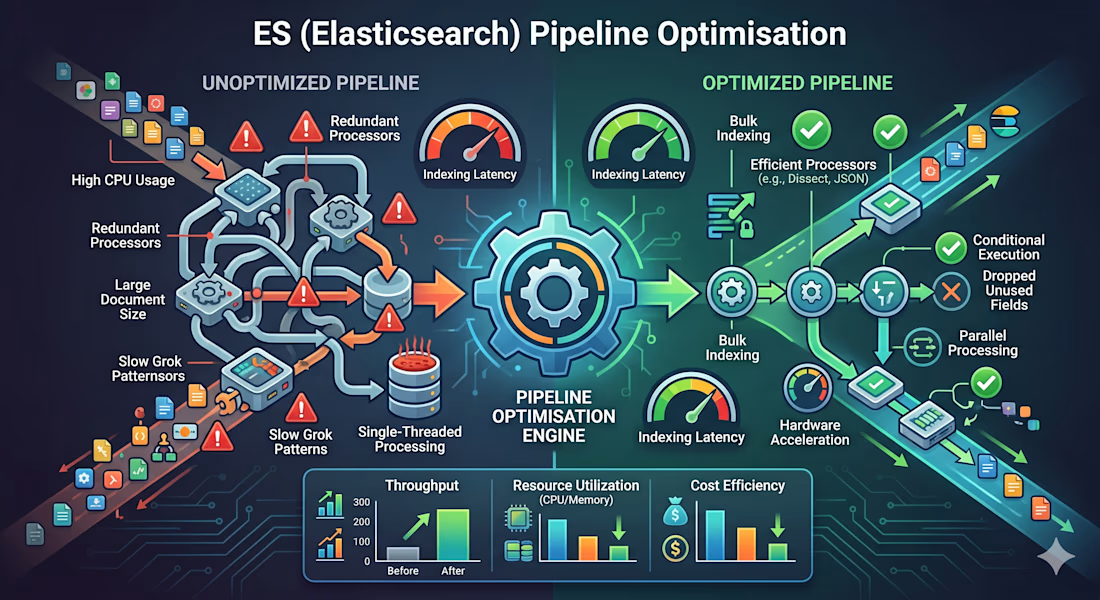
🔥 Scaling an Event Ingestion System: Lessons from Elasticsearch Optimization at High Volume 🔥
One of the more interesting engineering challenges I worked on recently involved optimizing a high-volume event ingestion and analytics pipeline built around Elasticsearch.
:Over time, the platform had scaled to processing tens of millions of events daily, with well over 100GB of data being indexed every day. As ingestion volume increased, the Elasticsearch cluster started showing signs of operational strain during peak traffic periods — high CPU utilization on data nodes, increasing indexing overhead, and growing infrastructure costs.
At first glance, the instinctive response could have been to simply add more infrastructure. But after analyzing the workload patterns more closely, it became clear that the larger issue was architectural drift. The indexing and partitioning strategy had evolved incrementally over time and was no longer aligned with the current ingestion scale, retention patterns, and query behavior of the system.
The optimization effort focused on understanding how data actually moved through the system:
ingestion frequency
indexing throughput
shard allocation behavior
write amplification
query access patterns
operational hotspots during peak load
A few key changes made a significant difference:
introducing bulk and batch indexing workflows instead of high-frequency individual writes
optimizing shard allocation to reduce indexing overhead and resource fragmentation
restructuring index partitioning to better align with retention and ingestion characteristics
improving operational visibility during indexing and rollout phases
One of the more important aspects of the project was balancing performance improvements with operational safety. Since downstream systems depended heavily on this data pipeline, the rollout had to preserve compatibility while maintaining visibility into cluster behavior and ingestion health throughout the migration process.
The result was a substantial improvement in indexing efficiency and operational stability, including roughly a 50% reduction in peak-hour CPU utilization on Elasticsearch data nodes along with meaningful infrastructure cost savings.
What stood out to me from this project was how often scalability problems are less about “more infrastructure” and more about aligning system design with actual workload behavior. In many growing systems, architectural decisions that work well initially can gradually become bottlenecks as scale, retention requirements, and operational patterns evolve.
Projects like these are the reason I enjoy backend and operational systems engineering — understanding how real-world workloads behave at scale and designing pragmatic solutions that improve reliability, maintainability, and long-term system efficiency.


The network for creativity
Join 1.25M professional creatives like you
Connect with clients, get discovered, and run your business 100% commission-free
Creatives on Contra have earned over $150M and we are just getting started
Related posts


Content management shouldn’t slow down product growth.
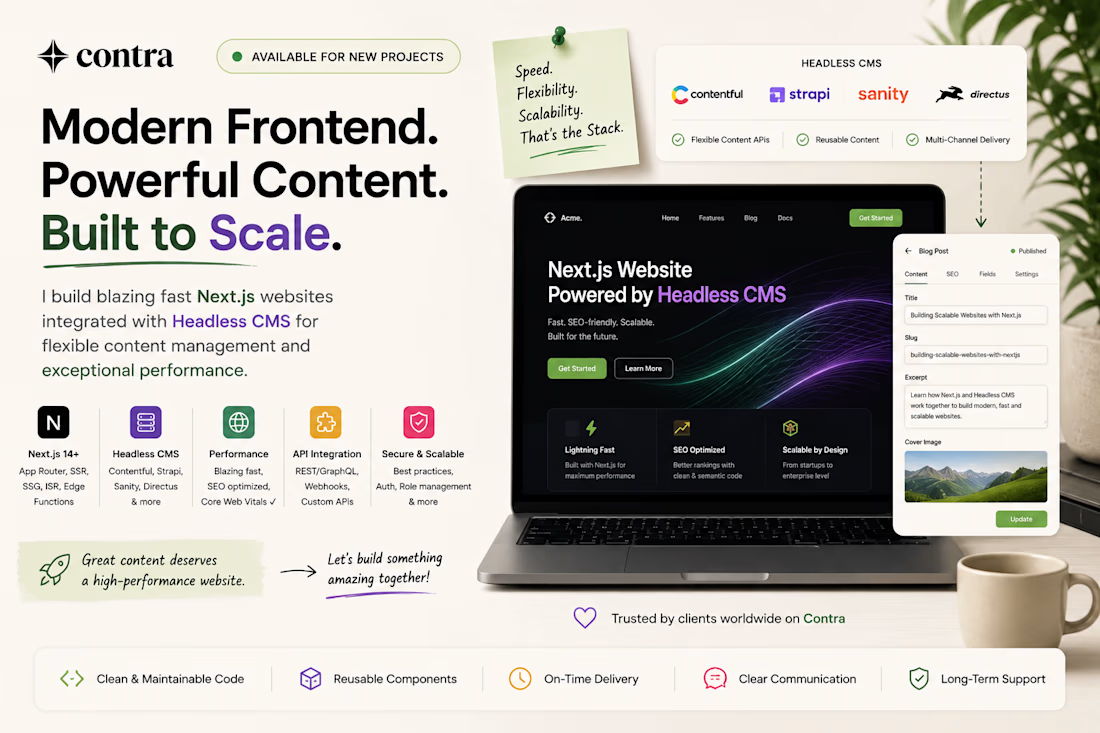
I build high-performance web platforms using Next.js + Headless CMS + AI integrations that give businesses speed, flexibility, and smarter content workflows.
Perfect for startups, SaaS platforms, marketplaces, blogs, documentation portals, and enterprise websites.
🚀 What I can help with:
• Next.js (App Router / SSR / SSG / ISR)
• Headless CMS integration (Contentful, Strapi, Sanity, Directus)
• AI-powered content workflows & automation
• OpenAI / Claude / Gemini integrations
• Smart search, recommendations & chatbot experiences
• GraphQL / REST API integrations
• CMS migration & performance optimization
• Scalable full-stack architecture
Imagine this:
✍️ AI-assisted content creation
🔍 AI-powered site search
🤖 Smart chat support
⚡ Lightning-fast SEO-friendly frontend
📈 Content workflows that scale with your business
If you’re building a modern content-driven platform, let’s make it faster, smarter, and future-ready.
Open for new projects on Contra 🚀
#NextJS #HeadlessCMS #Contentful #Strapi #Sanity #Directus #AIIntegration #OpenAI #AIDevelopment #FullStackDeveloper #WebDevelopment #SaaSDevelopment #CMSDevelopment #GraphQL #PerformanceOptimization #ContraCreator

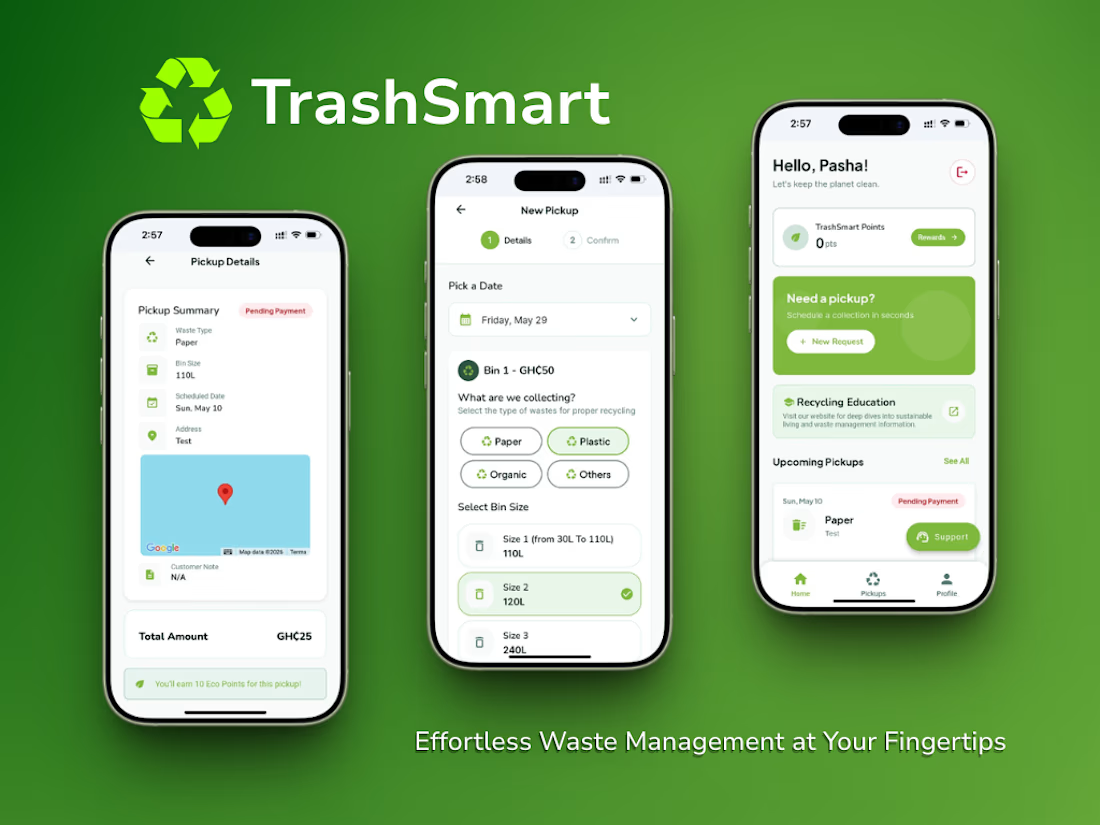
I’ve been working on a waste management and sustainability platform called TrashSmart.
It’s a centralized system built for one organization to manage end-to-end waste collection operations. The platform connects registered users who request waste pickups with assigned collectors, while admins oversee scheduling, assignments, payments, and overall operations.
The system supports multiple waste types and pickup sizes, includes a structured order workflow from request to completion, and features a rewards system that encourages recycling and eco-friendly behavior. Both users and collectors earn points that can be redeemed or used as incentives within the platform.
From a technical perspective, I focused on building the full backend architecture using Firebase, including role-based access control, Firestore data modeling, authentication flows, and operational logic for orders, payouts, and rewards.
It’s been a solid build in terms of designing something that blends logistics, sustainability and incentive-driven behavior into one system.



Stunning!

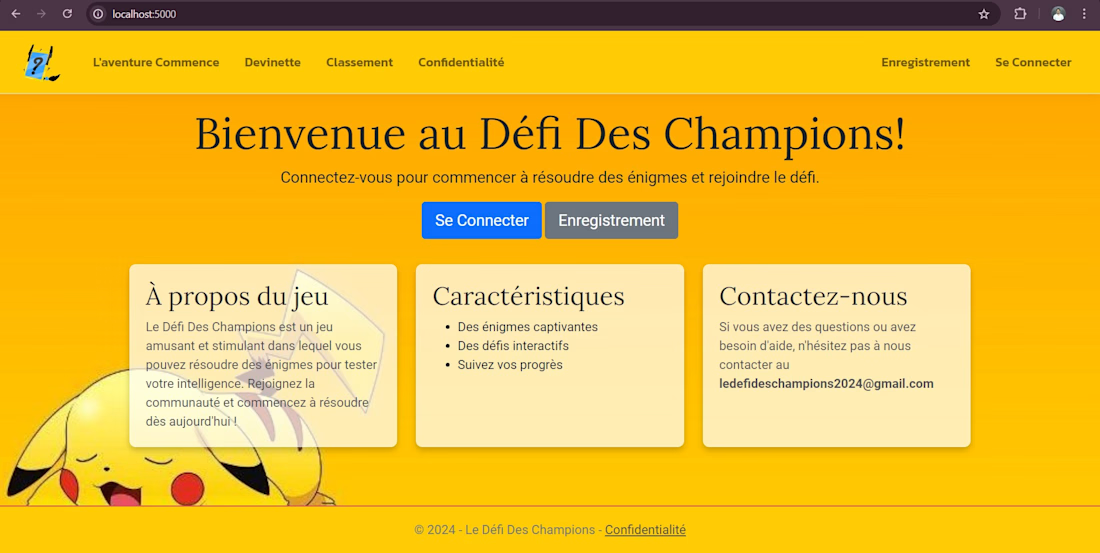
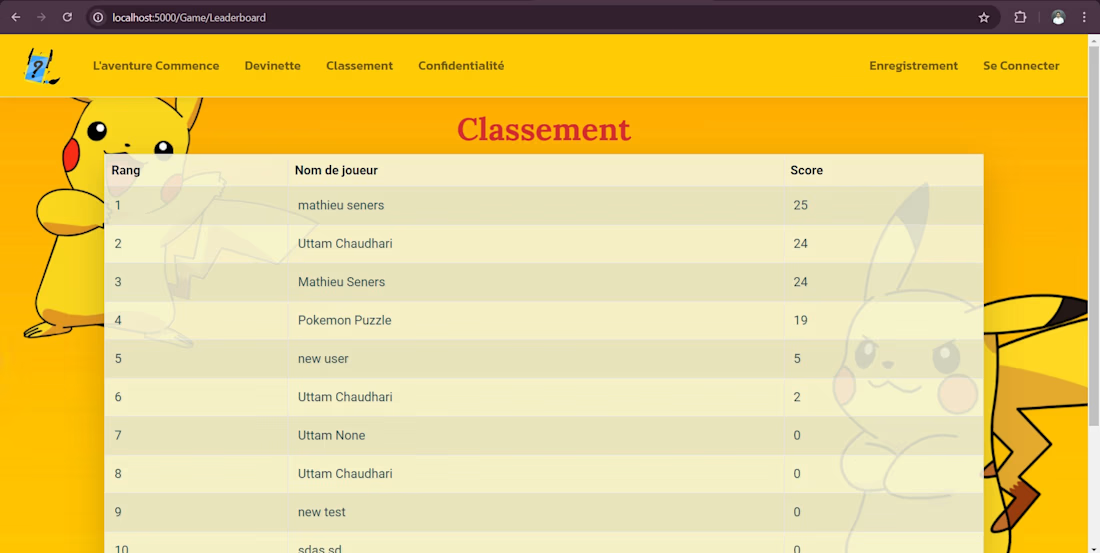
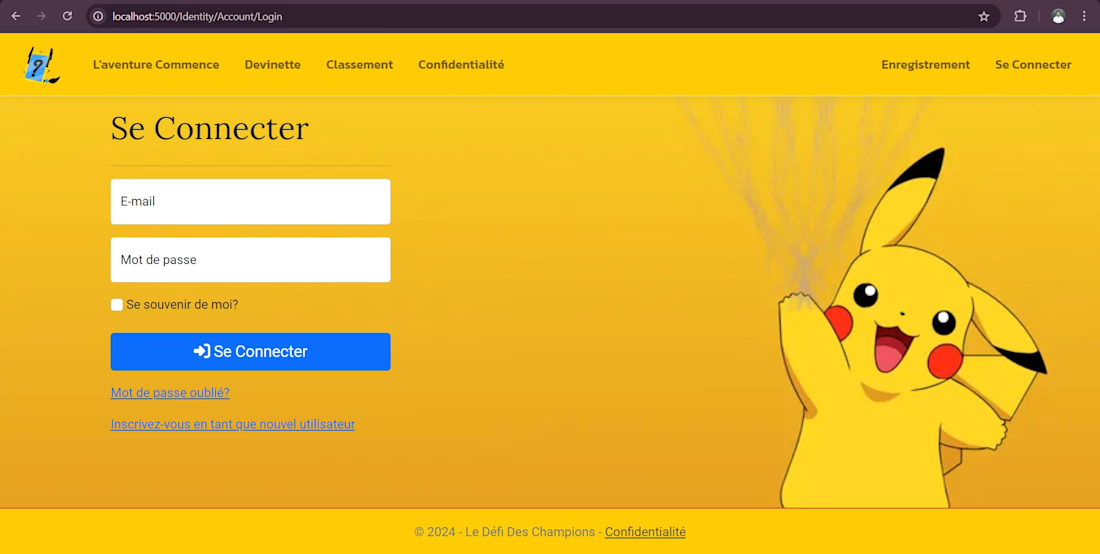
Pokemon Puzzle Game Development












Trending

Claude
Claude has entered the design space. How are you using Claude Design?

Contra University
Learn from expert creatives how to earn more using next-gen AI tools.
creativeaiflow
Creative AI workflows are evolving. What tools do you use, and what are their strengths and weaknesses?
portfolioreview
The best portfolios tell a story, not just show a grid. Share yours for feedback.
freelancerlife
Freelancer life is wins, pivots, and everything in between. What’s yours right now?