The network for creativity
Join 1.25M professional creatives like you
Connect with clients, get discovered, and run your business 100% commission-free
Creatives on Contra have earned over $150M and we are just getting started
Back to feedPost


A WordPress website shouldn’t need a developer for every small change.
That sounds obvious, but I think it’s one of the biggest things developers overlook.
A client asks for a new service page.
You add it.
Then they ask to update the pricing.
You update it.
Then they want to add a new team member, change a button, or publish a blog post.
That’s where the quality of the original build really matters.
If the website is built around a messy structure, unnecessary plugins, and sections that are difficult to edit, even simple updates become a headache.
For me, good WordPress development is about building a website that is easy to manage, easy to maintain, and ready to grow.
A few things I pay attention to:
• Is the content structure clear?
• Are reusable sections actually reusable?
• Are plugins solving a problem or creating more?
• Does the website stay responsive when content changes?
• Is the editing experience simple for the client?
• Are SEO and performance considered from the beginning?
Because a website isn’t finished when it looks good.
It’s finished when the client can actually use it.
That’s the kind of WordPress work I enjoy most.
What’s one WordPress mistake you see repeatedly in client projects?
Could be plugins, page builders, performance, security, or something else.
I’d love to hear what other developers and designers are seeing.
#WordPress #WordPressDevelopment #WebDesign #WebDevelopment #Contra


The network for creativity
Join 1.25M professional creatives like you
Connect with clients, get discovered, and run your business 100% commission-free
Creatives on Contra have earned over $150M and we are just getting started





Related posts

A few things we’ve been working on this month.
Different industries, different problems, but the same goal: making complex products feel simple, clear, and trustworthy.
Fintech → Investment Banking → Geospatial AI
More projects are still in progress.
Full case studies coming soon.


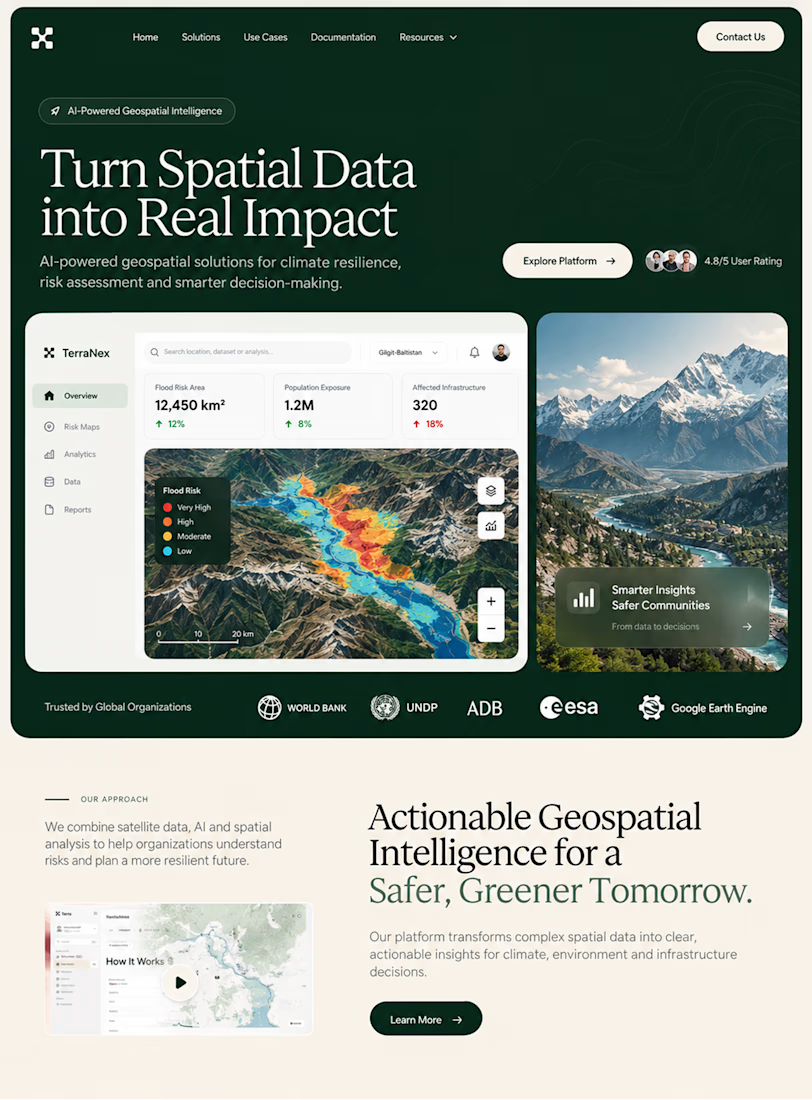

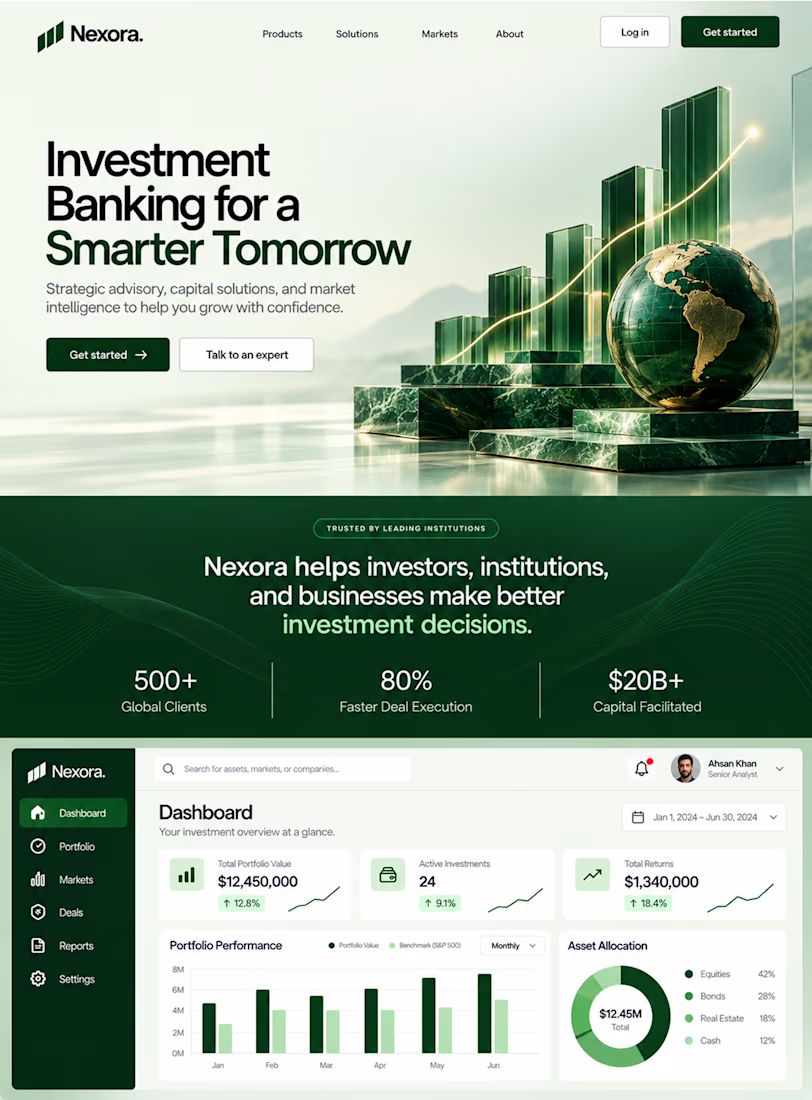

This is the kind of work I enjoy seeing — simple, focused, and actually thought through.

🚨 WordPress Security Alert: This One Deserves Attention
WordPress 7.1.2 was released as a critical security update.
But here's the part developers should pay attention to:
Security researchers have reported active exploitation attempts targeting the vulnerability after the patch was released.
The vulnerability can allow an unauthenticated attacker to include local PHP files under certain conditions, potentially leading to remote code execution.
Patchstack has reported attackers moving beyond basic scanning and attempting to write PHP files to the server.
If you manage WordPress websites, don't just assume your sites are safe because automatic updates are enabled.
✅ Check your WordPress version
✅ Verify the update actually completed
✅ Review recently modified files
✅ Check admin users
✅ Review security logs
✅ Verify your backups
✅ Remove unused plugins/themes
A security patch is only useful if it's actually applied.
For WordPress developers, regular security monitoring should be part of website maintenance — not an afterthought.
#WordPress #WordPressSecurity #WebDevelopment #PHP #CyberSecurity #WordPressDeveloper


A little Three.js experiment — a torn-edge reveal built with a custom shader and Sobel edge detection.
I wanted the transition to feel more organic and physical than a typical image reveal.


Custom shader + Sobel edge for a torn reveal is the kind of WebGL detail people feel even if they can't name it.