The network for creativity
Join 1.25M professional creatives like you
Connect with clients, get discovered, and run your business 100% commission-free
Creatives on Contra have earned over $150M and we are just getting started
Back to feedPost

Executive Summary
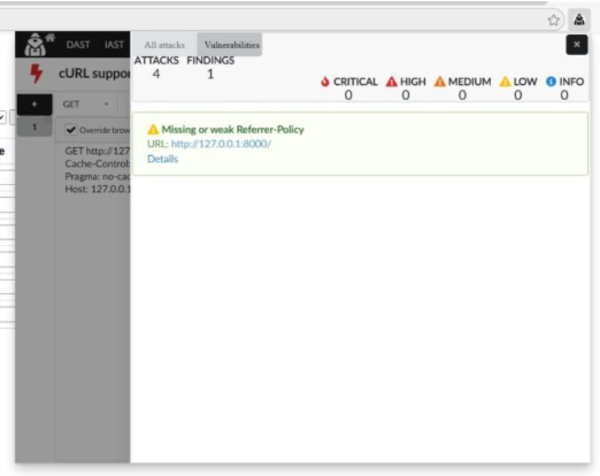
The primary objective of this project was to identify and mitigate security vulnerabilities within a custom-built academic portal. By implementing a defense-in-depth strategy, the assessment utilized multiple security testing methodologies to ensure a robust security posture. The evaluation revealed moderate security risks, primarily involving server misconfigurations and missing security headers.

The network for creativity
Join 1.25M professional creatives like you
Connect with clients, get discovered, and run your business 100% commission-free
Creatives on Contra have earned over $150M and we are just getting started





Related posts

Managing secrets and access credentials across repositories, cloud environments, devices, and communication tools can create significant security risks. VaultX is designed to help DevSecOps teams automate password and API key rotation, manage SSH access, and prevent data leaks.
The landing page communicates these capabilities through a dark security-focused aesthetic, electric green accents, subtle glow effects, and product-focused UI previews. A digital globe, monitoring indicators, and security architecture map help explain how VaultX connects and protects different environments.
Explore the project on Dribbble:
https://dribbble.com/shots/27814100-Landing-Page-DevSecOps-Security


Hey Contra Community! 👋
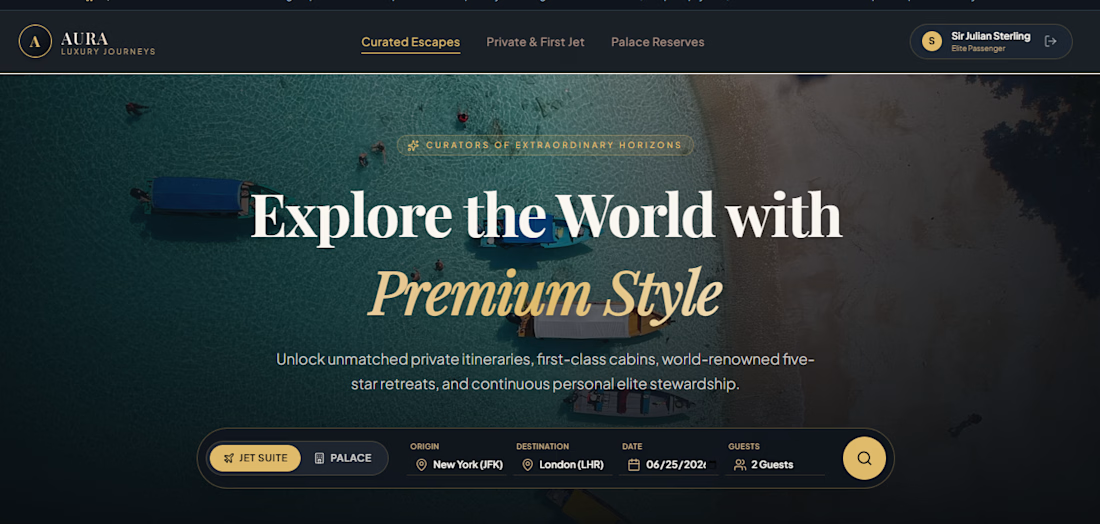
Excited to share my latest Full-Stack development project: a modern, highly secure Tourism & Travel Platform! 🌍✈️
For this project, I brought together architectural strength and beautiful design. I built a secure backend API using .NET Core and SQL Server, and integrated it seamlessly with a pixel-perfect React.js and Tailwind CSS frontend frontend application. The platform features fast endpoint performance, clean routing architectures, and a 100% mobile-responsive layout.
I love building functional, end-to-end solutions with clean and maintainable code structures!
I am currently available for new full-stack roles and remote software engineering contracts. Check out my services or feel free to drop me a message to discuss your next project! 💻✨



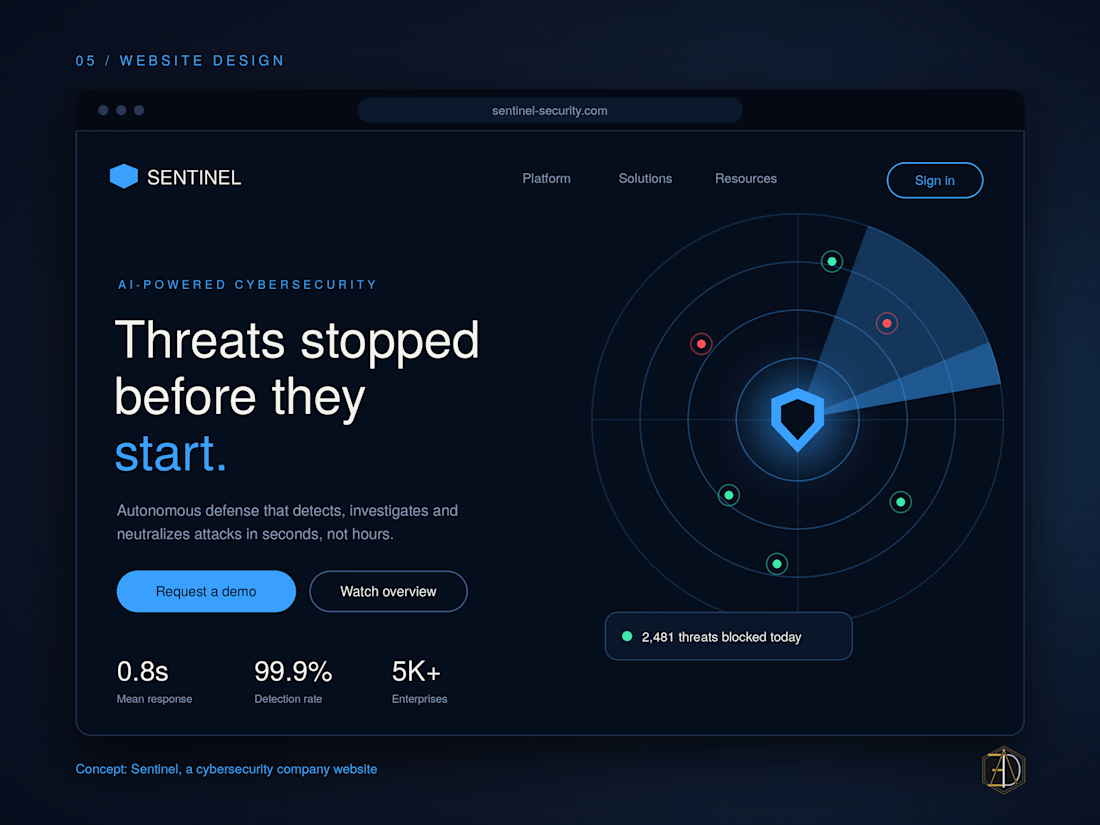
SENTINEL — AI-Powered Cybersecurity Web Design 🛡️💻
A cutting-edge, high-conversion landing page design tailored for AI-driven cybersecurity platforms and enterprise SaaS. Built around the theme "Threats stopped before they start," it features real-time threat detection radar visuals, performance metrics (0.8s response time, 99.9% detection rate), and crisp dark-mode ergonomics.
Key Highlights
🛡️ Interactive Radar UI: Cyber threat tracking visualization for immediate credibility and technical depth.
📊 Metrics Dashboard: Highlighting enterprise response times, threat neutralization counts, and reliability statistics.
⚡ SaaS Conversion Flow: Clear CTA hierarchy with "Request a demo" and "Watch overview" buttons.
🌌 Dark Ergonomics: Neon blue accents over deep navy palettes designed for modern tech enterprises.
Designed for cybersecurity firms, Cloud Security platforms, and DevSecOps startups looking for an authoritative brand identity.
Precision, power, and security in enterprise UX design. 🛡️✨ How do you like this dark tech aesthetic? Drop your thoughts below! 👇
#Cybersecurity #SaaSUI #WebDesign #UIUX #Figma #EnterpriseUX #DarkUI #TechDesign #UXDesign


Crisp, clean, and effective.