The network for creativity
Join 1.25M professional creatives like you
Connect with clients, get discovered, and run your business 100% commission-free
Creatives on Contra have earned over $150M and we are just getting started
Back to feedPost

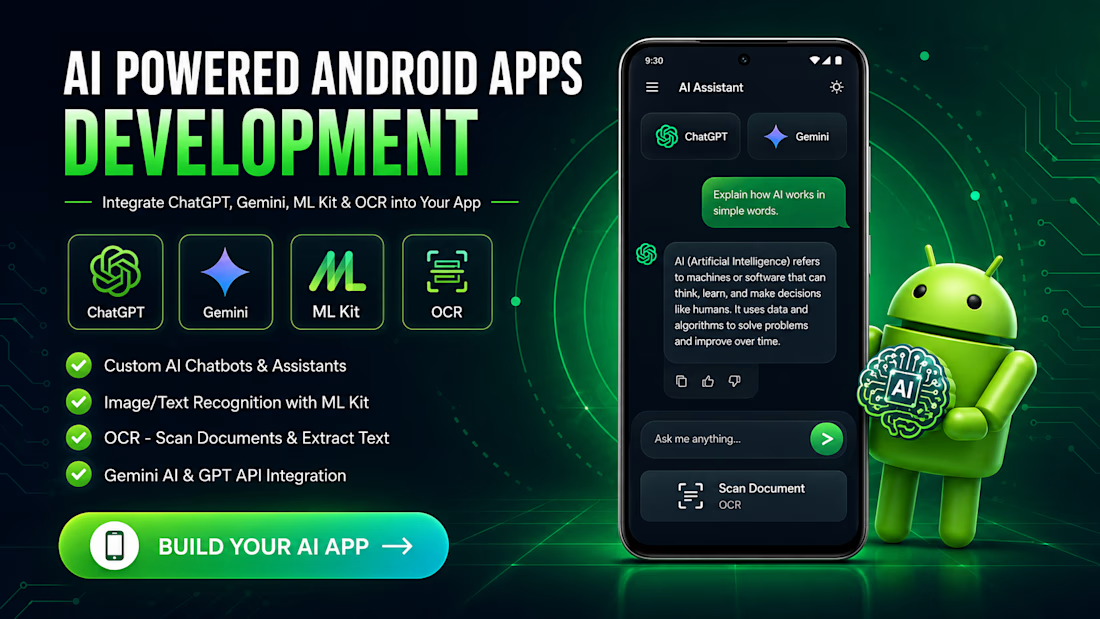
Build intelligent Android applications with the latest AI technologies using Kotlin and Jetpack Compose. I develop modern, scalable, and high-performance Android apps that integrate advanced AI capabilities to deliver smarter user experiences.
What I can build
🤖 ChatGPT & Gemini AI integration
🧠 AI Chatbots and Virtual Assistants
📄 OCR (Optical Character Recognition)
📷 Image & Text Recognition using Google ML Kit
🔥 Firebase Authentication, Firestore & Cloud Functions
🌐 REST API integration
⚡ Clean MVVM architecture
🎨 Modern Jetpack Compose UI
🚀 Performance optimization and bug fixing
Technologies
Kotlin
Jetpack Compose
Android SDK
Firebase
Google ML Kit
OpenAI API (ChatGPT)
Google Gemini API
REST APIs
MVVM Architecture
Why work with me?
Clean, maintainable, and scalable code
Responsive and modern UI/UX
Efficient API integration
Performance-focused development
Clear communication and timely delivery
Ongoing support after project completion
Whether you need an AI assistant, document scanner, OCR solution, chatbot, or a custom AI-powered Android application, I can help turn your idea into a polished, production-ready app.


The network for creativity
Join 1.25M professional creatives like you
Connect with clients, get discovered, and run your business 100% commission-free
Creatives on Contra have earned over $150M and we are just getting started





Related posts


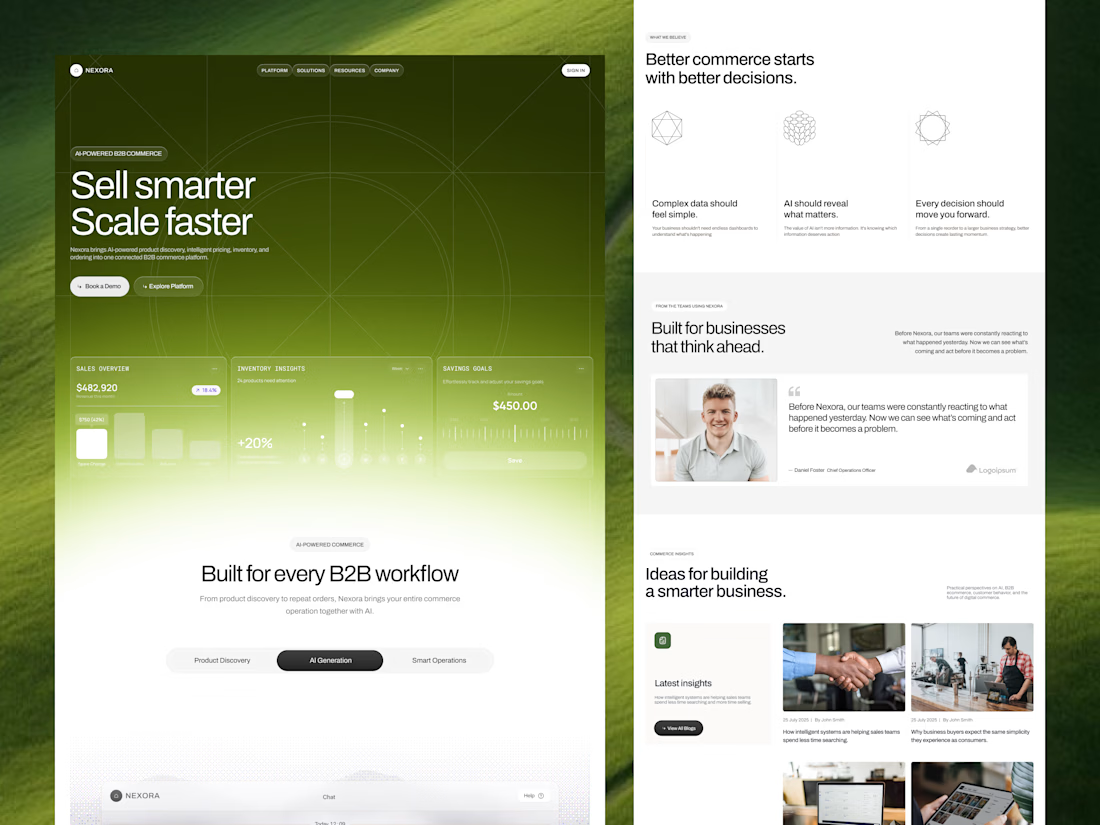
Our goal was to make pricing, inventory and ordering data feel simple and human for an AI-powered B2B commerce platform. We'd love to hear your thoughts!

Engaging background and nice gradient to not make the section look seprate 🔥

Morrow Atelier turns a panicked 'my wedding is in three weeks and my dress doesn't fit' message into a confirmed, pre-briefed fitting — the bride pins her fit zones on a live 3D gown at midnight, and Mara opens her morning with one prepared case instead of a week of back-and-forth


fabulous work @Omar Elmehammedy. upgoated...!

This project focused on building and testing a practical AI security assessment lab for evaluating LLM defenses against prompt injection and jailbreak attacks.
I integrated Spikee by Reversec with a locally hosted cybersecurity model running through LM Studio, then added NVIDIA NeMo Guardrails to compare model behavior under three conditions: no guardrails, input filtering, and combined input/output protection.
The work included configuring the local model environment, building a custom FastAPI gateway, integrating NeMo Guardrails, troubleshooting model latency and timeout issues, creating a reusable Spikee target, and analyzing attack results using Spikee’s built-in reporting tools.
The project also explored different adversarial testing approaches, including prompt injection datasets, obfuscation, encoded attacks, Best-of-N testing, synthetic canary leakage tests, and structured benchmark comparisons.
The objective was to measure how much the guardrails reduced successful attacks while keeping the model, dataset, and testing conditions consistent.
Tools used: Spikee, NVIDIA NeMo Guardrails, LM Studio, Python, FastAPI, PowerShell, Parrot OS, local LLMs, JSONL datasets, and custom security testing scripts.
This project demonstrates a hands-on approach to LLM red teaming, AI safety testing, prompt-injection assessment, and guardrail validation for organizations deploying generative AI systems.


pretty cool tbh. testing the same attacks with different guardrail setups makes the results way more interesting.