The network for creativity
Join 1.25M professional creatives like you
Connect with clients, get discovered, and run your business 100% commission-free
Creatives on Contra have earned over $150M and we are just getting started
Back to feedPost

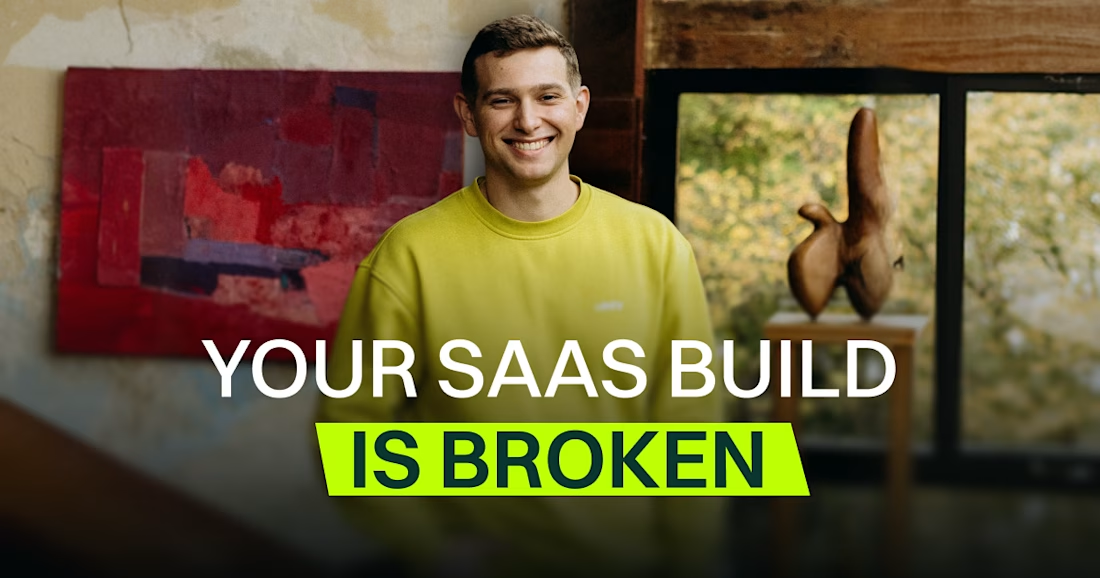
Every agency project I touched as a dev followed the same pattern.
Founder explains the vision to Sales. Sales packages it through their own understanding for the Project Owner. PO interprets it for the PM. PM rewrites it for developers.
By the time I'm reading the Jira ticket, I'm building someone's telephone-game version of what the founder actually needed.
Freelancers skip the chain but create a different problem – you become the PM & PM. Every decision routes through you. That $40/hour rate quietly becomes your most expensive hire when you factor in your calendar.
DIY with AI tools? I've seen the outputs. Visually functional, technically empty. Like assembling IKEA furniture that technically stands but wobbles under any real weight.
At YARSY, we run a different structure: one Product Lead owns your project end-to-end. No handoffs. They talk to you, they validate assumptions, they orchestrate the build, they ship, and responsible for the result.
Borrowed from McKinsey consulting, not from agencies.
AI accelerates the work, but humans make the main decisions.
If you're pre-seed or seed stage and curious whether this fits, we have a 10-minute CustDev form. Fill it out and get either a free landing page concept or a ready-to-use product requirements document. No call required to see if we're the right fit. Review the results.
Drop me «CustDev» in comments.
The network for creativity
Join 1.25M professional creatives like you
Connect with clients, get discovered, and run your business 100% commission-free
Creatives on Contra have earned over $150M and we are just getting started





Related posts

Most startups hire a designer, then a developer, then spend weeks fixing what got lost between the two.
I do both. I design the UI and build it myself, so what you approve is exactly what ships.
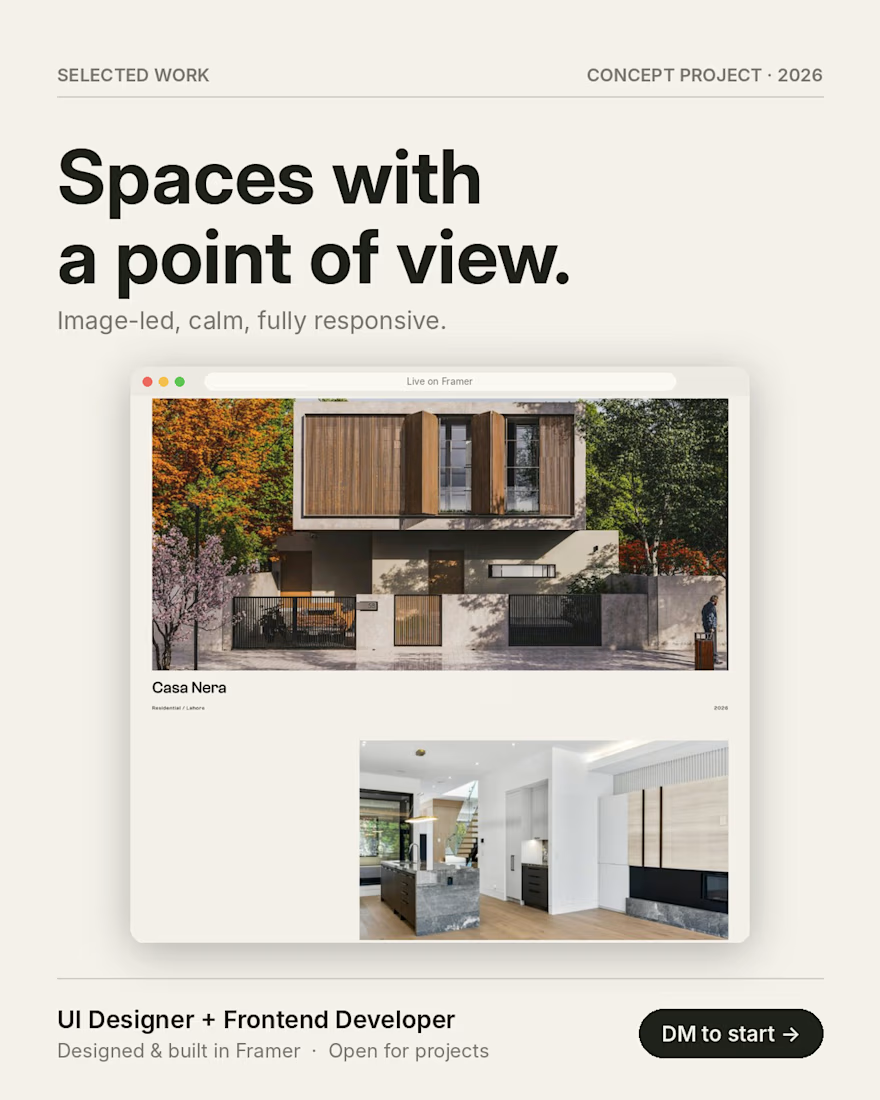
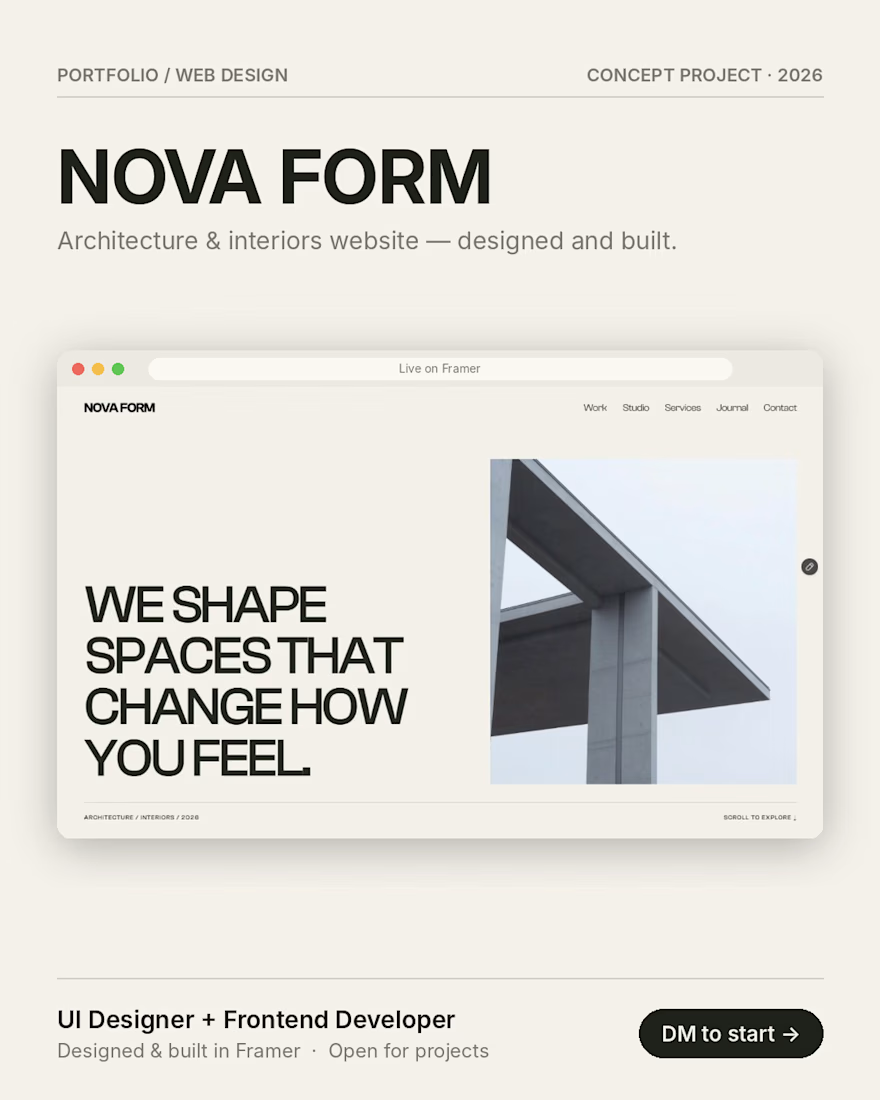
Here's a concept I just finished: NOVA FORM, a website for an architecture & interiors studio. Designed and built in Framer.
What I focused on:
Bold editorial typography with an elegant serif accent
Image-led project showcase that lets the work speak
Clean, calm layout with plenty of breathing room
Fully responsive and fast
Live site: https://rotating-turnip-092303.framer.app/
I help startups, studios and brands get websites that look premium and convert.
UI/UX Design
Frontend Development
Framer Websites
2 project slots open this month.
Send me a message with your idea and deadline. I'll reply within a few hours.
(Concept project, not a real client.)



Burying your traction on slide 28 is the fastest way to lose a venture partner.
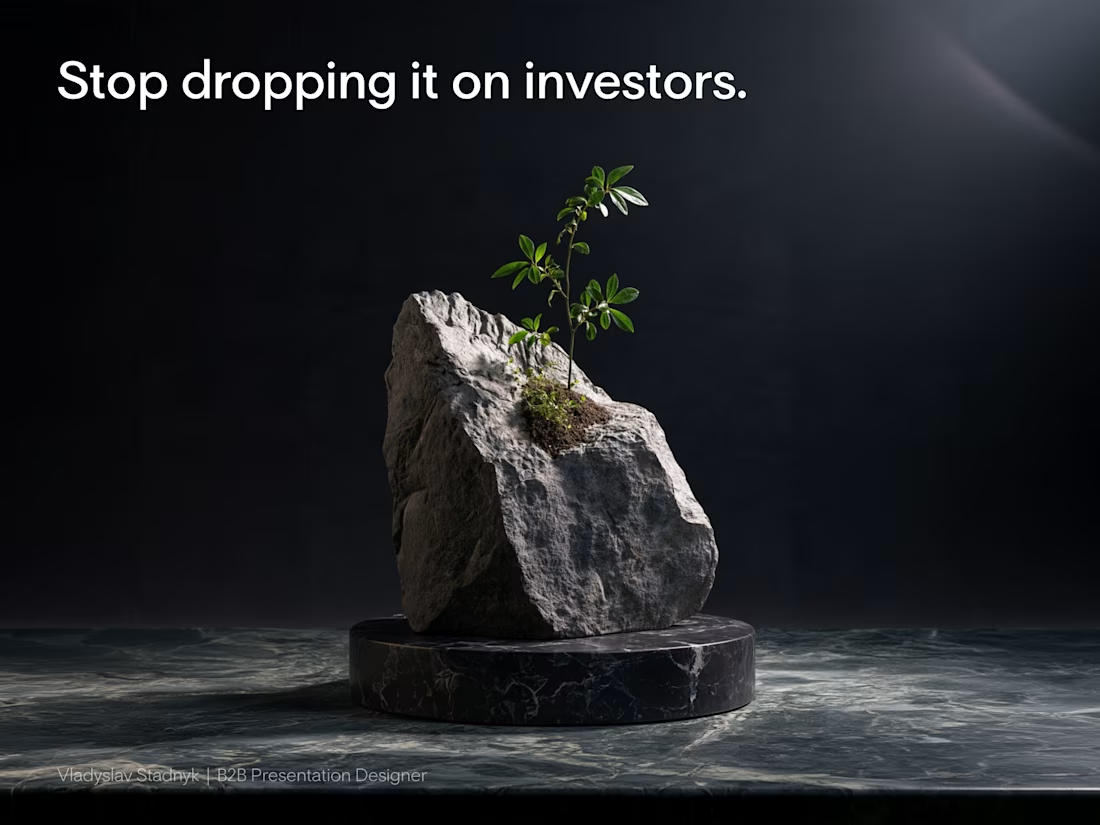
Most founders assume volume equals expertise. They drop a massive rock of information onto venture partners, hoping the investor will dig through it to find a reason to write a check.
But reality works differently. Venture partners review materials on their phones in the back of a cab or between meetings.
If your core growth metric is hidden under a solid wall of text, nobody is going to see it. You lose their attention before they even understand your business model.
Your presentation should be a scalpel, not a sledgehammer.
Cut your deck in half. Leave empty space so your most critical numbers can actually breathe. One clean layout proving your unit economics closes rounds much faster than ten pages of technical documentation and product features.
Open your current pitch deck. How many slides can you delete today without losing the core narrative?



The phone-in-a-cab test is a good one. A quick way to check it is to shrink each slide to thumbnail size: if the key number still reads there, it will survive a phone screen. Do you set a minimum size for metric callouts in your decks?

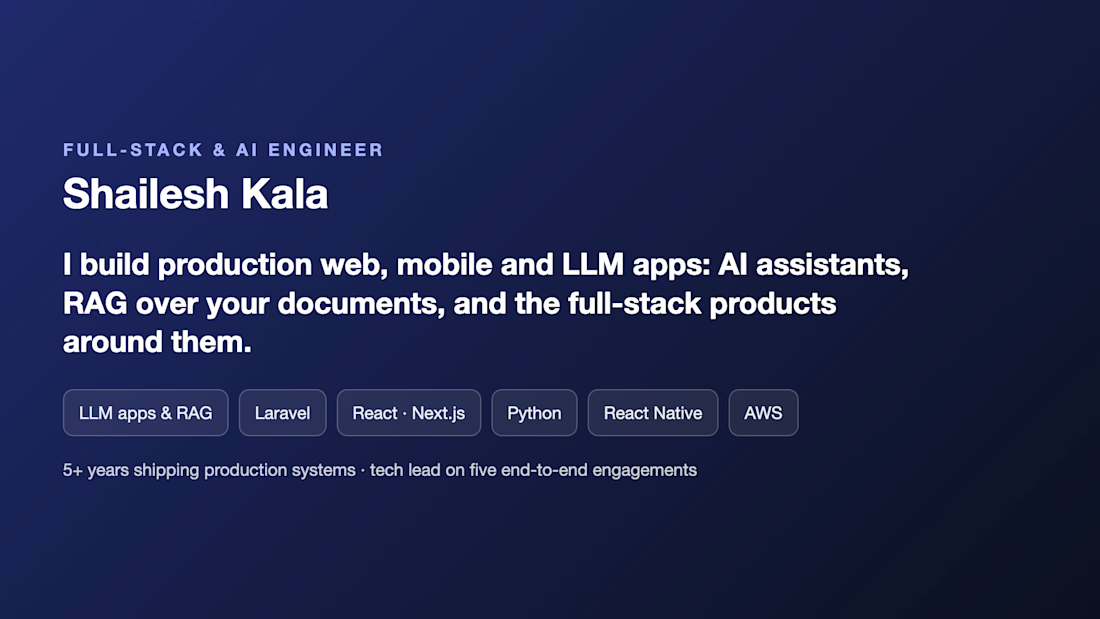
Hi Contra! I'm Shailesh, a full-stack & AI engineer with 5+ years of production experience, now taking on freelance projects full-time.
What I build:
• AI assistants that answer from your own documents (RAG), with hand-off to a person when the answer isn't there
• Multi-agent LLM workflows with OpenAI and Claude
• Web apps and MVPs with Laravel, Python, React/Next.js and React Native
• WordPress/WooCommerce fixes and speed-ups
Recent work: a multi-agent AI lesson planner for an education non-profit, an offline-first React Native app for teachers, and a zero-downtime integration between two national platforms.
Building something with AI, or need a dependable full-stack engineer? Send me a message or check out my services.

welcome to Contra! RAG with a hand-off to a real person is such a practical setup