
Ferdausur Rahman
B2B Website Designer | SEO, AEO & GEO Specialist
- 1
- Followers

Most manufacturing websites are just PDFs in disguise.
An engineer lands on your page with a real constraint: “I need a castor that holds 2 tonnes, survives a cast-iron floor, and fits a 150 mm wheel.”
Then they scroll through 40 products, open 6 datasheets, and leave to ask a competitor who answers faster.
I recently designed a Castors & Wheels catalogue page for an industrial castor manufacturer, and these are the principles I’d now apply to any B2B product catalogue:
1. Let buyers search by constraint, not by product name.
Industrial buyers rarely know your model names. They know their load, their floor, their wheel size. So the filters are load capacity, wheel material, diameter and duty class.
2. Put the specs on the card.
Size, load capacity and material are visible before the click. If someone has to open a page to find out whether a product is even relevant, the page has failed.
3. Offer a second way in.
Some buyers think in products, others in industries. A “Looking for your industry?” row (scaffolding, heavy engineering, material handling) gets them to the right range in one click.
4. Let them sort by what matters.
Defaulting to load capacity, high to low, matches how this buyer actually narrows things down.
5. Treat “we didn’t list it” as a lead.
Most manufacturers can build custom, but the page never says so. A “Didn’t find your castor?” block turns a dead end into a quote request.
6. Make the enquiry form ask the right questions.
Industry and application go in the form, so sales starts the first call already knowing what the buyer needs.
7. Design for export from day one.
Language options, a separate export contact and a clear route to a quote matter when your buyers sit in a dozen countries.
A catalogue page isn’t there to show everything you make.
It’s there to get the right buyer to the right product faster than your competitor can.
👇 If you’re a manufacturer, what’s the one thing buyers keep asking your sales team that your website should already answer?
And if you’re a buyer, what makes you close a supplier’s tab?
4
4
235
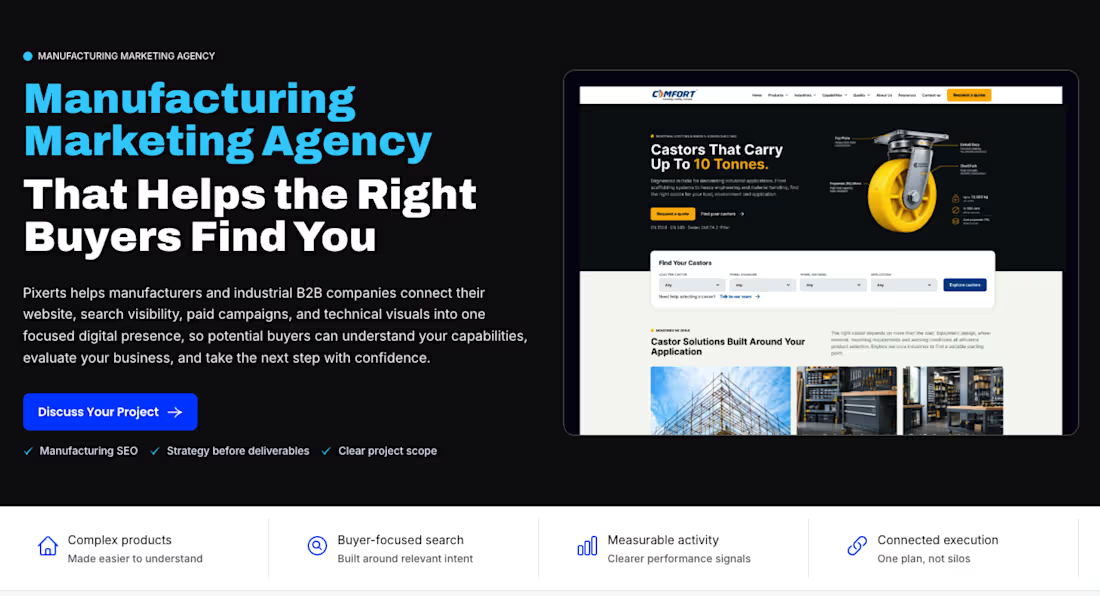
Most manufacturing websites explain the company.
But do they help the right buyers choose it?
That’s the problem I’m building Pixerts to solve.
We help manufacturers connect their website, SEO, paid campaigns, and technical visuals into one focused digital presence.
The goal is simple: make complex capabilities easier to understand, help the right buyers find you, and make requesting a quote the natural next step.
Here’s a look at our landing page and how we approach manufacturing marketing.
🌐 https://pixerts.com
If you're a manufacturer, what’s the biggest challenge with your website right now: visibility, explaining your capabilities, or generating qualified RFQs?
#Manufacturing #B2BMarketing #ManufacturingSEO
0
86
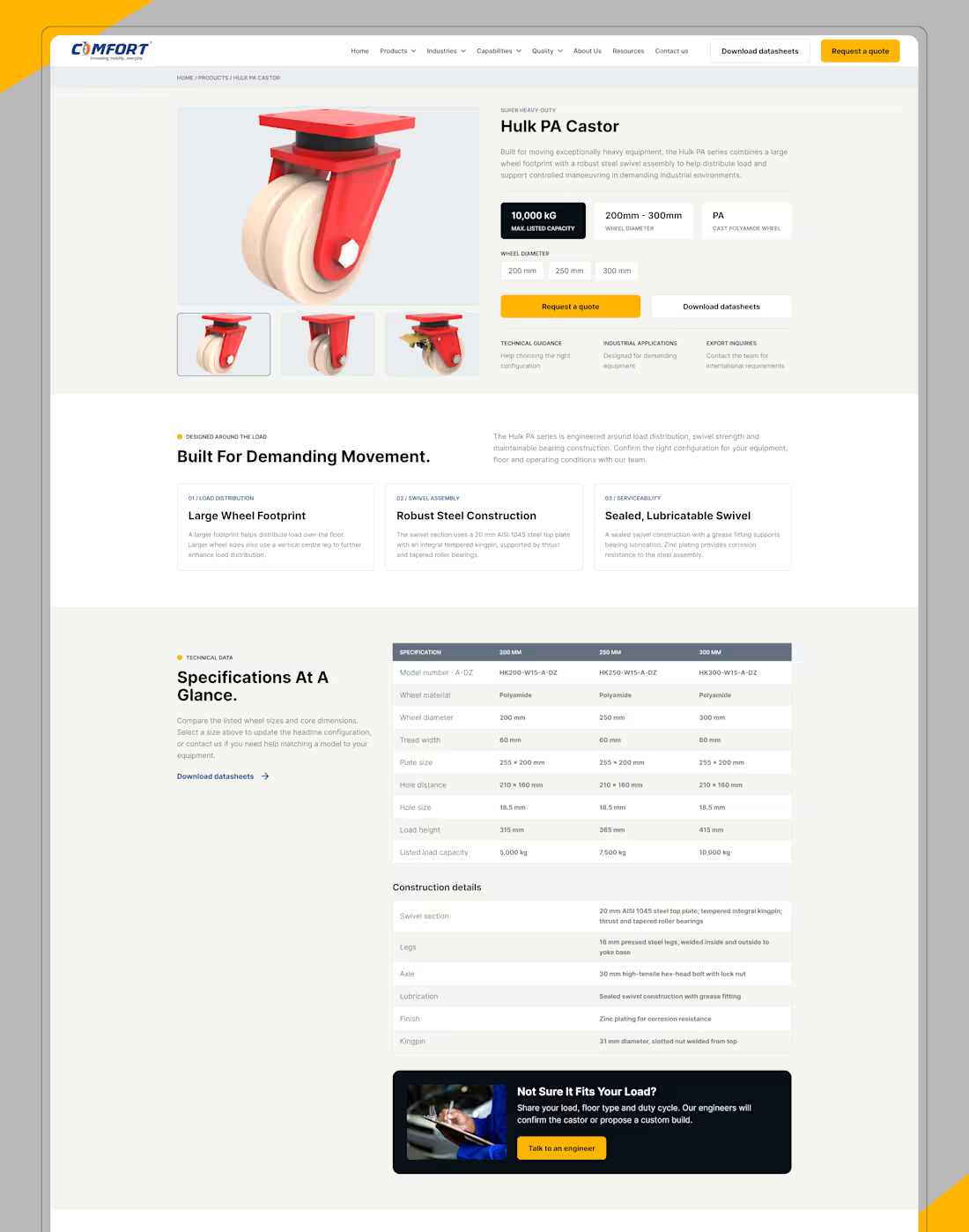
Your product might handle 10 tonnes.
But can your website handle the buyer’s questions?
When industrial buyers visit your website, they’re not just looking at products.
They’re evaluating specifications, comparing options, and deciding whether to trust your business.
If finding the right information takes too long, you’re creating friction before the conversation even begins.
That’s the problem this product page concept aims to solve.
We focused on three things:
→ Make technical details easy to find.
→ Make product comparisons easier.
→ Make requesting a quote the natural next step.
Because in B2B manufacturing, a better website isn’t just about looking professional.
It’s about making complex buying decisions easier.
At Pixerts (https://www.linkedin.com/company/pixerts/), we design and build B2B manufacturing websites that turn technical information into better buyer experiences.
Is your website helping buyers move forward, or making them work harder?
#Manufacturing (https://www.linkedin.com/search/results/all/?keywords=%23manufacturing&origin=HASH_TAG_FROM_FEED) #UXDesign (https://www.linkedin.com/search/results/all/?keywords=%23uxdesign&origin=HASH_TAG_FROM_FEED) #B2BMarketing (https://www.linkedin.com/search/results/all/?keywords=%23b2bmarketing&origin=HASH_TAG_FROM_FEED) #IndustrialDesign (https://www.linkedin.com/search/results/all/?keywords=%23industrialdesign&origin=HASH_TAG_FROM_FEED) #WebDesign (https://www.linkedin.com/search/results/all/?keywords=%23webdesign&origin=HASH_TAG_FROM_FEED)
1
131
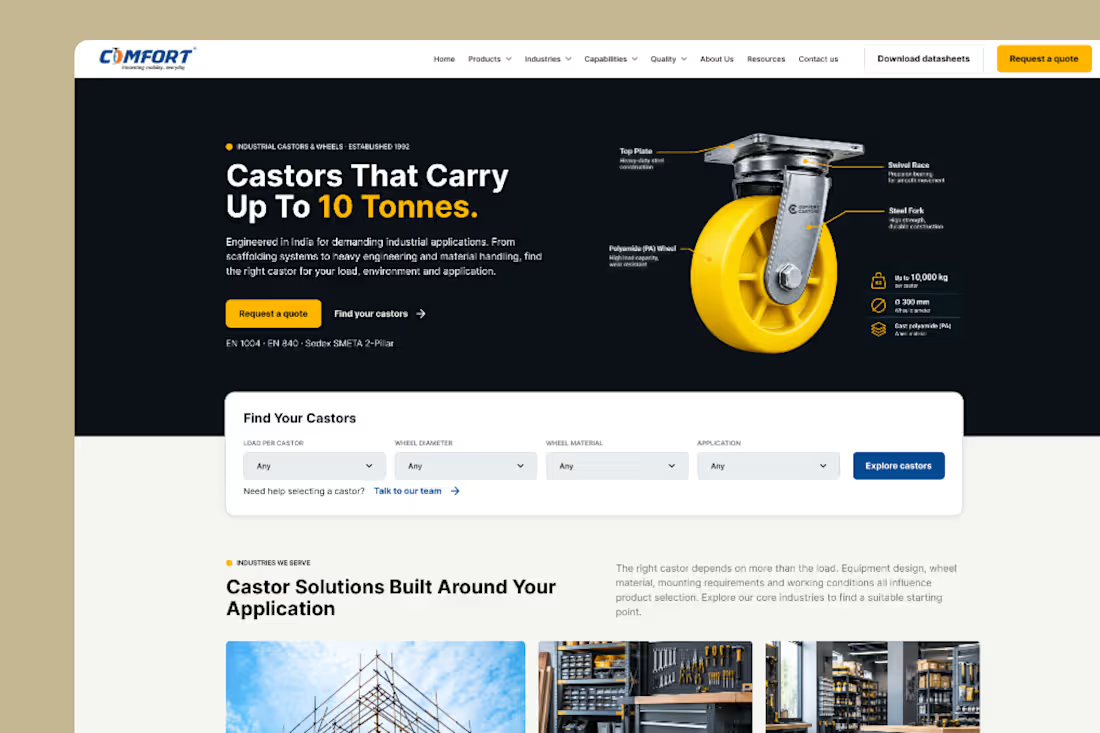
A manufacturing website should do more than look good.
It should help buyers make decisions.
Imagine searching for an industrial castor that can handle 10 tonnes.
You need clear specs, the right materials, and the right product without wasting time.
That’s what good UX makes possible.
→ Clear product positioning
→ Visual technical explanations
→ Easy product filtering
→ Simple quote requests
At Pixerts (https://pixerts.com/), we design and build B2B manufacturing websites that combine UX/UI, WordPress, SEO, and AEO to turn product discovery into business opportunities.
Does your website make it easy for buyers to find the right product and request a quote?
#Manufacturing (https://www.linkedin.com/search/results/all/?keywords=%23manufacturing&origin=HASH_TAG_FROM_FEED) #UXDesign (https://www.linkedin.com/search/results/all/?keywords=%23uxdesign&origin=HASH_TAG_FROM_FEED) #B2BMarketing (https://www.linkedin.com/search/results/all/?keywords=%23b2bmarketing&origin=HASH_TAG_FROM_FEED) #WebDesign (https://www.linkedin.com/search/results/all/?keywords=%23webdesign&origin=HASH_TAG_FROM_FEED)
1
165