The network for creativity
Join 1.25M professional creatives like you
Connect with clients, get discovered, and run your business 100% commission-free
Creatives on Contra have earned over $150M and we are just getting started
Back to feedPost

The Difference Between Content That Gets Read and Content That Gets Trusted
A headline can earn a click. A surprising claim can keep someone reading. But neither tells you whether that person believes what you have to say.
Imagine a potential customer reading an article on your website. The topic interests them, and the opening describes a problem they recognize. Then they encounter a promise that seems too convenient, a statistic without a source, or advice that overlooks their circumstances.
They may finish the article, but they leave with a question you never intended to raise: “Can I rely on this company?”
For organizations publishing content, that question matters. Attention gives you an opportunity to make your case; trust gives readers a reason to take it seriously.
Where Readers Begin to Lose Trust
Trust can weaken through small choices that seem harmless during drafting.
An exaggerated claim is one example. A service that “helps teams organize their work” becomes one that “eliminates confusion.” A useful learning tool promises to “unlock every student’s potential.” The language becomes more impressive while the promise becomes harder to defend.
Hidden assumptions create another problem. An article might encourage readers to take an uninterrupted hour each morning for focused work, overlooking the parent preparing children for school or the employee whose schedule belongs to someone else. The suggestion may have value, but presenting it as universally practical shows little awareness of the reader’s life.
Buzzwords create distance in a different way. A phrase such as “empowering transformative outcomes” asks readers to accept enthusiasm in place of an explanation. They still need to know what changes, how it changes, and why that change matters.
In health and mental-health content, unsupported advice carries particular weight. A sentence that presents a coping strategy as a reliable solution can encourage expectations the evidence does not justify. A reassuring tone cannot make an overstated claim responsible.
Then there is copy that talks at people. “You simply need to prioritize yourself” may sound encouraging to the writer, while sounding dismissive to someone balancing work, caregiving, and financial pressure.
The word “simply” deserves special attention. Before using it, ask whether the task is simple for the reader or merely simple to describe.
What Trustworthy Content Looks Like
When I write or edit a piece, I look beyond whether it sounds polished. I examine whether readers have enough information to understand the message, evaluate its claims, and decide what applies to them.
Five qualities help establish that foundation.
Credible Sourcing Makes Claims Checkable
“Research shows” should lead somewhere.
When a factual claim carries the argument, readers deserve to know where it comes from. Depending on the subject, that might mean linking to an original study, an official report, or guidance from a relevant expert organization.
The source also needs to support the actual sentence. Research involving one specific group does not automatically justify a claim about everyone, and a finding that two things occur together does not establish that one causes the other.
Good sourcing gives the writer boundaries as well as support. It helps determine how confidently something can be said.
Clear Structure Helps Readers Follow the Reasoning
Readers should understand why each section is there and how it connects to the question that brought them to the page.
For example, an article explaining an educational assessment might begin with its purpose, describe what happens during it, and then explain what the results can and cannot tell a family. That order follows the reader’s likely questions.
If the article jumps straight into technical details or a sales pitch, the reader has to supply the missing context.
Structure makes reasoning visible. It allows people to follow the explanation and judge whether the conclusion is earned.
Honest Limits Keep Confidence Proportionate
Writers sometimes worry that acknowledging uncertainty will make a piece less persuasive. Yet an unqualified promise gives a careful reader something to doubt.
A software feature may work well for a small team but require additional setup across departments. A research finding may be promising while leaving important questions unanswered.
Stating those limits helps readers assess the fit. The aim is to identify the conditions that matter to their decision without burying every sentence under qualifications.
Concrete Examples Give Ideas Meaning
“Make your services more accessible” is a worthwhile intention, but it leaves the practical work undefined.
A hypothetical clinic that offers a telephone booking option alongside its online form gives the reader something clearer to consider. Someone who struggles with the form has another way to make an appointment.
Examples should illuminate a claim without pretending to prove more than they do. An imagined situation should be identified as hypothetical, and a client story should reflect what actually happened.
Specificity strengthens trust when the details are honest.
Empathy Respects the Reader’s Circumstances
Empathy involves considering what a reader may be carrying into the conversation.
Someone researching a health concern may be frightened. A parent exploring learning support may already feel overwhelmed. A business owner comparing services may have paid for disappointing work before.
You do not need to claim you know exactly how they feel. You can show consideration by answering their questions plainly, explaining unfamiliar terms, and avoiding language that makes difficulty sound like a personal failure.
A Small Revision with a Significant Difference
Consider this sentence:
“Mindfulness can solve stress for most people.”
“Solve” implies an outcome the sentence does not establish, while “most people” makes a broad claim without supporting evidence.
A more responsible version would be:
“Mindfulness may help some people manage stress, although results vary and the research has limitations.”
That wording reflects the National Center for Complementary and Integrative Health’s discussion of potential benefits and its cautions about the quality and interpretation of mindfulness research. (NCCIH)
The revision gives readers a possibility they can consider without presenting it as a promise.
Even adding sensible-sounding advice requires care. Saying mindfulness “works best” alongside other habits would introduce another claim that needs support. Responsible editing examines the reassuring sentences as closely as the dramatic ones.
Trust Is a Discipline
Trustworthy content respects the reader’s time, intelligence, and lived experience. It explains its claims, acknowledges meaningful limits, and leaves people better equipped to make a decision.
Those qualities come from editorial choices made throughout the piece, from the headline’s promise to the final invitation.
If your content attracts attention but needs stronger evidence, clearer explanations, or a more considerate voice, I can help you bring those elements together.
About the author
I write and edit clear, reader-focused content for organizations working in AI, health, and education. My background in psychology helps me bring care, accuracy, and plain language to complex subjects.

nccih.nih.gov
Stress
Information and resources about complementary and integrative approaches for stress.
The network for creativity
Join 1.25M professional creatives like you
Connect with clients, get discovered, and run your business 100% commission-free
Creatives on Contra have earned over $150M and we are just getting started











Related posts

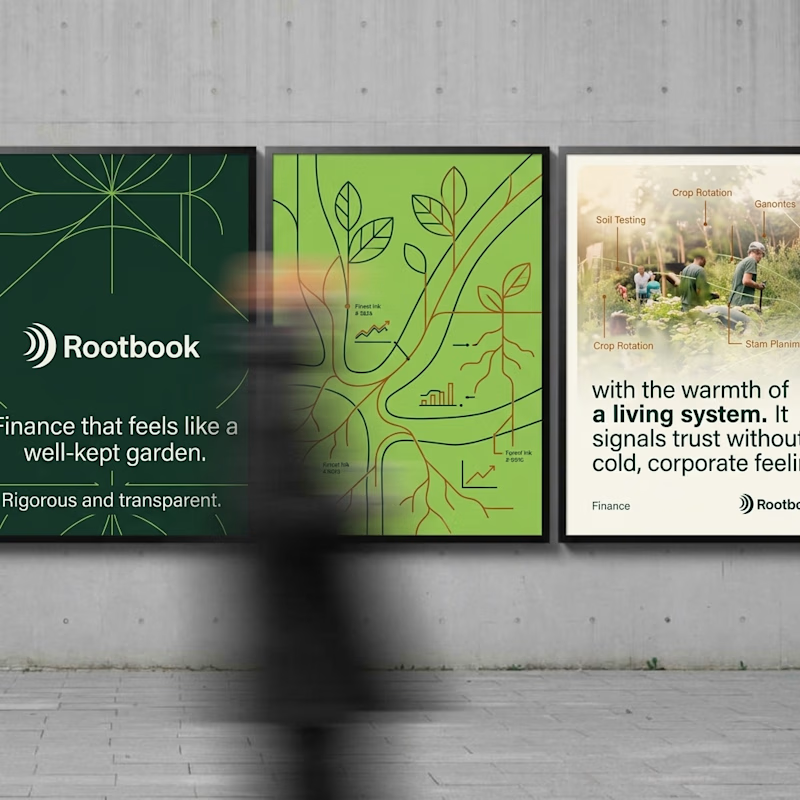
What does trustworthy finance look like to you?
A) Rootbook: Finance that feels like a well-kept garden.
B) Altair: The smarter way to manage your assets.
Two finance brands I’m designing, two completely opposite worlds. Which one gets your money?
28 voted
61%
18 voted
39%

46 votes
Closed

Rootbook wins for me. A finance brand that feels like a well kept garden is such a refreshing idea.

💼 A Professional Website That Builds Business Trust
First impressions matter — especially when businesses are looking for expert consulting services.
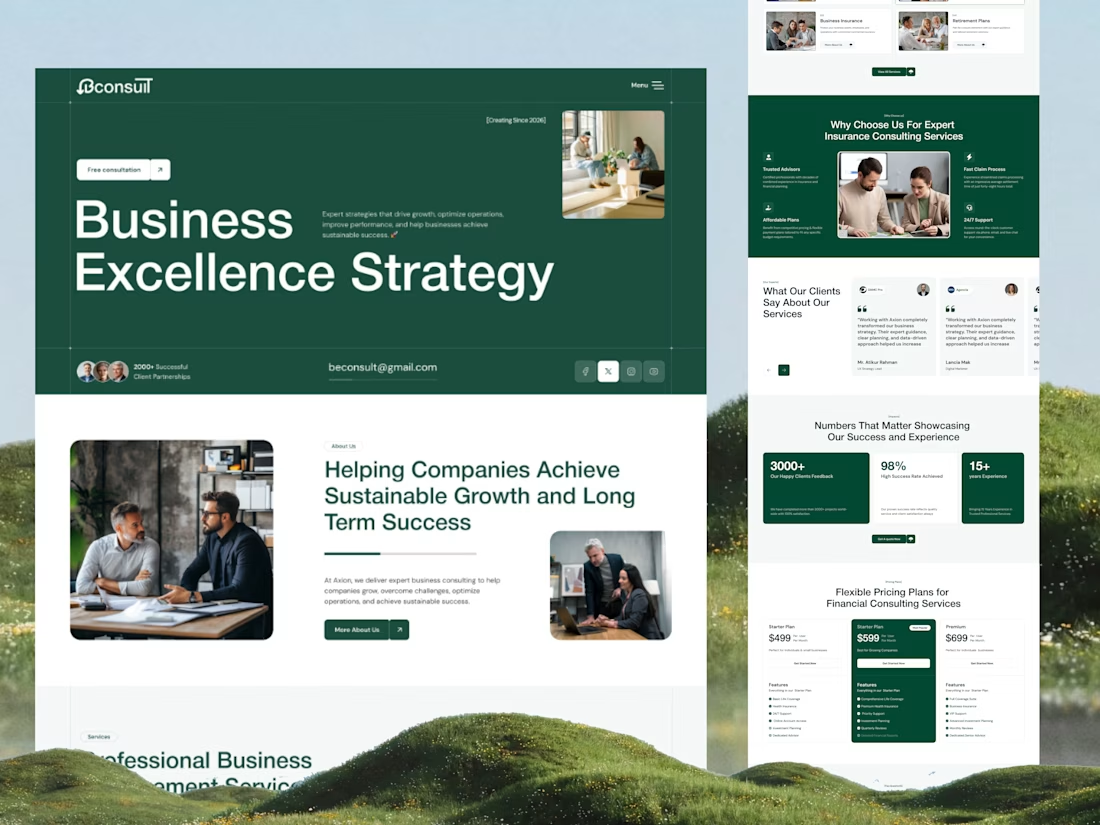
Introducing a modern business consulting website concept by OrdainIT, designed with a clean layout, elegant typography, and a premium dark-green color palette.
✨ Design highlights:
Professional hero section with a clear message
Structured business consulting services
Trust-building testimonials and statistics
Clean pricing plans and strong CTAs
Modern, responsive website layout
The goal is simple: turn a professional online presence into a better experience for potential clients.
At OrdainIT, we combine thoughtful UI/UX design with website development to help businesses stand out online.
💬 What makes you trust a business consulting website at first glance?
#WebDesign #UIUXDesign #BusinessWebsite #WebsiteDevelopment #LandingPageDesign #OrdainIT



Not bad

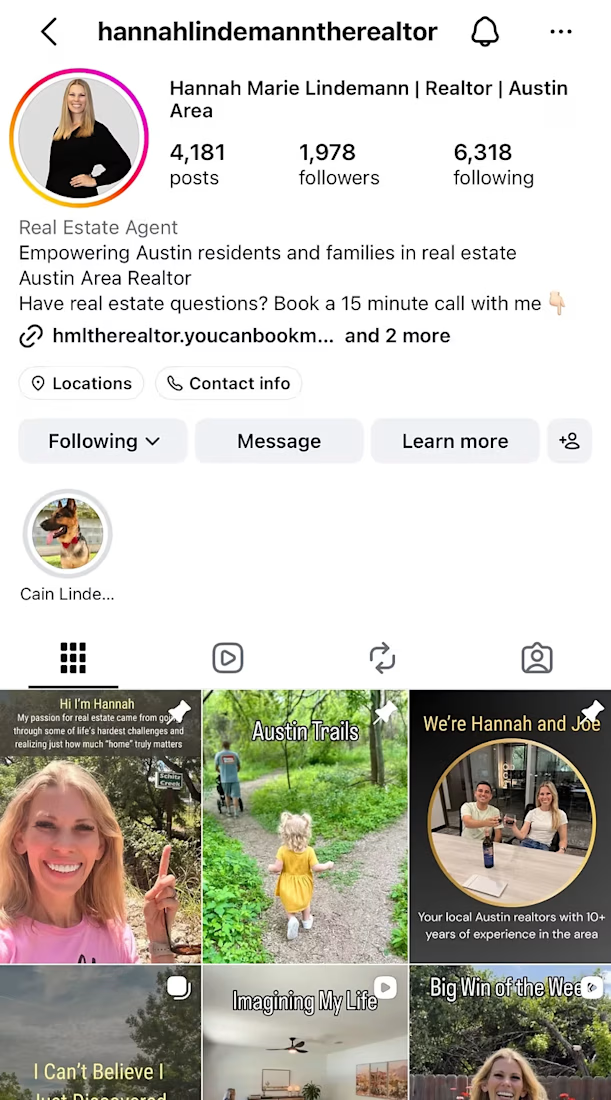
I worked as a Social Media Manager with a local realtor to increase brand awareness, maintain client retention, and generate leads.
I created a personalized marketing plan (revised monthly), updated her profile for SEO, established content pillars, and posted 4x per week on average.
Our time working together yielded steady growth in followers, views, and interactions. My client was no longer stressed about managing her social media, and dedicated more time to her business. Key results are as follows:
25 net followers gained int one month.
72.4K views and 316 interactions on one reel.


Such a good work!! Keep going!