The network for creativity
Join 1.25M professional creatives like you
Connect with clients, get discovered, and run your business 100% commission-free
Creatives on Contra have earned over $150M and we are just getting started
Back to feedPost

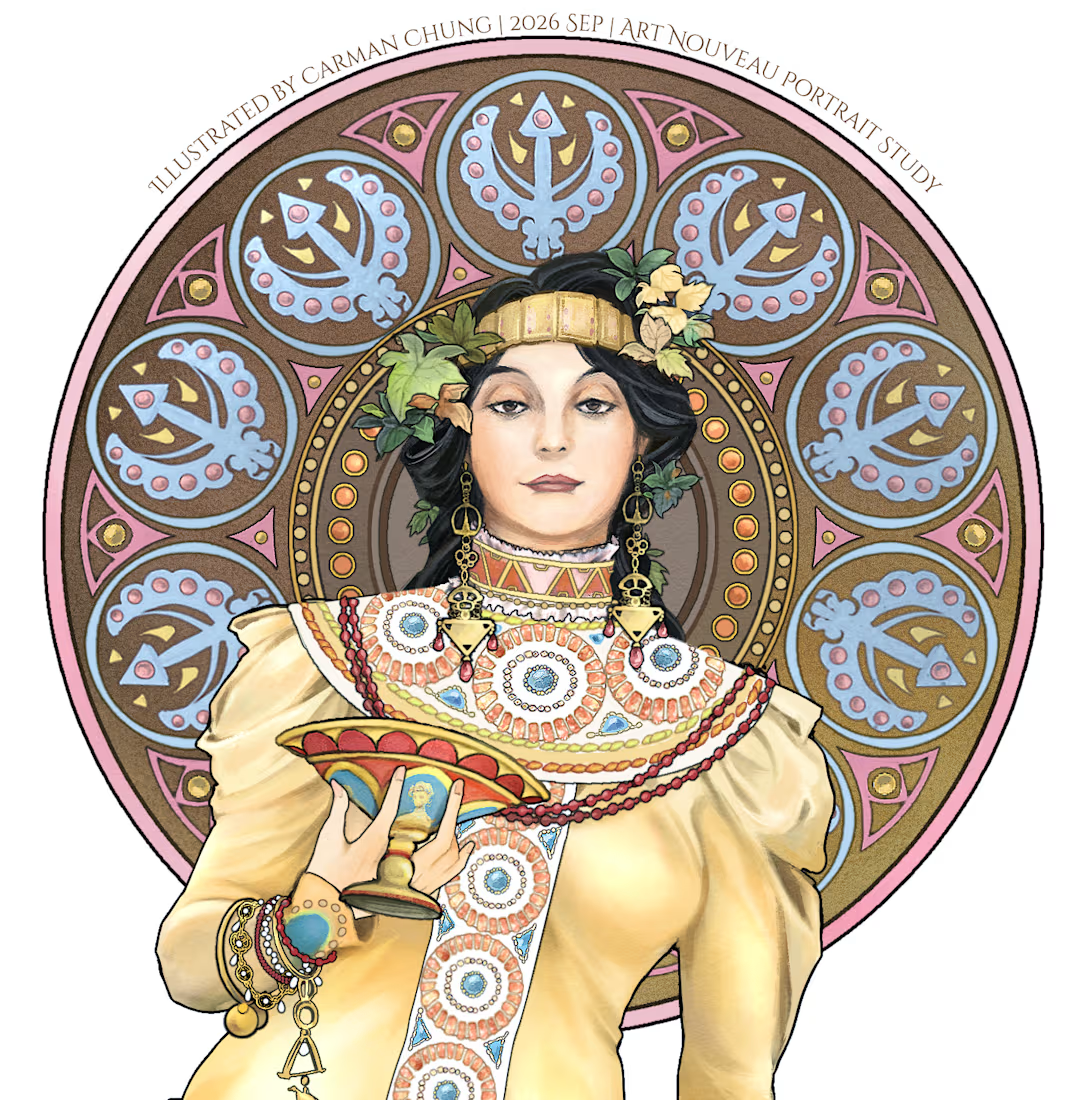
🎨Art Nouveau Portrait Study — After Alphonse Mucha
A personal Art Nouveau study after Alphonse Mucha’s Moët & Chandon Crémant Impérial (1899), created as a return to detailed portrait and ornamental illustration.
Rather than aiming for a faithful reproduction, I used Mucha’s original composition and silhouette as a framework while reworking the portrait, foliage, jewellery, costume details and decorative elements through my own drawing and rendering process.
The study became an exercise in rebuilding hand, colour and detail — particularly the balance between the figure, ornament and repeated motifs.
Personal study, 2026.
Original reference: Alphonse Mucha, Moët & Chandon Crémant Impérial (1899), public domain.

The network for creativity
Join 1.25M professional creatives like you
Connect with clients, get discovered, and run your business 100% commission-free
Creatives on Contra have earned over $150M and we are just getting started
Related posts

Press-on nails are my modern take 😊
I made one Recraft Style that draws press-on nails as if a mineral painter from 1810 had drawn them.
Many people do their nails now: at home, in minutes, a new set whenever they feel like it. Small brands sell them all over TikTok and Pinterest, and they need designs nobody else has. This Style gives them 200-year-old ones.
I trained it on six of James Sowerby's hand-painted rock prints (1802 to 1817), plus a gold ring and a stone table from the Met.
Try it in 3 steps 👍
1. Open the Style and paste: "Five almond press-on nails on cream paper, red jasper with gold veins, one nail with a small gold cabochon." Change "red jasper with gold veins" to try another stone, like "pale pink stone with dark red speckles".
2. Remove the Style, add your drawing as a reference, and paste: "Make these real press-on nails, same colors, white background"
3. Add the set as a reference and paste: "Hands covering the face, wearing these exact nails, red jasper with gold veins, white background"

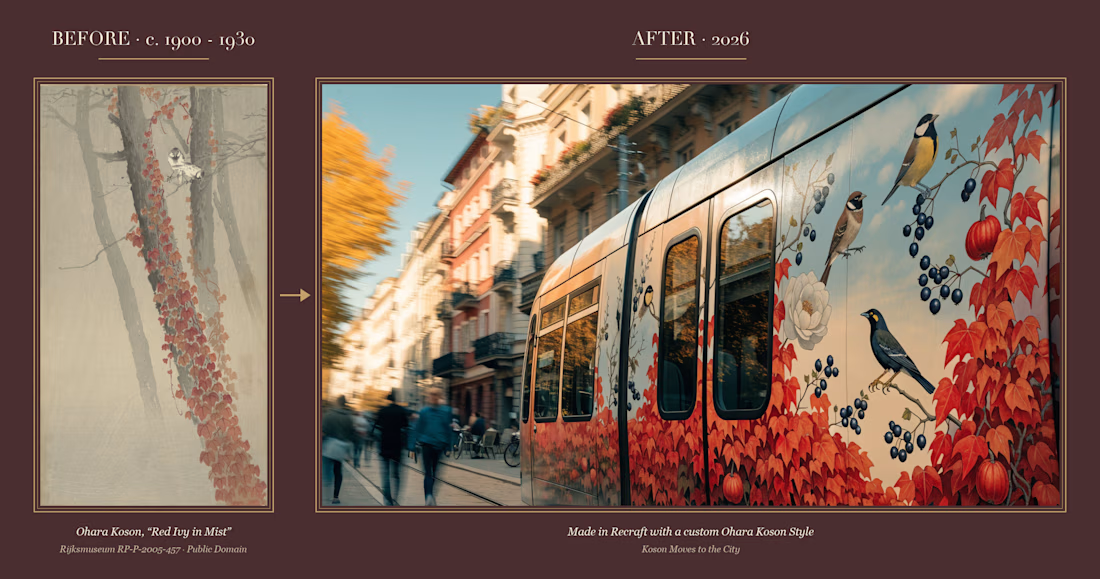
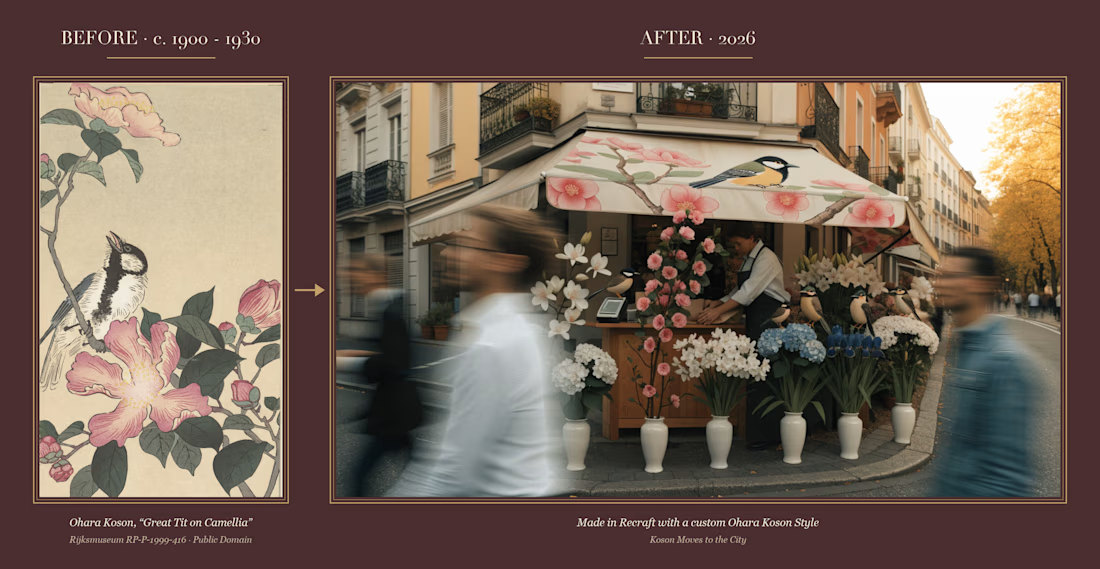
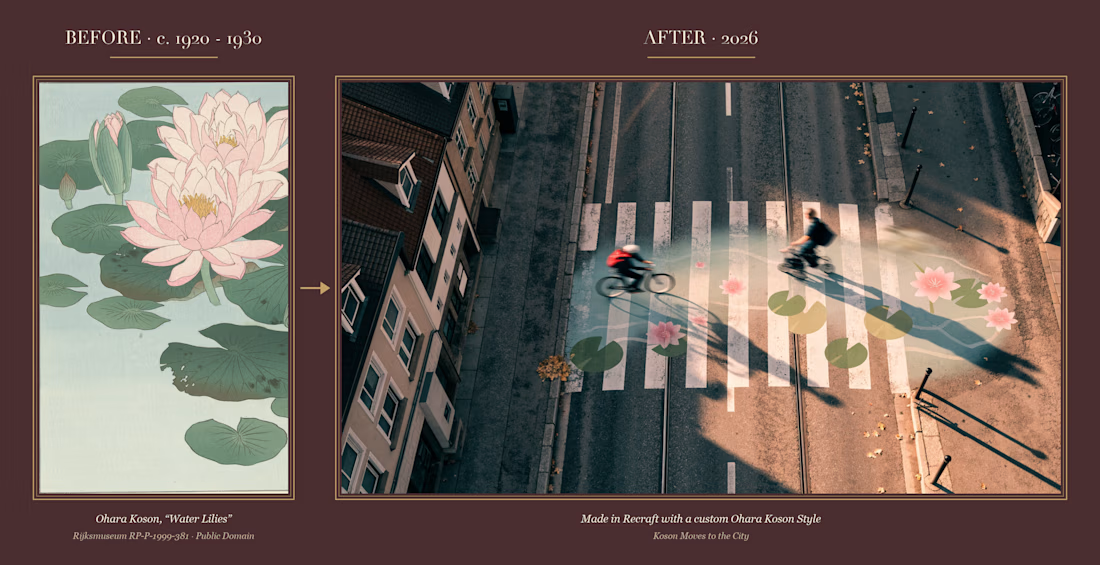
LOVED THIS ONE! While exploring the Rijksmuseum's public domain collection, I fell for Ohara Koson's quiet woodblock prints of small birds and flowers on soft, misty skies.
I trained a custom Recraft Style on ten of his prints from 1900–1930, cropping away signatures and margins so only his gentle colors, delicate lines and generous empty space remained.
Then I asked: what if his birds moved to the city? I used the Style to design for everyday 2026 life, from a tram wrap and a full-sleeve tattoo to café umbrellas, a building mural and a pedestrian crossing painted as a lily pond.
A century later, Koson's birds are still finding new places to land.


An interesting implementation.
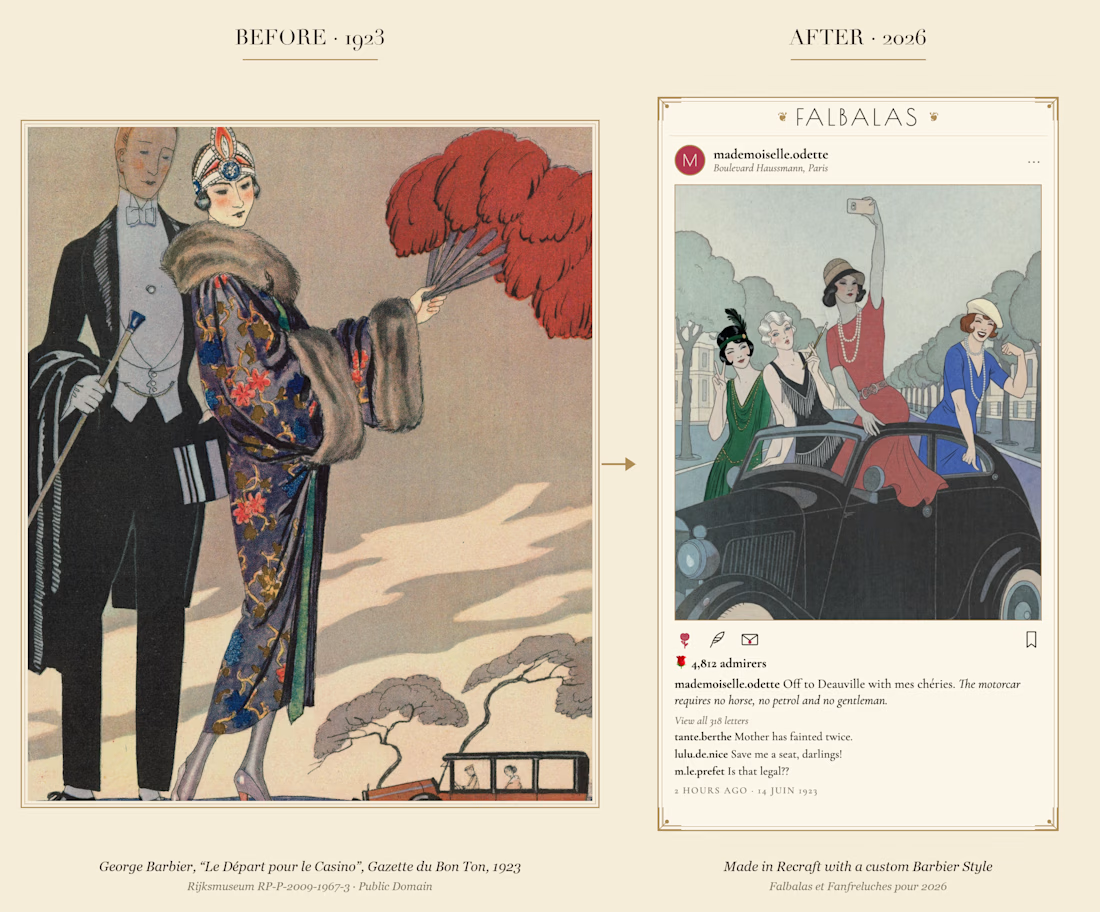
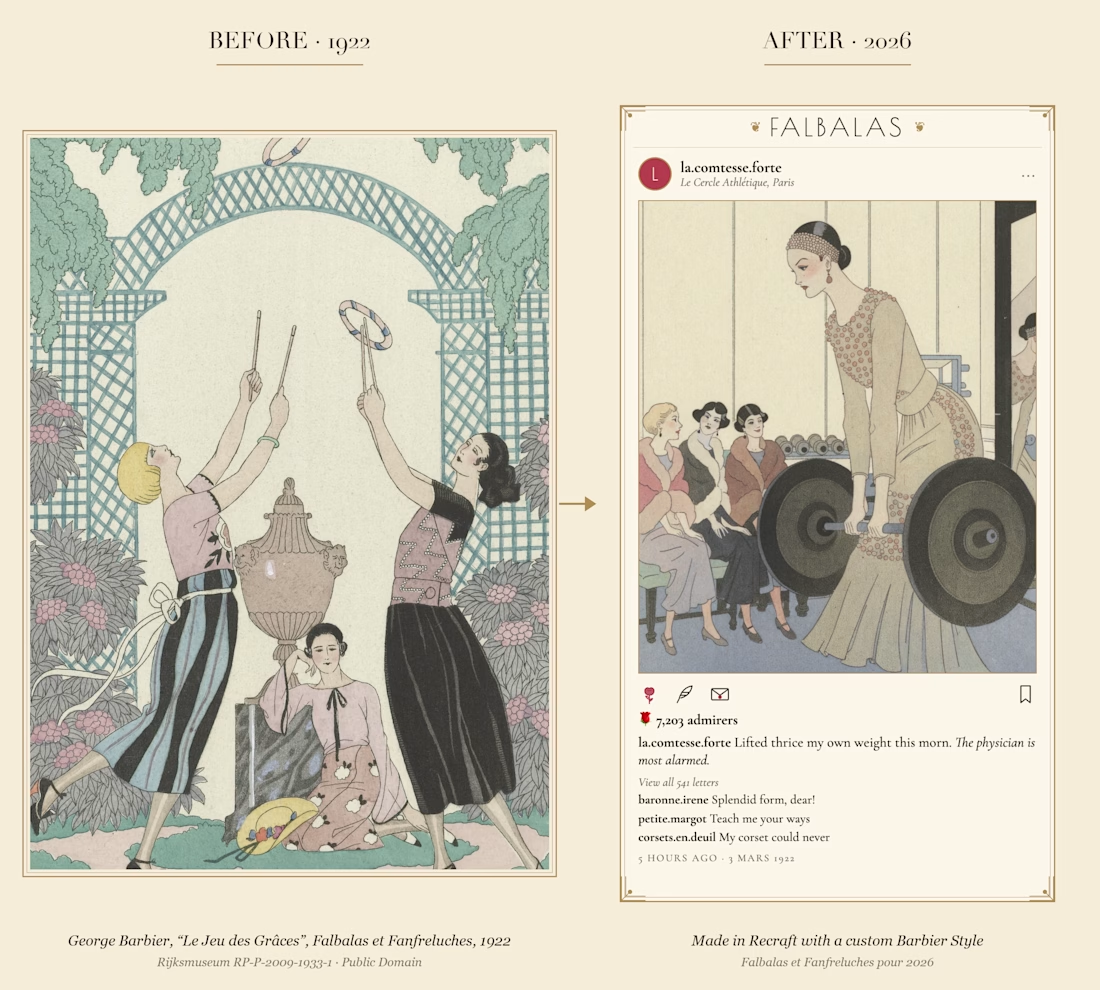
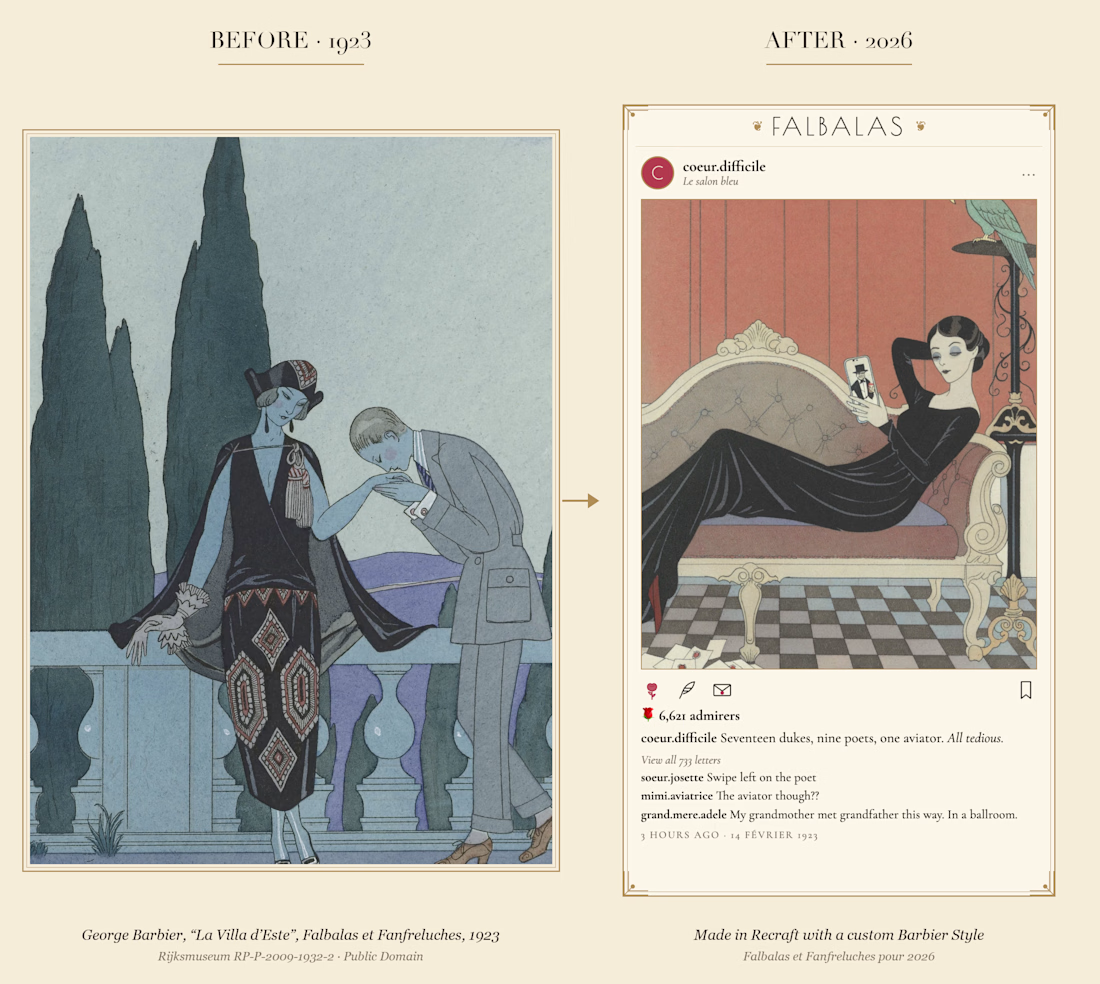
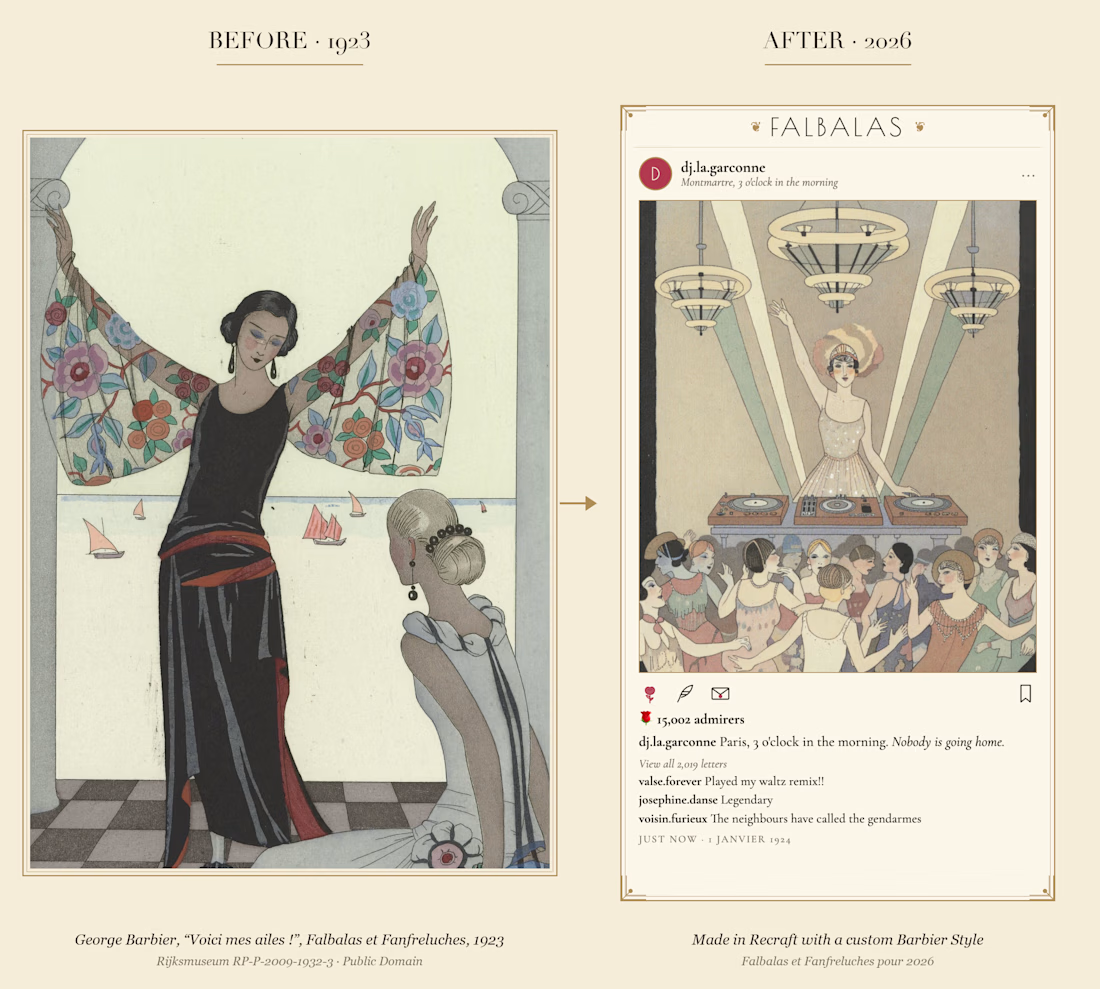
While digging through the Rijksmuseum's public domain collection, I found George Barbier's Falbalas et Fanfreluches, a 1920s almanac of hand-stenciled fashion plates that promised fashions "present, past & future."
I built a custom Recraft Style from 10 of his plates, cropping away captions and borders so only his jewel-toned colors, elegant linework, and
confident Parisiennes remained.
Then I gave Barbier the future edition he never got to make: his women deadlifting, running boardrooms, livestreaming makeup tutorials, swiping through suitors and DJing until dawn.
Each scene is presented as a post on Falbalas, an imaginary 1920s social feed where the admirers are many and the comments are scandalized.
It's a celebration of women taking up space, drawn in the style of an artist who always made them the most powerful people in the room.

Present, past, future..wow! All in one, amazing work!