The network for creativity
Join 1.25M professional creatives like you
Connect with clients, get discovered, and run your business 100% commission-free
Creatives on Contra have earned over $150M and we are just getting started
Back to feedPost


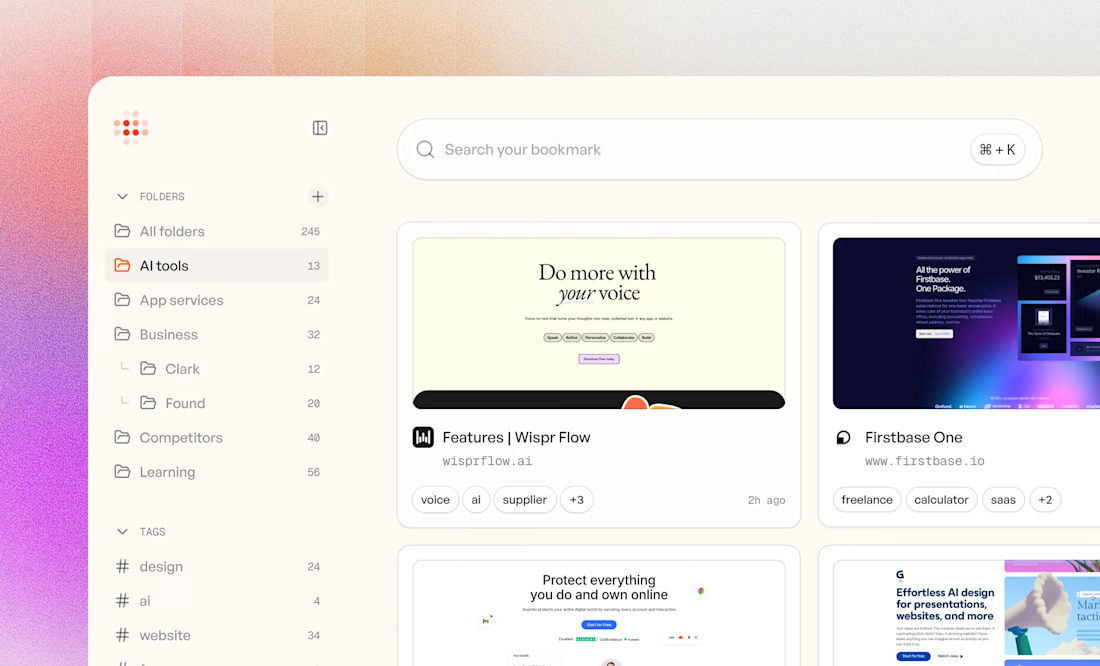
Most bookmark products fail at the exact moment people need them most: after a few hundred saved links, everything turns into a private landfill of vague titles, nested folders, and dead URLs. The link survives, but the reason for saving it disappears. Comparing sources means reopening every page and reading from scratch. I built Logged to change that outcome: a personal archive that stores the actual content and context behind each bookmark, then lets users query the whole thing through AI.
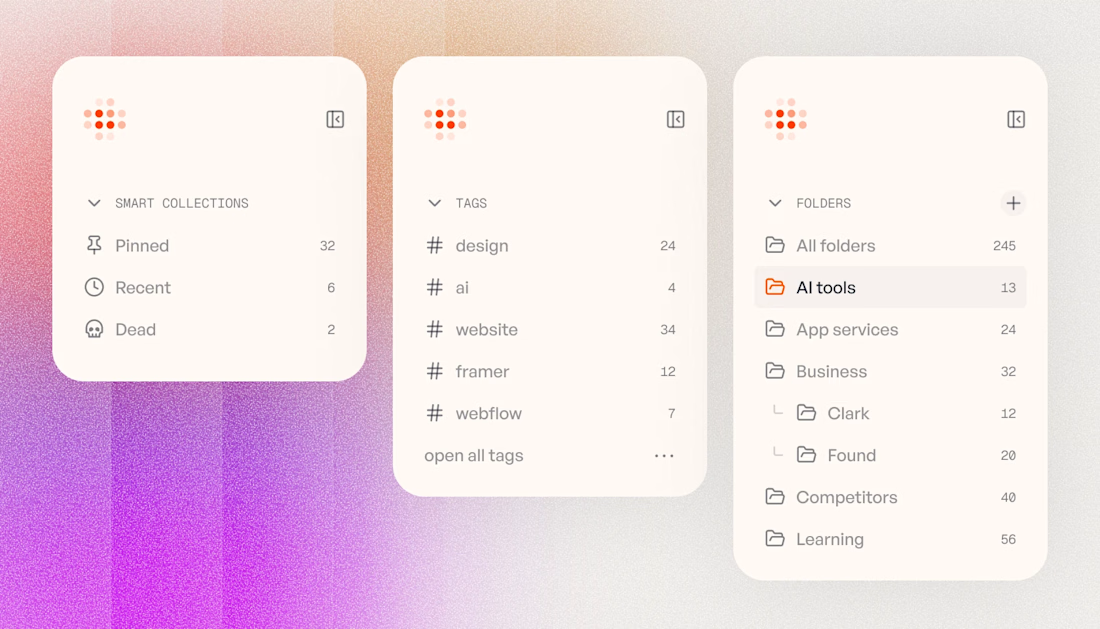
Logged is deliberately a single-user product, not a team workspace. That constraint mattered. The job was not collaboration, permissions, or shared knowledge bases. The job was making one person’s messy, long-running archive useful again without asking them to rebuild it from zero. So I kept the user’s existing folder structure exactly as it was and layered enrichment on top. That removed the biggest adoption barrier: nobody reorganizes 800 bookmarks just to test a new tool.
From there, every feature fixed a specific failure in traditional bookmarking. Each saved link can carry a memory note, so users stop asking “why did I save this?” AI-generated tags and user tags sit on top of folders, which means retrieval no longer depends on remembering a page title that never described the value of the page. Dead link detection automatically moves broken URLs into a separate list, which keeps the archive current instead of quietly decaying.
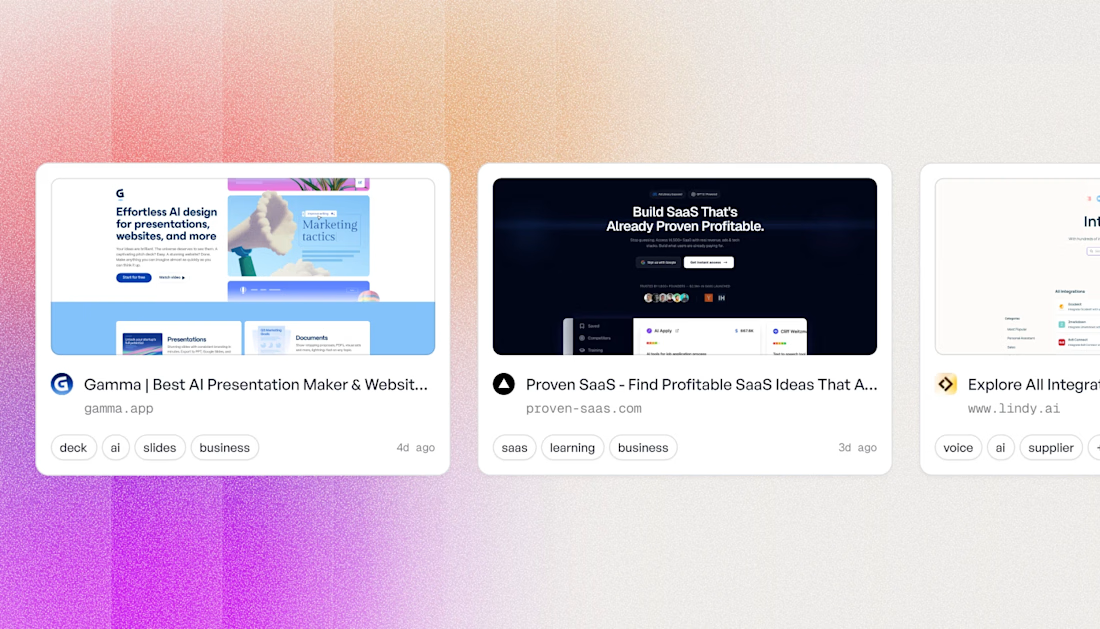
The most important product decision was also the most expensive one: Logged does not just save a pointer. It stores full metadata and up to 100,000 words of scraped content from each link. That changed the archive from a list of references into a searchable corpus. It costs more in storage and processing, and it is the reason the product works. Without that content layer, chat is decoration. With it, the archive becomes answerable.
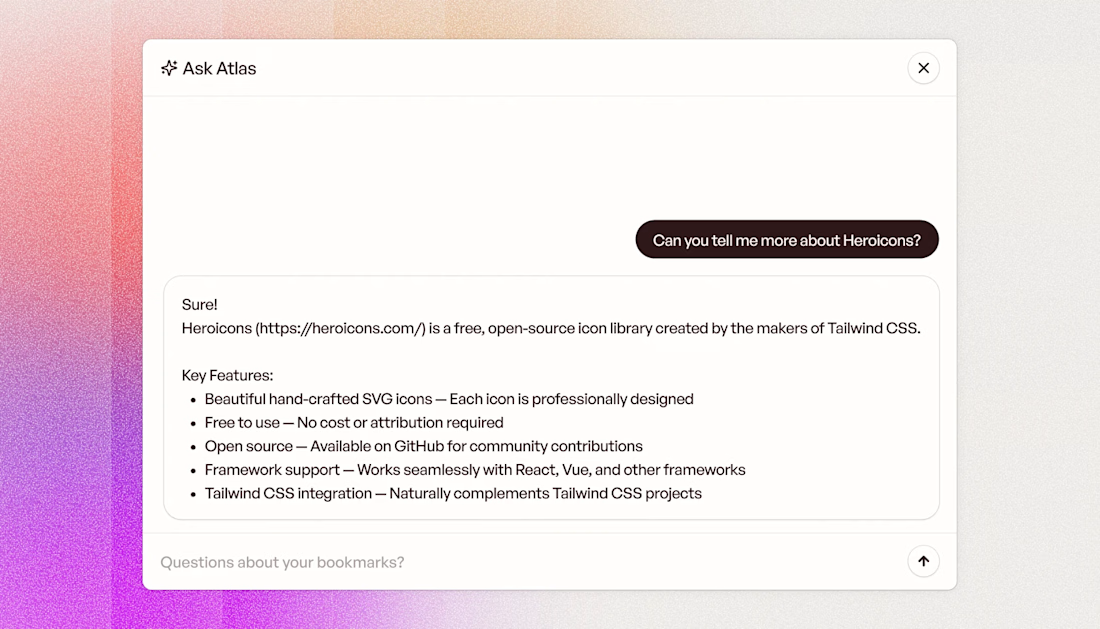
That is where Atlas comes in. I designed Atlas as the interface to the archive, not a chatbot pasted onto a bookmark list. Users can ask questions across saved sources, compare multiple sites, or retrieve something they only half remember saving, all without opening the original links. That turns research from a repetitive tab-opening exercise into a single query. For researchers compiling sources on one topic, that means instant comparison across saved material. For self-directed learners with courses, docs, and tutorials spread across dozens of tabs, it means the material stays usable after the tab is closed.
We built Logged in 4 weeks with custom product design by a unicorn designer, development in Claude Code, OpenAI agents for the internal research agent, and Supabase for database and storage. The short timeline forced sharp product decisions early, and the product shipped live with a Chrome extension, full brand, and complete product design.
The outcome is simple and concrete: archives hold thousands of bookmarks and stay navigable, where traditional folder systems break down after a few dozen. Users do not browse a link cemetery anymore. They talk to a memory tool.


The network for creativity
Join 1.25M professional creatives like you
Connect with clients, get discovered, and run your business 100% commission-free
Creatives on Contra have earned over $150M and we are just getting started





Related posts

Solene: skincare e commerce website, built in Framer
Skincare shopping should feel as good as the routine itself. For Solene, I designed and built a full online store with a soft, warm identity: a bold maroon and pink palette, big expressive type and real-skin photography.
What's inside:
A hero that sets the brand tone straight away
A Bestsellers section for quick browsing
Category pages for Cleanse, Hydrate and Protect
A shop page with price slider, filters, sorting and hover image previews
An Our Story page with brand values
A clean, confident footer
Need a website for your beauty or lifestyle brand? Let's talk.


The hover image previews on the shop page caught my eye - they let shoppers sense texture instantly without an extra click.

AI Sales Agent SaaS Landing Page
A modern AI Sales Agent & Sales Intelligence SaaS website designed for startups and growing businesses looking to automate sales workflows, streamline lead management, and boost revenue through intelligent automation and real-time insights. The design combines a premium SaaS aesthetic with a conversion-focused user experience, featuring clear product messaging, interactive sections, and a scalable interface built to support modern sales teams.

Amazing design

Still waiting to hear back from @Contra HQ
So I did what any designer would do: I made the card myself 😂
Brushed metal. Laser-engraved logo. Holographic Mastercard rings. Full 360° spin. I'm going to keep polishing this until the real one shows up in my mailbox. Your move, Contra 👀
(Concept / fan design, not an official Contra product..Yet 🙌 )


“Okay, this looks WAY too good 🔥 Contra needs to make this real 👀”