The network for creativity
Join 1.25M professional creatives like you
Connect with clients, get discovered, and run your business 100% commission-free
Creatives on Contra have earned over $150M and we are just getting started
Back to feedPost

🤖 The Future of AI Agents Isn't Just About Smarter Models. It's About Better Standards.
Here's something interesting happening in the AI ecosystem.
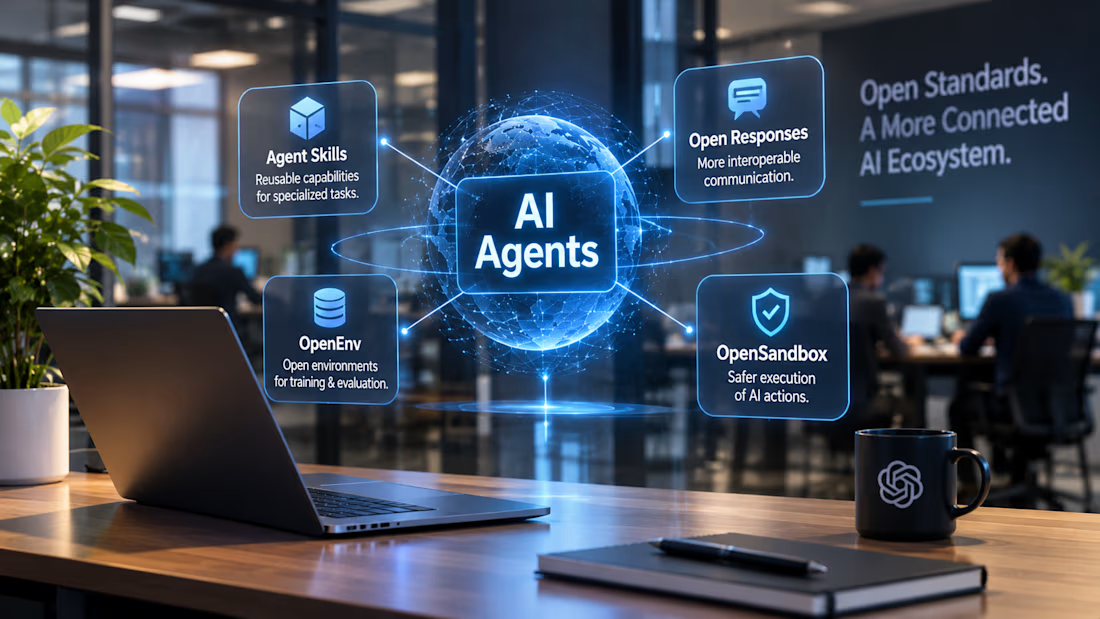
On October 22, 2026, the Agentic AI Foundation announced four new open projects designed to improve how AI agents work across different platforms.
Let's understand why this matters.
🔹 Agent Skills – Reusable capabilities that help AI agents perform specialized tasks.
🔹 Open Responses – An effort toward more interoperable ways for AI systems to communicate.
🔹 OpenEnv – Open environments for training and evaluating agents.
🔹 OpenSandbox – Infrastructure for safer execution of AI-generated actions and code.
Why should developers care?
Imagine building an AI agent that can:
Connect with multiple tools and services.
Execute complex workflows.
Reuse specialized capabilities.
Operate in controlled environments.
This requires more than a powerful LLM.
It requires reliable architecture, interoperability, security, and well-designed integrations.
My takeaway as an AI Engineer & Full Stack Developer:
The next big opportunity isn't simply building another chatbot.
It's building AI systems that can actually work together.
The developers who understand both AI models and the infrastructure around them will have an exciting role in shaping this future.
💬 What's more important for the future of AI agents: intelligence, interoperability, or security?
#AIEngineering #AIAgents #OpenSourceAI #ArtificialIntelligence #LLM #AgenticAI #SoftwareArchitecture #FullStackDevelopment #TechInnovation #FutureOfAI #Automation #Contra

The OpenSandbox piece is what stands out to me, because safe execution of agent actions matters most when the agent can touch patient-adjacent systems. In healthcare I'd want every tool call scoped to a narrow permission set and logged, so interoperability never quietly widens...
The network for creativity
Join 1.25M professional creatives like you
Connect with clients, get discovered, and run your business 100% commission-free
Creatives on Contra have earned over $150M and we are just getting started


Related posts

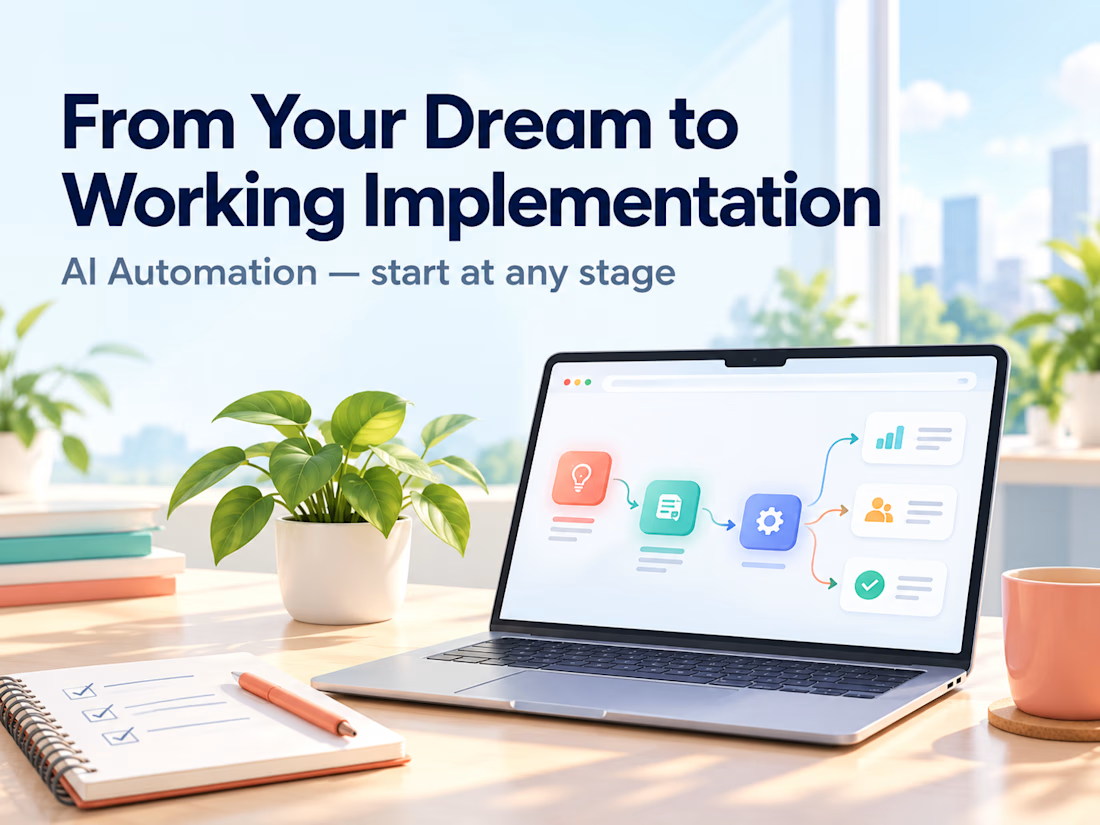
Clients often start with the same request: "Let's build an AI agent."
My counter-question is always: which manual process actually costs you time, errors, or money right now?
My selection rule: remove it first. If it can't be removed, simplify it. If it's still needed, automate it with a plain script. Only then add an integration or an agent. Often the best result is the process that no longer exists.
Safe automation means real scenarios, error handling, and alerts. Without alerts, a workflow can silently lose data for weeks. I always define what stays with a human and what goes to the system.
Question for you: which process would you automate first, and why is it still manual?
Service for audit and implementation: https://contra.com/s/BmWLbgFU-ai-automation-from-your-dream-to-working-implementation?r=auto_booster



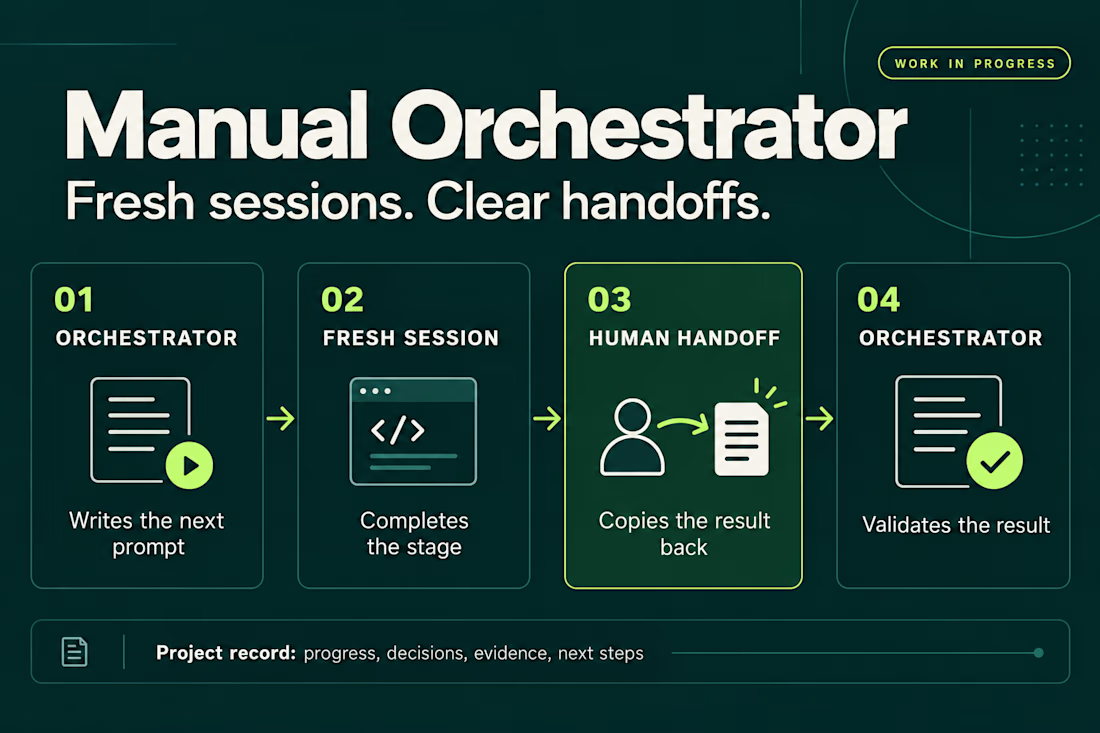
I’ve been working on a small skill called Manual Orchestrator to make longer projects with AI agents easier to manage.
The problem started with a familiar situation: one chat would accumulate plans, implementation details, corrections, and test results. By the time I was ready for the next phase, I wanted a fresh conversation without losing the decisions we’d already made.
Manual Orchestrator gives that process some structure. One chat acts as the orchestrator: it breaks the work into stages and writes a prompt for the next one. I run that prompt in a new session, then bring the result back. The orchestrator reviews it against the stage’s criteria before preparing the next prompt. If something needs fixing, I go back to the same worker session.
The skill also keeps a record in the project with the current stage, decisions, evidence, and next steps. That makes it easier to pause, resume, or hand the work to another session.
The handoff is manual. I choose when to open a session and carry the result back. The orchestrator and worker sessions can also use different agent CLIs, with the prompt adapted to the capabilities available.
It’s open source and still a work in progress. I’m using it to learn what helps in practice and where the workflow needs to improve. Installation has been checked for Codex, Claude Code, and Gemini CLI, but the full workflow hasn’t been tested across every CLI or version.
If you try it, I’d be interested in hearing what works and where it gets in your way.

NO SIGNAL — experimenting with 3D, AI & web design. 🛹
Created this 3D skateboard in Spline with a little help from AI, then turned it into an interactive website — also with AI's help.
Just exploring new tools, trying things out, and seeing where creativity takes me.
Follow me — I'll be sharing the 3D skateboard model for free soon!


Absolutely stunning!!🔥