The network for creativity
Join 1.25M professional creatives like you
Connect with clients, get discovered, and run your business 100% commission-free
Creatives on Contra have earned over $150M and we are just getting started
Back to feedPost

You don’t have to get the first version right. You just have to start.
One thing I’ve genuinely started to appreciate about Product Design is that you don’t need to have the perfect answer on day one. You need to create a strong enough starting point to learn from.
For me, that means starting with something simple, clean and clear. A foundation that can be discussed, challenged and improved.
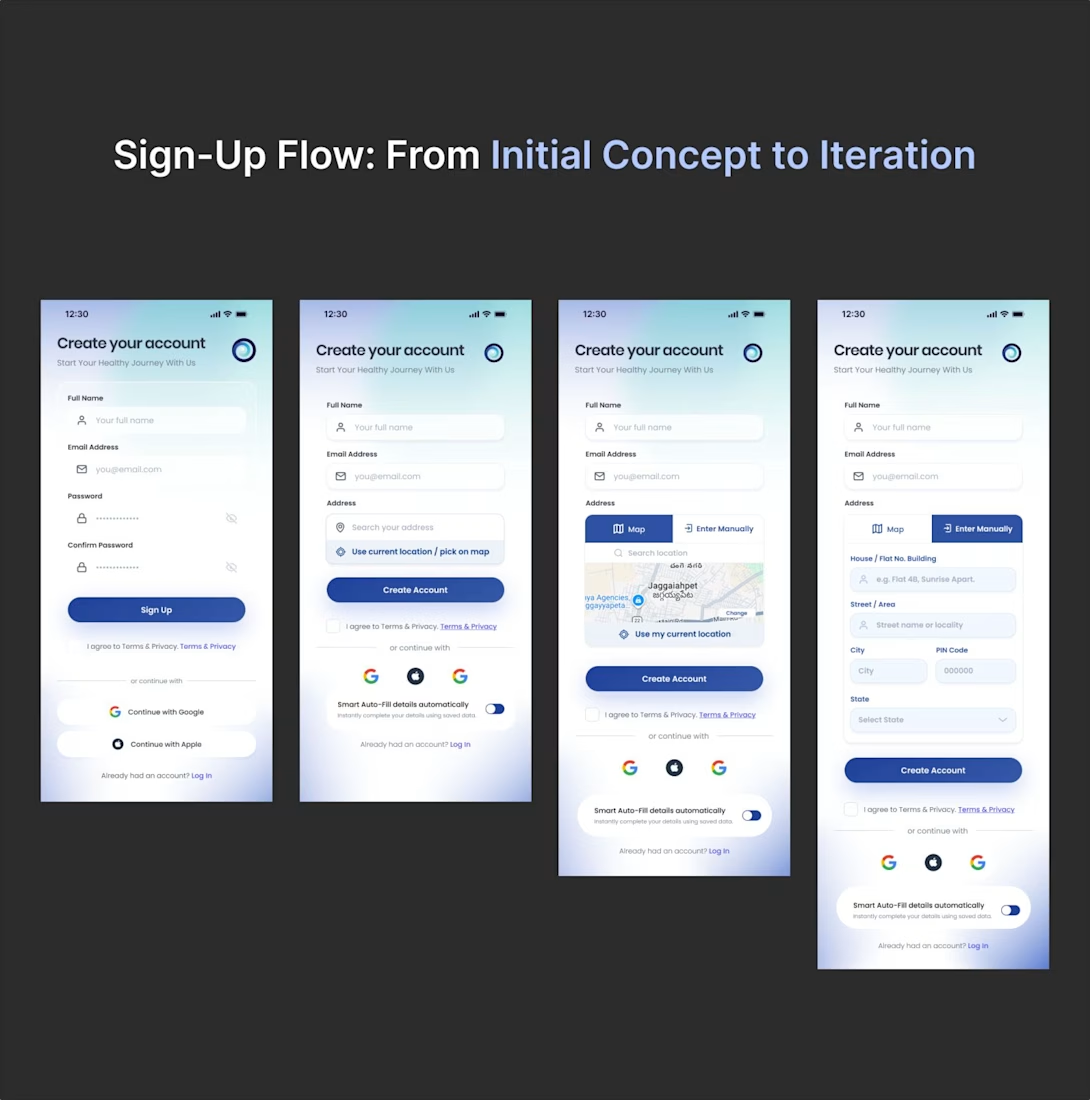
That’s exactly what happened with this sign-up flow.
The first version was straightforward. But once I started getting feedback and discussing the experience with the team, I began looking beyond the screens themselves.
I started asking:
Is this genuinely easy for the user?
Does it solve the actual product requirement?
Does it align with the PM and stakeholder expectations?
Does it contribute to the business goal?
Can we remove friction without adding unnecessary complexity?
Is there a better way to make the experience more flexible and inclusive?
And somewhere along the way, my perspective on feedback changed.
I no longer see feedback as “What’s wrong with my design?”
I see it as “What can we make better from here?”
Honestly, I enjoy finding that next opportunity for improvement.
Because every iteration is a chance to make the experience more thoughtful, not just visually, but from a user, product and business perspective.
And I think that’s an important part of being a Product Designer.
We’re not designing in isolation.
We’re constantly balancing user needs, product requirements, business goals, technical feasibility and stakeholder perspectives to move toward a solution that works in the real world.
So, for me, iteration isn’t about changing a screen again and again.
It’s about learning, questioning assumptions, responding to feedback and making better decisions with every version.
Start simple.
Listen carefully.
Iterate intentionally.
Build with purpose.
Which part of your design process usually goes through the most iterations?
hashtag#ProductDesign hashtag#UXDesign hashtag#UIDesign hashtag#UXUI hashtag#DesignProcess hashtag#Figma hashtag#Prod
The network for creativity
Join 1.25M professional creatives like you
Connect with clients, get discovered, and run your business 100% commission-free
Creatives on Contra have earned over $150M and we are just getting started




Related posts


🔥 If you were building an AI Wellness Companion today, would you design a feature or a brand people could actually form a relationship with?
I explored two directions for the same product.
🅰️ Emotional Companion
Built around context, continuity and the feeling that it remembers you.
🅱️ Character Led Companion
A recognizable character that becomes the emotional anchor of the product.
Imagine you’re the founder. Which concept and character would you bet the brand on for the next few years?
Which feels more distinctive, memorable and scalable?
👇 A or B and why?
#AI #WellnessApp #AICompanion #ProductDesign #MobileAppDesign #BrandDesign #UXDesign #HealthTech #AsolDesign


30 voted
39%
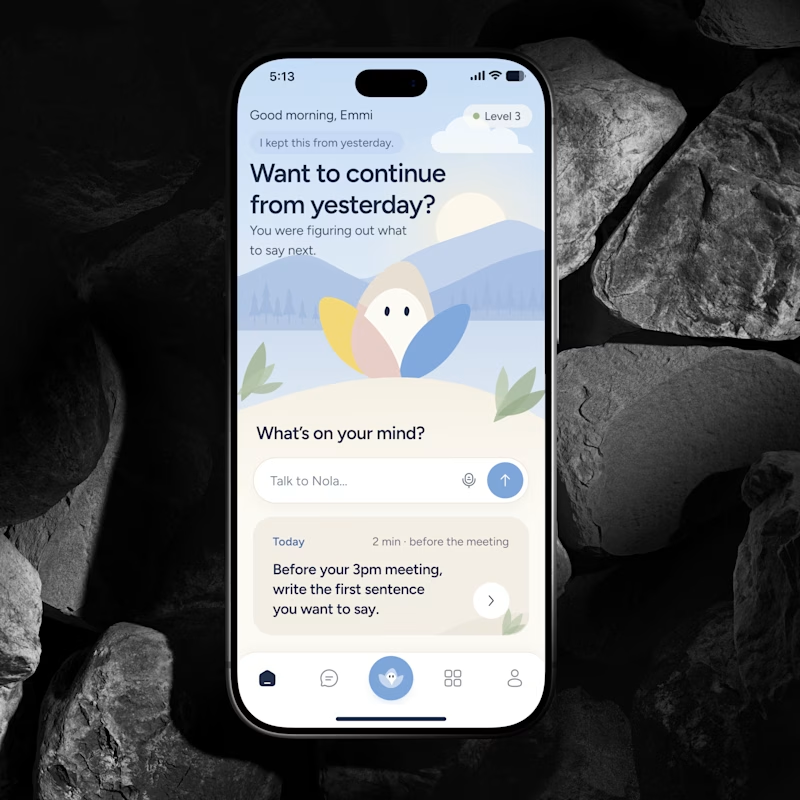
46 voted
61%
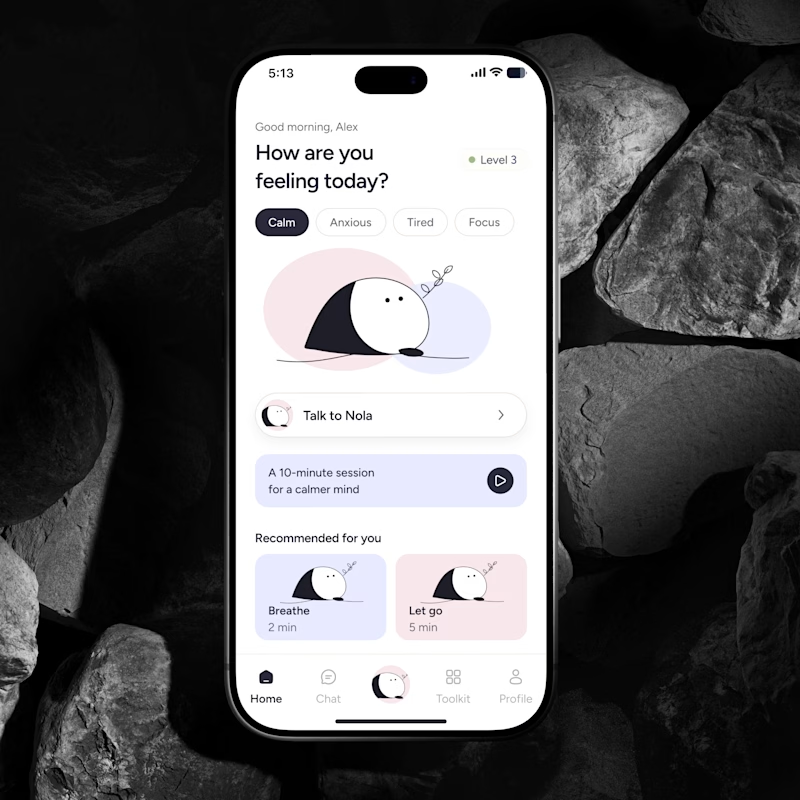
76 votes
Closed

Character definitely wins here. I think it's like verion2.0 of the emotional one.


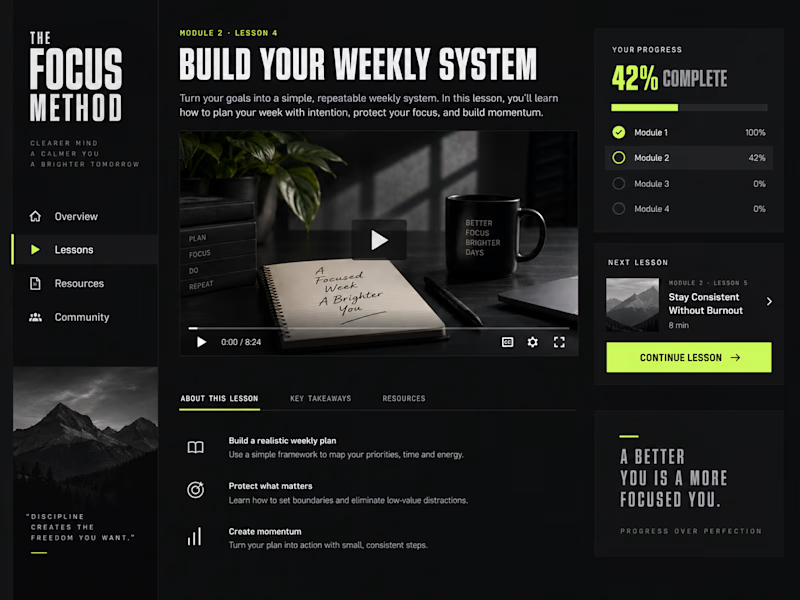
Same course, two completely different Kajabi product designs—which would you rather learn inside?

23 voted
61%
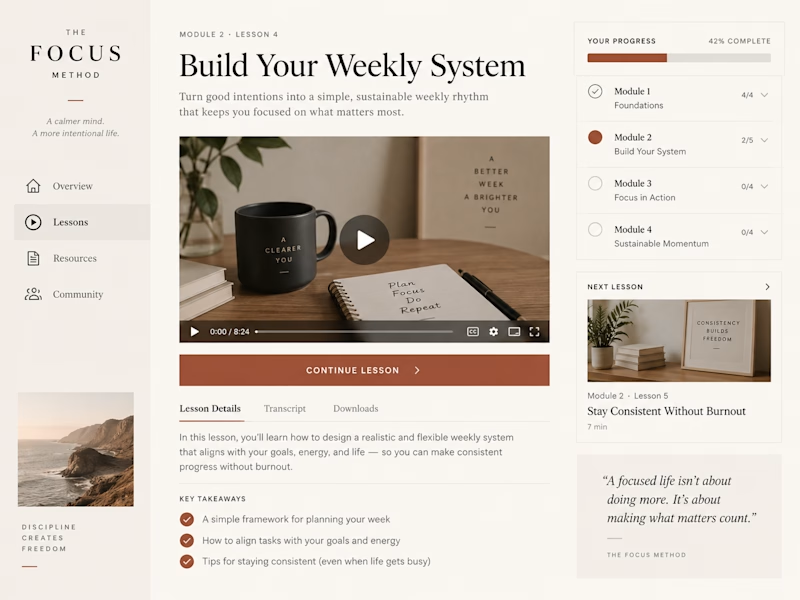
15 voted
39%
38 votes
Closed

Editorial for sure

Most consulting sites try to look impressive. This one tries to look trustworthy.
Hallam, a Framer template for boutique advisory firms. Work in progress. ✨


The arches in that hero shot do a lot of the trust-building on their own, they read stable and established without a single line of copy yet. Was there a version of this template that leaned harder into typical consulting-site cues, like team headshots or client logos up top, before you stripped it back to this?