The network for creativity
Join 1.25M professional creatives like you
Connect with clients, get discovered, and run your business 100% commission-free
Creatives on Contra have earned over $150M and we are just getting started
Back to feedPost

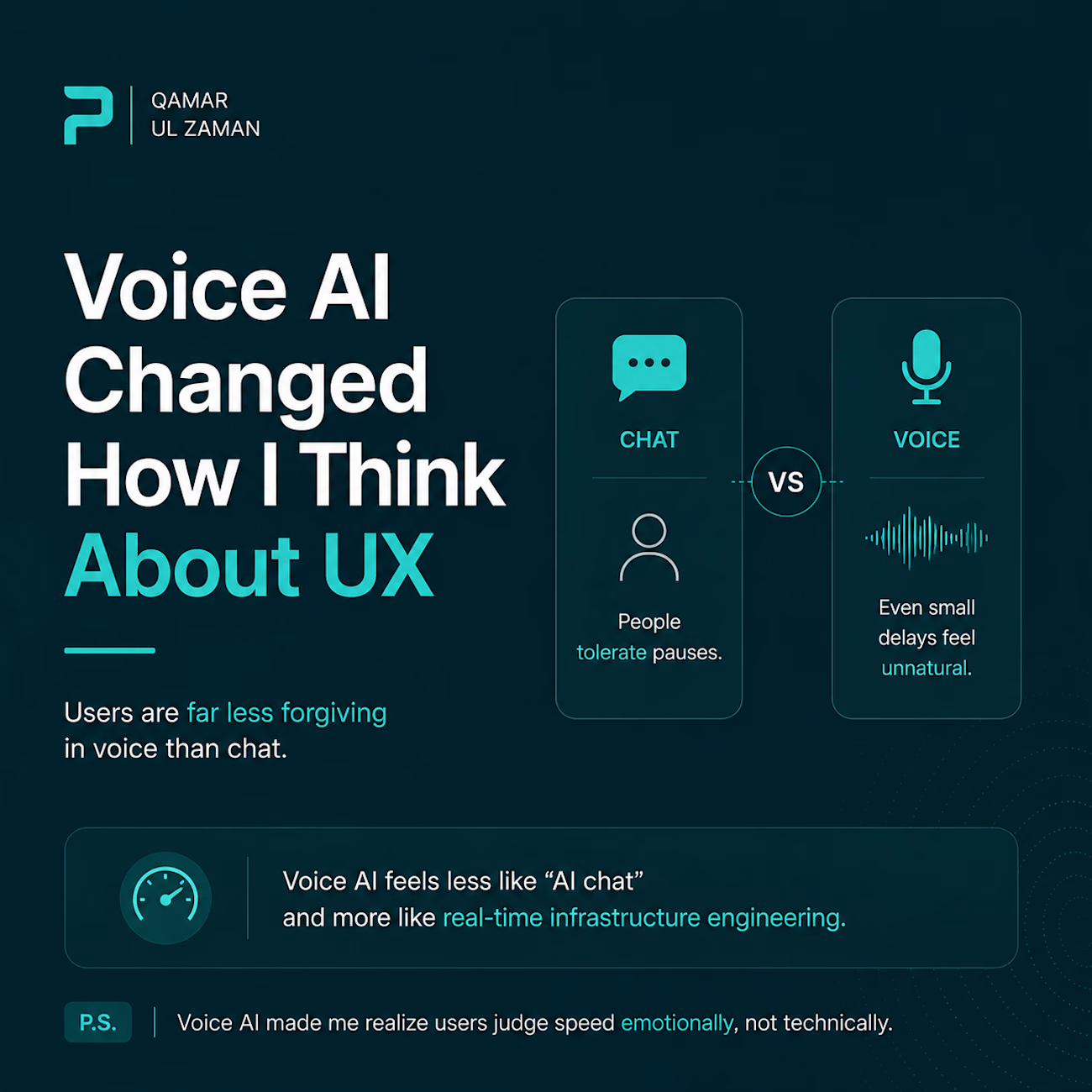
Building voice AI completely changed how I think about UX.
One thing became obvious very quickly:
Users are far less forgiving in voice than chat.
In chat,
people tolerate pauses.
In voice,
even tiny delays feel broken.
That changes engineering priorities fast.
You suddenly become obsessed with:
streaming responses
interruption handling
memory speed
async orchestration
low-latency retrieval
fast fallback systems
The interesting part?
Voice AI stops feeling like “AI chat.”
And starts feeling much more like real-time infrastructure engineering.
I think a lot of teams underestimate how aggressively latency impacts trust in voice systems.
Something that feels “slightly delayed” technically can feel completely unusable emotionally.
The demo usually sounds impressive.
Production latency changes everything.
Curious if anyone building voice AI systems has noticed how aggressively latency impacts user trust.
The network for creativity
Join 1.25M professional creatives like you
Connect with clients, get discovered, and run your business 100% commission-free
Creatives on Contra have earned over $150M and we are just getting started





Related posts

AI didn't take my job. It became my business partner.
Every designer I know is asking the same question right now: what's left for us when AI can make something pretty in 10 seconds?
Here's my honest answer, from branding and from product.
The way I work has completely changed. Moodboards, variations, mockups, even clickable prototypes: what used to take days now takes hours.
But here's what nobody says out loud: people are making a lot of pretty things. And pretty doesn't build a brand.
Pretty doesn't tell a stranger why they should trust you.
Pretty doesn't make your offer clear in 5 seconds.
Pretty doesn't fix the screen where users give up.
That part is still on me. It's actually most of my job now.
So I stopped seeing AI as a competitor. It does the drafts, I do the thinking, and my clients get both, faster.
Designers, how has AI changed the way you work this year?

Wonderful presentation and I like your thought you shared

AI Plant Care & Disease Detection Mobile App Design
An AI-powered Plant Health Monitoring mobile app designed to help users identify plant diseases, track plant health, monitor environmental conditions, and receive personalized care recommendations. The app combines intelligent diagnostics, smart reminders, and real-time health insights to make plant care simple, proactive, and accessible for both home gardeners and plant enthusiasts.


Premium and eye catching work


The AI reply comments on here are out of control.
You will build your network and clientele 5x faster if you just respond with your real thoughts, feedback, etc.

I can't tell you how much I agree with this. Going through school at the same time as developing my skill sets and seeing the 'great job, good post' is just... I want to be nice and not say 'a waste of everybody's time' but. Definitely low effort. Let's talk about things!!