The network for creativity
Join 1.25M professional creatives like you
Connect with clients, get discovered, and run your business 100% commission-free
Creatives on Contra have earned over $150M and we are just getting started
Back to feedPost

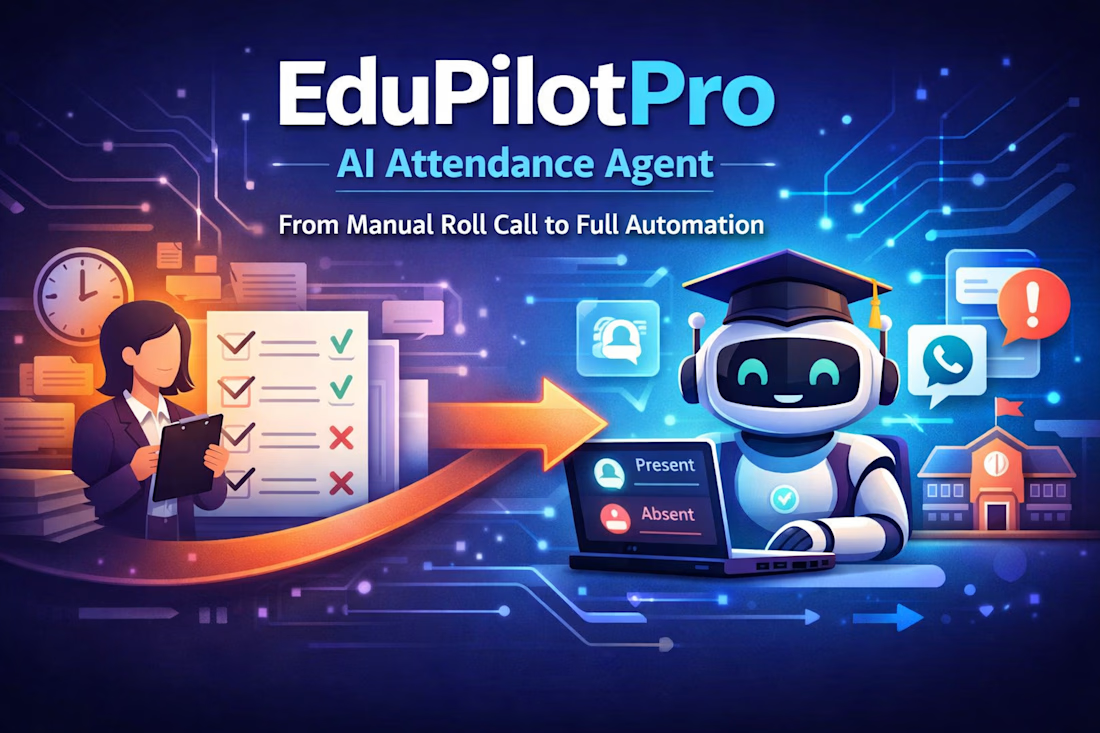
The AI attendance agent that replaced manual roll calls
Schools still take attendance the same way they did 30 years ago. A teacher calls names. A student says "present." Someone marks a register. Multiply that by every class, every period, every day, and you've got hours of dead time baked into the system.
When I built the AI Attendance Agent for EduPilotPro, the goal was simple: make attendance autonomous. No teacher input. No manual marking. Just an agent that handles it.
Here's the part that made the architecture interesting.
Why two LLMs?
The agent runs on Google Gemini as the primary model. Gemini handles the core reasoning: interpreting attendance data, resolving edge cases (late arrivals, partial attendance, substitutions), and generating structured outputs that feed directly into the school's system.
But relying on a single cloud LLM for a school environment is a risk. API latency spikes. Rate limits during peak hours when every classroom hits the system at once. Outages that turn your "autonomous" agent into a blank screen.
So I added WebLLM as a fallback layer. WebLLM runs inference directly in the browser. If Gemini is slow or unreachable, the agent degrades gracefully to local inference instead of failing entirely.
The trade-off is real:
Gemini gives you stronger reasoning and richer context windows, but you're dependent on network + API availability
WebLLM gives you resilience and zero-latency local inference, but with a smaller model and less sophisticated outputs
For attendance (which is structured, repetitive, and doesn't need GPT-4-level reasoning), the fallback model handles it fine. The user never notices the switch.
The stack underneath
Node.js on the backend. PostgreSQL for persistence. The agent writes attendance records directly to the database with full audit trails, so administrators can trace every decision the AI made and why.
No fancy orchestration framework. No LangChain. Just clean Node services that call the right model, validate the output, and write to Postgres.
What I'd tell founders building AI agents
Your agent will go down. Plan for it. The "two LLM" pattern (cloud-primary, local-fallback) works well for any task where the fallback model is competent enough to handle the 80% case. Attendance qualifies. Complex medical reasoning probably doesn't.
Build the fallback before you need it. You won't have time when Gemini returns a 429 at 8:45 AM on a Monday.
→ Full case study: EduPilotPro AI Attendance Agent
The network for creativity
Join 1.25M professional creatives like you
Connect with clients, get discovered, and run your business 100% commission-free
Creatives on Contra have earned over $150M and we are just getting started


Related posts


If AI can make anything, what still makes something yours?
I've always wanted to open a cozy little café. Books on the shelves, jazz on vinyl, matcha on the menu, and stories tucked into every corner.
So I imagined one.
Using Envato's AI tools and assets, I built the identity for Stories' House. The logo, menus, packaging, and brand system all came together through AI.
But the soul didn't.
That came from the prompts I wrote, the references I obsessed over, the directions I rejected, and the feeling I kept chasing until everything belonged to the same world.
AI created the visuals.
I directed the vision.
Here's my entry for the #EnvatoChallenge.
What's one creative choice you've made that AI couldn't have made for you?
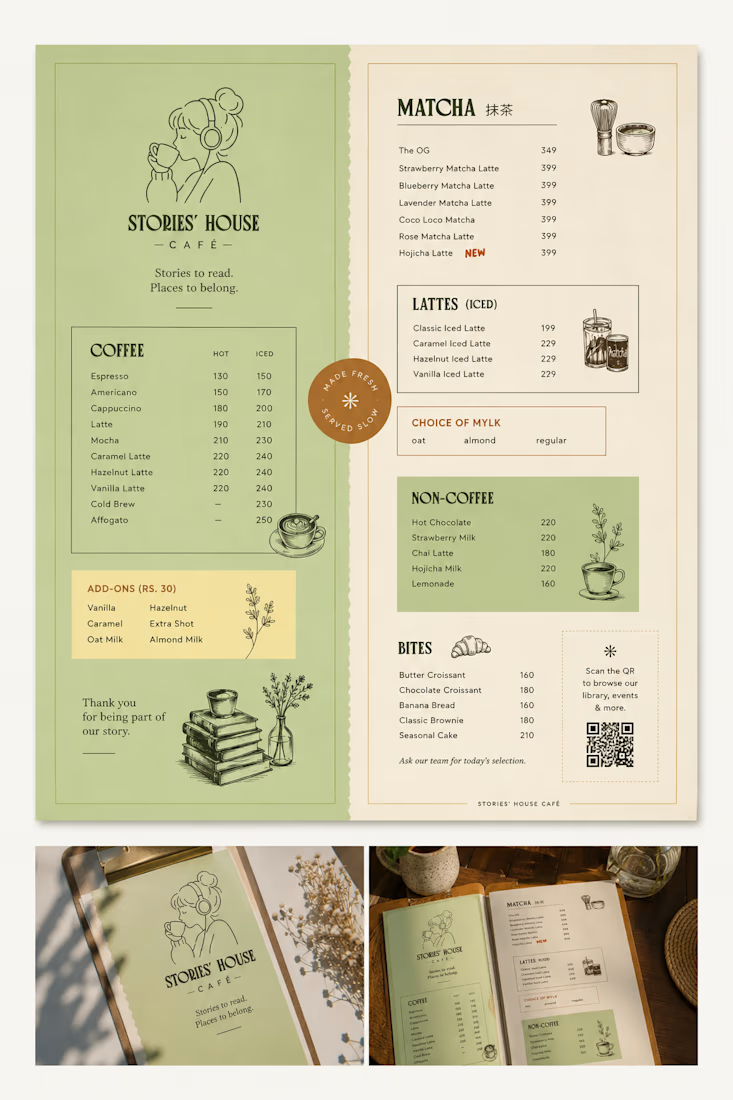

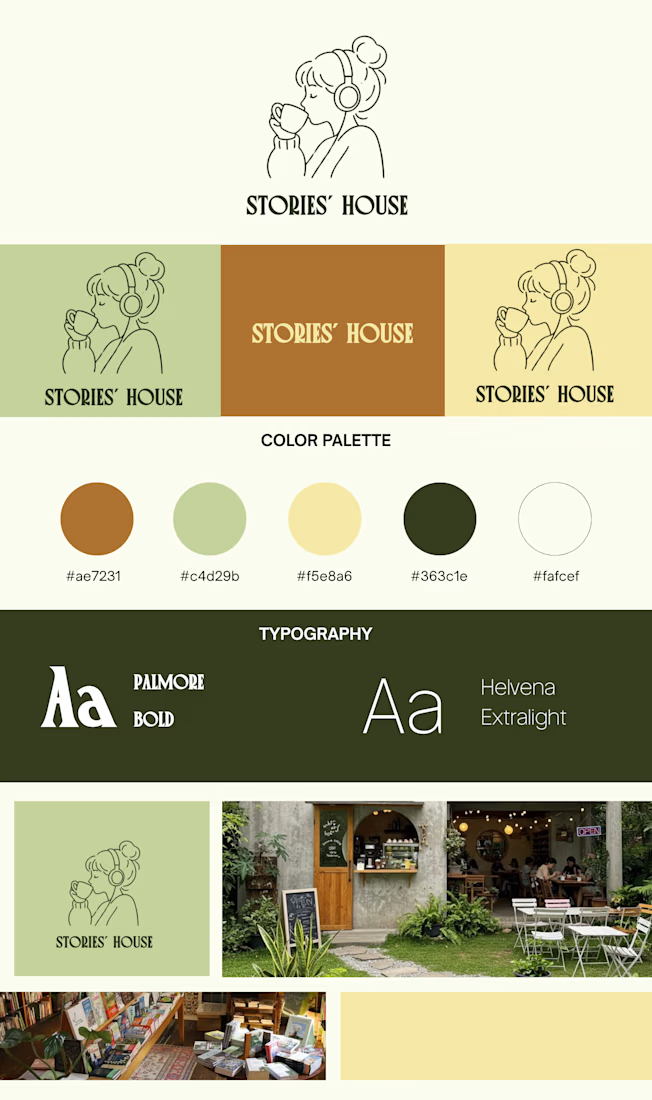
Here's the walkthrough of how I made the brand identity for the cafe of my dreams. Also catch my human behind the AI moment where I use the inspiration from Pinterest mixed with the assets created by Envato to create the desired output:)

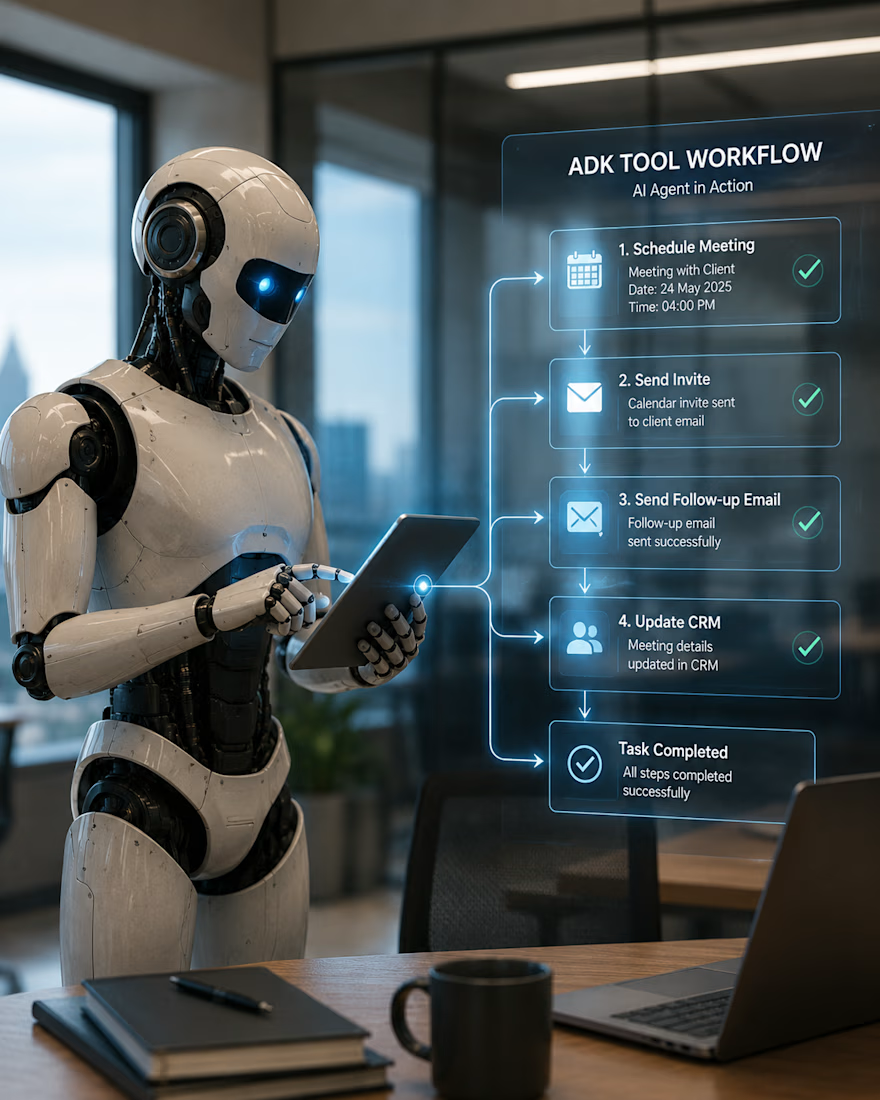
ADK (Agent Development Kit) might be one of the most important AI technologies developers should start learning.
We've spent the last few years building AI that can answer questions.
Now, with ADK, we're building AI that can perform tasks.
Think about it:
Instead of asking AI "How do I book a meeting?"
You can simply say:
"Book a meeting with the client, send the invitation, and update the CRM."
An AI Agent built with ADK can understand the request, use APIs and tools, and complete the workflow.
That's the difference.
ADK enables developers to build AI agents that can:
✅ Use APIs
✅ Access databases
✅ Connect external tools
✅ Automate repetitive workflows
✅ Complete multi-step tasks with minimal human input
This is why ADK is becoming an important building block for the next generation of AI applications.
We're moving beyond chatbots.
We're building AI agents that can actually work.
If you're a developer, ADK is definitely worth exploring.
Have you started learning ADK yet?
#ADK #AIAgents #AI #ArtificialIntelligence #Automation #SoftwareDevelopment #Developers #Tech

I redesigned 6 Corners Dental Studio into a modern AI-powered platform that improves both the patient experience and the clinic's day-to-day operations.
Instead of creating a traditional marketing website, I built a complete digital solution that combines a guided appointment booking system, an AI concierge, a Smile Assessment, a Patient Portal, and a Staff Portal with connected workflows and automations.
Patients can easily explore treatments, book appointments, manage their accounts, and receive personalized guidance, while the clinic's staff can monitor appointments, patient activities, notifications, messages, and other daily operations from one centralized dashboard.
The goal was to create a solution that saves time, improves communication, and demonstrates how AI and automation can provide real value for a local business.
Key Features
- AI Concierge for patient support and FAQs
- Smart multi-step appointment booking
- Patient Portal with account creation and appointment management
- Staff Portal with live dashboard and activity tracking
- Smile Assessment with personalized recommendations
- Real-time notifications and patient activity feed
- Responsive design across desktop, tablet, and mobile
- Connected automations for bookings, reminders, patient management, and - - Staff notifications
Business Impact
This project helps reduce repetitive administrative work while making it easier for patients to book appointments, access information, and communicate with the clinic. Every important interaction is reflected in the Staff Portal, allowing the clinic to manage operations from a single platform.
Implemented automations include:
- Appointment booking confirmation
- Patient account creation
- Staff notifications
- Activity tracking
- AI lead capture
- Smile Assessment workflow
- Appointment reminders
- Patient management updates
Live Application: https://6cornersdental-os.base44.app/



don't forget to showcase the before too!







Trending

Claude
Claude has entered the design space. How are you using Claude Design?

Contra University
Learn from expert creatives how to earn more using next-gen AI tools.
fifaworldcup2026
The World Cup is here and the whole world's watching. How are you designing for the world stage?
creativeaiflow
Creative AI workflows are evolving. What tools do you use, and what are their strengths and weaknesses?
freelancerlife
Freelancer life is wins, pivots, and everything in between. What’s yours right now?