The network for creativity
Join 1.25M professional creatives like you
Connect with clients, get discovered, and run your business 100% commission-free
Creatives on Contra have earned over $150M and we are just getting started
Back to feedPost

Multi vendor Market place
FreelanceWork — The All-in-One Freelancing Universe
Project Overview
FreelanceWork is an ambitious, multi-vendor freelancing marketplace designed to bring the entire freelance economy into one unified digital ecosystem. Instead of limiting users to a conventional job board or a simple service marketplace, the platform is being designed to support the complete lifecycle of freelance work—from discovering opportunities and finding talent to project execution, collaboration, payments, and long-term professional growth.
The platform connects freelancers, clients, agencies, businesses, recruiters, and other professional participants through dedicated onboarding experiences, role-based dashboards, specialized workflows, and a consistent user interface.
The core vision is to create a single destination where people can find work, sell services, hire professionals, build teams, manage projects, grow agencies, and develop sustainable freelance businesses.
1. A Multi-Role Freelancing Ecosystem
FreelanceWork is designed around different user roles, each with its own onboarding journey, dashboard, permissions, and functionality.
Freelancers
Freelancers can build professional profiles, showcase portfolios, list services, discover projects, submit proposals, communicate with clients, track milestones, manage invoices, and monitor earnings. Their workspace is intended to help them manage their professional activities without switching between multiple disconnected tools.
Clients and Businesses
Clients can publish projects, define requirements and budgets, review proposals, compare candidates, shortlist talent, hire professionals, establish milestones, monitor progress, and manage project-related communication and payments.
Agencies and Teams
Agency-focused workflows are being developed to support organizations that manage multiple professionals and client engagements. Potential capabilities include team member profiles, shared project management, workload allocation, agency portfolios, and centralized performance tracking.
Other Professional Roles
The platform's broader direction accommodates additional participant types, including recruiters, consultants, specialists, and service providers, where their workflows fit the marketplace model.
2. Multiple Ways to Find Work and Hire Talent
FreelanceWork is intended to support different ways of doing business rather than forcing every user into a single hiring model.
Project-Based Marketplace
Clients can publish detailed project briefs containing the scope of work, required skills, expected deliverables, budget, deadlines, and engagement preferences. Freelancers can explore relevant opportunities, submit tailored proposals, communicate with clients, and progress toward a formal engagement.
The intended workflow is:
A client creates and publishes a project.
Suitable freelancers discover the opportunity through categories, skills, filters, and search.
Freelancers submit proposals outlining their approach, pricing, timeline, and relevant experience.
The client reviews applicants, compares profiles, and shortlists candidates.
Both parties agree on the scope, terms, milestones, and deliverables.
The project moves into an organized workspace for execution and tracking.
Service-Based Marketplace
Freelancers can package their expertise into clearly defined services with descriptions, pricing options, delivery timelines, and optional add-ons.
For example, a WordPress developer could offer a landing-page package, a business website package, and an advanced custom WordPress development package. Clients can compare these offerings and choose the option that best fits their requirements.
The service marketplace is designed to support structured service discovery, transparent deliverables, and repeatable purchasing workflows.
Direct Hiring and Talent Discovery
Clients can explore professional profiles, review work samples, examine skills and experience, and contact suitable candidates. This complements project listings by allowing businesses to start with the talent they want rather than waiting for applications.
Long-Term and Recurring Engagements
The broader product direction includes support for ongoing contracts, repeat work, and recurring client relationships, allowing the platform to serve both one-time projects and longer-term professional engagements.
3. Category-Specific Freelancing Workflows
A major part of the product vision is recognizing that different industries work differently. A designer, developer, video editor, writer, and marketing consultant should not necessarily have identical service forms, project requirements, deliverables, or review processes.
FreelanceWork is being designed with room for category-specific fields, filters, service structures, and workflows.
Software Development and IT
Relevant capabilities can include technology stacks, programming languages, frameworks, repositories, technical requirements, API integrations, testing expectations, deployment environments, and software delivery milestones.
Potential project types include website development, mobile applications, SaaS products, backend systems, automation, AI applications, and technical consulting.
Web Design and UI/UX
Design-oriented listings can emphasize design tools, design systems, wireframes, prototypes, responsive layouts, user flows, component libraries, and handoff requirements.
Deliverables may include Figma files, prototypes, design assets, and implementation specifications.
Graphic Design and Branding
Category-specific information can include brand guidelines, creative briefs, logo concepts, source files, export formats, revision limits, and usage rights.
This helps clients define what they expect and helps designers communicate the exact scope of their work.
Content Writing and Translation
Writing projects can accommodate content type, word count, language, tone, target audience, research requirements, SEO requirements, editing rounds, and submission formats.
Potential service categories include blog writing, copywriting, technical documentation, editing, localization, and translation.
Video Editing, Animation, and Photography
These workflows can support footage duration, resolution, aspect ratio, source assets, editing style, subtitles, animation requirements, revision rounds, and final export formats.
Project briefs can distinguish between short-form social content, long-form video, motion graphics, and commercial production.
Digital Marketing and SEO
Marketing projects can capture target platforms, campaign objectives, target audiences, monthly deliverables, reporting expectations, advertising budgets, and performance indicators.
Specialized services may cover technical SEO, content strategy, social media management, paid campaigns, analytics, and conversion optimization.
Business, Finance, and Consulting
Professional consulting workflows can capture the engagement objective, business context, required expertise, expected reports, meeting schedules, and project duration.
Additional categories may include business planning, research, financial analysis, operations, and strategic consulting, subject to appropriate verification and compliance requirements.
Virtual Assistance and Administrative Support
These services can be structured around working hours, time zones, recurring responsibilities, required software, communication preferences, task volume, and service-level expectations.
Other Creative and Professional Categories
The marketplace can expand into education, tutoring, audio production, product management, engineering, architecture, 3D design, and other specialized professions.
The underlying goal is a flexible category architecture that supports industry-specific requirements without fragmenting the overall platform experience.
4. Professional Profiles, Portfolios, and Service Listings
A freelancer's profile is intended to function as a professional identity rather than just a résumé.
Profiles can bring together:
Professional headline, biography, location, and availability.
Skills, tools, technologies, languages, and industry expertise.
Work history, education, certifications, and relevant experience.
Portfolio projects with descriptions, visuals, outcomes, and technologies used.
Published services with pricing, packages, and delivery details.
Reviews, ratings, and completed engagement history, where supported.
Verification indicators and professional credentials, where applicable.
This information helps clients evaluate both the suitability of a freelancer and the relevance of their previous work.
5. Advanced Search, Discovery, and Matching
The discovery experience is intended to help users find relevant work and talent efficiently.
Potential capabilities include:
Keyword search across projects, profiles, skills, and services.
Category-specific filters and specialized search attributes.
Filtering by budget, experience, availability, delivery timeline, and engagement type.
Sorting by relevance, recency, or other supported criteria.
Saved searches, bookmarked opportunities, and shortlisted professionals.
Personalized recommendations based on skills, preferences, and project requirements.
Future matching algorithms that improve discovery through structured profile and project data.
The objective is to reduce irrelevant results and make it easier for clients and freelancers to identify suitable opportunities.
6. Proposals, Offers, and Hiring Management
FreelanceWork is designed to support the process between discovering an opportunity and starting actual work.
A proposal can communicate the freelancer's understanding of the brief, proposed solution, pricing, estimated timeline, relevant portfolio work, and delivery plan.
Clients can review proposals, compare candidates, shortlist applicants, request clarifications, and proceed with an offer. Once the terms are agreed upon, the engagement can move into a project workspace with defined responsibilities and deliverables.
This workflow is intended to create a more structured hiring process and reduce ambiguity before work begins.
7. Project Management and Collaboration
The platform's project management direction focuses on keeping project information, communication, and progress connected.
Potential capabilities include:
Project workspaces with scope, participants, and status.
Task lists, deadlines, assignments, and progress tracking.
Milestone-based delivery and approval workflows.
File sharing and organized deliverable submissions.
Client feedback, revision requests, and acceptance tracking.
Project conversations and activity notifications.
Project history and records of key decisions.
Support for multiple projects and client engagements from a unified dashboard.
These capabilities are intended to make the transition from hiring to delivery more organized and transparent.
8. Milestones, Invoices, Payments, and Earnings
FreelanceWork's financial workflows are designed around making project terms and payment records easier to manage.
Depending on the implemented payment integrations, the broader roadmap can include:
Fixed-price and milestone-based project structures.
Invoices, payment records, and transaction histories.
Freelancer earnings dashboards and financial summaries.
Client payment status and outstanding invoice tracking.
Service purchases and order histories.
Platform fees and commission calculations.
Refund, cancellation, and dispute workflows.
Future support for recurring engagements and subscription-based offerings.
Payment processing, escrow, automated payouts, and dispute handling require appropriate provider integrations and operational policies; they should be considered separate capabilities rather than assumed features.
9. Reviews, Trust, and Platform Safety
A sustainable freelance marketplace needs more than listings and transactions. It also needs mechanisms that help participants evaluate one another and use the platform responsibly.
The product direction includes structured professional profiles, review and feedback workflows, reporting and moderation tools, account controls, and appropriate verification processes.
Future trust features may include identity checks, project-history signals, fraud prevention, suspicious-activity monitoring, and dispute-resolution workflows. Their availability will depend on the implemented systems, integrations, and applicable legal requirements.
10. Role-Based Dashboards and Account Management
Each user role requires a workspace that prioritizes the information and actions relevant to that role.
A freelancer dashboard can focus on proposals, active projects, service orders, deadlines, messages, and earnings.
A client dashboard can prioritize posted projects, applications, shortlisted professionals, active contracts, deliverables, and invoices.
An agency dashboard can evolve to support team management, workload distribution, client portfolios, and consolidated project oversight.
Across these experiences, the goal is to maintain consistent navigation, reusable UI components, clear status indicators, and predictable interaction patterns.
11. Notifications, Messaging, and Professional Networking
Communication is a central part of the freelancing lifecycle.
The platform is designed to connect discovery, proposals, hiring, and project delivery through contextual communication and notifications.
Potential features include direct messaging, project-specific conversations, proposal updates, milestone reminders, deadline alerts, hiring notifications, and account activity updates.
The broader ecosystem can also evolve to include professional networking, following, saved talent, and relationship-building features that help users maintain long-term connections.
12. Future Marketplace Expansion
FreelanceWork is intended to grow beyond a conventional freelancer directory into a broader professional work ecosystem.
Potential future modules include:
AI-assisted workflows: Proposal drafting assistance, project brief structuring, skill extraction, and improved talent discovery.
Team collaboration: Agency workspaces, team permissions, shared projects, and workload management.
Recurring services: Repeat orders, retainers, and ongoing professional engagements.
Digital products: Downloadable templates, development assets, design resources, and other permitted digital deliverables.
Learning and professional growth: Skill development resources, certifications, and career-oriented content.
Advanced analytics: Project performance, proposal conversion, service demand, earnings trends, and marketplace activity.
Business integrations: Calendar, communication, accounting, and project-management integrations where useful.
Localization and accessibility: Expanded language, currency, regional settings, and accessible interaction patterns as the marketplace grows.
These are forward-looking possibilities for the ecosystem, not a claim that every module is currently available.
13. Technical and Product Architecture
The platform is being approached as a modular, multi-role marketplace where core entities—users, organizations, profiles, skills, categories, projects, proposals, services, orders, contracts, milestones, invoices, reviews, and notifications—can be connected through well-defined relationships.
The intended architecture supports reusable components, consistent data structures, permission-aware workflows, responsive interfaces, and room for future modules.
Category-specific metadata can allow specialized workflows without requiring a separate application for every profession. Similarly, shared project and transaction foundations can support different engagement types while preserving the requirements unique to each category.
Performance, security, maintainability, and a consistent design system remain important considerations as the platform evolves.
14. Product Design Philosophy
A marketplace with many roles and features can quickly become complicated. FreelanceWork emphasizes making that complexity manageable through a coherent user experience.
Key principles include:
Role-specific onboarding that asks relevant questions.
Consistent design language across public pages and dashboards.
Reusable interface components and predictable interaction patterns.
Clear project, proposal, order, and payment statuses.
Category-aware forms that avoid unnecessary fields.
Responsive layouts across desktop, tablet, and mobile devices.
Progressive feature expansion without overwhelming new users.
The aim is to build a platform that feels like one connected product rather than a collection of disconnected tools.
My Role and Project Focus
My focus on FreelanceWork includes product structure, marketplace workflows, user journeys, interface consistency, data relationships, and the technical foundations needed to support a growing multi-role platform.
The project involves balancing the needs of freelancers, clients, agencies, and specialized professional categories while building a foundation that can accommodate new marketplace models over time.
Vision
FreelanceWork aims to bring the fragmented freelancing experience into one connected ecosystem—where professionals can discover opportunities, showcase their expertise, sell services, collaborate with clients, manage delivery, track finances, and grow their careers.
The long-term vision is to build a comprehensive freelancing universe that supports different professions, business models, and working relationships through one flexible, consistent, and scalable platform.


The network for creativity
Join 1.25M professional creatives like you
Connect with clients, get discovered, and run your business 100% commission-free
Creatives on Contra have earned over $150M and we are just getting started









Related posts

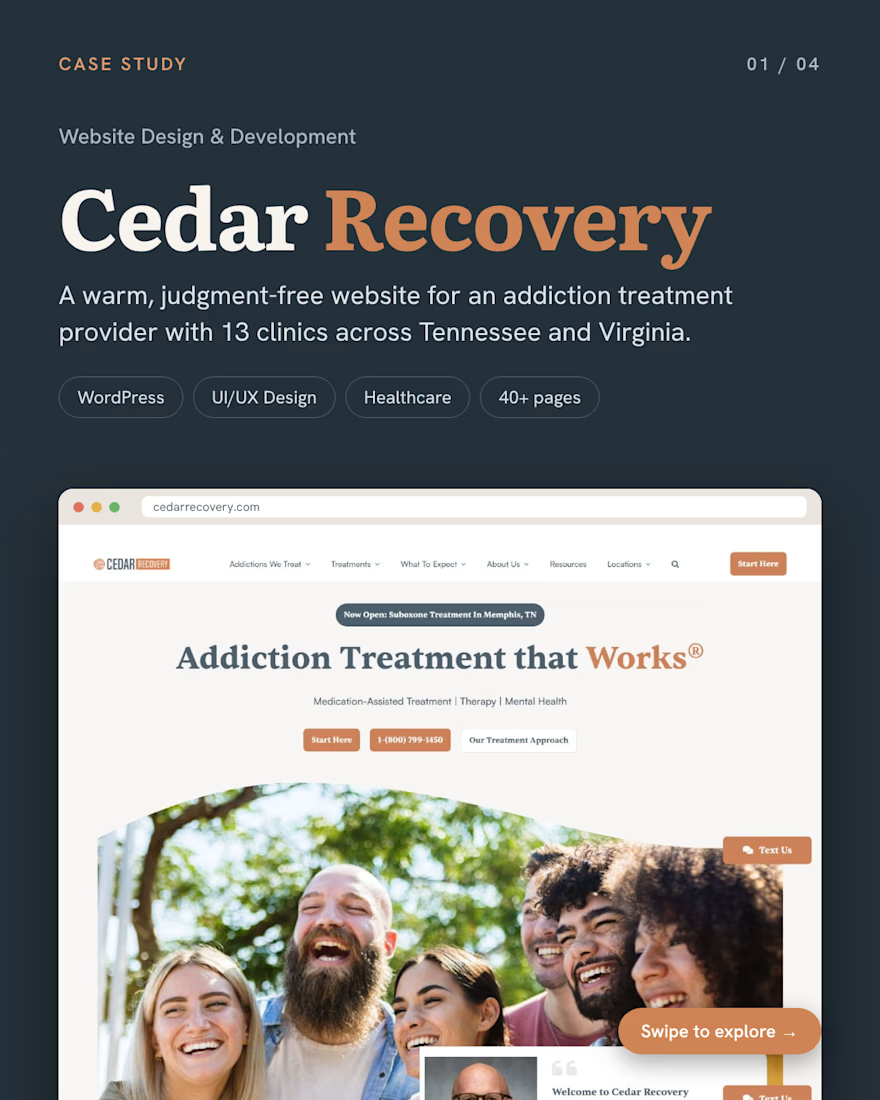
Most people looking for addiction treatment are scared, ashamed or in crisis.
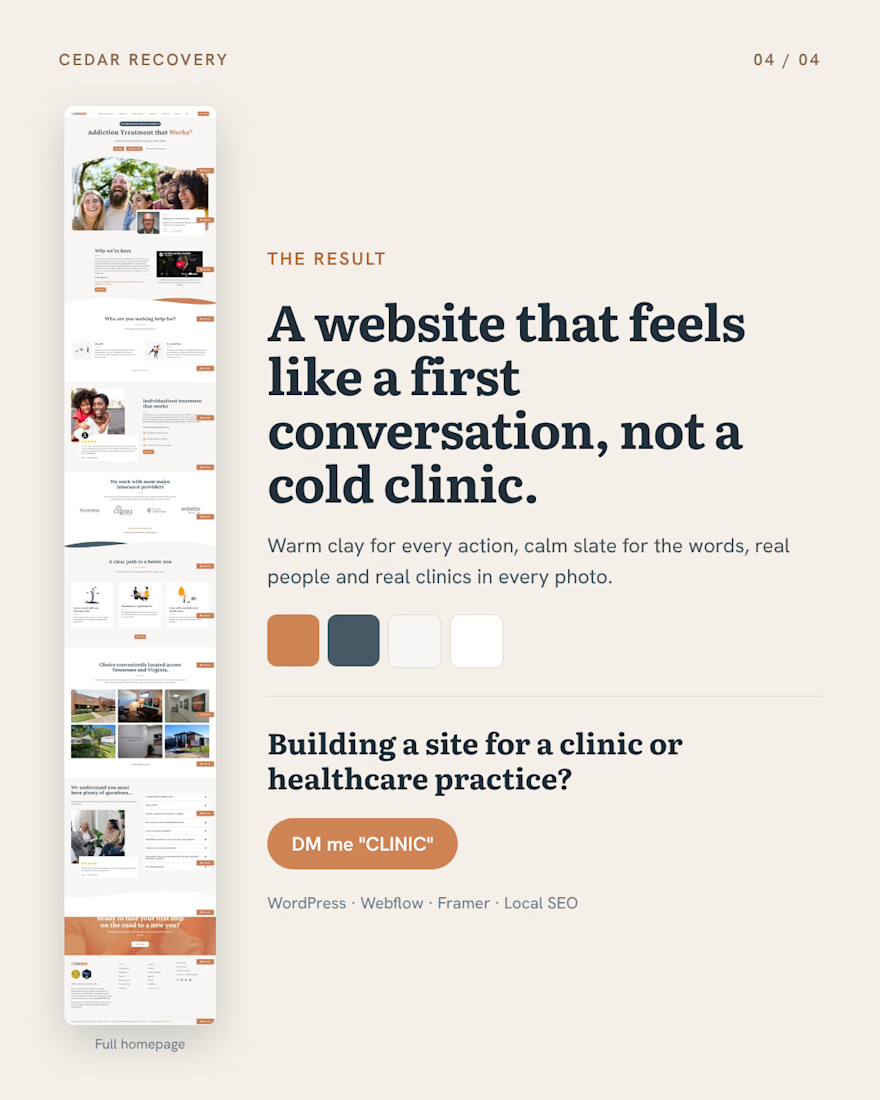
For Cedar Recovery, an addiction treatment provider with 13 clinics across Tennessee and Virginia, we designed and developed a custom WordPress website with one goal: make the first step feel safe.
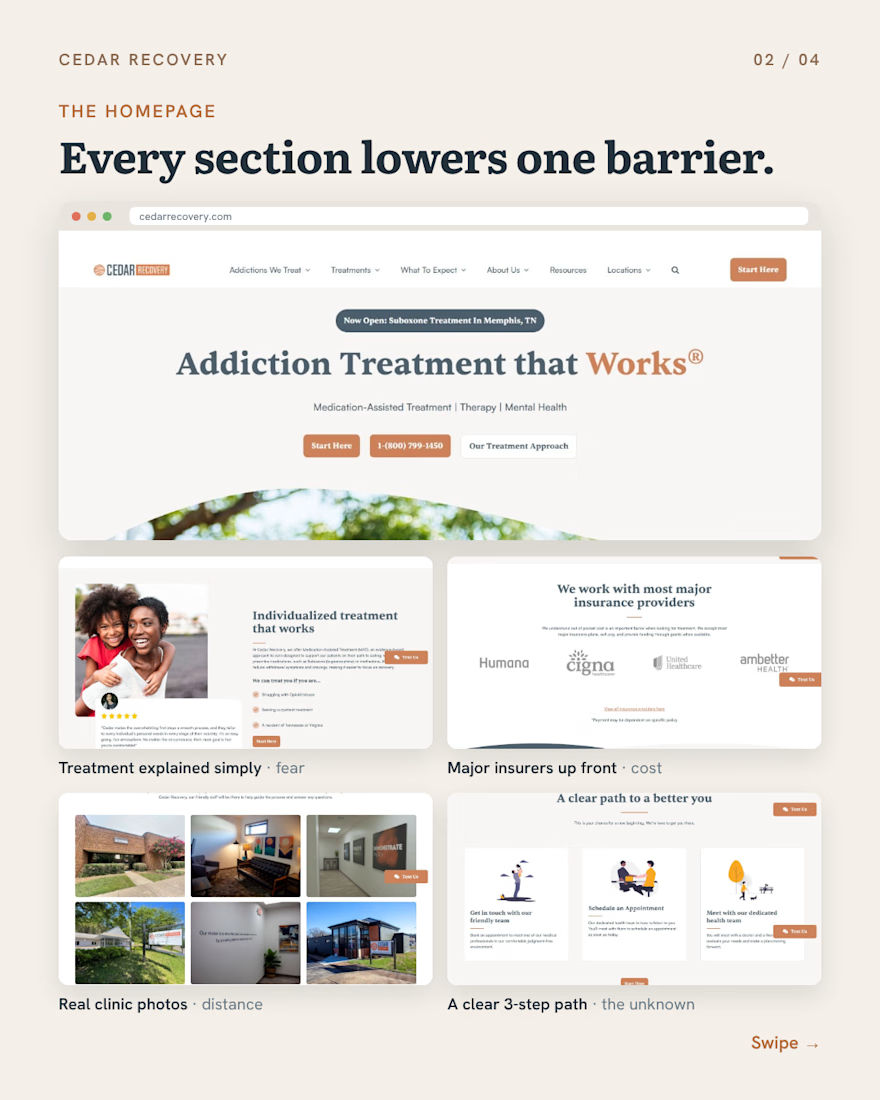
Each section removes one barrier:
→ Fear: treatment in plain words, real patient stories
→ Cost: insurers and payment options up front
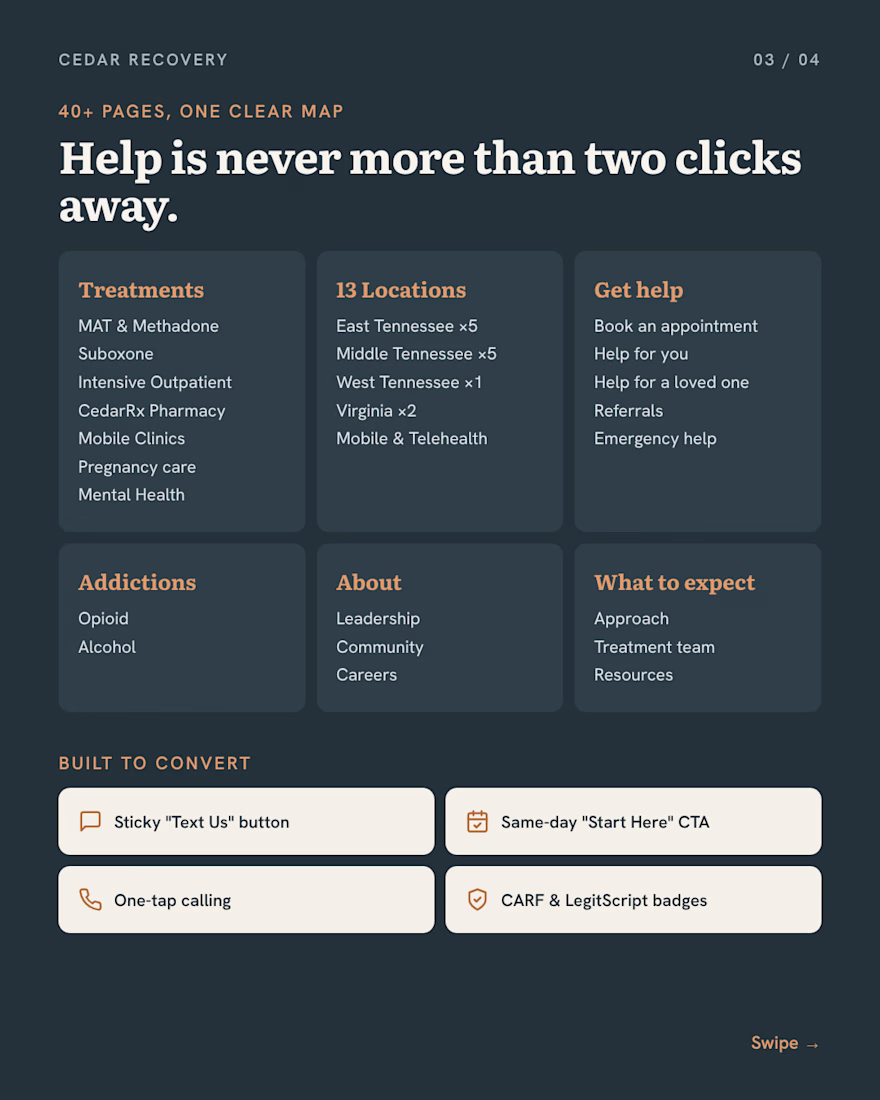
→ Distance: real clinic photos and a page for every location
→ The unknown: a clear 3-step path to the first appointment
What we did: UX strategy, UI design and a full WordPress build of 40+ pages, with “Text Us” and “Start Here” on every screen so help is always one tap away.
🔗 See it live: https://www.cedarrecovery.com
Swipe to see it 👉

"make the first step feel safe" is a really thoughtful goal for a treatment site, and text us on every screen fits it. how did you end up working with cedar recovery, did they find you or did you reach out?

I'm now available for freelance work as a Web Designer (UI)!
I design clean, modern and user-friendly interfaces for websites and landing pages, with a focus on clarity, strong visual hierarchy and a smooth user experience.
What I can help you with:
Website and landing page UI design
Responsive layouts (desktop and mobile)
Visual identity and logo design
Redesigns of existing pages
If you're a startup, a small business or a creator looking to level up your online presence, let's talk.
You can book me directly on Contra:
#webdesign #uidesign #freelance #hireme

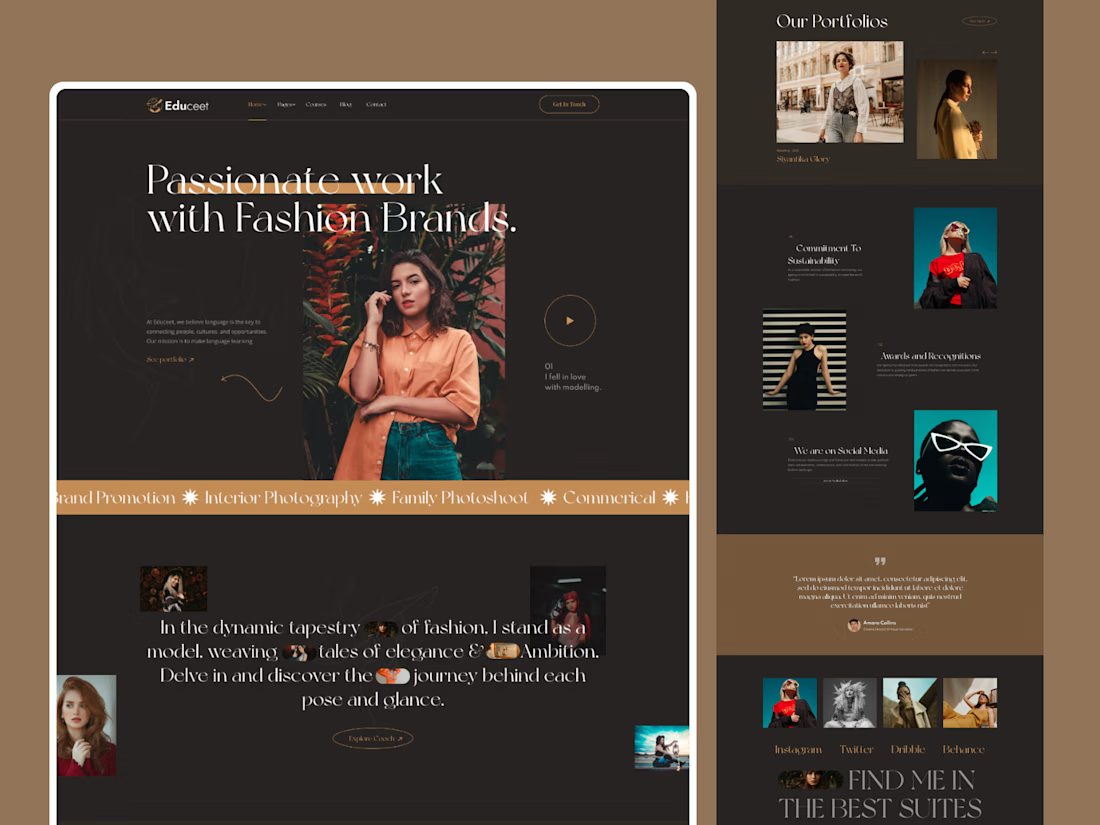
✨ Where Fashion Meets Digital Elegance
A portfolio website should do more than showcase work — it should tell a story.
Introducing a bold, editorial-style fashion portfolio website concept by OrdainIT, featuring elegant typography, rich dark tones, warm accents, and immersive imagery.
🎨 Design highlights:
Premium editorial-inspired UI/UX
Elegant typography and visual storytelling
Creative portfolio and gallery layouts
Smooth visual hierarchy with bold contrasts
A sophisticated design tailored for fashion creatives
Designed to help models, photographers, and creative brands present their work with confidence and style.
At OrdainIT, we create thoughtful digital experiences that help brands stand out.
💬 Do you prefer dark, editorial-style websites or clean, minimal layouts?
#WebDesign #UIUXDesign #PortfolioWebsite #FashionWebsite #WebDevelopment #OrdainIT



This is nice honestly 👏

