The network for creativity
Join 1.25M professional creatives like you
Connect with clients, get discovered, and run your business 100% commission-free
Creatives on Contra have earned over $150M and we are just getting started
Back to feedPost


The network for creativity
Join 1.25M professional creatives like you
Connect with clients, get discovered, and run your business 100% commission-free
Creatives on Contra have earned over $150M and we are just getting started





Related posts

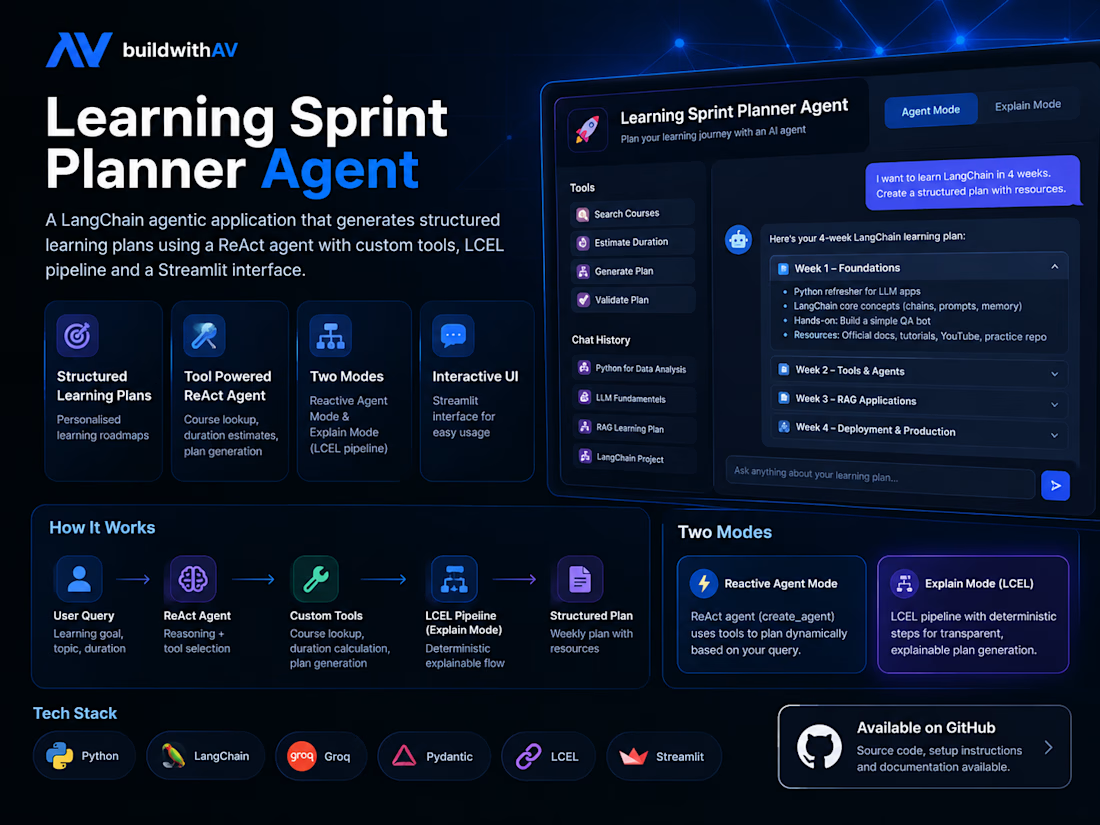
Built a LangChain-based agentic application that turns a learning goal into a structured, personalised learning plan.
The application supports two execution modes:
⚡ ReAct Agent Mode
A tool-using agent dynamically selects custom tools for course lookup, completion-time calculation, and learning-plan generation.
🔍 Explain Mode — LCEL
A deterministic LCEL pipeline executes the planning workflow step-by-step, making the process more transparent, predictable, and easier to debug.
The project also uses Pydantic structured outputs, Groq, Python, Streamlit, and custom LangChain tools, with deterministic logic kept outside the LLM wherever possible.
This project was built to explore the practical engineering side of AI agents — tool calling, agent orchestration, structured outputs, deterministic workflows, and explainability.
The project is not currently deployed, but the complete source code and implementation are available on GitHub.
Tech: Python · LangChain · ReAct · LCEL · Groq · Pydantic · Streamlit



turning a learning goal into an actual plan is such a useful agent use case 🔥

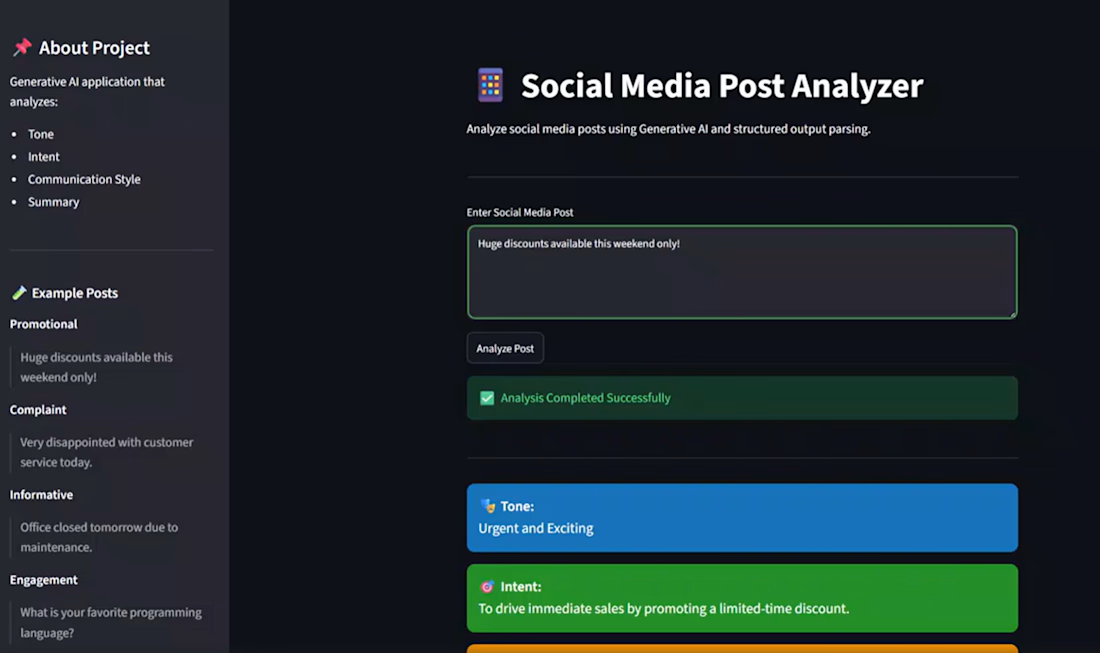
Built an AI-powered Social Media Post Analyzer that analyzes social media content and generates structured insights using LLMs.
The application uses LangChain and Pydantic to process the input and return structured results through an interactive Streamlit interface.
Built with: Python, LangChain, Pydantic, Hugging Face, Streamlit, and LangSmith.



Pydantic catches shape errors, but a plausible wrong insight can still pass. I'd keep a small set of posts with expected labels in LangSmith and rerun it after prompt changes. Are you tracking that kind of drift?

Increased revenue opportunities by automating how AI voice-agent calls are captured, analyzed, quality checked, and stored in the CRM.
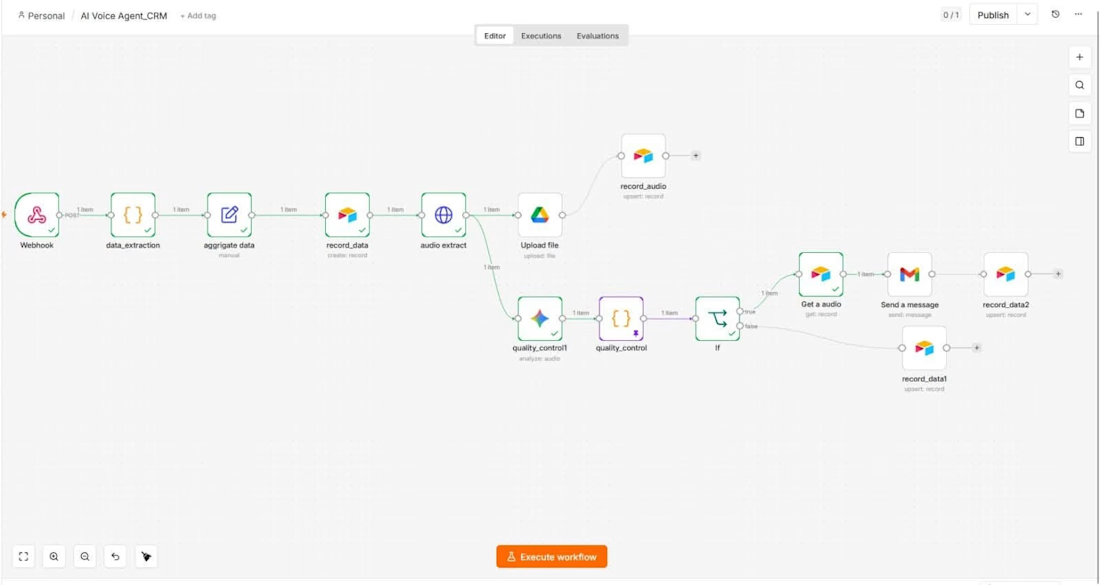
I built an automated workflow that connects an AI voice agent with Airtable, Google Drive, Gmail, and AI-powered quality analysis.
The workflow receives call data through a webhook, extracts and structures the information, creates a CRM record, retrieves the call recording, uploads the audio for storage and runs an AI quality check on the conversation.
Based on the quality control result, the workflow automatically follows the appropriate path. Qualified conversations can trigger an email notification while the relevant call data and recording are updated in the CRM for future review.



The way the webhook pushes call data straight into Airtable and the CRM removes a lot of manual entry.