The network for creativity
Join 1.25M professional creatives like you
Connect with clients, get discovered, and run your business 100% commission-free
Creatives on Contra have earned over $150M and we are just getting started
Back to feedPost

I get brought in when complex systems need to work for real people — not just on paper.
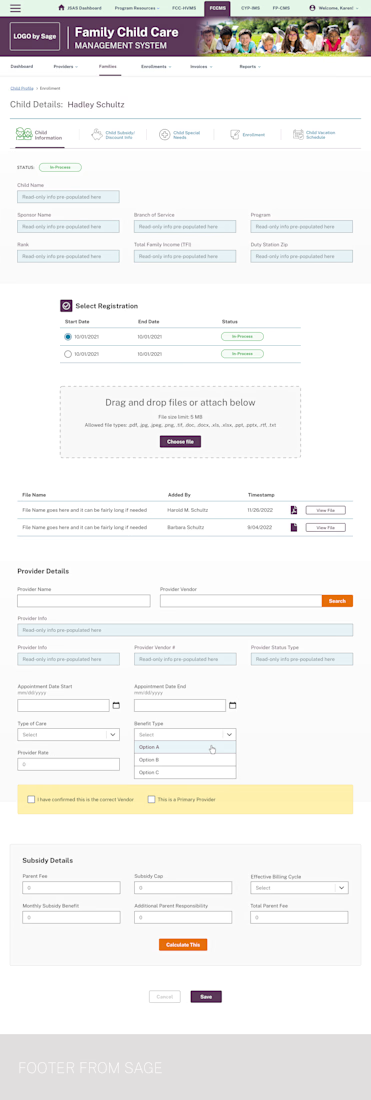
In this case, it meant solving a decades-old problem: childcare access across all branches of the U.S. military. What started as a policy mandate had never fully translated into a usable experience. My role was to step in as the UX strategist and turn that into something operational.
I worked across Army, Navy, Air Force, and Marine systems to create a single, unified experience where any military parent — anywhere in the world — could quickly find and arrange childcare.
That meant designing a structure that could handle both global complexity and local nuance. A parent on a remote overseas base doesn’t plan the same way as someone in a major U.S. city, so the system had to adapt without breaking consistency.
I led cross-branch research to understand not just the logistics, but the real-world pressure families were under. From there, I rebuilt the experience — simplifying navigation, aligning workflows, and creating a framework that balanced each branch’s identity with a cohesive, shared system.
I also worked through the underlying mess — auditing and consolidating fragmented legacy platforms into something centralized, usable, and scalable.
The outcome wasn’t just a better interface — it was a system that actually worked for families trying to solve a real problem, often under stress and time constraints.

The network for creativity
Join 1.25M professional creatives like you
Connect with clients, get discovered, and run your business 100% commission-free
Creatives on Contra have earned over $150M and we are just getting started





Related posts

IPO Coins landing page web design 3D animation website icons


Great Design, R


That's cool man it feels professional 🎉🎉🎉

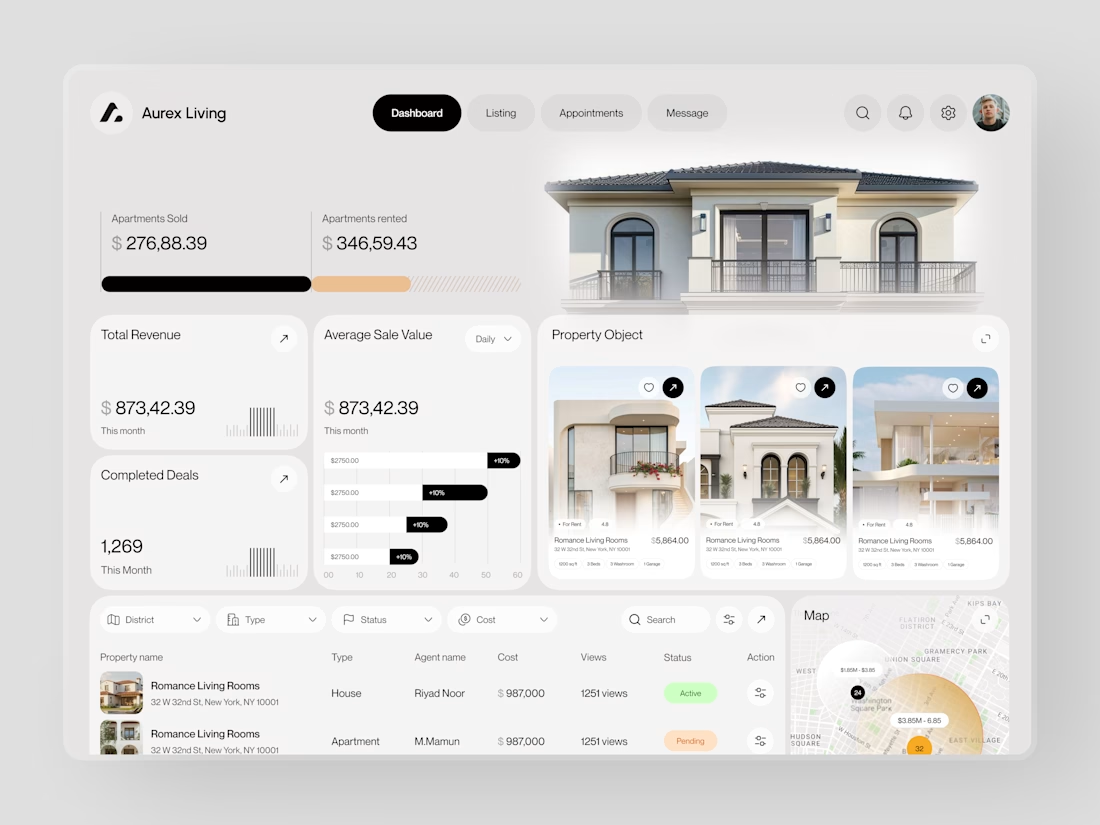
Real estate dashboards are usually built for data entry. Aurex Living was built for decision-making.
$873,42.39 total revenue. 1,269 completed deals this month. $276K sold, $346K rented. Property cards, agent tracking, map view, average sale value trending +10% - every number a real estate operator actually needs, on one clean white canvas.