The network for creativity
Join 1.25M professional creatives like you
Connect with clients, get discovered, and run your business 100% commission-free
Creatives on Contra have earned over $150M and we are just getting started
Back to feedPost

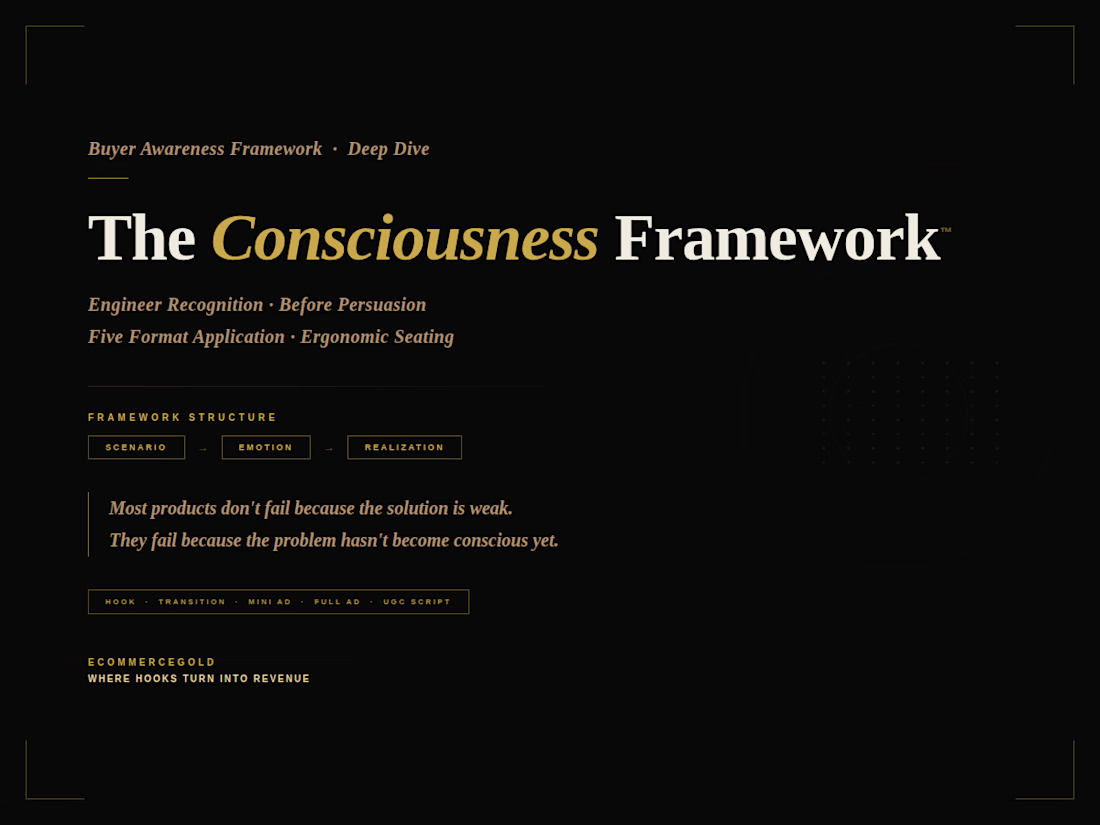
➡️THE CONSCIOUSNESS FRAMEWORK👇
💡A buyer-awareness framework built to trigger emotional recognition before the product is ever introduced.
➡️Deep Dive + 5 Format Application
➡️Applied to: Ergonomic Seating
➡️Core Insight
Most products don’t fail because the solution is weak.
They fail because the problem hasn’t become conscious yet.
A buyer can live with invisible friction for months without ever labeling it as a problem.
They adapt. They normalize it. They work around it. They even blame themselves for it.
And when that happens, even the right product feels like an unnecessary luxury —
not because it lacks value, but because the buyer hasn’t recognized the actual need.
That’s where The Consciousness Framework comes in.
It’s engineered for the moment before persuasion works —
the moment where the buyer stops unconsciously “surviving” the issue
and starts clearly seeing it.
➡️What is The Consciousness Framework? 👇
➡️Structure: Scenario → Emotion → Realization
The Consciousness Framework™ is designed to make the consumer recognize a problem emotionally before the product is introduced.
➡️Instead of starting with:
features
benefits
persuasion
urgency
or “why you need this”
…it begins with recognition.
💡It places the buyer inside a familiar moment, activates the physical feeling tied to it, and guides them toward a personal realization.
It doesn’t try to convince first.
It makes the buyer conscious first.
And once that happens, the product stops feeling like a pitch —
and starts feeling like the answer.
➡️The Psychology Behind It👇
Most consumers don’t reject products because they don’t want them.
They reject them because the issue still feels normal.
Buying resistance rarely sounds like:
“I’m not interested.”
It sounds like:
“This isn’t really a problem.”
“I’m probably fine.”
“This is just how it is.”
“It’s not serious enough yet.”
That’s a low-awareness state.
In that state, the brain registers:
no urgency
no relevance
no reason to act
So, before the product can matter, the mind has to shift from:
💡normalized discomfort → active awareness
At its core, this framework works by shifting perception from:
💡self-blame → external cause
Because once the buyer thinks:
“Wait… this is actually affecting me.”
Resistance drops.
Relevance rises.
➡️How the Framework Works👇
➡️1) Scenario
The first step is placing the buyer inside a moment they instantly recognize.
Not a broad problem.
Not a generic statement.
A specific, lived-in moment.
Goal: Make them see themselves in the copy.
Example:
You sit down to work and shift positions again before you’ve even opened your first tab.
This doesn’t explain the problem.
💡It activates it.
➡️2) Emotion
Once the moment feels real, the next step is surfacing the internal friction attached to it.
This moves the copy from:
observation → real discomfort
Not extreme pain — but the low-grade friction buyers have stopped questioning.
Goal: Name the quiet discomfort they’ve normalized.
Example:
That constant restlessness starts pulling at your focus before the workday even begins.
Now the buyer isn’t just reading.
💡They’re recognizing.
➡️3) Realization
This is the shift.
Scenario and emotion create tension —
this is where meaning is assigned.
The buyer moves from:
“This happens to me”
to
“This is the problem”
Example:
Maybe it’s not your focus that’s the problem…
maybe your setup has been working against you this whole time.
This moment is everything.
Because once the buyer reaches it, the product doesn’t need to force relevance.
💡It already fits.
➡️Framework in Action
➡️Applying the Consciousness Framework™ to Ergonomic Seating
➡️1) The Hook
💡Goal: Immediate Pattern Interruption
You don’t realize how draining your chair is until sitting itself starts draining you before the work even begins.
Why it works:
It surfaces a problem the buyer hasn’t consciously labeled yet.
It starts with lived experience, not a product claim.
➡️2) Hook + Transition
💡Goal: Deepen Emotional Awareness
You don’t realize how draining your chair is until sitting itself starts draining you before the work even begins.
The constant shifting. The lower back tension. The restlessness before the real work even starts.
Most people don’t call it a setup problem — they just call it a normal workday.
Why it works:
It names the symptoms the buyer has normalized, building weight without pitching.
➡️3) Mini Ad Copy
💡Goal: Rapid Awareness
You sit down to work.
Then adjust.
Then shift again.
Then lean forward.
Then wonder why you already feel off by 11 AM.
Most people think they need more focus or more caffeine.
Sometimes, they just need a chair their body isn’t quietly fighting all day.
Why it works:
Simple, visual, and familiar.
The realization lands naturally.
➡️4) Full Ad Copy
💡Goal: Full Awareness → High-Intent Relevance
You sit down to start your workday.
A few minutes in, you shift. Then again.
Your lower back tightens. Your shoulders drift forward without you noticing.
And somehow, before the real work even begins, your body already feels tired.
The strange part?
Most people never question the chair.
They question themselves.
They assume they’re distracted. Low on energy. Bad at sitting still.
But maybe it’s not your discipline wearing out.
Maybe your setup has been working against you this whole time.
A better workday doesn’t always start with more motivation.
Sometimes, it starts with finally sitting in something built for the way you actually work.
Why it works:
Complete arc: Scenario → Tension → Reframe → Natural Solution Entry
➡️5) UGC Script
💡Goal: Authentic, Peer-to-Peer Realization
[Talking to camera]
I genuinely thought I was just getting bad at focusing.
Every time I sat down to work, I’d feel uncomfortable almost immediately — constantly shifting, leaning weird, stretching my back every 20 minutes.
And I never once thought, “Maybe it’s the chair.”
I just assumed that’s just what work feels like.
But once I actually paid attention to how much that discomfort was affecting me… it clicked.
I didn’t need to push through more.
I needed a setup that wasn’t draining me before the day even started.
Why it works:
Feels like self-discovery, not a sales script.
That’s what makes it convert.
➡️What This Demonstrates
This isn’t just copywriting.
It demonstrates the ability to:
➡️identify normalized pain
➡️create awareness before persuasion
➡️engineer emotional recognition
➡️translate one framework across formats
➡️build relevance without friction
This is Strategic Message Construction.
➡️Closing Thought
💡Good copy doesn’t always start by selling harder.
Sometimes it starts by making the buyer notice what they’ve been unconsciously living with.
That’s what this framework does.
It creates the moment where the buyer thinks:
“Wait… this is actually affecting me.”
And once that happens, the product doesn’t have to fight for attention.
It already makes sense.
Where hooks turn into revenue.
EcommerceGold. 🚀


The network for creativity
Join 1.25M professional creatives like you
Connect with clients, get discovered, and run your business 100% commission-free
Creatives on Contra have earned over $150M and we are just getting started
Related posts



This is one of tyhe best have seen so far today..... :)

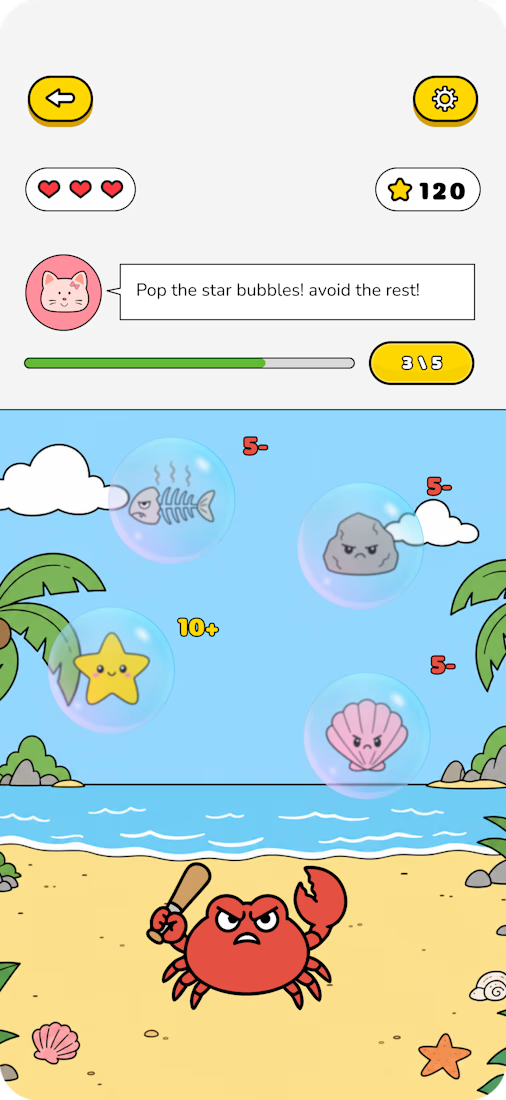
Buddi / A Fun Companion Game for Kids with ADHD
Project live demo link:
prototype
Link of Figma project:
design file
Figma X Contra challenge
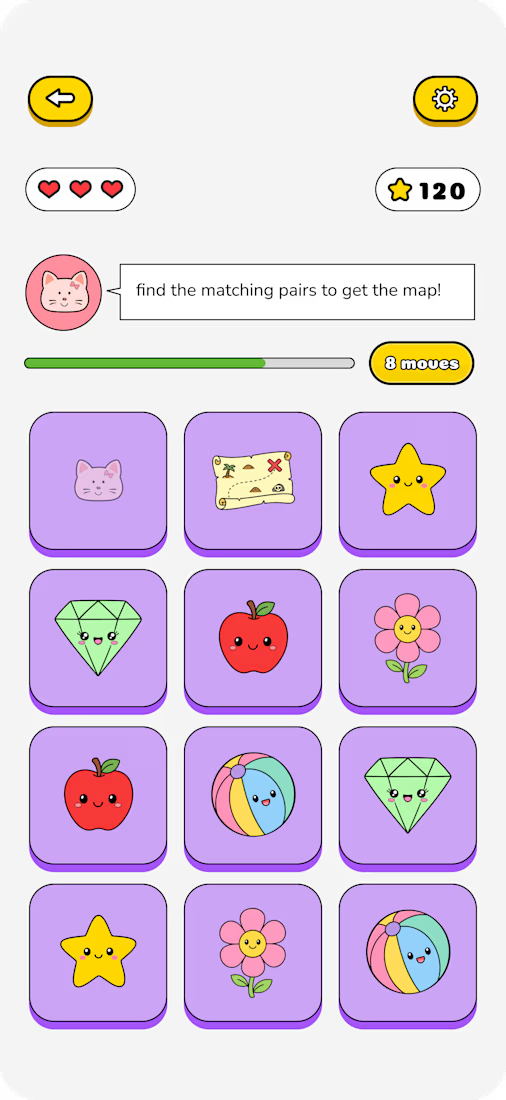
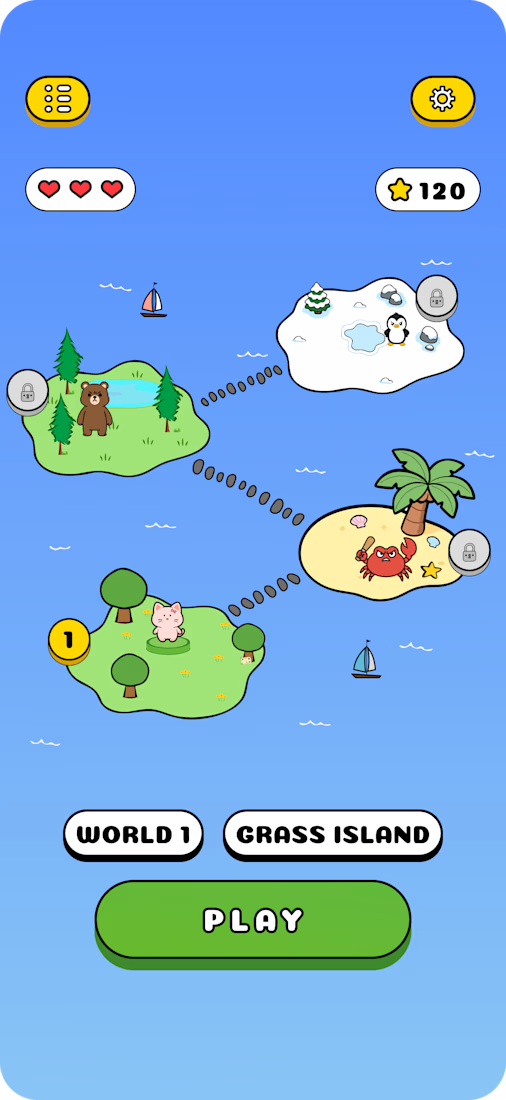
Buddi gives kids a friend, not just a game. They pick their buddy, Lea or Leo and travel together across a world of islands, where every stop is a fun minigame secretly training a real skill: focus, memory, impulse control, patience.
And when a kid misses? No "wrong," no "game over." Their buddy misses with them, cheers them up, and says let's try again. Retrying gets celebrated, not punished.
Kids get a world map to explore, badges to collect, and a shop to dress up their buddy with stars they earn. Parents get their own gated dashboard to track behavior, moods, progress, and skill growth, all in plain language.
I built Buddi because I wanted both sides covered: kids get a fun educational game they actually love, and parents finally get a way to see how their child is really doing.
How I built it: research and structure with Claude → every screen designed in Figma → Lea, Leo, and the shop items illustrated in Figma Weave → living prototype in Figma Make, with Claude writing the Make prompts and the buddies' in-game dialogue. Design first, always.
A friend first. Everything good is hidden inside the friendship.
i hope you guys enjoy! and ill be glad to hear feedbacks from all of you!




This is so wholesome I love it !



Love this!
Challenges
View all



Trending

Claude
Claude has entered the design space. How are you using Claude Design?

Contra University
Learn from expert creatives how to earn more using next-gen AI tools.

MagicPath
The canvas is infinite, and exploration is becoming the workflow. How are you using MagicPath?
creativeaiflow
Creative AI workflows are evolving. What tools do you use, and what are their strengths and weaknesses?
freelancerlife
Freelancer life is wins, pivots, and everything in between. What’s yours right now?