âĄď¸THE CONSCIOUSNESS FRAMEWORKđ
đĄA buyer-awareness framework built to trigger emotional recognition before the product is ever introduced.
âĄď¸Deep Dive + 5 Format Application
âĄď¸Applied to: Ergonomic Seating
âĄď¸Core Insight
Most products donât fail because the solution is weak.
They fail because the problem hasnât become conscious yet.
A buyer can live with invisible friction for months without ever labeling it as a problem.
They adapt. They normalize it. They work around it. They even blame themselves for it.
And when that happens, even the right product feels like an unnecessary luxury â
not because it lacks value, but because the buyer hasnât recognized the actual need.
Thatâs where The Consciousness Framework comes in.
Itâs engineered for the moment before persuasion works â
the moment where the buyer stops unconsciously âsurvivingâ the issue
and starts clearly seeing it.
âĄď¸What is The Consciousness Framework? đ
âĄď¸Structure: Scenario â Emotion â Realization
The Consciousness Framework⢠is designed to make the consumer recognize a problem emotionally before the product is introduced.
âĄď¸Instead of starting with:
features
benefits
persuasion
urgency
or âwhy you need thisâ
âŚit begins with recognition.
đĄIt places the buyer inside a familiar moment, activates the physical feeling tied to it, and guides them toward a personal realization.
It doesnât try to convince first.
It makes the buyer conscious first.
And once that happens, the product stops feeling like a pitch â
and starts feeling like the answer.
âĄď¸The Psychology Behind Itđ
Most consumers donât reject products because they donât want them.
They reject them because the issue still feels normal.
Buying resistance rarely sounds like:
âIâm not interested.â
It sounds like:
âThis isnât really a problem.â
âIâm probably fine.â
âThis is just how it is.â
âItâs not serious enough yet.â
Thatâs a low-awareness state.
In that state, the brain registers:
no urgency
no relevance
no reason to act
So, before the product can matter, the mind has to shift from:
đĄnormalized discomfort â active awareness
At its core, this framework works by shifting perception from:
đĄself-blame â external cause
Because once the buyer thinks:
âWait⌠this is actually affecting me.â
Resistance drops.
Relevance rises.
âĄď¸How the Framework Worksđ
âĄď¸1) Scenario
The first step is placing the buyer inside a moment they instantly recognize.
Not a broad problem.
Not a generic statement.
A specific, lived-in moment.
Goal: Make them see themselves in the copy.
Example:
You sit down to work and shift positions again before youâve even opened your first tab.
This doesnât explain the problem.
đĄIt activates it.
âĄď¸2) Emotion
Once the moment feels real, the next step is surfacing the internal friction attached to it.
This moves the copy from:
observation â real discomfort
Not extreme pain â but the low-grade friction buyers have stopped questioning.
Goal: Name the quiet discomfort theyâve normalized.
Example:
That constant restlessness starts pulling at your focus before the workday even begins.
Now the buyer isnât just reading.
đĄTheyâre recognizing.
âĄď¸3) Realization
This is the shift.
Scenario and emotion create tension â
this is where meaning is assigned.
The buyer moves from:
âThis happens to meâ
to
âThis is the problemâ
Example:
Maybe itâs not your focus thatâs the problemâŚ
maybe your setup has been working against you this whole time.
This moment is everything.
Because once the buyer reaches it, the product doesnât need to force relevance.
đĄIt already fits.
âĄď¸Framework in Action
âĄď¸Applying the Consciousness Framework⢠to Ergonomic Seating
âĄď¸1) The Hook
đĄGoal: Immediate Pattern Interruption
You donât realize how draining your chair is until sitting itself starts draining you before the work even begins.
Why it works:
It surfaces a problem the buyer hasnât consciously labeled yet.
It starts with lived experience, not a product claim.
âĄď¸2) Hook + Transition
đĄGoal: Deepen Emotional Awareness
You donât realize how draining your chair is until sitting itself starts draining you before the work even begins.
The constant shifting. The lower back tension. The restlessness before the real work even starts.
Most people donât call it a setup problem â they just call it a normal workday.
Why it works:
It names the symptoms the buyer has normalized, building weight without pitching.
âĄď¸3) Mini Ad Copy
đĄGoal: Rapid Awareness
You sit down to work.
Then adjust.
Then shift again.
Then lean forward.
Then wonder why you already feel off by 11 AM.
Most people think they need more focus or more caffeine.
Sometimes, they just need a chair their body isnât quietly fighting all day.
Why it works:
Simple, visual, and familiar.
The realization lands naturally.
âĄď¸4) Full Ad Copy
đĄGoal: Full Awareness â High-Intent Relevance
You sit down to start your workday.
A few minutes in, you shift. Then again.
Your lower back tightens. Your shoulders drift forward without you noticing.
And somehow, before the real work even begins, your body already feels tired.
The strange part?
Most people never question the chair.
They question themselves.
They assume theyâre distracted. Low on energy. Bad at sitting still.
But maybe itâs not your discipline wearing out.
Maybe your setup has been working against you this whole time.
A better workday doesnât always start with more motivation.
Sometimes, it starts with finally sitting in something built for the way you actually work.
Why it works:
Complete arc: Scenario â Tension â Reframe â Natural Solution Entry
âĄď¸5) UGC Script
đĄGoal: Authentic, Peer-to-Peer Realization
[Talking to camera]
I genuinely thought I was just getting bad at focusing.
Every time I sat down to work, Iâd feel uncomfortable almost immediately â constantly shifting, leaning weird, stretching my back every 20 minutes.
And I never once thought, âMaybe itâs the chair.â
I just assumed thatâs just what work feels like.
But once I actually paid attention to how much that discomfort was affecting me⌠it clicked.
I didnât need to push through more.
I needed a setup that wasnât draining me before the day even started.
Why it works:
Feels like self-discovery, not a sales script.
Thatâs what makes it convert.
âĄď¸What This Demonstrates
This isnât just copywriting.
It demonstrates the ability to:
âĄď¸identify normalized pain
âĄď¸create awareness before persuasion
âĄď¸engineer emotional recognition
âĄď¸translate one framework across formats
âĄď¸build relevance without friction
This is Strategic Message Construction.
âĄď¸Closing Thought
đĄGood copy doesnât always start by selling harder.
Sometimes it starts by making the buyer notice what theyâve been unconsciously living with.
Thatâs what this framework does.
It creates the moment where the buyer thinks:
âWait⌠this is actually affecting me.â
And once that happens, the product doesnât have to fight for attention.
It already makes sense.
Where hooks turn into revenue.
EcommerceGold. đ
0
14
âĄď¸THE FPIS FRAMEWORKâ˘
âĄď¸A Proprietary Strategy for High-Tension Conversion
âĄď¸The Primal Truth: Fear as the Base Ignition
Fear is not a tactic; it is the base emotion. It is the only psychological trigger powerful enough to bypass the modern consumer's "scroll-reflex" and years of accumulated marketing resistance.
The FPIS Framework⢠is built on a single neurological reality: the survival brain responds before the logical brain can intervene. By leading with fear, you don't just capture attentionâyou commandeer it. This creates an emotional vacuum that demands resolution. By the time the solution arrives, the buyer isn't weighing options; they are seeking necessary relief.
đĄIgnite the fear. The rest follows.
âĄď¸THE ARCHITECTURE
â FEAR â The Base Ignition
We lead with the Invisible Threatâthe risk the buyer hasn't yet admitted to themselves. Because fear is the first emotion to register in the human brain, it is the most potent scroll-stopper in existence. We use it to pull the buyer out of passive consumption and into a state of high-alert awareness before a single product claim is made.
⥠PAIN â The Immediate Realization
Once the fear is ignited, we give it a name. We transition the abstract threat into a tangible, personal discomfortâsomething the buyer can feel in their body, their business, or their daily life right now. The survival spark becomes a fire that can no longer be ignored.
⢠IMPACT â The Cost of Inaction
We project the current pain forward. What does this look like in six months? A year? Five? We make the status quo feel more dangerous than the act of buying, ensuring that hesitation itself becomes the primary risk. In the FPIS model, staying still is never neutralâit carries a compounding price.
⣠SOLUTION â The Necessary Relief
The release. The product enters the narrative not as a "purchase," but as an extinguisherâthe only logical way to resolve the primal tension built across the first three stages. At this point, the buyer isn't being sold to; they are reaching for the answer.
âĄď¸FPIS IN ACTION: Blue Light Glasses
FEAR: Your digital screens are quietly straining your retinas for ten hours every single day.
PAIN: That end-of-day headache and blurry vision isn't just "tiredness"âit's active ocular fatigue from sustained, high-energy blue light exposure.
IMPACT: Left unaddressed, you arenât just risking a headache. Youâre looking at permanent sleep-cycle disruption and long-term macular strain that no amount of "rest" will reverse.
SOLUTION: Our Precision-Filter Lenses block the harmful spectrumâallowing you to work longer, sleep deeper, and protect the vision youâre currently spending down without knowing it.
âĄď¸THE EXECUTION FORMATS
Engineered to sustain the Fear Ignition consistently across the entire funnel:
1ď¸âŁThe Hook: A sharp, fear-led pattern interrupt designed to trigger a survival response before the thumb moves.
2ď¸âŁThe Hook + Transition: The psychological bridge from startle to realization; it turns a flinch into full attention.
3ď¸âŁThe Mini Ad: High-tension, concise copy optimized for Meta, X, and rapid-fire direct response placements.
4ď¸âŁFull Ad Copy: A narrative "pressure cooker" that escalates fear into projected long-term consequences before delivering relief.
5ď¸âŁUGC Script: Peer-to-peer storytelling that validates the fear through lived experience, making the solution feel earned rather than sold.
âĄď¸STRATEGIC DEPLOYMENT
The FPIS Framework⢠operates at peak performance when:
The product is a genuine solution to a real-world threat, decline, or hidden risk.
The audience is procrastinating on a decision involving their health, wealth, or security.
The conversion goal demands immediate direct response by leveraging Loss Aversion over desire.
âĄď¸THE RESULT
The FPIS Framework⢠works because it respects the brain's natural hierarchy. When you start with the base emotion, the buyer is fully awakeâinvested, alert, and seeking resolutionâbefore the product is ever mentioned.
đĄThe sale doesnât happen at the CTA. It happens in the four seconds after the fear lands.
đĄIgnite the Fear. Validate the Pain. Project the Impact. Deliver the Solution.
1
44
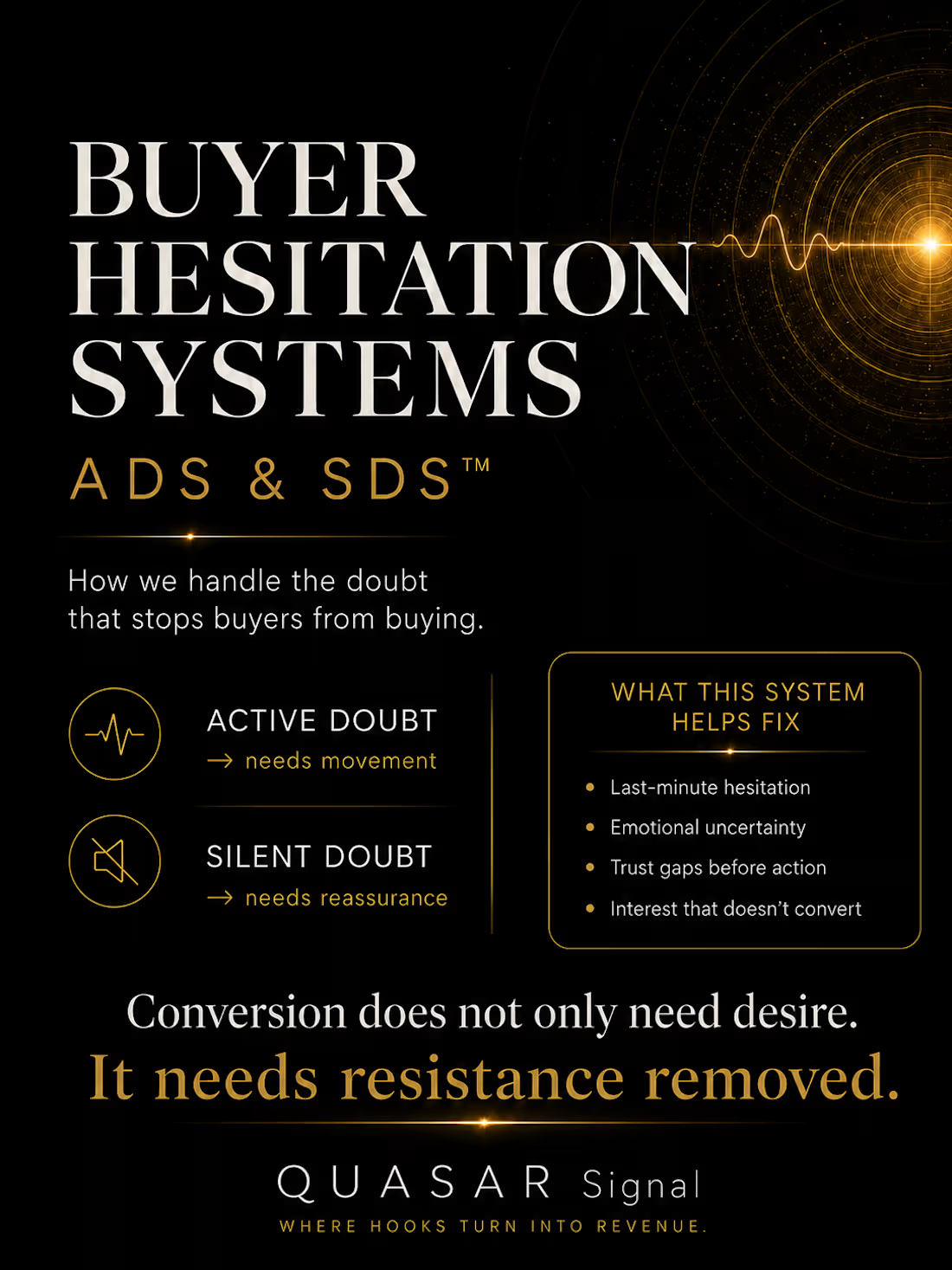
âĄď¸THE ADS & SDS FRAMEWORKSâ˘
âĄď¸Two Proprietary Objection-Handling Systems for Modern Brand Tones.
âĄď¸The Core Philosophy
Most copy is built around desire. These frameworks are built around resistance.
The moment a buyer reaches the finish line, a different psychology takes overânot excitement, but hesitation. Quiet doubts. Comfortable inertia. The internal voice that says, "not yet." The ADS & SDS Frameworks⢠were designed specifically to dismantle that resistanceâone with a direct strike, one with a knowing whisper.
đĄTwo systems. Two tones. One purpose: Eliminate the doubt that kills the conversion.
âĄď¸System 01 â ADS (Active Doubt Strike)
âĄď¸The Aggressive Punch Tone: Bold. Confronting. Direct.
âĄď¸Structure: Surface Doubt â Make It Uncomfortable â Immediate Resolution
âĄď¸The Philosophy: ADS disrupts "Comfortable Status Quo." Most buyers delay not because they lack desire, but because theyâve convinced themselves the problem isnât urgent. ADS surfaces that hidden doubt, amplifies the cost of ignoring it, and positions the product as the only logical escape. It makes waiting feel dangerous.
âĄď¸The Psychological Trigger: Passive Thinking. The belief that "itâs not that serious yet" is the single most common conversion killer. ADS interrupts that belief, making the consequence of delay feel immediate, real, and costly.
âĄď¸Best Deployed For: Direct response ads, performance creatives, and high-urgency pain-point products.
âĄď¸ADS in Action: Ergonomic Desk Chair
Surface Doubt: Think that "minor" back ache is just from a long day?
Make It Uncomfortable: That tightness is your spine compressing under a chair built for aesthetics, not anatomy. Ignore it long enough, and youâre looking at chronic nerve damage, not just soreness.
Immediate Resolution: Stop settling for a seat thatâs working against you. Our active lumbar tracking realigns your spine in real time, so you finish the workday feeling recovered, not depleted.
âĄď¸System 02 â SDS (Silent Doubt Surfacing)
âĄď¸The Premium Whisper Tone: Calm. Elegant. Confident.
âĄď¸Structure: Visual Context â Internal Doubt â Quiet Consequence â Emotional Relief
âĄď¸The Philosophy: SDS is built for the buyer who has already tuned out every brand that tried too hard. It doesn't pushâit observes. By reflecting the buyer's reality back to them with surgical accuracy, it creates a quiet recognition: "Someone understands exactly what Iâm experiencing."
âĄď¸The Psychological Trigger: Emotional Intelligence. The sophisticated buyer makes decisions based on resonance, not pressure. SDS earns that resonance by demonstrating deep familiarity with the buyerâs inner worldâmaking the brand feel less like a seller and more like a mirror.
âĄď¸Best Deployed For: Premium DTC, high-ticket lifestyle, and high-consideration purchases where trust precedes the transaction.
âĄď¸SDS in Action: Luxury Weighted Blanket
Visual Context: The lights are off. The house is finally quiet. Youâre waiting for sleep to arrive.
Internal Doubt: But your mind is still running. You adjust the covers again. You canât quite settle.
Quiet Consequence: Another night spent restingâbut not actually recovering.
Emotional Relief: Deep Pressure Touch works with your nervous system, not against it. Our hand-knitted weighted blanket grounds the body so that getting into bed finally means falling into genuine, restorative sleep.
âĄď¸Strategic Deployment: Choosing Your Systemđ
âĄď¸Use the ADS Framework when: đ
Target Tone: Bold, confronting, and high conviction.
Buyer State: The audience is underestimating the problem or making excuses to delay.
Mechanism: Amplifies urgency by making the "status quo" feel uncomfortable.
Trust Model: Challenges the buyer to convert immediately.
Best Environment: High-noise feeds, Direct Response (DR), and Meta/TikTok hooks.
âĄď¸Use the SDS Framework when: đ
Target Tone: Calm, elegant, and sophisticated.
Buyer State: The audience is living with the issue quietly and needs to feel seen.
Mechanism: Builds resonance by reflecting the buyer's lived reality.
Trust Model: Observes the buyerâs world to earn their confidence.
Best Environment: Premium DTC, high-ticket lifestyle, and high-consideration landing pages.
âĄď¸The Bottom Line
đĄThe two systems aren't opposites; they are complements.
Deploy ADS when the audience is making excuses to delayâwhen they need to be shocked out of passive comfort.
Deploy SDS when the audience already knows something is offâwhen they need to feel understood before theyâll consider a solution.
đĄOne for the buyer who needs a push, one for the buyer who needs a mirror. Together, they cover the full spectrum of purchase hesitation.
0
34
âĄď¸THE 13-SECOND DESIRE FRAMEWORKâ˘
âĄď¸A Proprietary Strategy for Identity-Driven Conversion
âĄď¸THE NEUROLOGICAL TRUTH
The human brain requires exactly 13 seconds to decide whether a stimulus is worth holdingâor discarding forever.
In an infinite-scroll economy, that window is the only territory that matters. Miss it, and the sale is dead before the pitch begins. The 13-Second Desire Framework⢠is engineered around a singular goal: hijacking those 13 seconds by making the buyerâs brain do the selling itself. Through Self-Projection, we force the mind to simulate a superior version of reality anchored to the product. Once that internal image locks in, the purchase isn't a choiceâitâs a foregone conclusion.
âĄď¸THE ARCHITECTURE
1. SELF-PROJECTION â Stopping the Scroll
The copy places the viewer inside a peak moment of their future realityânot as an aspirational fantasy, but as vivid, specific, simulated ownership. The brain is forced to ask the only question that matters: "Is this who I am supposed to be?" Attention is captured. The clock starts.
2. DOPAMINE & IDENTITY â Holding the Window
To sustain the hold, the brain demands a reward. We deliver a neuro-chemical hit: a vision of elevated status, sharpened confidence, or refined aesthetic. The product becomes the identity anchor that makes scrolling away feel like a personal loss. The 13-second threshold isn't just crossed; itâs owned.
3. FRICTION & SOLUTION â Converting the Hold
When attention holds past the 13-second mark, the logical brain activates to seek justification. We pre-empt the strike. Price objections and risk aversion are dissolved before they surface by positioning the product as the only rational tool to preserve the identity the buyer has already mentally claimed.
âĄď¸THE EXECUTION FORMATS
Engineered to bridge the gap between attention and action across every digital environment:
1ď¸âŁThe Hook: A 3-second pattern interrupt. Designed to claim the window before the thumb moves.
2ď¸âŁThe Hook + Transition: The psychological bridge that transforms a glance into a holdâand a hold into intent.
3ď¸âŁThe Mini Ad: Dense, identity-loaded copy for social captions, PDPs, and high-velocity paid placements.
4ď¸âŁFull Ad Copy: A deep-dive narrative that converts 13 seconds of captured attention into lasting brand desire.
5ď¸âŁUGC Script: Creator-led validation that makes the identity feel real, attainable, and worth the decision.
âĄď¸FRAMEWORK IN ACTION: HIGH-PERFORMANCE RUNNING
Self-Projection: Youâre at the halfway mark of your hardest routeâand your feet still feel as light as mile one.
Identity: That rare, effortless momentum where you stop fighting the pavement and start moving like the high-performance athlete you already are.
Solution: Most gear drains you as you tire. Ours recycles that energy back into your stride so the momentum never dies.
Outcome: The shoe is no longer an option; it is the infrastructure required to sustain the runner's identity.
âĄď¸STRATEGIC UTILITY
The 13-Second Desire Framework⢠reaches peak performance when:
The product is driven by appearance, confidence, or status (Fashion, Beauty, Performance Tech).
The brand is competing in high-noise environments where attention is the scarcest resource.
The goal is to make "not buying" feel like a forfeiture of identity.
âĄď¸THE RESULT
đĄThirteen seconds is not a limitation; it is a leverage point.
Own the brain's focus within that window and the psychological battle is wonâbefore the price, before the doubt, and before the objection. This framework doesn't just produce copy; it builds the cognitive architecture that makes it impossible for the buyer to move on.
đĄOwn the 13 seconds. Own the conversion.
0
37
âĄď¸THE CONSCIOUSNESS FRAMEWORKâ˘
âĄď¸A Proprietary Conversion Strategy by Ecommerce Goldđ
âĄď¸The Problem It Solvesđ
Modern buyers are desensitized. Decades of aggressive marketing have trained them to tune out sales language the moment they sense it. Traditional copy pushes. The Consciousness Framework⢠doesnât pushâit reflects. Built for DTC brands navigating a crowded attention economy, this framework bypasses marketing resistance entirely by meeting the buyer inside their own lived experienceâbefore the pitch ever begins.
âĄď¸The Core Philosophyđ
đĄMost copy sells a product. This framework sells a realization.
By using psychological mirroring, the Consciousness Framework⢠guides the buyer through a precise three-step internal journeyâScenario â Emotion â Realizationâuntil the need for the product becomes a self-discovered truth, not a sales-driven conclusion. When the buyer feels seen rather than sold to, resistance dissolves.
đĄSelf-discovery is the most powerful conversion tool in existence.
âĄď¸The Architecture
â SCENARIO â Activating Recognition The copy places the buyer inside a hyper-specific, hyper-relatable moment. This precision triggers a "how do they know that?" response, breaking the consumer's mental pattern and commanding full attention.
⥠EMOTION â Anchoring the Pain The buyer is guided toward the exact emotional charge attached to the scenarioâthe quiet frustration or the low-grade stagnation theyâve stopped questioning. The problem stops being abstract and becomes visceral.
⢠REALIZATION â The Aha Moment This is where conversion happens. The buyer arrives at a conclusion they believe they reached on their own: the problem is real, it has a name, and it has a solution. The product enters the conversation as the obvious next step.
âĄď¸The Execution Formats
The framework is engineered for full-stack adaptability:
1ď¸âŁThe Hook: A precision pattern-interrupter for scroll-stopping awareness.
2ď¸âŁThe Hook + Transition: A bridge to buyer realization; ideal for Video and Carousel openers.
3ď¸âŁThe Mini Ad: Condensed, high-impact copy for Meta captions and Product Pages.
4ď¸âŁFull Ad Copy: A long-form narrative arc built for high-intent conversion (Email, LPs, VSLs).
5ď¸âŁUGC Script: Creator-voice storytelling engineered for TikTok and Reels.
âĄď¸Framework in Action: Skincare
Scenario: You catch your reflection at 7:00 PM and realize you look five years older than you did this morning.
Emotion: That quiet stingâthe feeling that your face is carrying the entire weight of your day.
Realization: Your skin isn't failing. It's depleted. This isn't a sleep problem. It's a support problem.
Outcome: The buyer reaches for the serum as a recovery toolâsomething they now need, not merely want.
âĄď¸The Result
Products stop being optional luxuries. They become obvious necessities. The Consciousness Framework⢠changes the buyer's internal narrative before the "Buy Now" button ever appearsâand that's precisely what makes it convert.