The network for creativity
Join 1.25M professional creatives like you
Connect with clients, get discovered, and run your business 100% commission-free
Creatives on Contra have earned over $150M and we are just getting started
Back to feedPost

Before repacking a market booth, check stock counts and sales totals separately.
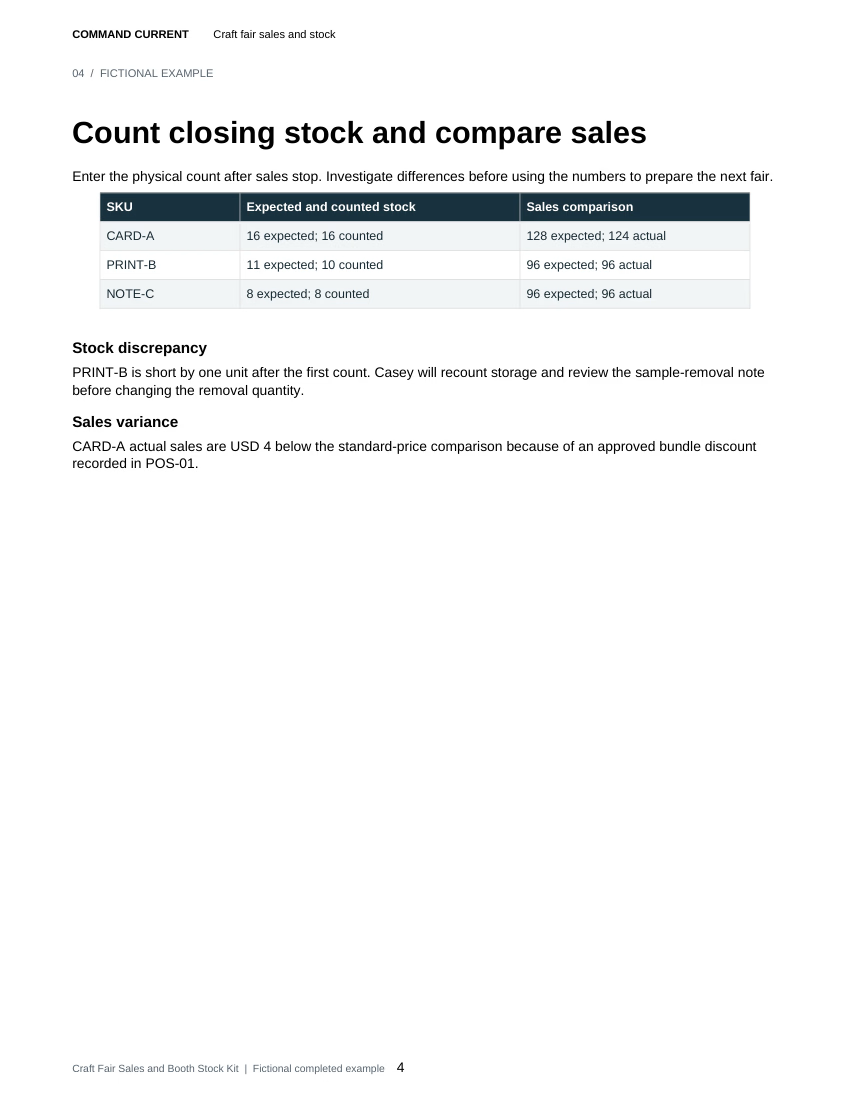
In the Craft Fair Sales and Booth Stock Kit's fictional example, PRINT-B begins with 20 prints, sells 8 and gives away 1 display sample. That leaves 11 expected, but the physical count is 10.
The useful next step is to recount storage and check the sample-removal note before changing the numbers.
Try this closing routine:
• Keep one row per item variant, with a fixed opening count
• Record later replenishment and non-sale removals separately
• Calculate expected closing stock: opening + replenishment - net units sold - other removals
• Enter the physical count and investigate any difference before repacking
• Compare actual net sales with the standard-price calculation, keeping discount and refund evidence
The same example has matching card stock but lower actual sales because of an approved bundle discount. A stock difference and a sales difference can need different explanations.
The preview is an actual page from the included fictional example. The kit includes an editable Word packet, matching print PDF, Excel tracker, fictional completed example and Quick Start.
This is a manual organizer. It doesn't process payments or sync online inventory, and its sales comparisons are not profit calculations. Keep the original sales and payment records.
The network for creativity
Join 1.25M professional creatives like you
Connect with clients, get discovered, and run your business 100% commission-free
Creatives on Contra have earned over $150M and we are just getting started

Related posts

Three checks I put beside a post-purchase email draft:
Does the main CTA open the exact page the copy promises?
Does the recommendation match the product the customer bought?
What stops a refill message after another order or when a subscription already covers the item?
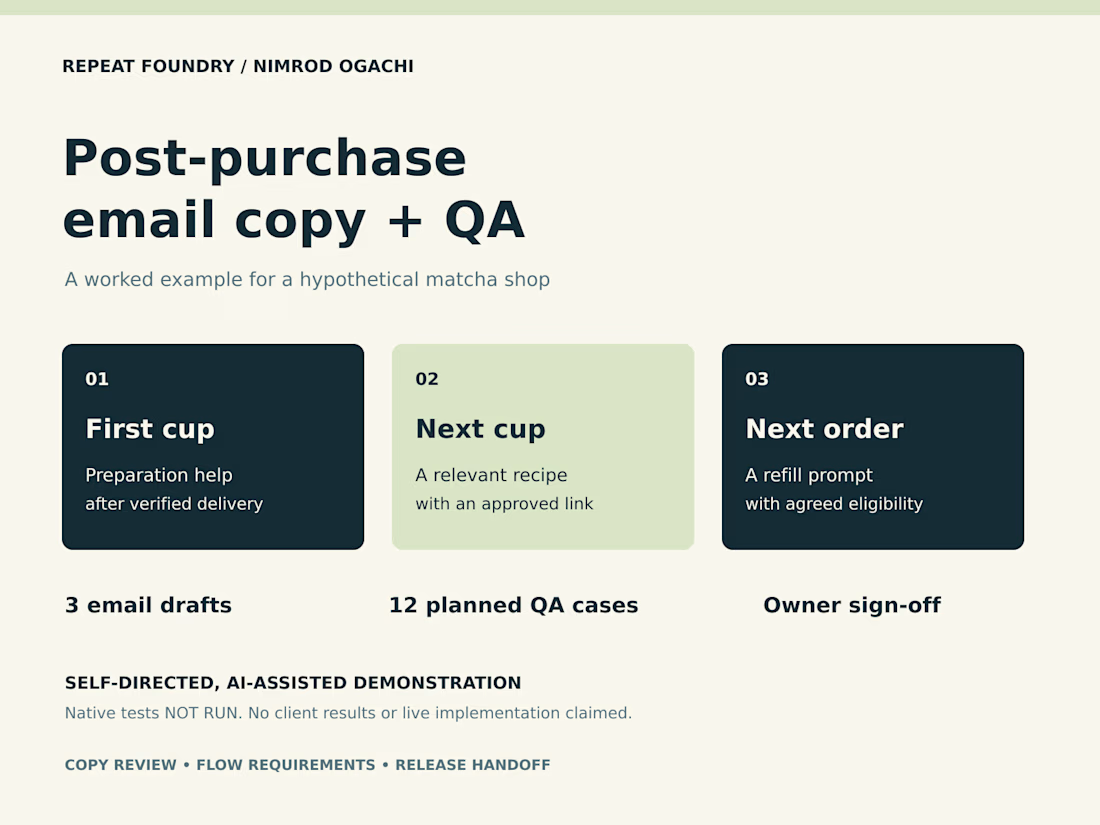
These questions shaped my new matcha-shop demonstration: three email drafts, an evidence-linked review and a 12-case QA plan. The handoff makes the remaining decisions explicit, including delivery evidence and refill timing.
This is self-directed, AI-assisted work for a hypothetical shop. Every native account test is marked NOT RUN, and no client or revenue results are claimed.
The full six-page example is here:
https://contra.com/p/7vFYWm3m-post-purchase-email-copy-review-and-qa-handoff
If your Shopify brand or email team needs a focused copy review, send the email count and the question you want answered.


Great QA approach. Checking the CTA, recommendations, and timing can prevent a lot of post-purchase mistakes.

I’m starting a new series: “Make Your Numbers Make Sense.”
As an accountant, I’ve noticed that many business owners don’t actually need more numbers — they need to understand the numbers they already have.
Revenue. Profit. Cash flow. VAT. Xero. P&L.
These can look complicated, but they don't have to be.
So I’m starting a daily series where I’ll take one accounting/business number at a time and explain what it actually means for a business owner — simply and practically.
Episode 1 coming next:
“Your business made £100,000. So why isn't £100,000 in your bank account?”
If you're a founder, freelancer, or small-business owner, follow along.
Let’s make your numbers make sense.




Excited for this series.😍
Month-end close shouldn't feel like a fire drill. 📊
If your team dreads the last week of the month, the problem usually isn't the people. It's the process.
After 5+ years in bookkeeping and financial reporting, here's the month-end close structure I rely on:
1. Set a close calendar
Assign every task a deadline and an owner. "Close by Day 5" only works when everyone knows what they're responsible for.
2. Cut off transactions cleanly
Confirm all invoices, bills, and expense claims are recorded in the correct period before anything else.
3. Reconcile everything
Bank and credit card accounts, receivables, payables, loans, and payroll liabilities. Unreconciled balances are where errors hide.
4. Post accruals, prepayments, and depreciation
Match income and expenses to the period they belong to. This is what makes your P&L accurate.
5. Review the trial balance
Look for unusual balances, misclassified entries, and variances against last month or budget. Question anything that doesn't make sense.
6. Check tax accounts
Reconcile VAT or sales tax and review any tax liabilities before filing deadlines catch you off guard.
7. Prepare and review reports
Finalize the P&L, balance sheet, and cash flow, then add short notes on key movements so the numbers tell a story.
8. Lock the period
Once reviewed, close the books to prevent backdated changes.
The result? Faster closes, fewer surprises, cleaner audits, and decision-makers who trust the numbers.
A good close is built on a repeatable checklist, not last-minute heroics.
💬 What's the one step in your month-end close that takes the longest? Let me know in the comments.
#Accounting #MonthEndClose #Bookkeeping #FinancialReporting #Finance #QuickBooks #Xero #Accountant #SmallBusiness #CountingCrux

Thanks for sharing the Crux of accounting😍