The network for creativity
Join 1.25M professional creatives like you
Connect with clients, get discovered, and run your business 100% commission-free
Creatives on Contra have earned over $150M and we are just getting started
Back to feedPost

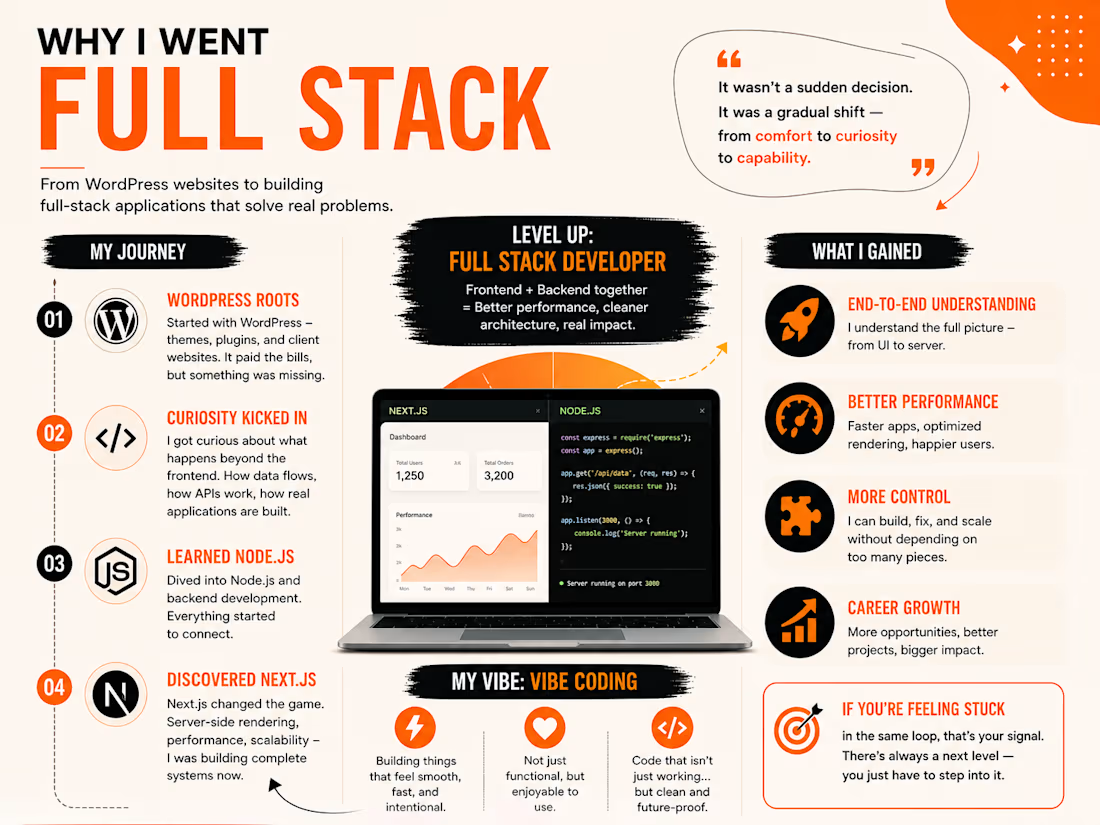
I didn’t start as a “full-stack developer.”
I started with WordPress.
Like most people, I was building simple websites — themes, plugins, client work. It paid the bills, but after a point, everything started to feel repetitive. I was assembling websites, not really building them.
That’s when I got curious.
I started exploring what happens beyond the frontend… how data flows, how APIs work, how real applications are structured. That curiosity pulled me into learning Node.js. Then came Next.js — and that changed everything.
For the first time, I wasn’t just designing pages. I was building complete systems:
– Frontend + backend together
– Faster performance with server-side rendering
– Clean, scalable architecture
It felt like leveling up from “website creator” to “product builder.”
And somewhere along the way, I found my own style — what I call vibe coding.
For me, it means:
Building things that feel smooth, fast, and intentional.
Not just functional, but enjoyable to use.
Code that isn’t just working… but clean and future-proof.
Going full stack wasn’t a sudden decision.
It was a gradual shift — from comfort to curiosity to capability.
And honestly, it was the best move I made.
If you’re still in that phase where things feel repetitive, that’s probably your signal.
There’s always a next level — you just have to step into it.
The network for creativity
Join 1.25M professional creatives like you
Connect with clients, get discovered, and run your business 100% commission-free
Creatives on Contra have earned over $150M and we are just getting started





Related posts

Then: 1 month, 1 template.
Now: 1 week, 15 templates.
Same designer, different workflow.
I wrote up how I built no-code.supply: fifteen website templates, each with its own brand, in HTML and React, and some in Framer too. Claude Code did most of the typing. I did the directing.

no-code.supply
How I built 15 website templates with an AI coding agent in a week
How I built 15 AI-ready website templates with Claude Code in a week: the workflow, the quality bar, and why a template is only the starting point.

Going from one template a month to fifteen a week is wild. How much of the design direction did you still do by hand?

🚨 TYPOGRAPHY ISN'T JUST AESTHETICS—IT'S USER PSYCHOLOGY & PERFORMANCE
Most people choose fonts solely based on looks. High-performance engineers optimize typography based on visual hierarchy, eye-scanning psychology, and load speed.
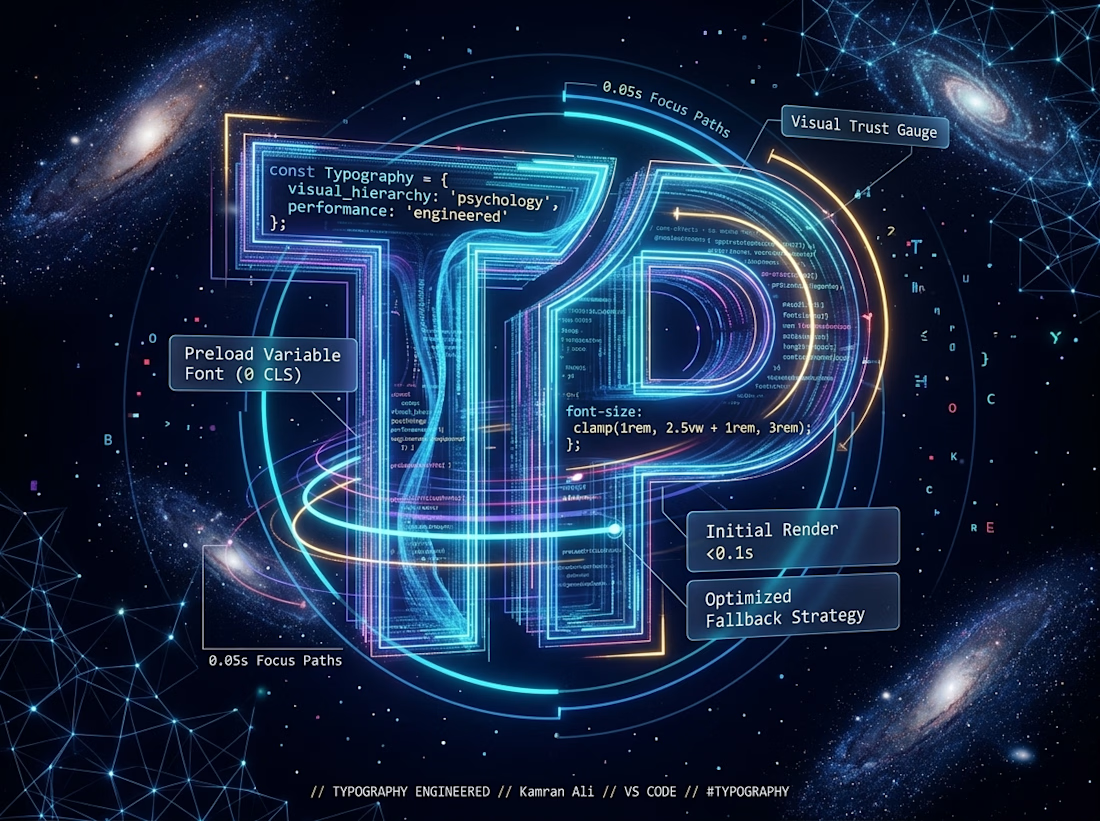
When a visitor lands on a digital product, typography dictates where their eyes move in 0.05 seconds. If your custom web fonts cause Layout Shifts (CLS) or slow down initial rendering, you lose user trust before they even read your headline.
How I engineer typography directly in VS Code:
• Fluid Typography: Using CSS clamp() to build smooth, proportional text scaling across every screen size without bloated libraries.
• Zero Layout Shift: Preloading critical variable fonts and executing fallback strategies so rendering is instant and crisp.
• Typography in Code: Blending monospace code fonts with modern UI elements (using RML & WGSL Shaders) to create deep visual contrast.
Great typography captures attention. Hand-coded optimization ensures it delivers results without sacrificing speed.
💬 Quick Question for Designers & Engineers:
What is your go-to typography stack for modern web applications, and how do you handle web font performance?
👇 Drop your favorite font pairings below—let's connect and share workflows!
#Typography #WebDevelopment #UIUX #CleanCode #DesignSystems #VSCode #FullStack



clamp() for fluid type saved me so many breakpoints. inter plus a variable serif usually

Open to New Projects 🚀
I’m a Full-Stack Developer open to working directly with clients on web, mobile, and AI-powered projects. I have experience with Generative AI, LLMs, RAG, Agentic AI, OpenAI, AWS Bedrock, React, Node.js, and TypeScript. Looking forward to building great products with new clients!