The network for creativity
Join 1.25M professional creatives like you
Connect with clients, get discovered, and run your business 100% commission-free
Creatives on Contra have earned over $150M and we are just getting started
Back to feedPost

The network for creativity
Join 1.25M professional creatives like you
Connect with clients, get discovered, and run your business 100% commission-free
Creatives on Contra have earned over $150M and we are just getting started
Related posts


A calculator that runs by itself is a clever way to show the product without asking anyone to read. Watching a price turn into an invoice explains the value instantly.

Most spreadsheet errors don’t come from bad formulas. They come from bad entries.
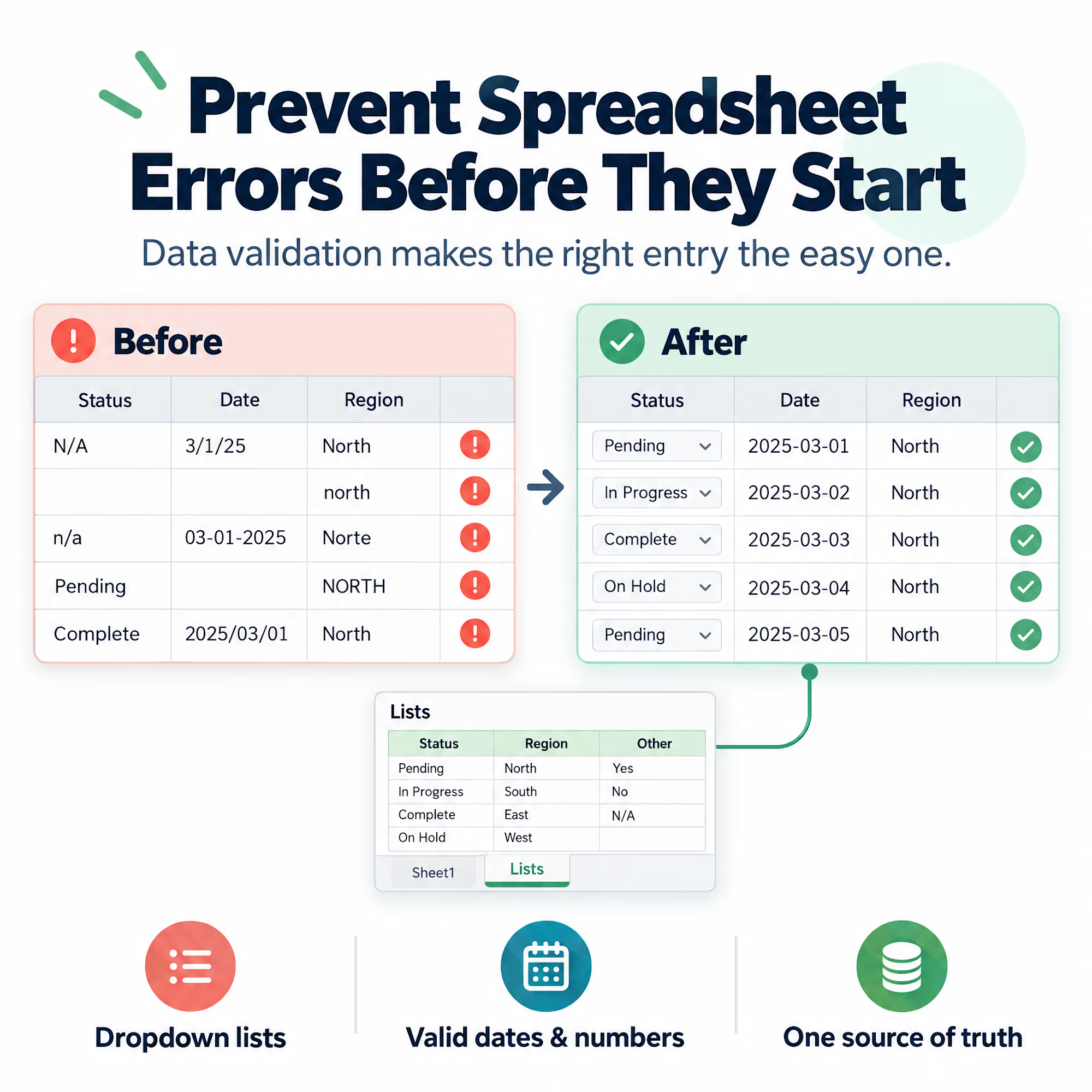
One person types “N/A”, another leaves the cell blank, a third writes “n/a “ with a trailing space. A date arrives as text. A region shows up as “North”, “north”, and “Norte”. Every formula downstream is correct, and the totals are still wrong.
Cleaning that up afterward works, but it’s the expensive way. It’s cheaper to stop the bad entry from getting in:
-- Use dropdown lists (Data Validation) for any field with a fixed set of values
-- Restrict date and number columns to valid formats
-- Add a short input message that explains what the cell expects
-- Keep a separate “lists” sheet so the allowed values live in one place
The goal isn’t to lock people out. It’s to make the right entry the easy one.
A spreadsheet that’s hard to fill in wrong rarely needs a cleanup project later.
Which field in your own reports causes the most cleanup work?

This analytical fintech project features a dashboard that presents key statistics and supports essential money-management tasks, including adding funds, transferring money, and sending payments.
