The network for creativity
Join 1.25M professional creatives like you
Connect with clients, get discovered, and run your business 100% commission-free
Creatives on Contra have earned over $150M and we are just getting started
Back to feedPost

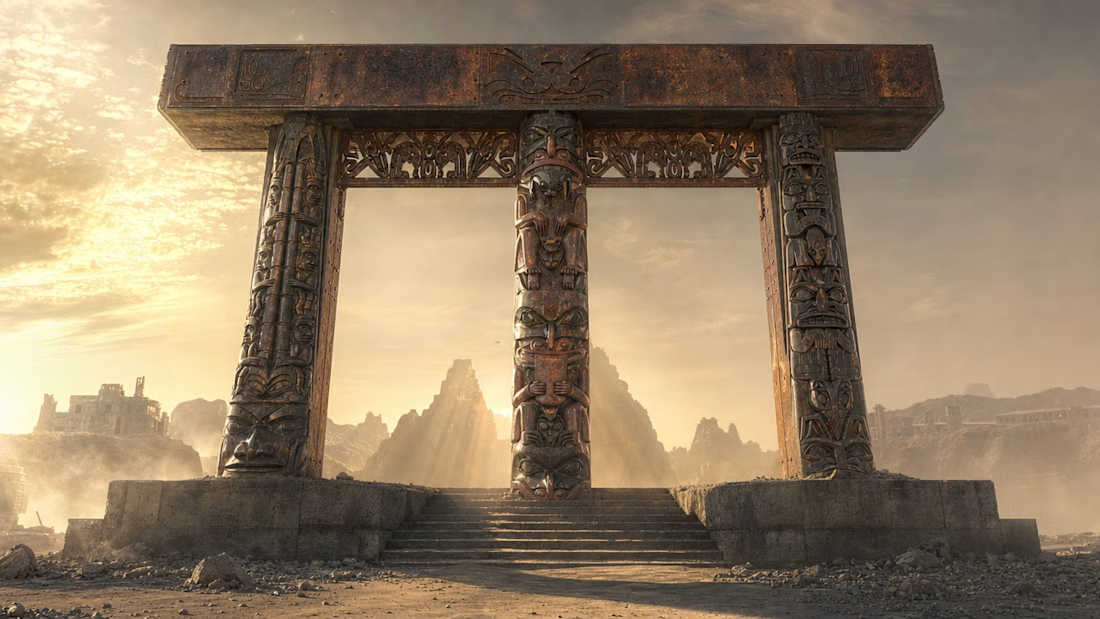
TOTEM — The Gate (bonus piece — my main entry is here 👇)
Main submission TOTEM: https://contra.com/community/Y6nZXmUy-totem-flora-museum-challenge-submission — that's the one to upvote for the challenge.
This piece is a side visual from the same project TOTEM.
Traditionally, welcome poles stood at the edge of a Northwest Coast village to greet visitors, and every totem pole carried a clan's lineage and history in its carved figures — a record of memory, not an idol.
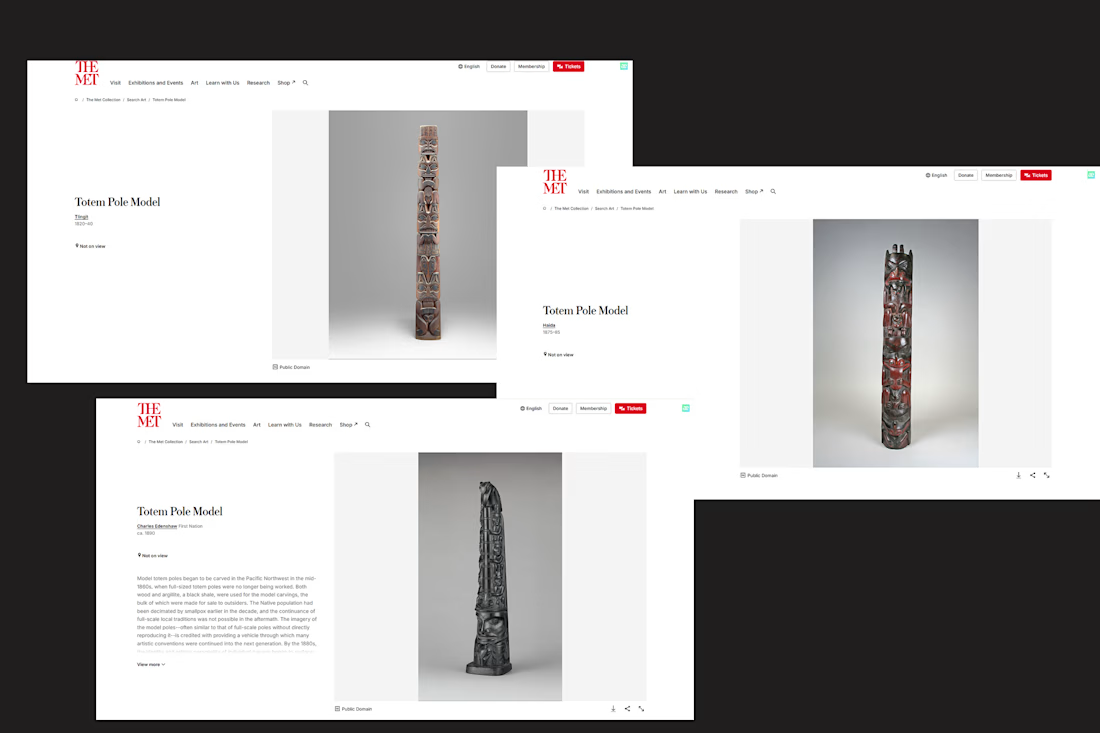
In TOTEM, three separate pole models — Tlingit (1820–40, wood), Haida (1875–85, wood, pigment), and one carved in argillite around 1890 by Charles Edenshaw — are reimagined not as three separate standing poles, but fused into a single arch at the shrine's threshold, keeping that same essence: they carry clan memory and greet whoever arrives.
One gate instead of three poles, reforged in metal instead of wood and stone.
The Met's own records don't specify what each carved figure on these three poles depicts, so the imagery in TOTEM's version is my own extrapolation — grounded in the real, documented purpose of welcome poles and clan-crest carving, not a literal reading of these specific figures.
Model poles like these first appeared in the Pacific Northwest in the 1860s, once full-sized totem poles were no longer being carved at the same scale — smaller versions became the way carvers, including Edenshaw, kept the same imagery and tradition alive for the next generation. In the post-collapse world of TOTEM, that same tradition is deliberately amplified: several poles are merged into a single arch, scaled up to a monumental size, and carved in a far more durable material — metal instead of wood and stone — so that it reminds everyone who passes through of the history of the lineage it carries.
Totem Pole Model — Tlingit, 1820–40 — wood
https://www.metmuseum.org/art/collection/search/319073
Totem Pole Model — Haida, 1875–85 — wood, pigment
https://www.metmuseum.org/art/collection/search/319081
Totem Pole Model — Charles Edenshaw, ca. 1890 — argillite (carved stone)
https://www.metmuseum.org/art/collection/search/319092
👉 Full story TOTEM: https://contra.com/community/Y6nZXmUy-totem-flora-museum-challenge-submission
#floramuseumchallenge #flora #metmuseum #generativedesign #FLORAMuseum


beautifully done!
Thanks😊
Update here https://on.contra.com/6rQwwN

on.contra.com
TOTEM — FLORA Museum Challenge submission The Challenge: take one real, public-domain object from...
FLORA Museum Challenge submission The Challenge: take one real, public-domain object from The Metropolitan Museum of Art’s collection and reimagine it into a new world, using FLORA. The Story…

😍 🔥 Amazing
Thank you so much, that means a lot!

Perfect!
Thank you! I’m so glad you liked it.😊
The network for creativity
Join 1.25M professional creatives like you
Connect with clients, get discovered, and run your business 100% commission-free
Creatives on Contra have earned over $150M and we are just getting started











Related posts

The team is cooking
Motion design for the logo we are making for Nation e-commerce


Wou

Juggling multiple projects, experimenting with motion, and bringing ideas to life. A little peek at what I’ve been working on lately. ✳️


Looks like a busy but fun stretch! The motion adds so much life to these sites.

Access Granted | Event Reveal Template
Access Granted turns an admission pass into an event poster for club nights, gallery openings and design events. After Hours and Form Forum use the same 10-second timing, with editable text, named layers and replaceable artwork. Built in SVGator through its MCP, using masked type reveals and a scan-and-stamp opening.
Second version, Form Forum: https://app.svgator.com/editor#/bbc9d7627c9248e6bfa9ed72ac87c90a