The network for creativity
Join 1.25M professional creatives like you
Connect with clients, get discovered, and run your business 100% commission-free
Creatives on Contra have earned over $150M and we are just getting started
Back to feedPost

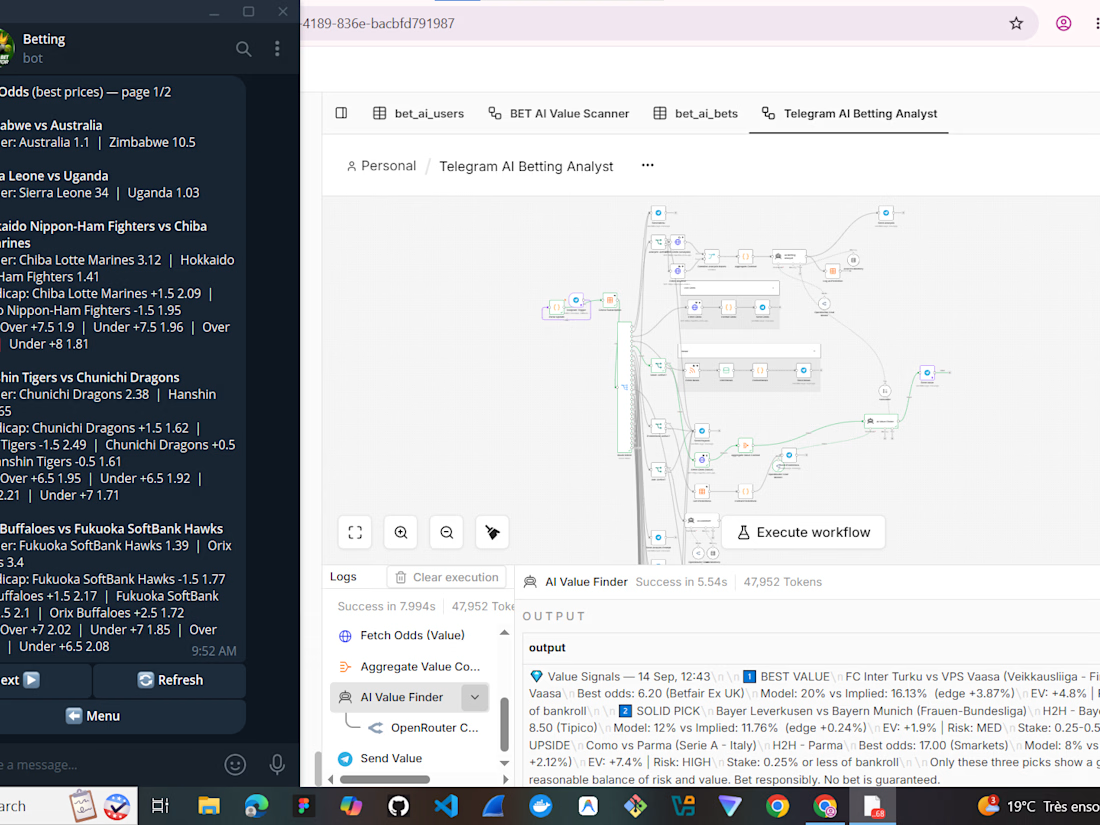
I built a fully automated Telegram AI Betting Analyst to process live sports data and find market edges. ⚡️
Instead of manually checking odds, this system centralizes the whole process:
→ Fetches and aggregates live odds via API
→ Routes data through an AI Value Finder to spot +EV (Expected Value) opportunities
→ Pushes real-time alerts and analysis directly to a Telegram bot UI
I handled the entire architecture in n8n, turning raw market data into an interactive, actionable dashboard right in the user's pocket.
#automatedworkflow #n8n #TelegramBot #AIAutomation #API
AI Agent DesignerAI Agent EngineerBusiness Workflow AutomationDockerN8NautomatedworkflowTelegram API


The network for creativity
Join 1.25M professional creatives like you
Connect with clients, get discovered, and run your business 100% commission-free
Creatives on Contra have earned over $150M and we are just getting started

Challenges
View all


Related posts

🚀 Automated Lead Management System
I built an automated lead management workflow using n8n that captures incoming leads, stores them in Google Sheets, and instantly notifies the sales team on Telegram.
Capture → Enrich → Score → Save → Notify
Built to reduce manual work, improve response time, and prevent missed leads.
#AI #Automation #n8n #CRM #LeadManagement

Nice work sir,
Sir we can Build this normally with App script. I just Built yesterday.
Where Google sheet will received the leads from any channel + store and distribute as per described assignment rules and notify with lead details to respected person.

Saved an hour each week with a Telegram finance bot
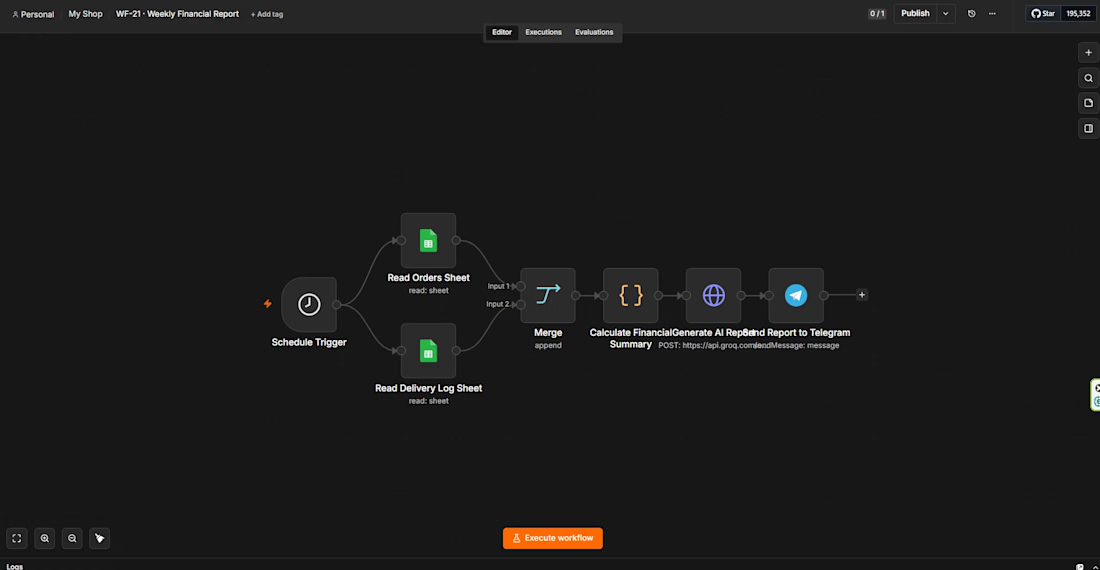
I finally got rid of the weekly spreadsheet grind. Using n8n’s Schedule Trigger I pull orders and delivery logs from Google Sheets, merge them, run a quick Code node to calc the margins and then ask Groq AI for a plain‑English summary. The text lands in my Telegram via an HTTP Request. The whole thing runs on Friday evenings and hands me a ready‑to‑read report – no more manual copy‑pastes. It’s a small win, but it shaves an hour off my workload each week.
#n8n #automation #ScheduleTrigger #GoogleSheets
Follow for more: https://go.phonezait.de/

What if your PC could actually listen, understand, and do the work for you?
I’m building that idea into something real.
Meet AURA — my personal AI voice assistant for Windows.
Instead of building another chatbot that only answers questions, I’m experimenting with an AI agent that can actually interact with my computer and help with everyday work.
So far, AURA can:
• Have live voice conversations
• Convert speech to text and respond with voice
• Open applications like Excel, Power BI, Chrome, and Windows Settings
• Search the web and YouTube through voice
• Perform basic PC and file operations
• Understand requests through Gemini
• Execute actions through a safety-controlled automation layer
• Continue listening after completing a task
But this is only the beginning.
My long-term goal is to make AURA understand my actual workspace — including what’s happening on my screen and inside applications — so I can simply say:
“Open my Excel file, check the sales data, clean the date column, and add a formula for total revenue.”
And let AURA handle the workflow.
I also want it to become useful for my own Data Analytics work — from Excel and Power BI workflows to repetitive desktop tasks, research, and automation.
I’m building AURA with Python, AI, voice technologies, desktop automation, Excel, Power BI, and LLMs, while keeping safety and human control at the core.
It’s still far from the final vision.
But that’s exactly what makes the project interesting.
I’m not just learning how AI agents work.
I’m trying to build one that I can actually use every day.
Building in public. Learning by building. 🚀
#AI #AIAgents #Python #AIAssistant #VoiceAI #DesktopAutomation #DataAnalytics #PowerBI #Excel #Automation #BuildInPublic


The screen-reading step is where I would put the guardrail. Once AURA can read what is in the window, everything on that screen is input - and a page it opened from a voice search can hold a sentence written to be read as an instruction. I spent a while trying to rob my own...