The network for creativity
Join 1.25M professional creatives like you
Connect with clients, get discovered, and run your business 100% commission-free
Creatives on Contra have earned over $150M and we are just getting started
Back to feedPost

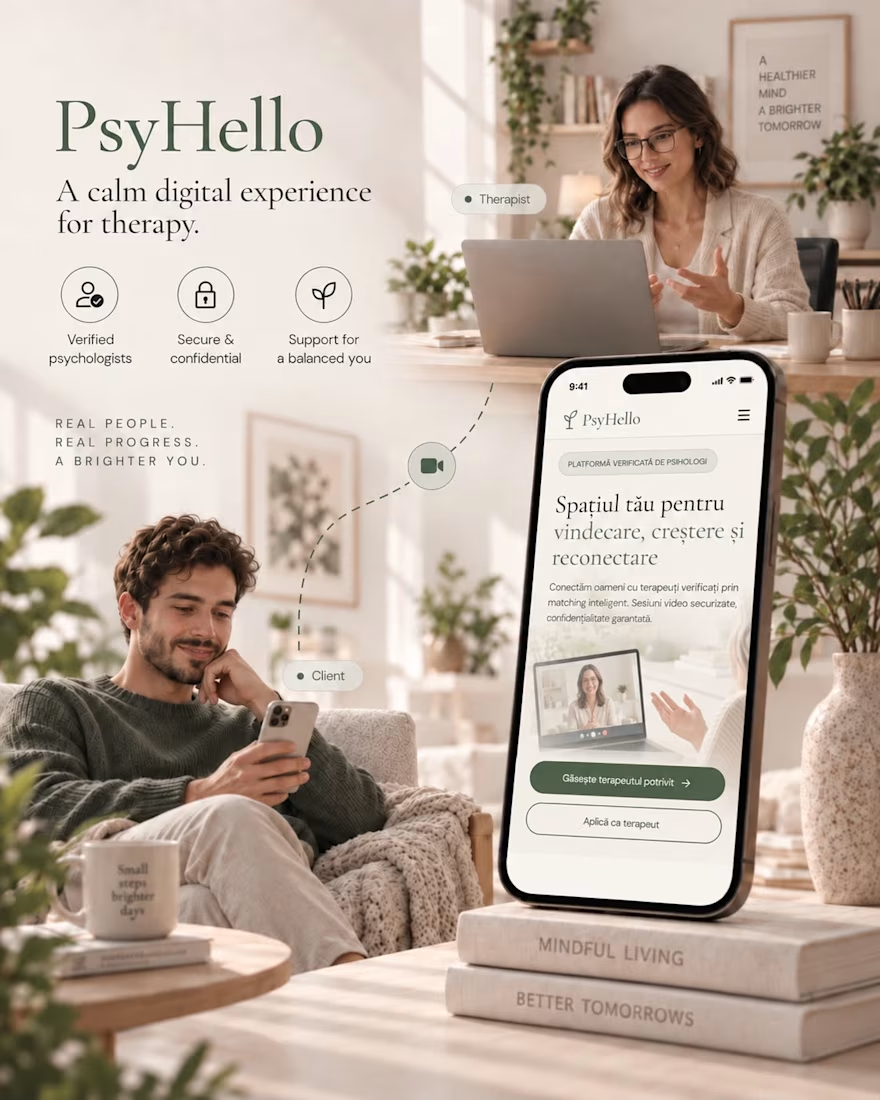
How do you design a therapy platform for two types of users with different needs without making the experience more complicated?
That was one of the main challenges behind PsyHello.
For clients, the experience needed to reduce uncertainty around choosing the right therapist and provide more clarity in a context that can already feel sensitive and overwhelming.
For therapists, the platform needed to offer a professional way to present their services, communicate the value they provide, and build trust from the very first interactions.
The challenge wasn’t simply to design two different user flows, but to bring them together within the same product without losing simplicity and consistency across the experience.
Throughout the design process, I focused especially on:
• defining distinct user journeys, connected by the same product logic
• creating an information architecture that reduces cognitive load and makes decisions easier
• prioritizing essential actions and reducing points of friction
• building trust through structure, consistency, and transparency of information
• balancing an empathetic experience for clients with an efficient and professional one for therapists
What I enjoyed most about this project was the complexity behind an experience that, on the surface, needs to feel simple.
When designing for two types of users within the same product, you need to balance different needs, contexts, and goals without losing clarity across the experience.
PsyHello was a project that pushed me to look beyond the interface and focus on how all of these needs come together into one coherent experience. 🌱
#UXDesign #ProductDesign #UIDesign #UserExperience #ProductThinking
The network for creativity
Join 1.25M professional creatives like you
Connect with clients, get discovered, and run your business 100% commission-free
Creatives on Contra have earned over $150M and we are just getting started

Challenges
View all


Related posts


Thaw — AI Mental Wellness Platform Landing page
Designed the landing page and dashboard preview for Thaw — an AI platform that tracks anxiety, mood, and burnout, framing emotional buildup as frost that gradually melts through guided sessions.
Mental health apps tend to land in one of two places: too clinical to feel human, or too soft to feel like it takes anything seriously. So the whole design leans on one strong metaphor instead — a head encased in melting ice — and lets oversized typography wrap directly around it for real visual weight.
Below the hero, the dashboard preview does the harder work: mood stability, anxiety signals, sleep quality, and a specific AI-detected insight that makes the product feel genuinely perceptive rather than generic.
A warm dark palette with cool blue type keeps the tone serious without tipping into heavy.
Creative - Midjourney
Animation - Jitter


🎰 6 POSTS AGO I ASKED: LUCK OR A PATTERN?
Well… apparently, a pattern.
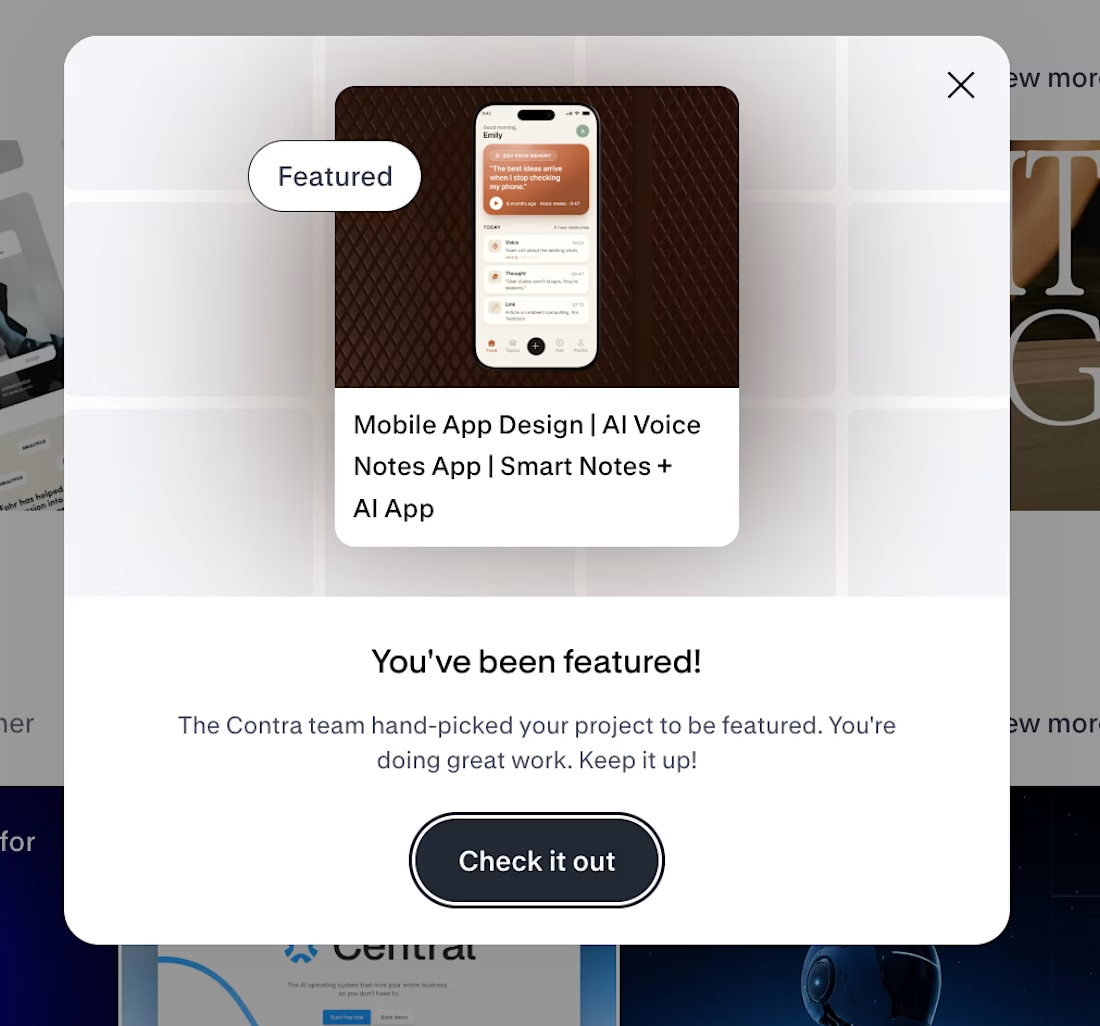
Another Asol Design project was hand-picked by the Contra team.
Feature #7.
And this time it’s our AI Voice Notes App, another mobile product concept built around the same principle I keep pushing:
Great mobile design isn’t just about making screens look beautiful.
It’s about combining product thinking, user behavior, growth logic, and strong visual execution into one clear experience.
7 features later, I think the pattern is becoming pretty obvious. 👀
Thank you, Contra team, for noticing the work again.
More mobile product experiments, growth thinking, and probably a few more Contra features are coming. 👀
Next stop: #8?
#mobileappdesign #productdesign #uxdesign #uidesign #growthdesign #iosdesign #aidesign #figma #asol_design


Congrats 🎉