The network for creativity
Join 1.25M professional creatives like you
Connect with clients, get discovered, and run your business 100% commission-free
Creatives on Contra have earned over $150M and we are just getting started
Back to feedPost

How much time does your team spend collecting data from websites every week?
It might seem like a small task.
Open a website.
Find the information.
Copy it into Excel.
Move to the next website.
Repeat.
But when someone does this every day, those small tasks can turn into hours of manual work.
This is where web scraping and automation can help.
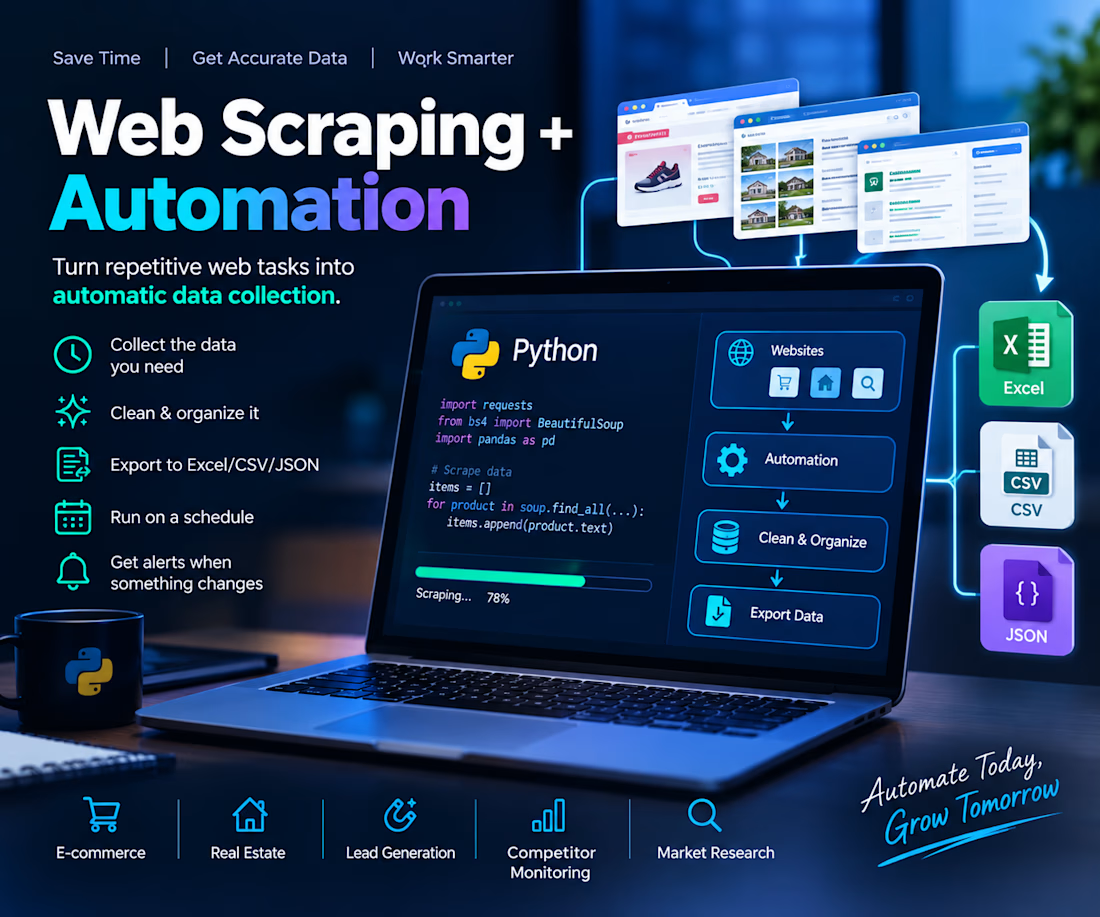
A Python-based system can automatically:
→ Visit multiple websites
→ Extract the specific data you need
→ Clean and validate the information
→ Save it to Excel, CSV, JSON, or a database
→ Run automatically on a schedule
→ Detect important changes and send alerts
For example, businesses can use automation for:
• E-commerce price and stock monitoring
• Real estate listing collection
• Lead generation
• Competitor research
• Supplier data collection
• Market research
• Job listing monitoring
The goal isn't simply to scrape a website.
The goal is to turn a repetitive manual process into a reliable workflow that runs with much less human effort.
If someone on your team is still opening the same websites and collecting the same information every day, there may be a good opportunity for automation.
If you have a repetitive web-based task, feel free to share it in the comments. I'll give you an honest opinion on whether it can realistically be automated.
#Python #WebScraping #Automation #DataExtraction #WebAutomation #LeadGeneration #Ecommerce



Work are so good
The network for creativity
Join 1.25M professional creatives like you
Connect with clients, get discovered, and run your business 100% commission-free
Creatives on Contra have earned over $150M and we are just getting started





Related posts

This project focused on building and testing a practical AI security assessment lab for evaluating LLM defenses against prompt injection and jailbreak attacks.
I integrated Spikee by Reversec with a locally hosted cybersecurity model running through LM Studio, then added NVIDIA NeMo Guardrails to compare model behavior under three conditions: no guardrails, input filtering, and combined input/output protection.
The work included configuring the local model environment, building a custom FastAPI gateway, integrating NeMo Guardrails, troubleshooting model latency and timeout issues, creating a reusable Spikee target, and analyzing attack results using Spikee’s built-in reporting tools.
The project also explored different adversarial testing approaches, including prompt injection datasets, obfuscation, encoded attacks, Best-of-N testing, synthetic canary leakage tests, and structured benchmark comparisons.
The objective was to measure how much the guardrails reduced successful attacks while keeping the model, dataset, and testing conditions consistent.
Tools used: Spikee, NVIDIA NeMo Guardrails, LM Studio, Python, FastAPI, PowerShell, Parrot OS, local LLMs, JSONL datasets, and custom security testing scripts.
This project demonstrates a hands-on approach to LLM red teaming, AI safety testing, prompt-injection assessment, and guardrail validation for organizations deploying generative AI systems.


pretty cool tbh. testing the same attacks with different guardrail setups makes the results way more interesting.

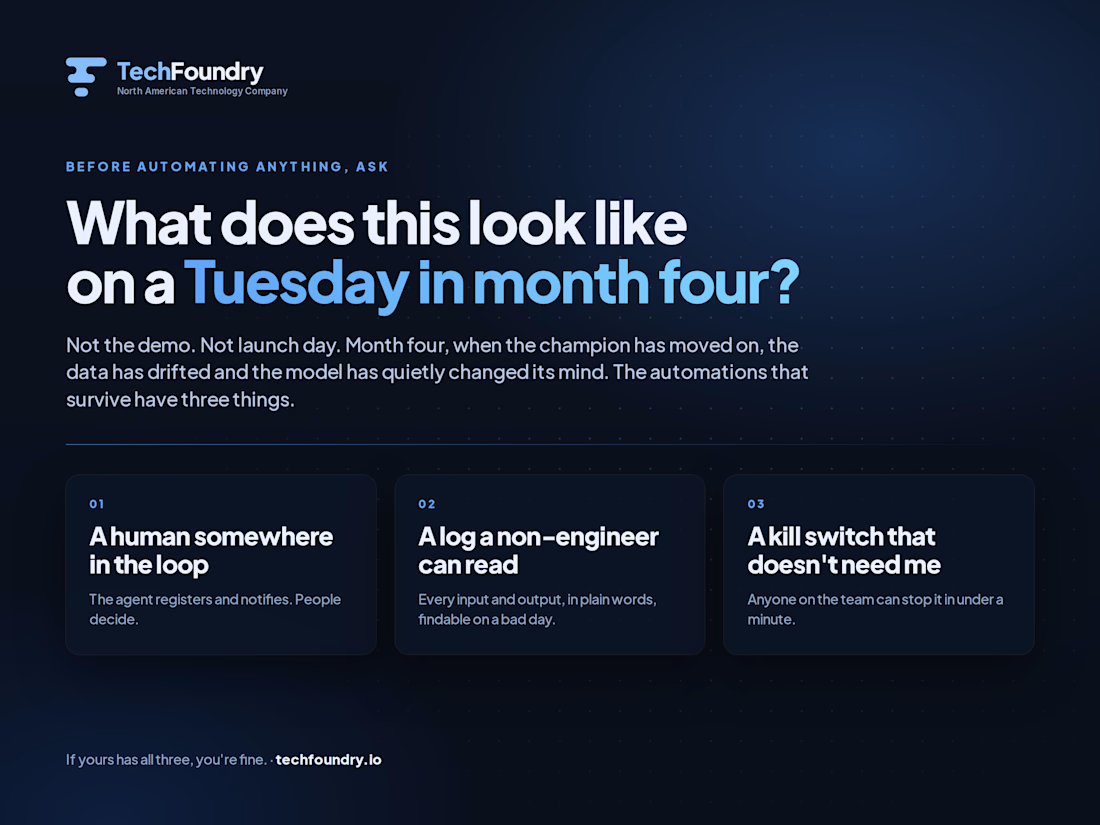
The question I ask before automating anything: "What does this look like on a Tuesday in month four?"
Not the demo. Not launch day. Month four, when the person who championed it has moved on, the data has drifted, and the model has quietly started doing something slightly different.
The automations that survive month four have three things: a human somewhere in the loop, a log a non-engineer can read, and a kill switch that doesn't need me. The PO intake agent I posted last week is built that way on purpose. It registers and notifies, people decide, and every email in and out is logged.
If yours has all three, you're fine. If it has none, I'd love to hear how it's going. I collect these stories.



the month four test is so spot on zahid. everyone designs for the launch demo, but silent prompt drift kills more workflows than actual broken APIS.

JARVIS
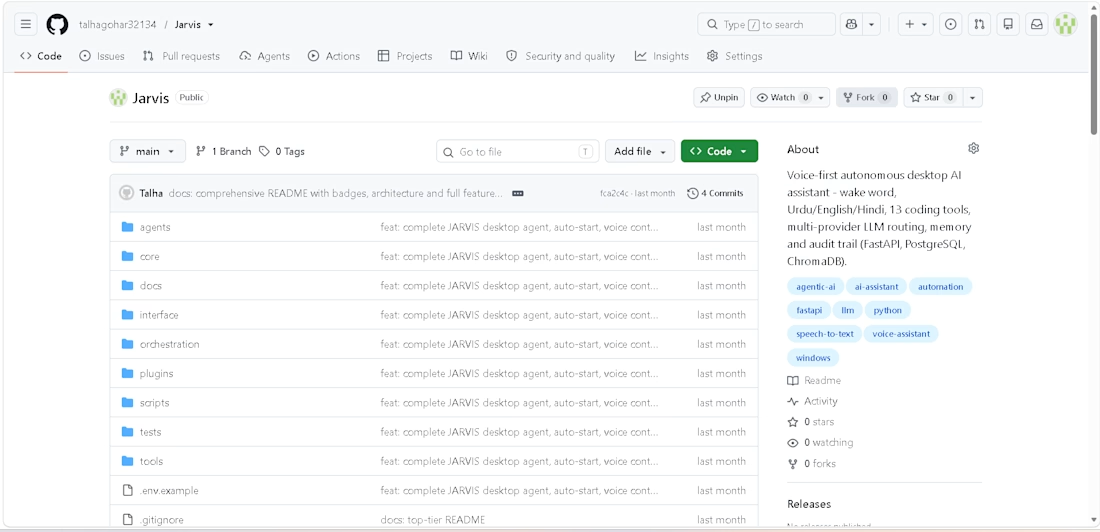
Title: JARVIS: Voice-First Autonomous AI Assistant
Description:
A locally hosted AI assistant that listens, reasons, and acts on my computer with human approval where it matters.
What I built:
Voice interface with a "Hey Jarvis" wake word, speech-to-text and text-to-speech
Autonomous coding agent that locates, patches, tests, and fixes its own code
Multi-provider LLM routing (Gemini, Groq, OpenRouter, Ollama, OpenAI) with automatic fallback
13 tools, approval gates, and an audit trail for safety
n8n workflow automation and a REST/WebSocket API
Tools: Python, FastAPI, LangChain, PostgreSQL, Redis, ChromaDB, Ollama, Docker, n8n



Having automatic fallback across multiple LLM providers keeps the assistant running smoothly even when one service drops.