The network for creativity
Join 1.25M professional creatives like you
Connect with clients, get discovered, and run your business 100% commission-free
Creatives on Contra have earned over $150M and we are just getting started
Back to feedPost

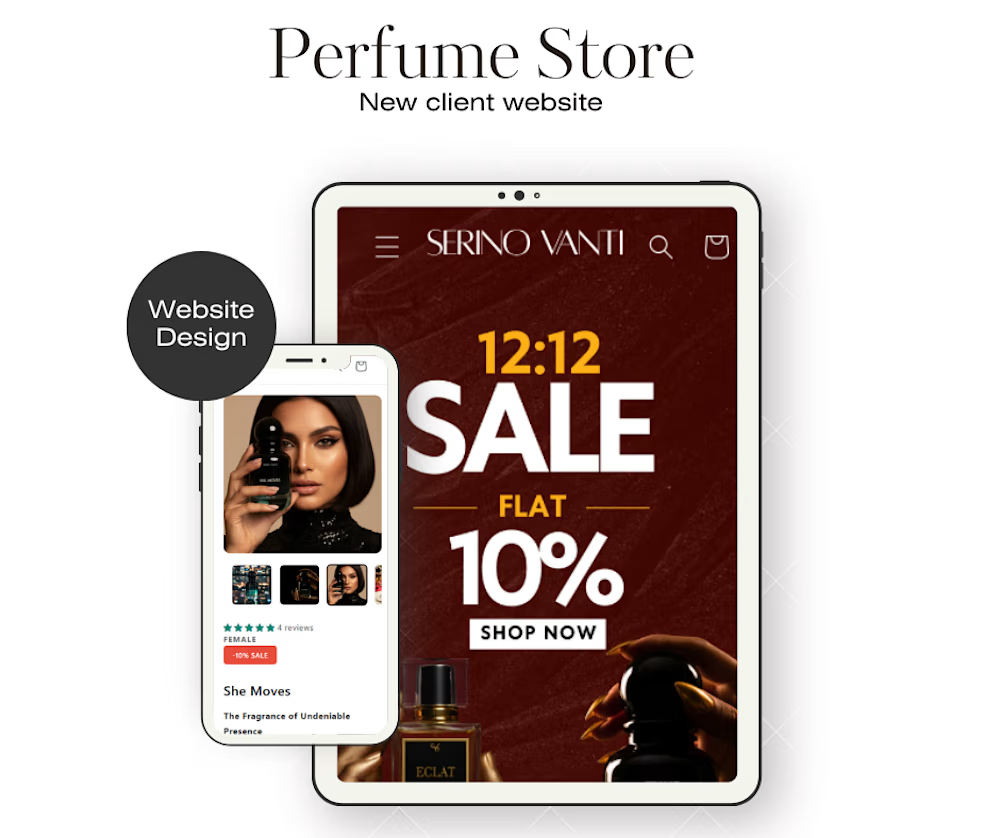
A perfume store created from scratch with CRO optimization

The network for creativity
Join 1.25M professional creatives like you
Connect with clients, get discovered, and run your business 100% commission-free
Creatives on Contra have earned over $150M and we are just getting started





Related posts

We’re building something new for creators who make serious digital products—playbooks, software, 3D assets, and high-value tools.
Introducing Strum ⚡️
Most marketplaces take huge cuts or flood buyers with low-quality clutter. We’re building a curated, performance-based launchpad designed to put real revenue back into creators' pockets.
• 80% creator revenue split
• Dedicated launch marketing & ad strategy
• Curated catalog of high-impact digital products
We’re currently hand-selecting our 10 Founding Creators for the official launch.
If you build high-converting digital assets or software tools, DM me or comment below.
Big things dropping soon—stay tuned. 👀🚀



Hey everyone! Here's a quick teaser for an upcoming spec project I've been working on in my spare time. I'm a huge fan of good fragrances, so this has been a treat to work on. 😮💨 See you soon with the full spec!

I am definitely looking forward to the end result as the lighting and rendering of this is amazing

Absolutely. Here’s a ~1,200-character version written to make store owners stop, think, and keep reading.
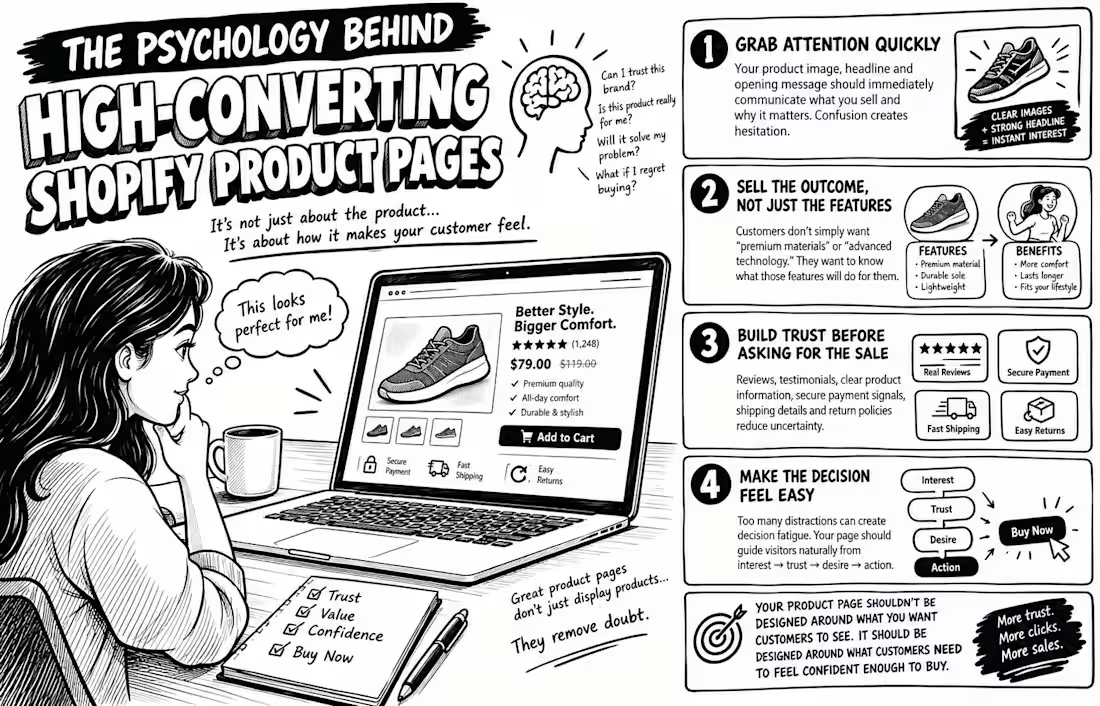
The Psychology Behind High-Converting Shopify Product Pages
Why do some Shopify product pages make you want to click “Buy Now”, while others make you leave, even when the product is good?
It’s not always about price. It’s psychology.
Before customers buy, their brains are quietly asking: Can I trust this brand? Is this product really for me? Will it solve my problem? What happens if I regret buying it?
A high-converting product page answers these questions before the customer has to ask.
1. Grab attention quickly.
Your product image, headline, and opening message should immediately communicate what you sell and why it matters. Confusion creates hesitation.
2. Sell the outcome, not just the features.
Customers don’t simply want “premium materials” or “advanced technology.” They want to know what those features will do for them.
3. Build trust before asking for the sale.
Reviews, testimonials, clear product information, secure payment signals, shipping details, and return policies reduce uncertainty.
4. Make the decision feel easy.
Too many distractions can create decision fatigue. Your page should guide visitors naturally from interest → trust → desire → action.
And here’s the biggest mistake:
Your product page shouldn’t be designed around what you want customers to see.
It should be designed around what customers need to feel confident enough to buy.
Because great product pages don’t just display products.
They remove doubt.
If you want, I can also turn this into a 1400 × 900 black-and-white comic/sketch illustration concept that visually explains the psychology behind the post.