The network for creativity
Join 1.25M professional creatives like you
Connect with clients, get discovered, and run your business 100% commission-free
Creatives on Contra have earned over $150M and we are just getting started
Back to feedPost

Why relying on public CAs for internal infrastructure is an operational time bomb: The case for your own private Root and Sub-CA.
How many times has your engineering team been paged at 3:00 AM because an internal TLS certificate expired, taking down database connection pools, internal APIs, or background workers?
When securing internal networks, teams usually fall into one of three traps: 1. The Self-Signed Disaster: Generating ad-hoc self-signed certificates and scattering them across servers. Developers end up adding ``--insecure`` or ``insecure_skip_verify: true`` to application code, completely gutting transport security. 2. The Public ACME Workaround: Trying to use Let's Encrypt on non-routable internal hostnames (like ``.internal`` or RFC 1918 IPs). This requires leaking internal network topology to public DNS or storing sensitive DNS API credentials on every internal host. 3. The Spreadsheet Calendar: Tracking certificate expiration on calendar reminders until an un-tracked intermediate cert inevitably lapses.
Enterprise sovereign infrastructure solves this permanently with a dedicated, multi-tier Private Public Key Infrastructure (PKI):
• Offline Enterprise Root CA: An ultra-secure, isolated trust anchor that signs only subordinate issuing authorities and never touches online network traffic. • High-Availability Subordinate Issuing CAs (Sub-CAs): Domain-level issuing authorities (Dogtag PKI/FreeIPA) handling day-to-day certificate issuance. • Zero-Touch Automated Renewal: Using ``certmonger`` on Linux hosts to continuously monitor certificate lifecycles, automatically re-requesting certificates 30 days prior to expiration and reloading daemons hitlessly. • Mutual TLS (mTLS) Enforcement: Cryptographic workload identity verifying both server and client authenticity across internal database listeners, microservices, and admin interfaces.
Stop debugging expired certificates during outages. Deploy an automated private PKI foundation.
Deploy your sovereign PKI with our 2-week Enterprise FreeIPA HA & Centralized PKI/CA Sprint on Contra: https://contra.com/s/ALrNLqlg-enterprise-free-ipa-ha-and-centralized-pkica-infrastructure
#Security #CyberSecurity #Cryptography #Infrastructure #Linux #DevOps #SRE #Architecture


The network for creativity
Join 1.25M professional creatives like you
Connect with clients, get discovered, and run your business 100% commission-free
Creatives on Contra have earned over $150M and we are just getting started

Challenges
View all


Related posts

A sneak peak to a B2B solution I'm building.


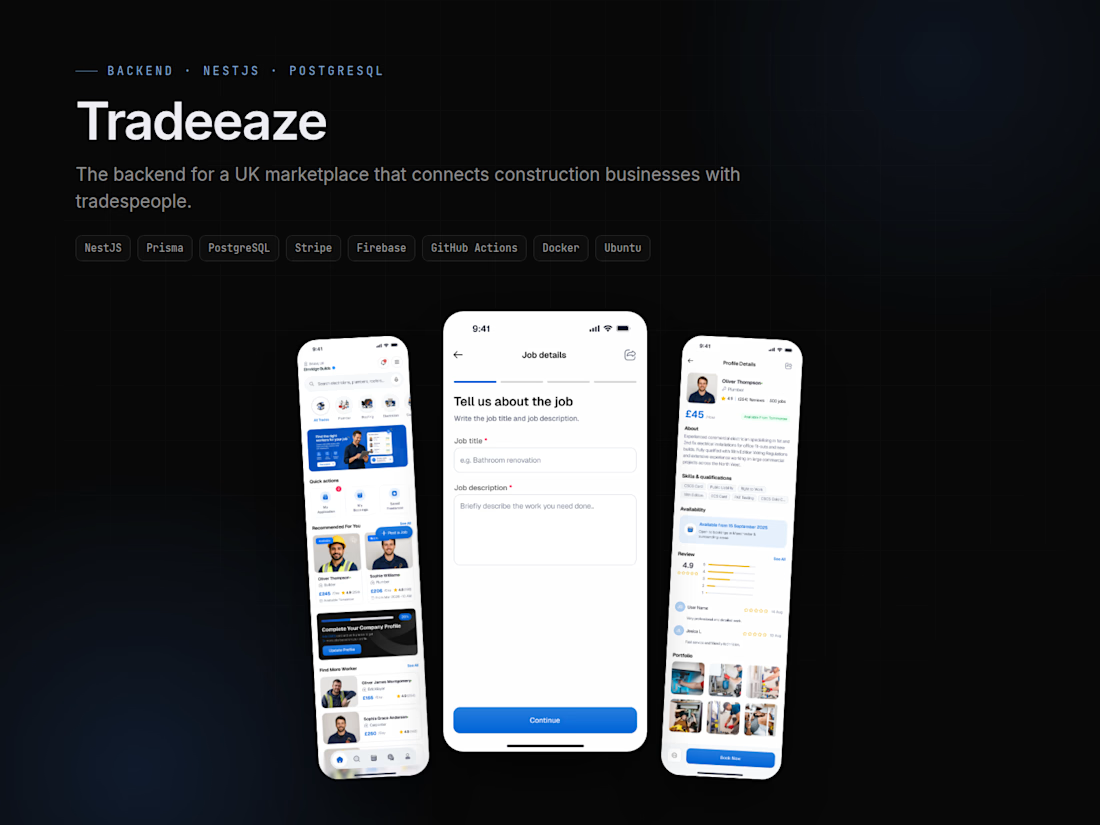
The backend for a UK marketplace that connects construction businesses with tradespeople.
I built the auth layer with admin 2FA, social and phone sign-in and rate limiting, and in a security review I closed an account-takeover path and an MFA bypass. On top of that: profiles with skills, accreditations and auto-geocoding, job posting and applications, a discovery search that ranks tradespeople by availability, distance, rating and budget, and Stripe subscriptions with webhooks.
I also set up the CI pipeline in GitHub Actions and the one-command deploy to an Ubuntu server with health checks.
Stack: NestJS, Prisma, PostgreSQL, Stripe, Firebase, Docker, GitHub Actions.


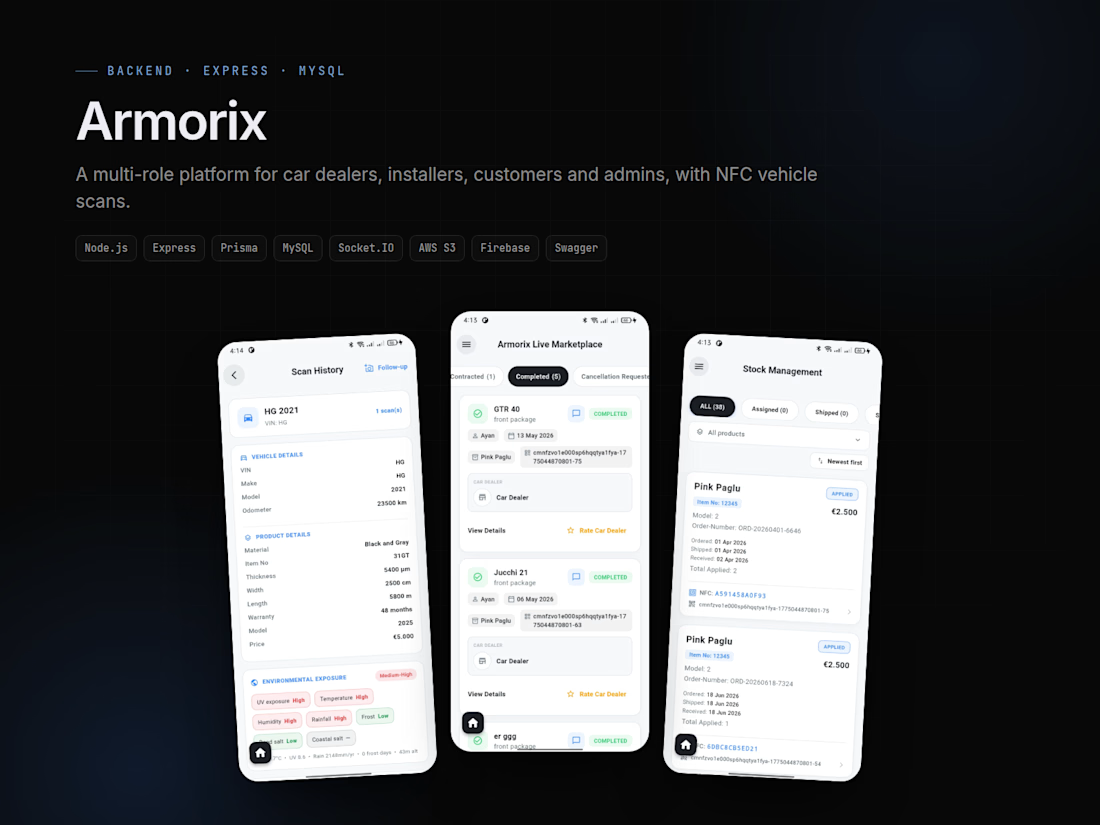
A vehicle protection platform where four kinds of users share one system: car owners, installers, car dealerships and a super admin. I was the main backend developer on a team of four, with 395 commits.
I built the REST API across about 30 database models: role-based access so each role reaches only its own data, the request and bidding workflow between dealers and installers with approvals, cancellations, penalties and ratings, and NFC-based vehicle scan sessions with multi-angle photo upload and image quality checks.
It also includes real-time chat with Socket.IO, push notifications, S3 uploads, PDF reports, warranty tracking and full Swagger documentation.
Stack: Node.js, Express, Prisma, MySQL, Socket.IO, AWS S3, Firebase.