The network for creativity
Join 1.25M professional creatives like you
Connect with clients, get discovered, and run your business 100% commission-free
Creatives on Contra have earned over $150M and we are just getting started
Back to feedPost

Sample deliverable showing the full output of a Business SOP Library — up to 10 standalone, immediately usable process documents for one business function. Built around how the business actually works, not generic templates. Delivered as a Google Docs bundle.


The network for creativity
Join 1.25M professional creatives like you
Connect with clients, get discovered, and run your business 100% commission-free
Creatives on Contra have earned over $150M and we are just getting started
Related posts

Looking for someone to help manage your daily administrative tasks?
I’m Jericka, an Administrative Virtual Assistant offering support with data entry, email management, online research, spreadsheet updates, and document organization.
My goal is to help business owners stay organized, save time, and focus on what matters most.
📩 Have tasks you need help with? Let’s connect!
#AdministrativeVirtualAssistant #VirtualAssistant #AdminSupport #DataEntry




Connecting order intake to the vendor workflow.
This TechFoundry IMS demo shows a purchase order feeding a vendor order, followed by date checks, vendor notification, and planning updates. A practical example of the AI and automation workflows we build into business software.
Watch the vendor order demo:
https://www.youtube.com/watch?v=vASYJhdLpZw
#AI #Automation #SoftwareDevelopment #Procurement

Great demo Zahid! Connecting order intake to vendor workflow with PO feeding vendor order + date checks + notification + planning updates - that's a solid practical flow! Love how you show AI & automation actually working inside business software, not just theory!

Most inbound bottlenecks aren't caused by low lead volume—they happen during triage.
When inquiries roll into a Google Sheet or CRM, operations teams often waste 10–15 minutes per submission reading through messy paragraphs, deciphering budget mismatch, and manually deciding who gets an immediate call vs. a standard rate sheet.
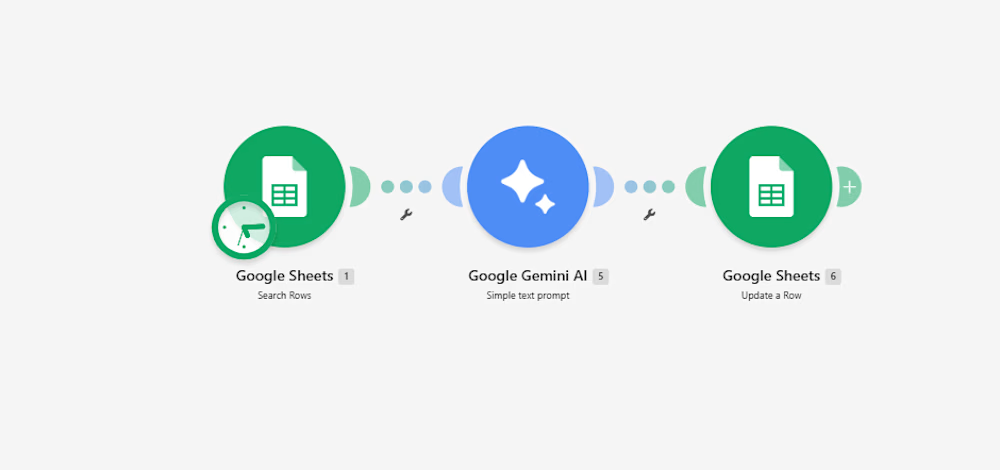
Instead of adding a bulky CRM add-on, I documented a lightweight 3-step automation pipeline built inside Make:
Intake & Extraction: An active listener triggers immediately upon a new submission, extracting core variables: client scope, target deliverables, timeline, and stated budget.
Context-Aware Evaluation (Gemini 2.5 Flash): The payload passes through an AI evaluation node with strict guardrails:
Evaluates budget against minimum agency criteria.
Assigns a triage score: Hot (immediate priority), Warm (nurture), or Cold (disqualified/template reply).
Generates a strict 15-word operational summary—no long paragraphs.
Determines an automated next step (e.g., routing to an account lead or flagging for asynchronous follow-up).
Data Return & Clean Pipeline: Appends the structured classification directly back to the master operational tracker, keeping the sheet filterable and clean.
The outcome: The sales and operations team can filter the entire board by priority status in two clicks, cutting first-touch response time to minutes without manually reading every single submission.
I’ve documented the full scenario map, execution logic, and data schemas below.
Curious how other agency operators and automation leads here handle their lead enrichment layer—are you doing AI scoring at the form level, or later in the CRM pipeline?:


For the budget gate, I'd keep an unstated budget separate from one explicitly below your minimum. Does the Make route ask for clarification when the amount or currency is missing, so a potentially suitable lead doesn't fall into Cold by default?