The network for creativity
Join 1.25M professional creatives like you
Connect with clients, get discovered, and run your business 100% commission-free
Creatives on Contra have earned over $150M and we are just getting started
Back to feedPost

I answer my website's chat from Telegram now
I make websites, and for years people reached me by email. Then I put a live chat I built on my own site, and I'm not going back.
It's early, but more people write in the chat than ever emailed me. I know who I'm talking to before I reply: the page they're on, how they found me, whether they've written before. And it's livelier than email ever was. Short messages, quick answers, a photo when words don't do it.
The chat lands in my Telegram. Each visitor gets their own topic in a group, whoever's free replies from their phone, and the answer shows up on the site in seconds. The visitor keeps reading the page they were on and chats right there.
It works on any site with one script tag, and there's a plugin for Framer. Everyone in the group can answer. $12 a month per site, or $10 paid yearly, and the first seven days are free.
I'm looking for the first few people to run it on a real site. If that's you: humanreply.app


humanreply.app
Human Reply — Live chat for your website, answered from Telegram
Site chats land in your team’s Telegram with what the visitor is looking at. Reply from your phone and it shows on the site in seconds. 7 days free.
The network for creativity
Join 1.25M professional creatives like you
Connect with clients, get discovered, and run your business 100% commission-free
Creatives on Contra have earned over $150M and we are just getting started





Related posts

Turin's biggest run club has no website to book and see events
So what do you build when 150+ people show up every Thursday and the whole thing runs on Instagram stories and WhatsApp threads?
For the @Lovable challenge, I built Endorphin's site and their booking system
I started with their reality.
I went through everything they publish. No website. Stories, a Linktree, two WhatsApp groups. 150+ people at the season opener, around 11K followers, nights with Nike and adidas. "Can I come?" arrives as a DM, and every answer is typed by hand.
Strategy before screens.
Endorphin isn't a logistics problem. The product is connection, and the run is the excuse. So Thursday stays booking-free: "I'm coming", one tap, a signal and not a reservation. Real booking exists only where spots are real: the drops. Brands get their own door. The crew gets one room instead of an inbox. The real power is behind "add every thursday to you calendar" button.
Every state designed in Figma before I touch Lovable.
Calendar, carousel, full, waitlist, booked, past. The molecule. The formula. One visual language: black, volt yellow, mono labels.
Lovable gets a spec, not a wish.
One prompt at a time, with the Figma design system: sizes, colors, timings, easing. I check the result against my board before I send the next one.
Details that make it feel like the club.
Endorphin is a molecule, so the homepage have one. Every dot is a moment from a Thursday. A "Your move" card asks three taps before any form, so you see people like you before you see a pass. Then you slide to claim it.
First time?
Live website and book page:
https://endorphin-spark-flow.lovable.app
Find the black flag.
Full walkthrough ( sorry for the length, too much to say : )

Her patients were ready to book. Her phone just couldn't keep up.
Meet Dietitian Pradeepa. She runs her own clinic in Coimbatore, South India, with 19+ years in practice. She is a real client, and she is my own dietitian.
The problem in one line: every booking took a chain of WhatsApp messages, Instagram DMs and missed calls, so enquiries went cold, patients forgot to come, and one day off meant calling everyone herself.
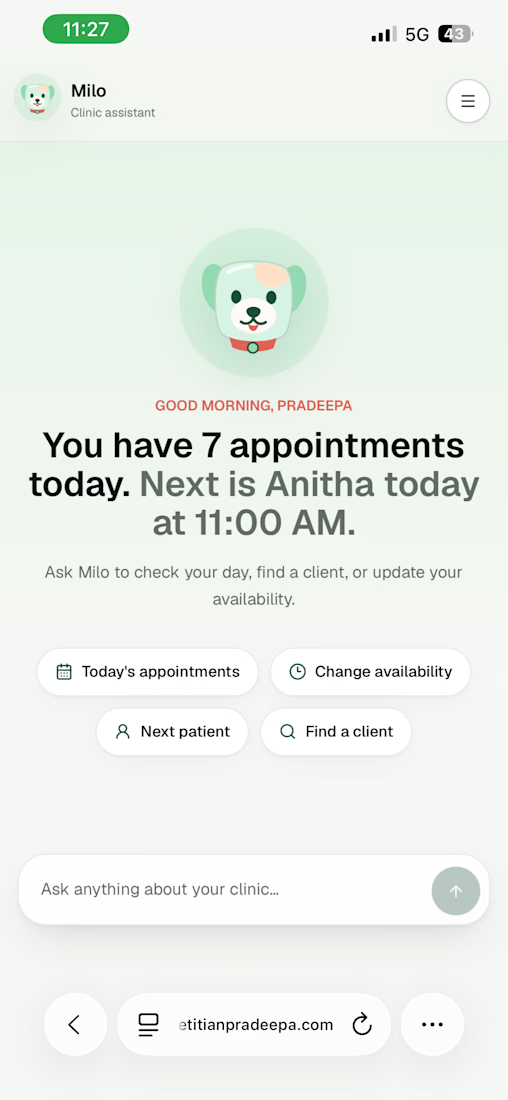
So I built Milo in @Lovable . He is her AI clinic assistant, named after her dog 🐾
For patients (the front door)
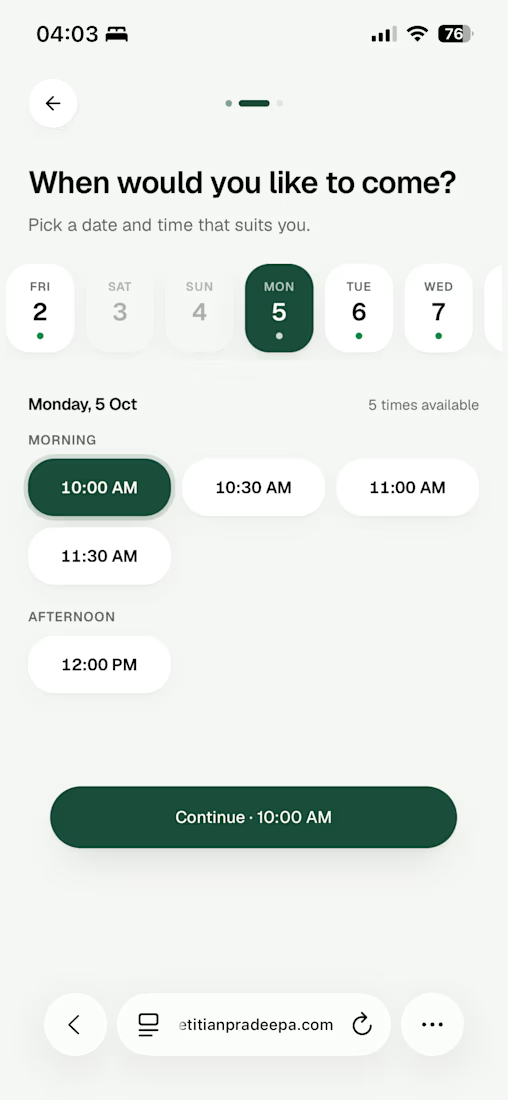
→ One booking link. Pick a consultation, pick a slot, confirmed in under a minute.
→ WhatsApp confirmation straight away, a reminder the day before, and a follow-up after the visit.
For Pradeepa (the follow-through)
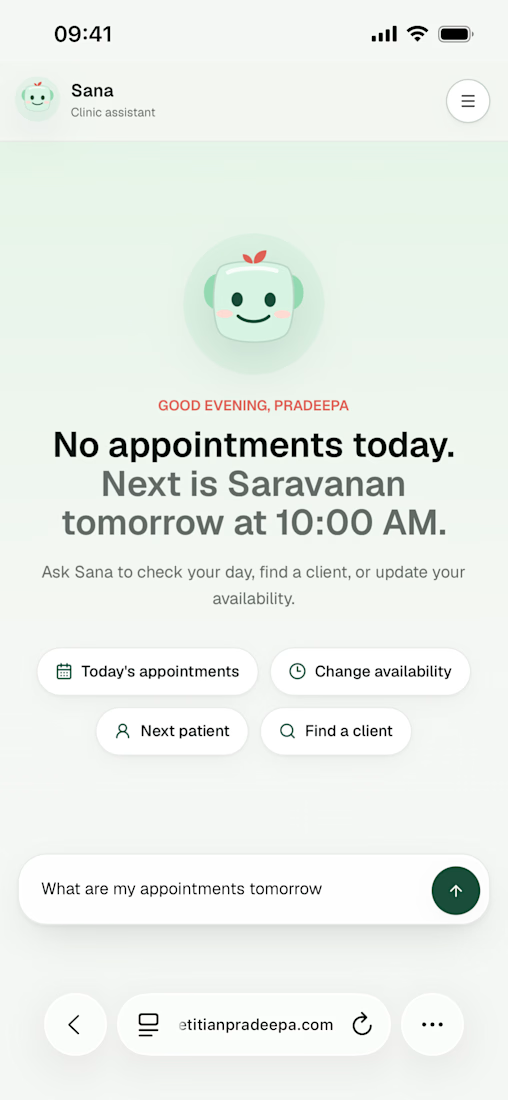
→ She asks Milo, in the app or on WhatsApp: "What are my appointments tomorrow?"
→ She says "I'm not available tomorrow" and Milo moves all five patients and tells each one.
→ Bookings, earnings and no-shows in one place.
I built it for a contest. Now it runs her clinic: it is live on her own domain and real patients book through it ❤️
Built in 41 prompts and 160 credits.
Live app: https://www.dietitianpradeepa.com
To Book an Appointment: https://www.dietitianpradeepa.com/book
Social post: https://lnkd.in/p/gVzBa6Bs
Demo video (2:24) and process video (1:57) attached.
@Lovable #lovablechallenge

On a phone call, silence is the bug.
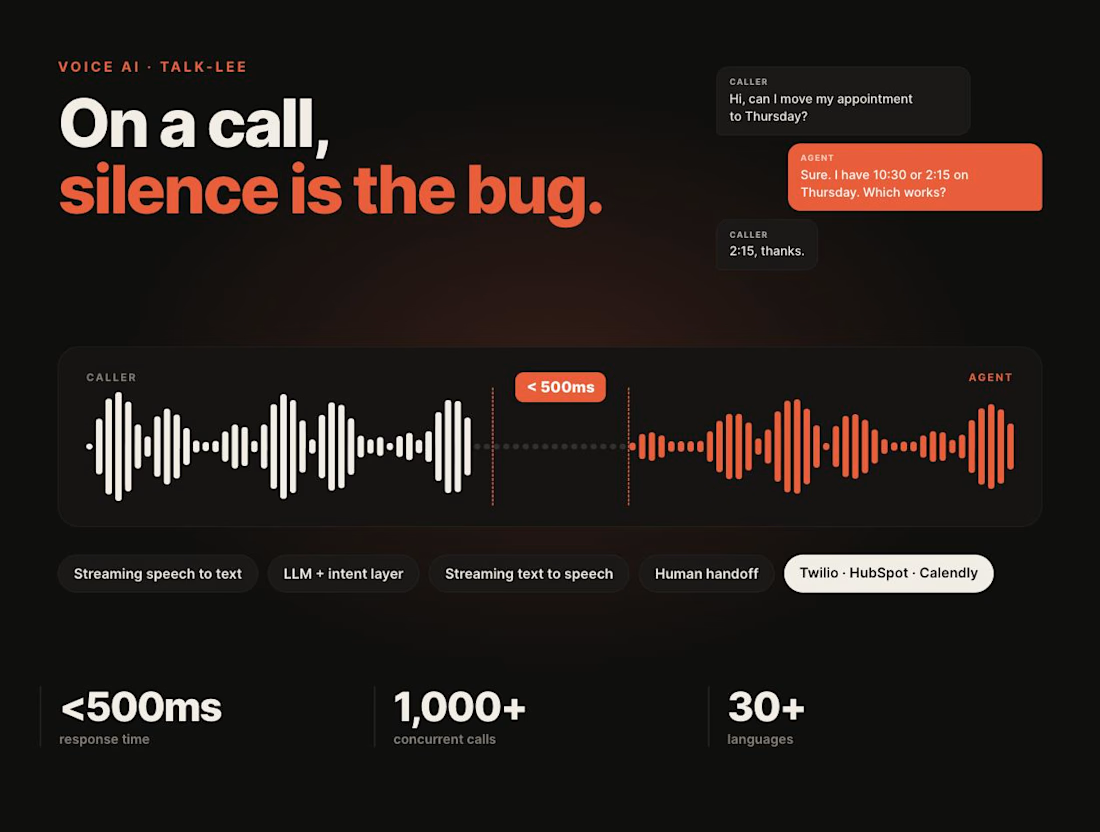
A text chatbot can take three seconds to reply and nobody minds. A voice agent can't. Leave a caller in silence for a beat too long and they say "hello?", start talking over it, or hang up.
That one fact shaped everything we built on Talk-Lee, an AI voice agent that answers business calls for healthcare, real estate and finance teams. Scheduling, support, lead qualification, around the clock.
The goal was a reply in under 500ms. You don't get there with a faster model. You get there by making sure nothing waits for anything else.
→ Speech to text streams while the caller is still talking
→ An LLM and intent layer keeps track of what they actually want
→ Text to speech streams back, so the agent starts talking before the whole answer is ready
→ An orchestrator decides in real time whether to answer, book or hand off to a person
Then it has to do something useful. It books into Calendly, logs the lead in HubSpot, and passes the hard calls to a human with the context already attached.
Where it landed. Under 500ms responses, 1,000+ concurrent calls, 30+ languages, GDPR and TCPA compliant.
Third project in a row with the same lesson. The model is the easy part. The plumbing around it decides whether anyone keeps using it.