The network for creativity
Join 1.25M professional creatives like you
Connect with clients, get discovered, and run your business 100% commission-free
Creatives on Contra have earned over $150M and we are just getting started
Back to feedPost

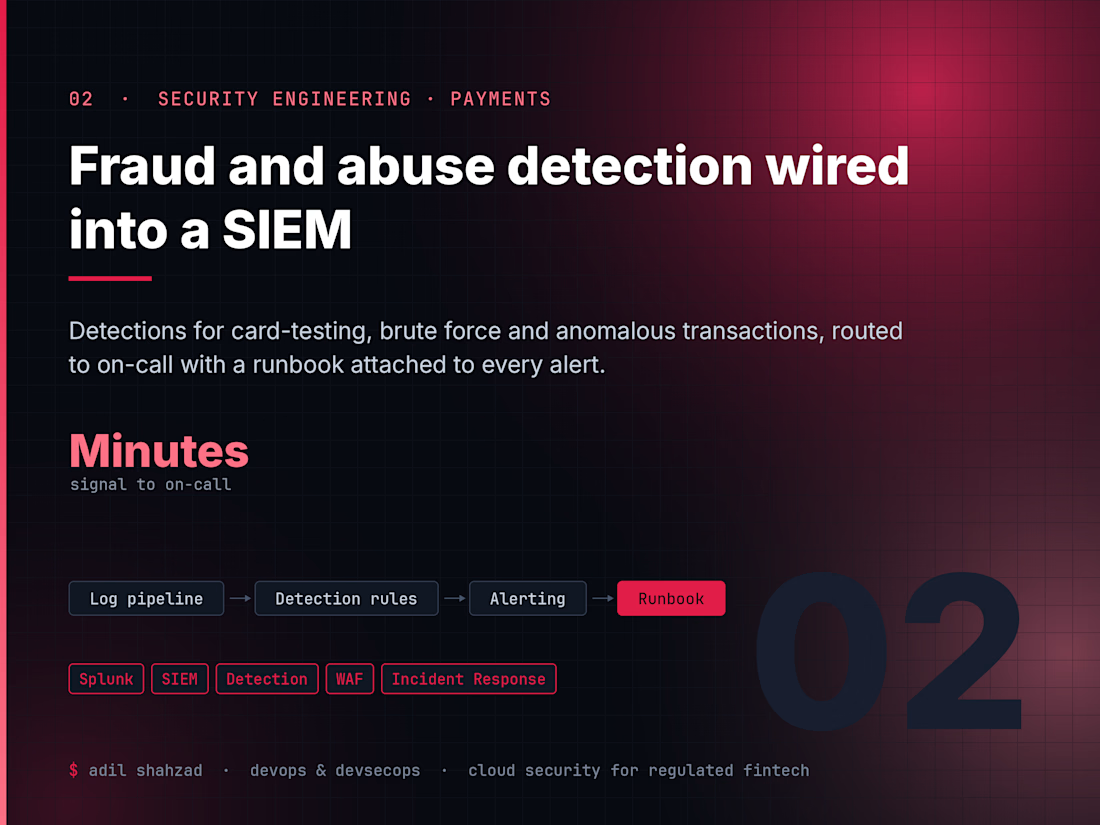
Fraud and abuse detection wired into a SIEM
Card-testing and brute-force detection routed to on-call with a runbook attached to every alert.
Who it was for: A payments platform exposed to automated card-testing traffic.
The problem. Automated enumeration against payment endpoints is both a fraud loss and an availability threat, and it doesn't announce itself. Without detection it looks like ordinary traffic until the chargebacks arrive.
What I did. Built the log pipeline into the SIEM, then wrote detections for card-testing patterns, brute force and anomalous transaction behaviour. Tuned edge rate-limiting and bot controls to cut volume at the perimeter. Every alert routes to on-call with a runbook attached, so whoever is paged at 3am has the next step in front of them.
The result. Repeat attempts are caught as they start rather than reconstructed afterward, and response is a documented procedure instead of improvisation.


The network for creativity
Join 1.25M professional creatives like you
Connect with clients, get discovered, and run your business 100% commission-free
Creatives on Contra have earned over $150M and we are just getting started











Related posts

I built FlowPilot AI ⚡ — an AI-powered operations platform that transforms customer requests into intelligent workflows.
From AI-powered request analysis and smart prioritization to conditional automation and human approval, FlowPilot helps small businesses streamline operations and reduce repetitive work.
Built with @Base44 for the #Base44Challenge


There's a lot to appreciate in this piece. Great job!

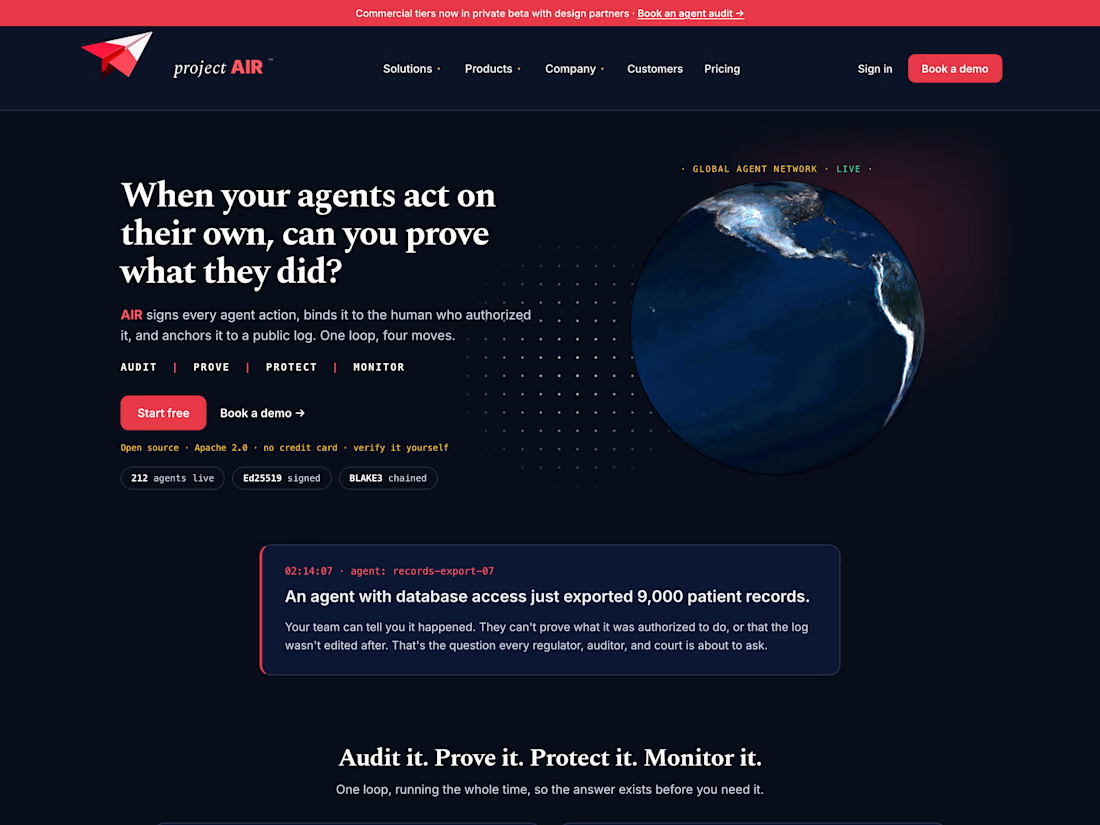
Project AIR is an open-source toolkit that keeps a tamper-proof record of what AI agents do. Every action an agent takes gets signed, chained to the step before it, and tied to the person who authorized it. The chain is anchored to Sigstore Rekor, a public transparency log, so anyone can check later that nothing was changed or deleted. When something goes wrong, you can show exactly what happened and who approved it, instead of just saying it happened.
It also runs 16 detectors over every record, covering all ten risks on the OWASP Top 10 for Agentic Applications, three from the OWASP list for LLM apps, and three of its own. It can stop an agent mid-action until a person signs off. It plugs into LangChain, LlamaIndex, and the OpenAI, Anthropic and Gemini SDKs with a line or two of code.
I built the Python library and command-line tool, published on PyPI as projectair (now at version 1.3.1) under the Apache 2.0 license, plus the website and dashboard in SvelteKit. We run it on our own infrastructure too: every request to vindicara.io is recorded and anchored to Rekor every minute.



Impressive work! 👏 Excellent approach to AI agent security, tamper-proof audit trails, and human oversight for more trustworthy AI systems.

In security operations, every second matters. SentriGo is an AI-powered mobile app designed to help on-site guards detect, assess, and respond to potential threats in real time.
The experience follows a simple Scan, Classify, Alert workflow. Guards can capture a scene, receive AI-powered threat analysis with confidence scores and risk indicators, and connect with dispatch. A visual incident timeline keeps them informed about AI verification, incident status, and dispatcher responses.
A high-contrast dark interface, strategic color accents, large interactive elements, and clear hierarchy support fast decision-making in demanding environments.
Explore the project on Dribbble:
https://dribbble.com/shots/27820478-Mobile-App-Security-Guard-Assistant-App


The simple Scan, Classify, Alert workflow is perfect for guards under pressure. That high-contrast dark interface with the threat-level screen looks built for real field conditions.