The network for creativity
Join 1.25M professional creatives like you
Connect with clients, get discovered, and run your business 100% commission-free
Creatives on Contra have earned over $150M and we are just getting started
Back to feedPost

While working on a project, I encountered one of the most fragile moments in system design:
when control shifts from the system to a third party.
After user confirmation, the café may accept, reject, or remain silent.
A reliable system does not assume cooperation or wait indefinitely.
It defines clear time boundaries and treats silence as a state.
Designing for uncertainty is where real system thinking begins.

The network for creativity
Join 1.25M professional creatives like you
Connect with clients, get discovered, and run your business 100% commission-free
Creatives on Contra have earned over $150M and we are just getting started





Related posts


AI isn’t replacing designers.
but ignoring AI is a mistake.
in our latest UnContrad interview, @pizzaboy and @LukeADesign
break down what actually protects a creative business:
- strong standards
- better systems
- client-ready brands
the courage to reject “good enough”
this conversation is for every independent creative building something real ↓

The real cost of bad UX:
Cluttered layouts, and slow load times quietly push people toward competitors before they even read your value prop. Good design isn't decoration. It's retention.
If you're not sure how your product's UX is performing, that uncertainty is usually the first sign it needs a look.
Send me a message - happy to share quick audit on your existing design!
#UXDesign #UIUX #WebDesign #UserExperience #WebsiteDesign #ConversionFocusedDesign

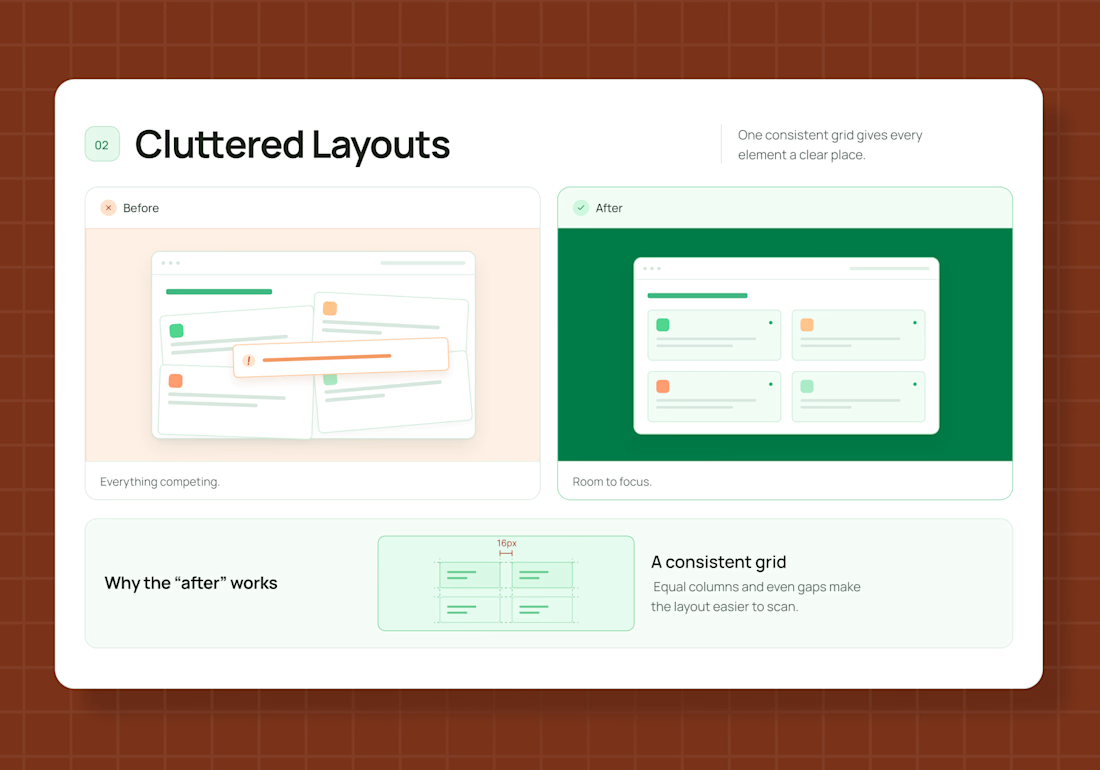
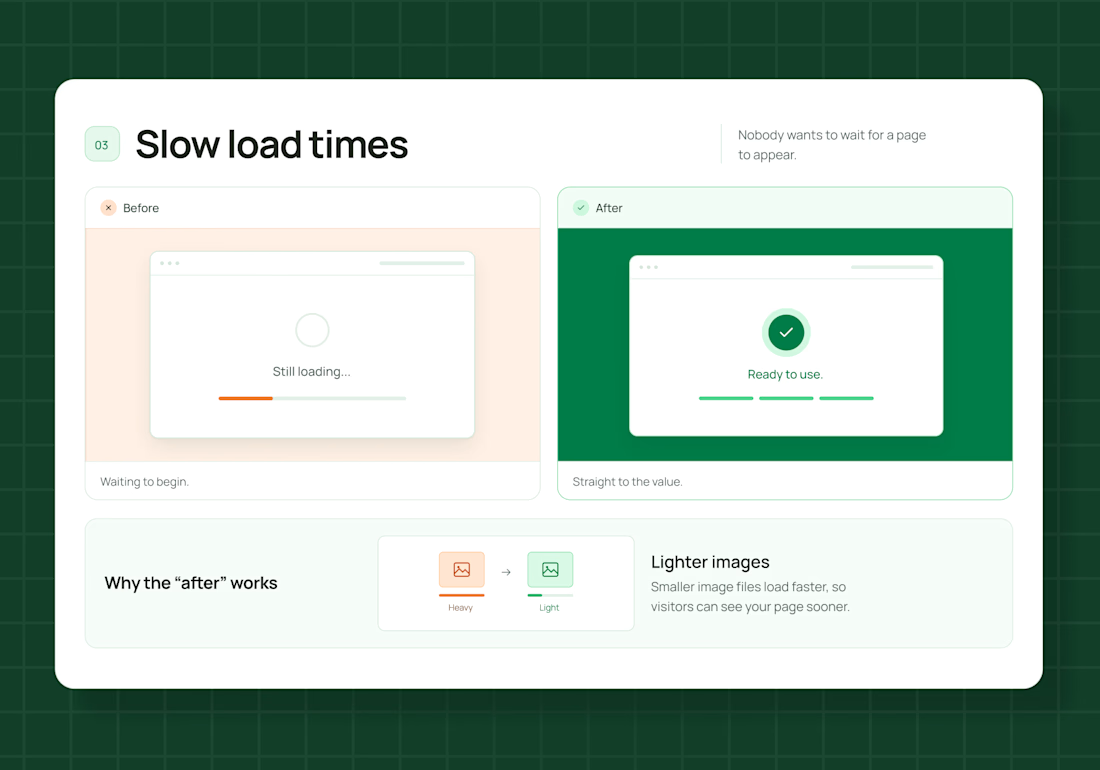

Good design isn't decoration, it's retention is a line every founder should tape to their monitor. People bounce over clutter and slow loads before they ever reach the value prop, and that lost revenue is invisible so it never gets fixed. Framing UX as retention is exactly right.

This project focused on building and testing a practical AI security assessment lab for evaluating LLM defenses against prompt injection and jailbreak attacks.
I integrated Spikee by Reversec with a locally hosted cybersecurity model running through LM Studio, then added NVIDIA NeMo Guardrails to compare model behavior under three conditions: no guardrails, input filtering, and combined input/output protection.
The work included configuring the local model environment, building a custom FastAPI gateway, integrating NeMo Guardrails, troubleshooting model latency and timeout issues, creating a reusable Spikee target, and analyzing attack results using Spikee’s built-in reporting tools.
The project also explored different adversarial testing approaches, including prompt injection datasets, obfuscation, encoded attacks, Best-of-N testing, synthetic canary leakage tests, and structured benchmark comparisons.
The objective was to measure how much the guardrails reduced successful attacks while keeping the model, dataset, and testing conditions consistent.
Tools used: Spikee, NVIDIA NeMo Guardrails, LM Studio, Python, FastAPI, PowerShell, Parrot OS, local LLMs, JSONL datasets, and custom security testing scripts.
This project demonstrates a hands-on approach to LLM red teaming, AI safety testing, prompt-injection assessment, and guardrail validation for organizations deploying generative AI systems.


pretty cool tbh. testing the same attacks with different guardrail setups makes the results way more interesting.