The network for creativity
Join 1.25M professional creatives like you
Connect with clients, get discovered, and run your business 100% commission-free
Creatives on Contra have earned over $150M and we are just getting started
Back to feedPost

Building your frontend before your API is like painting a house before pouring the foundation. 🏗️
Adopting an API-first design mentality completely changes how teams collaborate. When you establish the API contract before writing the UI, backend and frontend developers can work in parallel without blocking each other. It’s the ultimate hack for accelerating your product timeline.

The network for creativity
Join 1.25M professional creatives like you
Connect with clients, get discovered, and run your business 100% commission-free
Creatives on Contra have earned over $150M and we are just getting started





Related posts

A high-impact Webflow experience for an industrial site-selection platform.


Industrial site selection on Webflow lives or dies on map and filter clarity. High impact usually means dense data still scans on mobile.

Productivity apps aren't one-size-fits-all.
Neither is their color psychology.
Which one makes you want to actually open the app?
5 voted
63%
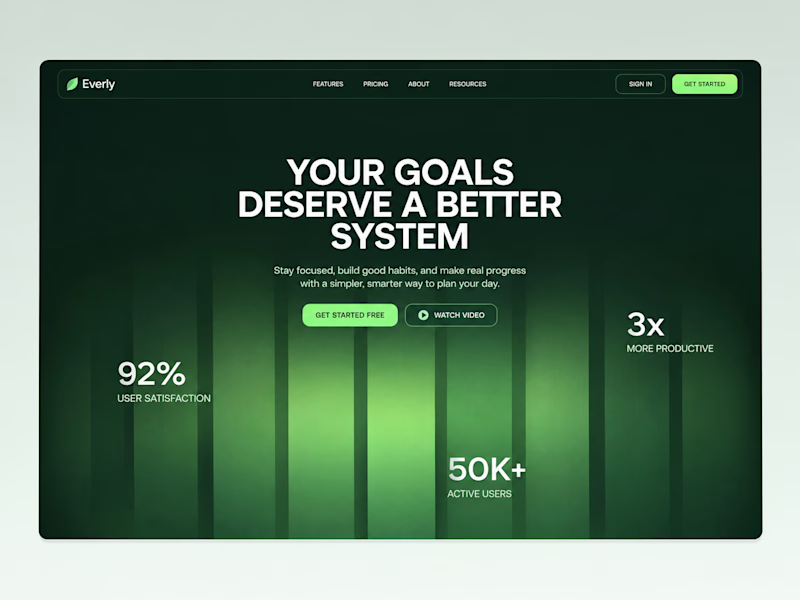
3 voted
37%
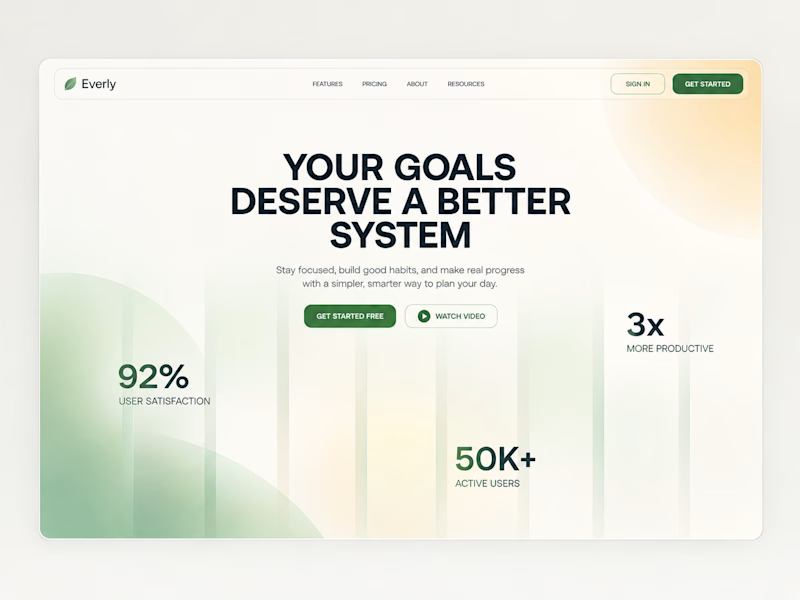
8 votes
Closed

Light. The dark green is striking, but light feels better for something I'd open all day.

Full-Stack Developer & AI Automation Engineer
I build scalable web applications, SaaS platforms, mobile apps, custom dashboards, and AI-powered automation systems that turn complex business workflows into reliable digital products.
My core stack includes Next.js, React, Node.js, NestJS, Python, PostgreSQL, MongoDB, and AI APIs.
I specialize in turning ideas into production-ready systems—from architecture and development to deployment, automation, and optimization.
Available for:
AI Automation • SaaS Development • Web Development • Mobile Apps • Custom Dashboards • API Development • Business Automation


Seeing how you stitch AI APIs into custom dashboards really cuts the manual data wrangling. The stack choice keeps the deployment pipeline smooth.


