The network for creativity
Join 1.25M professional creatives like you
Connect with clients, get discovered, and run your business 100% commission-free
Creatives on Contra have earned over $150M and we are just getting started
Back to feedPost

Why does your AI model’s face look like a completely different person in every single shot?
You’ve spent hours crafting the perfect prompt.
The rim lighting is cinematic, the fabric texture is pristine, and the composition is flawless.
But when you hit generate for the next angle, the face is... someone else entirely.
Consistency is the absolute 'Final Boss' of generative AI creation.
Whether it's missing hair strands, shifting bone structures, or a completely swapped likeness between frames, this face-shifting kills commercial campaigns instantly.
High-end fashion houses and D2C brands cannot launch look books with a shape-shifting model.
If your AI model keeps drifting, it usually boils down to three invisible technical bottlenecks:
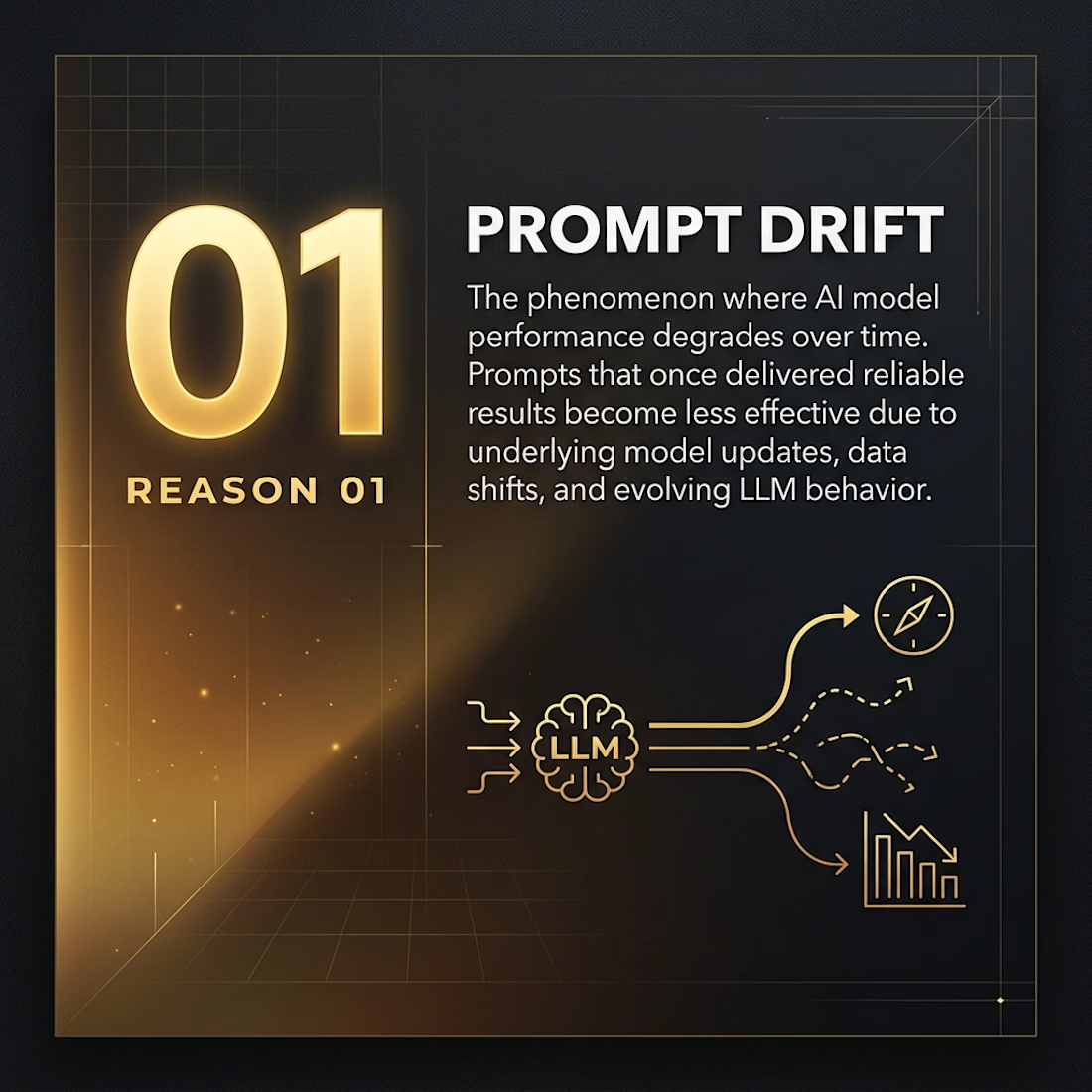
Prompt Drift: Even a single adjective change in your prompt re-rolls the seed values for facial geometry. AI doesn't 'remember' a person; it reconstructs pixels from scratch unless strictly anchored.
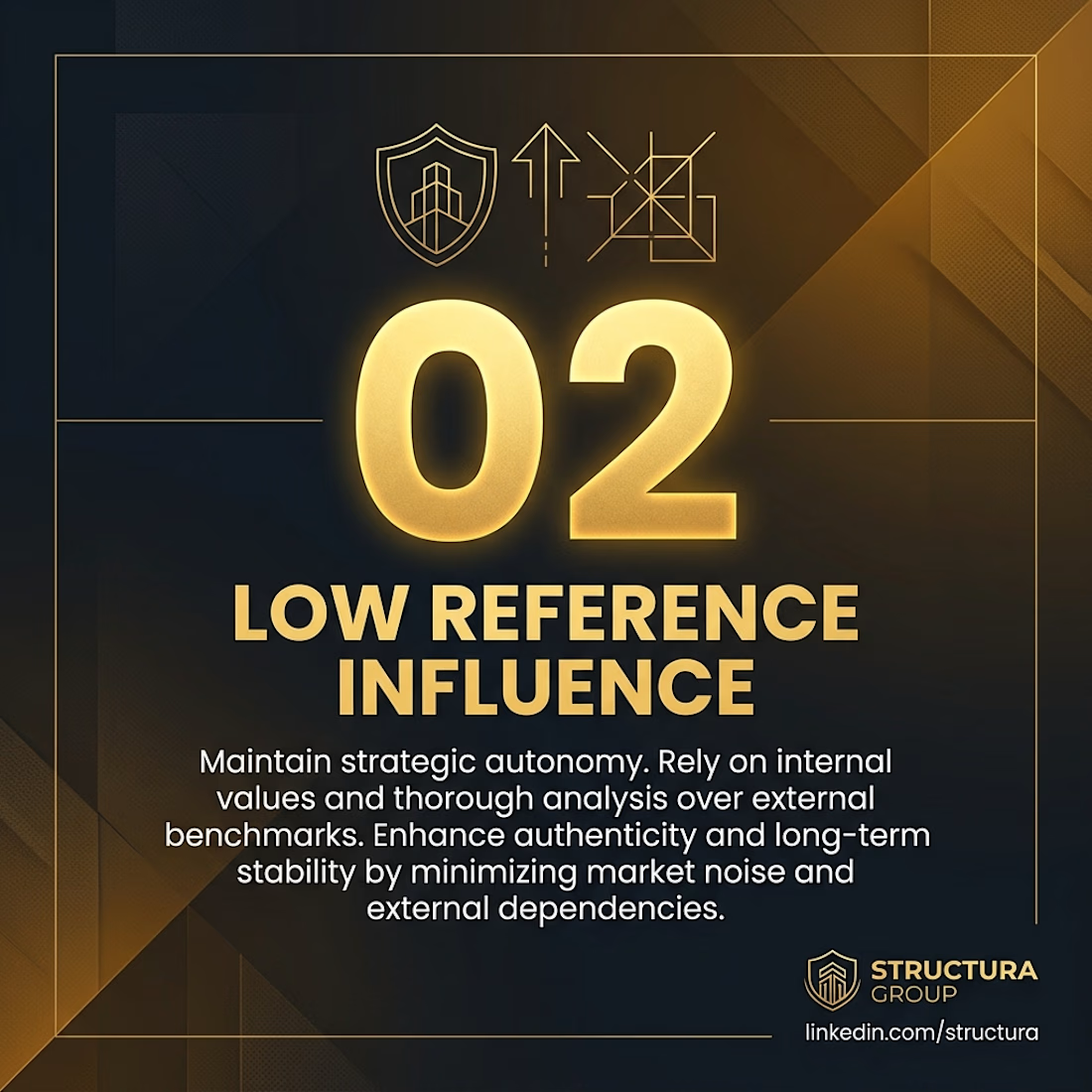
Low Reference Influence: If your reference weight is too low, the engine prioritizes abstract style over human anatomy, taking wild creative liberties with the facial structure.
Token Noise & Environmental Clutter: Complex background elements or high-contrast lighting introduce noise, distracting the model from core facial features.
The fix isn't luck—it's rigid technical control.
By locking anchor points, managing reference weights, and utilizing strict multi-frame pipelines, you turn a random generator into a predictable studio tool.
Are you still wrestling with face-shifting in your AI workflows, or have you built a pipeline that locks your character down?
Let's discuss in the comments below. 👇
Strategic Hashtags: #AICreation #DigitalFashion #CreativeDirection #GenerativeAI #TechnicalBreakdown


The network for creativity
Join 1.25M professional creatives like you
Connect with clients, get discovered, and run your business 100% commission-free
Creatives on Contra have earned over $150M and we are just getting started








Related posts

Creativity still excels but Ai have come to stay and will definitely breed next creative creators through promoting and training Ai models


When does a hand-drawn logo make sense for a brand?
In this case, a Barcelona-based creative studio founded by a team with decades of combined experience approached me wanting a hand-drawn identity that would feel unexpected for a team like them, a way to signal creativity and...

Cool!

AI didn't take my job. It became my business partner.
Every designer I know is asking the same question right now: what's left for us when AI can make something pretty in 10 seconds?
Here's my honest answer, from branding and from product.
The way I work has completely changed. Moodboards, variations, mockups, even clickable prototypes: what used to take days now takes hours.
But here's what nobody says out loud: people are making a lot of pretty things. And pretty doesn't build a brand.
Pretty doesn't tell a stranger why they should trust you.
Pretty doesn't make your offer clear in 5 seconds.
Pretty doesn't fix the screen where users give up.
That part is still on me. It's actually most of my job now.
So I stopped seeing AI as a competitor. It does the drafts, I do the thinking, and my clients get both, faster.
Designers, how has AI changed the way you work this year?

Wonderful presentation and I like your thought you shared



That's great its really creative 🎉🎉