The network for creativity
Join 1.25M professional creatives like you
Connect with clients, get discovered, and run your business 100% commission-free
Creatives on Contra have earned over $150M and we are just getting started
Back to feedPost

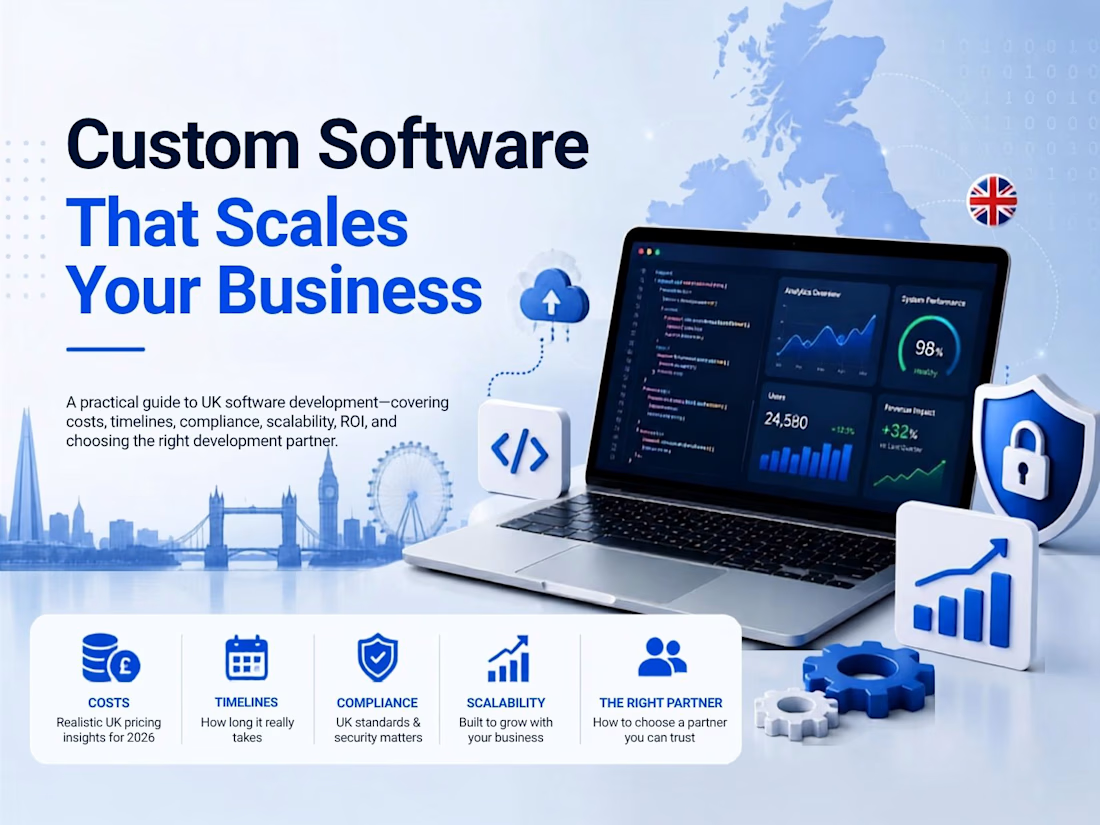
Custom Software Development
Every business has different workflows so sometimes an off-the-shelf tool just isn't enough.
I build custom software solutions tailored to your business processes, users, and goals.
From internal business systems and dashboards to customer portals, SaaS platforms, management systems, and custom web applications, I focus on building reliable software that can grow with your business.
If you have an idea, a manual process that needs automation, or an existing system that needs improvement, let's turn it into a practical digital solution.
📅 Book a 30-minute call: https://calendly.com/codexstechnology/30min
#CustomSoftware #SoftwareDevelopment #WebApplication #FullStackDevelopment #SaaSDevelopment #MVPDevelopment #BusinessSoftware #WebDevelopment #APIIntegration #SoftwareEngineer


The network for creativity
Join 1.25M professional creatives like you
Connect with clients, get discovered, and run your business 100% commission-free
Creatives on Contra have earned over $150M and we are just getting started




Related posts

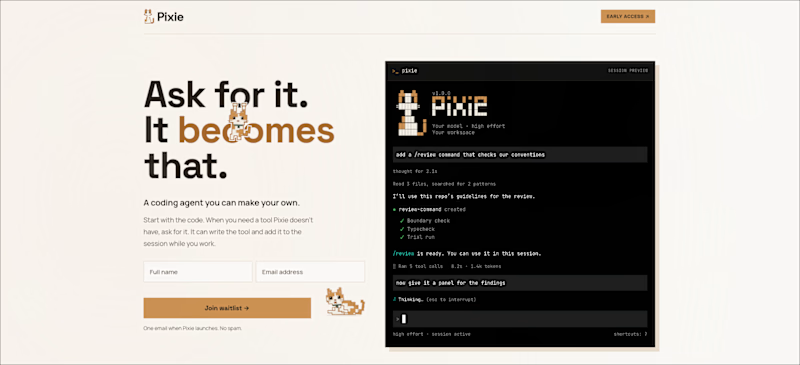
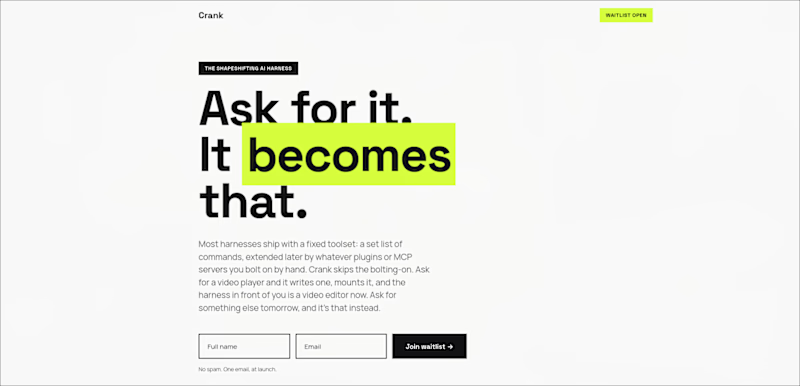
So I Recently rebranded my upcoming AI Agent Harness from "Crank" to "Pixie" which is the name of my cat. Do you think it was the right decision?
Which one do you prefer? Crank or Pixie?!
Check it out here: pixie.ecnivs.com
#FreelancerLife #AIHarness #FrontendDesign #AIAgent #ArtificialIntelligence #WebDevelopment #Design #TasteTest
5 voted
71%
2 voted
29%
7 votes
Closed

Pixie gets my vote too. Naming it after your cat makes it memorable, and it feels a lot friendlier for a tool people trust with their code. Nice rebrand.

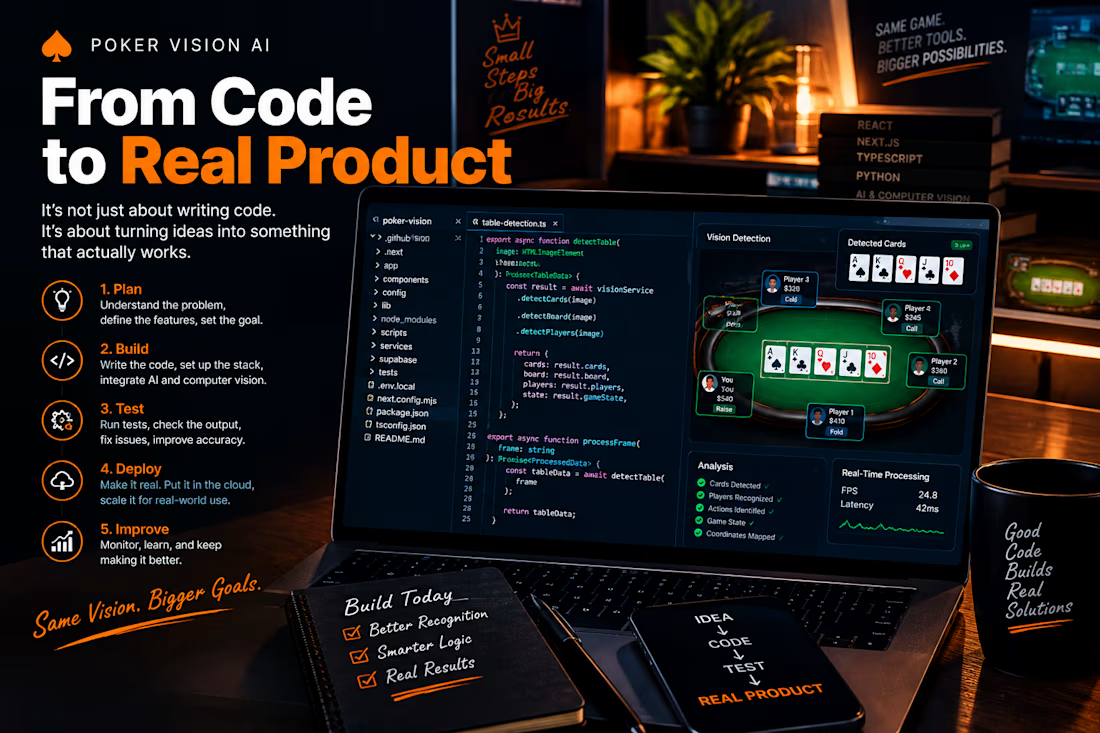
From Code to a Real Product That’s Where the Real Work Begins.
A lot of projects start with a simple idea:
“What if we built this?”
But turning that idea into something people can actually use is a completely different challenge.
With my current project, I’m going beyond writing components and making the UI look good.
I’m working through the entire process:
Plan Understand the problem and define what the product needs to do.
Build Turn the idea into real application logic, integrate the right technologies, and connect the different pieces.
Test Break the system, inspect the output, find edge cases, and fix what doesn't behave as expected.
Deploy Take it out of the development environment and make it accessible as a real product.
Improve Monitor what happens, identify weaknesses, and keep iterating.
The biggest lesson I'm learning is this:
A project isn't finished when the code works on your computer.
It's finished when the product works for the person using it.
That's why I'm becoming more interested in the parts of development that happen after the first successful build:
Testing the real workflow.
Handling unexpected input.
Improving reliability.
Making the experience smoother.
And turning a collection of code into something that actually solves a problem.
AI can help me move faster.
But building the right thing, validating it, and taking it all the way to a usable product is still the real challenge.
Idea → Code → Test → Deploy → Real Product.
That's the journey I'm documenting.
What do you think is the biggest difference between a working project and a real product? 👇




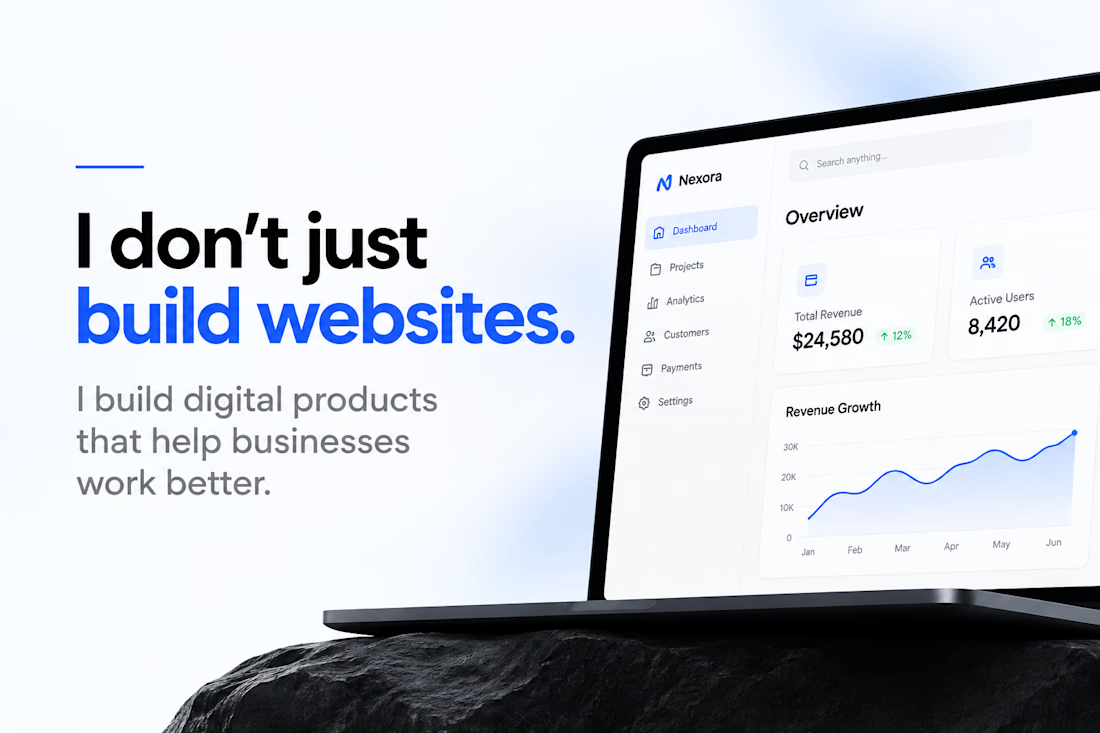
I don’t just build websites.
I build digital products that help businesses work better.
A website might be the starting point, but real projects often need much more:
→ A SaaS platform
→ Custom dashboards
→ APIs & integrations
→ Payment systems
→ Admin panels
→ AI-powered workflows
→ Automation
→ Scalable backend systems
My approach is simple:
Understand the business problem first.
Then figure out what actually needs to be built.
Because writing 10,000 lines of code isn’t the goal.
Solving the right problem is.
If you’re building a SaaS, launching a product, or turning a manual process into software - I’d love to hear what you’re working on.