The network for creativity
Join 1.25M professional creatives like you
Connect with clients, get discovered, and run your business 100% commission-free
Creatives on Contra have earned over $150M and we are just getting started
Back to feedPost

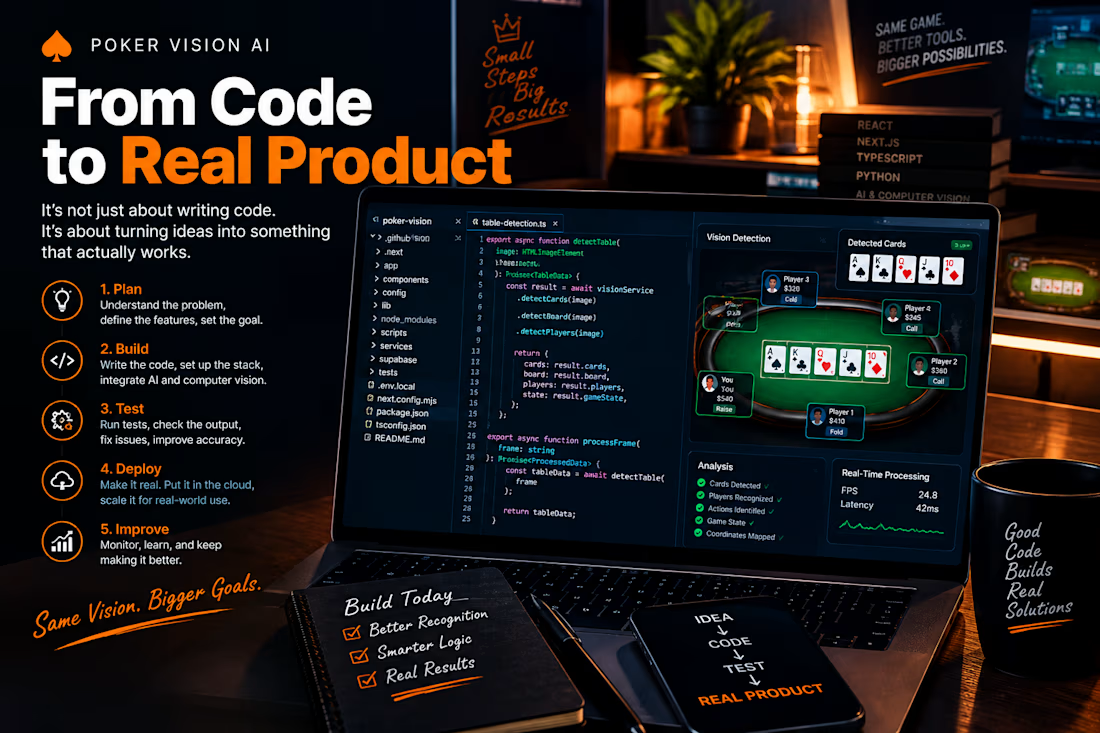
From Code to a Real Product That’s Where the Real Work Begins.
A lot of projects start with a simple idea:
“What if we built this?”
But turning that idea into something people can actually use is a completely different challenge.
With my current project, I’m going beyond writing components and making the UI look good.
I’m working through the entire process:
Plan Understand the problem and define what the product needs to do.
Build Turn the idea into real application logic, integrate the right technologies, and connect the different pieces.
Test Break the system, inspect the output, find edge cases, and fix what doesn't behave as expected.
Deploy Take it out of the development environment and make it accessible as a real product.
Improve Monitor what happens, identify weaknesses, and keep iterating.
The biggest lesson I'm learning is this:
A project isn't finished when the code works on your computer.
It's finished when the product works for the person using it.
That's why I'm becoming more interested in the parts of development that happen after the first successful build:
Testing the real workflow.
Handling unexpected input.
Improving reliability.
Making the experience smoother.
And turning a collection of code into something that actually solves a problem.
AI can help me move faster.
But building the right thing, validating it, and taking it all the way to a usable product is still the real challenge.
Idea → Code → Test → Deploy → Real Product.
That's the journey I'm documenting.
What do you think is the biggest difference between a working project and a real product? 👇


The network for creativity
Join 1.25M professional creatives like you
Connect with clients, get discovered, and run your business 100% commission-free
Creatives on Contra have earned over $150M and we are just getting started



Related posts

Testing doesn't have to slow your team down.
A motion design concept for Hostable focused on simplifying the testing workflow.
A flowing gradient path, glowing UI elements, and smooth transitions turn a technical process into a simple and visually engaging experience.

The gradient path leading the eye to Run workflow works well. Did you build the loop in After Effects?

I had a random idea: what if I built a 3D Taekwondo game that runs entirely in the browser? 🥋
Well… I actually went and built it 😂
Introducing DOJANG — a little side project that started as an excuse to explore 3D development and turned into a surprisingly fun game.
You can:
- Spar against AI opponents at different difficulty levels.
- Practice Taekwondo techniques and combinations.
- Compete using arcade or Taekwondo-inspired scoring rules.
- Work your way through belt progression.
- Play on desktop or mobile.
It's built with React, Three.js, TypeScript, and a lot of experimentation with animation, physics-like combat interactions, and game mechanics.
This was a fun opportunity to step outside my usual product and interface development work and explore a completely different kind of interaction design.
There's still plenty I'd love to improve, but that's part of the fun of building things.
Anyway, enough talking. Go throw some kicks 😂
🎮 Play DOJANG: https://dojang.balogunoluwasogo.com/
Would love to hear what you think (and whether you can beat the black belt 👀).

sharp minds build great projects

Product demo and launch video work for SaaS apps: smooth UI animation, cursor-driven walkthroughs and minimal typography that makes features easy to understand. Made in After Effects.
#ProductDemoVideo #SaaSLaunchVideo #UIAnimation #MotionGraphics


It's amazing you have cooked