The network for creativity
Join 1.25M professional creatives like you
Connect with clients, get discovered, and run your business 100% commission-free
Creatives on Contra have earned over $150M and we are just getting started
Back to feedPost

Your ERP is only as good as the process behind it.
Many businesses invest heavily in ERP systems, automation, dashboards, and digital tools—yet still experience inventory errors, delays, inconsistent execution, and productivity issues.
Why?
Because technology can automate a process, but it cannot automatically fix a poorly designed one.
Consider a common situation:
An experienced employee knows exactly how to complete a task in 30 minutes because they have developed an efficient way of working over time.
They leave the organization.
The next person takes 60 minutes to complete the same task.
Errors increase. Productivity drops. Training takes longer. Operations become dependent on individual knowledge.
The real problem isn't necessarily the ERP.
It's the lack of standardization and process knowledge.
What should come first?
1. Understand the process
Map how the work is actually being performed—not just how it is supposed to be performed.
2. Define the standard
Establish the best-known method for completing the task efficiently and consistently.
3. Document it
Create practical SOPs and work instructions so critical knowledge doesn't remain with one person.
4. Train the team
Make sure the process can be replicated by others—not just the person who originally developed it.
5. Improve the process
Remove unnecessary steps, reduce errors and identify bottlenecks.
6. Then automate
Use ERP, Excel, Power Apps, VBA, dashboards or other tools to make a good process faster, more reliable and scalable.
Technology should amplify good processes—not hide bad ones.
This is the approach I use when working on warehouse operations, inventory management, SAP processes, process improvement and operational automation.
If your team is experiencing recurring errors, excessive manual work, dependency on key employees, or processes that only "work when a certain person is there," the solution may not be another software system.
It may be time to fix the fundamentals first.
The network for creativity
Join 1.25M professional creatives like you
Connect with clients, get discovered, and run your business 100% commission-free
Creatives on Contra have earned over $150M and we are just getting started






Related posts

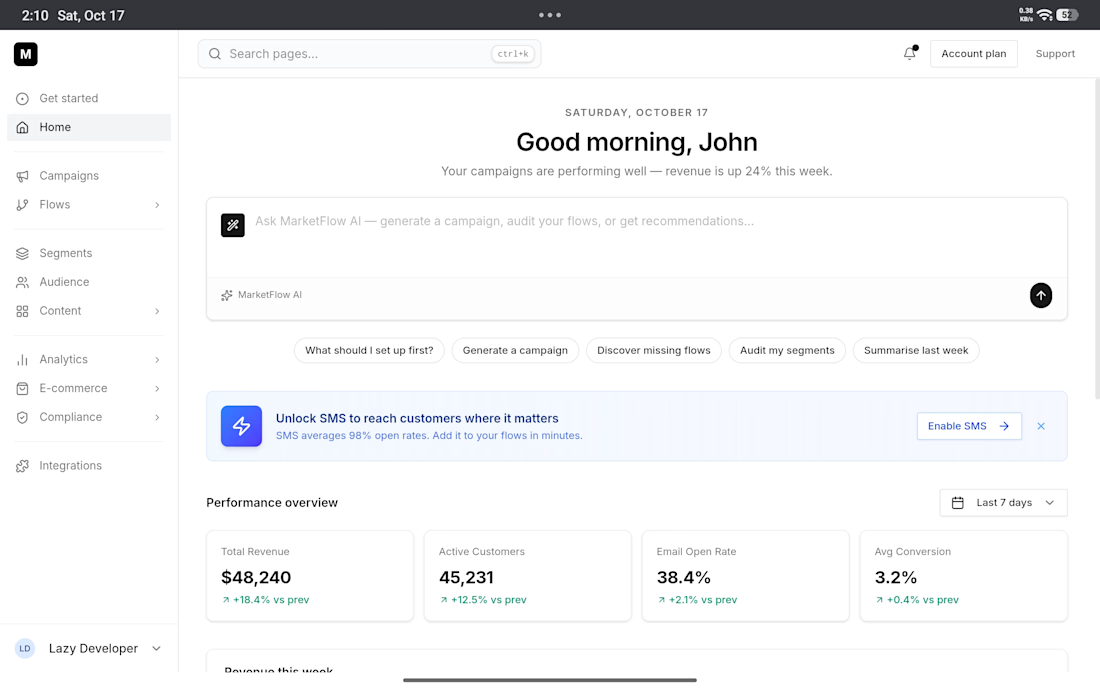
I have successfully designed and deployed an end-to-end automation system for an online store infrastructure, focusing on operational efficiency and scalable data pipeline management.
By engineering a seamless integration between Shopify, MongoDB, and Replit, this system automates critical user flows and synchronizes transactional data in real time. Moving away from manual operations allows the business to focus strictly on revenue-generating workflows rather than administrative overhead.
Key Frameworks & Tools:
Backend & Hosting: Replit
Database Management: MongoDB
E-Commerce Infrastructure: Shopify
Next step is monitoring performance metrics to ensure maximum uptime and data integrity as volume scales.
#SoftwareEngineering #Ecommerce #SystemAutomation #WebDevelopment #MongoDB #Shopify





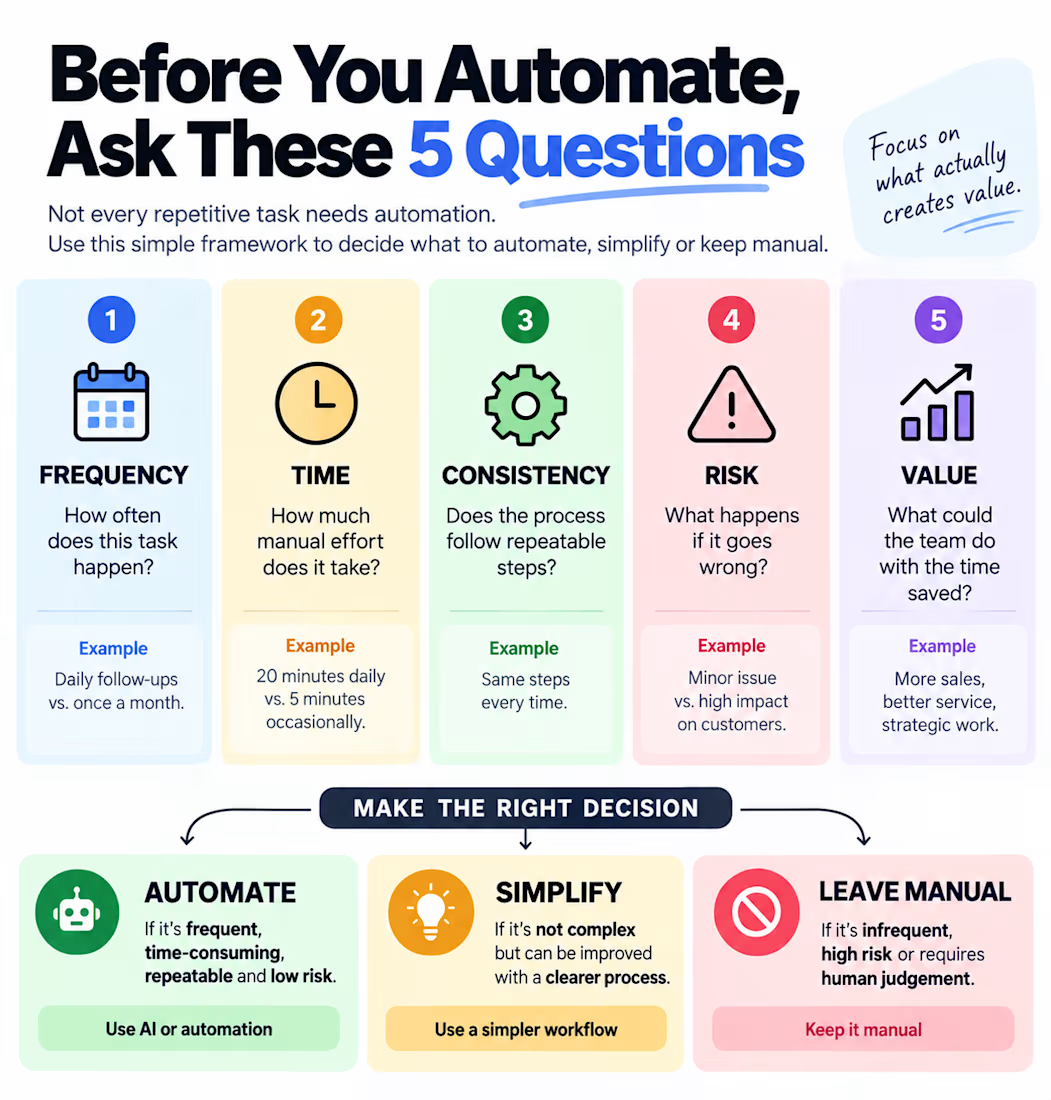
Not every repetitive business task deserves to be automated.
Before building an AI workflow, I'd ask five questions:
Frequency: How often does this task happen?
Time: How much manual effort does it consume?
Consistency: Does the process follow repeatable steps?
Risk: What happens if the automation gets it wrong?
Value: What could the team do with the time saved?
A task that takes five minutes once a month probably doesn't need an elaborate automation.
But a task that takes 20 minutes every day, follows predictable steps, and regularly gets delayed might be a good candidate.
Even then, automation isn't always the answer. Sometimes a clearer process or a simple rule is enough.
My approach is to understand the bottleneck first, then decide whether AI, automation, a simpler workflow—or no change at all—is the right solution.
What's one repetitive task in your business that you'd love to eliminate?
#WorkflowAutomation #AIAutomation #BusinessOperations

I find the point about simple rules often being enough is critical. Many teams skip that step and jump straight to complex n8n workflows, only to realize a basic if then logic or a shared checklist solved the issue without the maintenance overhead.

Most AI products fail for a simple reason.
They add AI before fixing the actual user flow.
The better approach is:
Understand the user problem.
Reduce unnecessary steps.
Then add AI where it saves time or improves decisions.
AI should improve the product, not become the product.
#aigold #AI #ProductDevelopment #SaaS #AIAgents