The network for creativity
Join 1.25M professional creatives like you
Connect with clients, get discovered, and run your business 100% commission-free
Creatives on Contra have earned over $150M and we are just getting started
Back to feedPost

Case Study: Ecoa.me — Corporate Emotional Safety Infrastructure
Role: Lead Product Designer.
Focus: Strategic Design, UX Research, Privacy by Design, and Regulatory Compliance (NR-01).
1. The Challenge: Bridging the Silence in Corporate Mental Health
The mental health landscape in Brazil reached a critical point in 2024, with a record 472,000 work leaves, a 68% increase compared to 2023. Research indicated that the most severe situations—such as domestic violence, harassment, and discrimination—rarely reach HR departments because employees fear retaliation or lack a safe, trusted channel.
Furthermore, the NR-01 regulation (effective May 2026) now mandates that all Brazilian companies actively manage psychosocial risks as part of their Risk Management Programs (PGR). Existing "wellness" solutions, like meditation apps or individual therapy, were identified as reactive and insufficient because they focus on individual symptoms rather than the structural causes of distress in the workplace.
2. UX Research & Scientific Foundation
As a Senior Product Designer, the process began with deep academic and social research rather than interface design.
Society-Centered Design (SCD): The product was built on SCD principles, which shift the unit of attention from the "individual user" to the social conditions they inhabit.
Integrative Review: I conducted a review of evidence regarding the mental health of single mothers and work precarity in Brazil. The findings showed that support networks function as essential protective infrastructure for mental health.
Archetype Insight: We identified our primary operational users as often earning between 1 to 3 minimum wages, with lower levels of education and digital literacy. This dictated a need for extremely simplified UX and language.
3. Product Evolution & Strategy
The product evolved from a "wellness benefit" into a robust compliance and safety infrastructure.
Outcome-Driven Design: We repositioned the narrative to focus on outcomes (preventing crises and legal liabilities) rather than just features (anonymous support).
Modular Architecture: I designed an ecosystem with four tiers—Essential, Performance, Pro, and Compliance—to meet companies at different levels of maturity, integrating clinical audits and full support for the new regulatory requirements.
4. The Solution: Design & UX
A. Privacy by Design & Technical Anonymity
The core UX differentiator is irreversible anonymity through architecture, not just a policy promise.
Token-Based Access: Users login via a unique 6-digit token generated by HR, with no link to their name, ID (CPF), or email within our platform.
Security-First UI: To protect users in high-risk environments, the design includes a disguised version (hidden UI) of the app to prevent discovery on shared or monitored devices.
B. Core Features for Care
Emotional Check-in: A daily flow to monitor mood and detect early warning signs of burnout or violence via Ethical AI.
SOS Button & Circle of Care: A shortcut for immediate emergencies (e.g., ongoing violence or suicidal crisis) that alerts pre-configured trusted contacts.
Human Connection: Access to specialized counselors for active listening and stabilization in under 3 minutes.
C. Ethical Management Dashboard
The UI challenge was to display high-value data without ever identifying the individual.
Aggregated Insights: HR views an average emotional score, predominant emotions, and a weekly heatmap to identify when and where risks concentrate.
AI Priority Cards: The system highlights patterns (e.g., "High anxiety at 6 PM on Tuesdays") to guide preventive interventions like workshops or schedule adjustments.
5. Impact & Business Results
The solution was designed to deliver tangible organizational value:
Efficiency: A targeted 30% reduction in absenteeism and a 20% reduction in turnover.
ROI: An estimated 2.3x return on investment within the first year.
Compliance: Automatic generation of technical evidence for 4 out of 6 central requirements of NR-01.
6. Design System & Visual Identity
Color Palette: Use of primary purple (#7C3AED) and soft support colors to convey calm, trust, and professional safety.
Illustration vs. Photography: A strict directive to use illustrations to represent vulnerability, avoiding the stigma of associating real people with trauma or suffering in corporate materials.
This case demonstrates the ability to merge visual design, academic research, and business strategy to solve a complex and urgent social problem in the Brazilian corporate market.


The network for creativity
Join 1.25M professional creatives like you
Connect with clients, get discovered, and run your business 100% commission-free
Creatives on Contra have earned over $150M and we are just getting started





Related posts

A few things we’ve been working on this month.
Different industries, different problems, but the same goal: making complex products feel simple, clear, and trustworthy.
Fintech → Investment Banking → Geospatial AI
More projects are still in progress.
Full case studies coming soon.


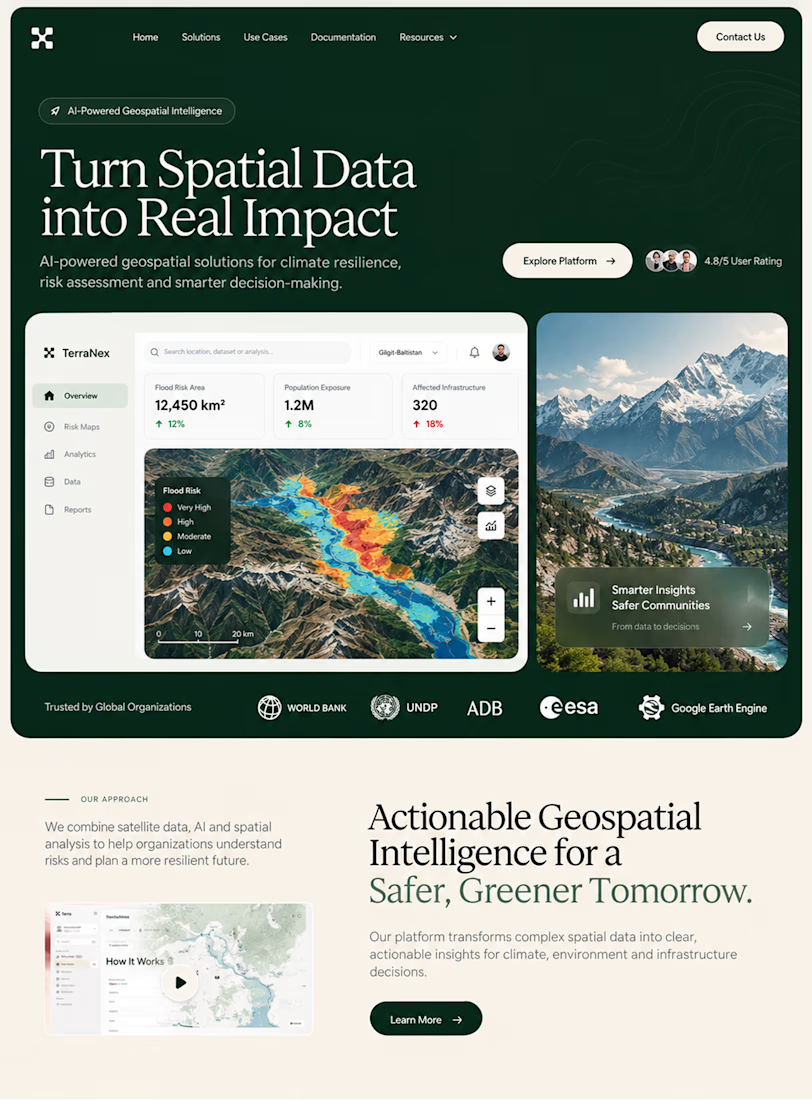
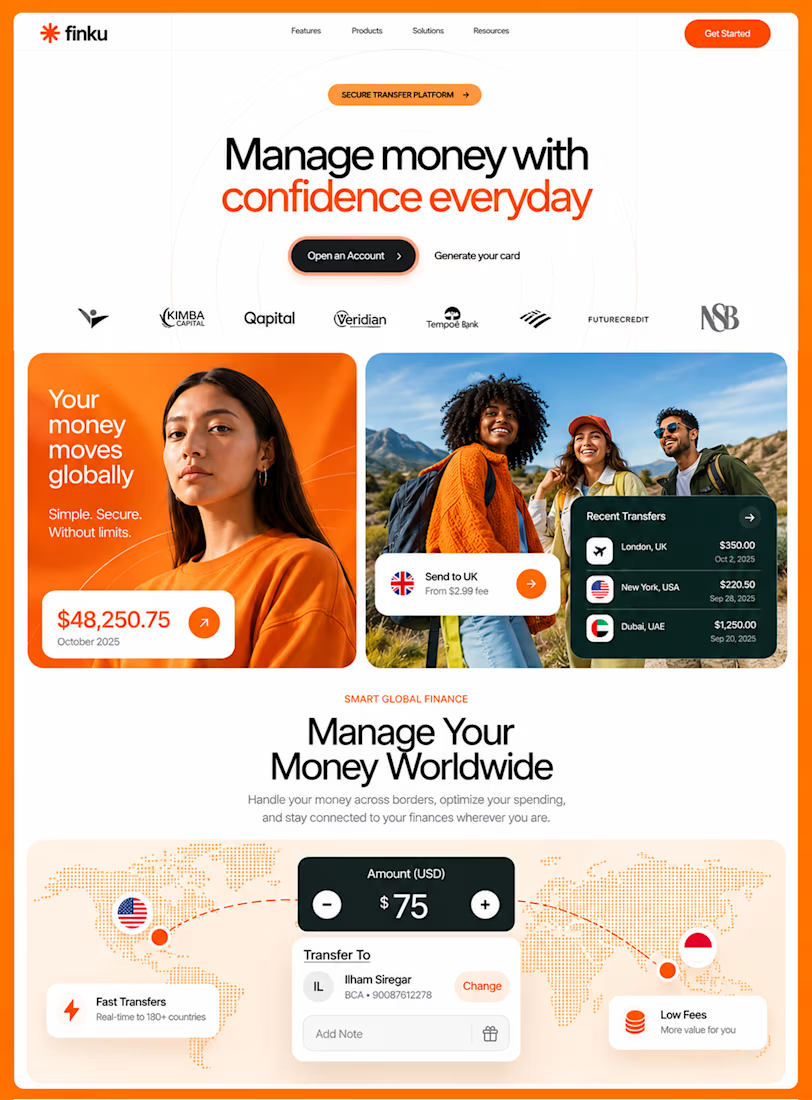
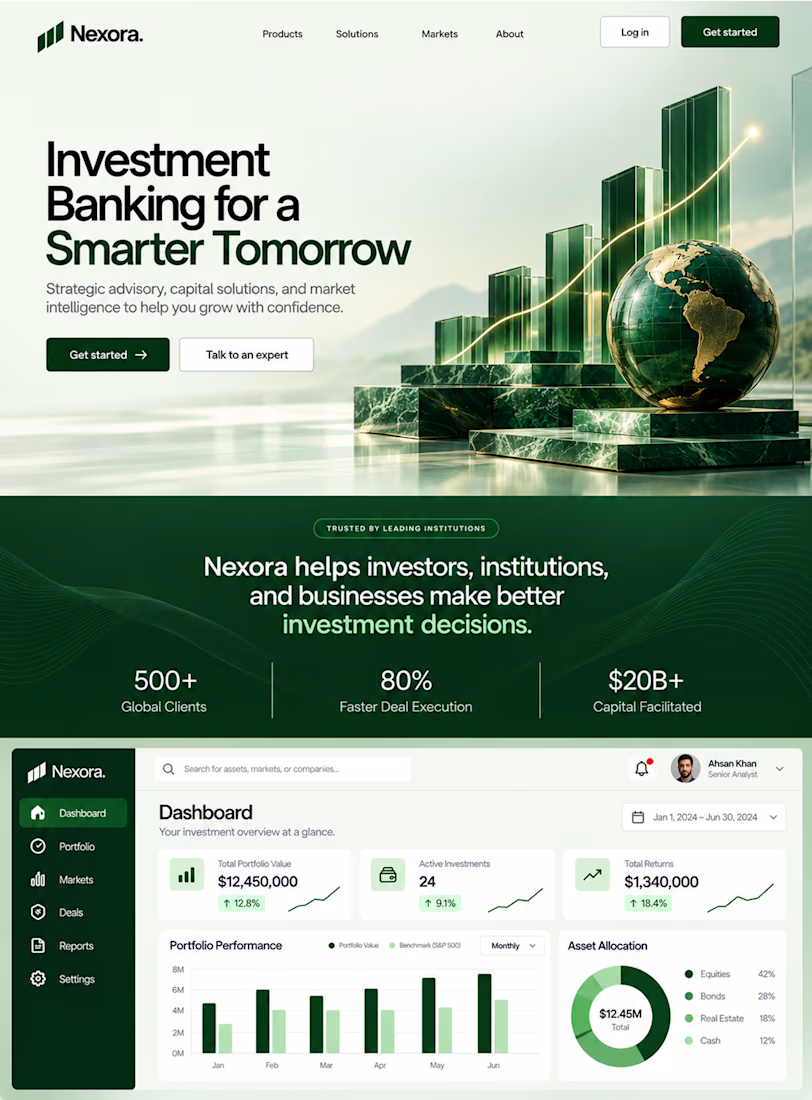

This is the kind of work I enjoy seeing — simple, focused, and actually thought through.

Next intelligence. A brand you can feel.
Ice blue, deep black and refracted glass bring texture, depth and a sense of touch to an invisible technology. An identity designed to be recognised. And felt.
Brand identity and visual direction for Niwos, a platform that brings AI agents together as a digital workforce.
Five modules. One W. A simple idea at the heart of the identity: working as one.
I’ve really enjoyed working on this project with Muhammed. His trust in my design judgement and openness to new ideas gave me the creative freedom to explore fully.
Here’s hoping this is just the first chapter of an exciting journey with him and his team.


👍 nicely done


Does an AI brand still need to look like an AI brand?
Lupr helps small and growing businesses adopt AI without the complexity, so the identity needed to do the same.
We built a clean, approachable system around movement, connection and continuous improvement, without leaning on the usual futuristic tech clichés.
The idea was simple: make AI feel like useful business infrastructure, not something you need to be an expert to understand.
As AI becomes part of everyday business, do you think brands still need to visibly signal “AI”?
Full case study below 👇


Great design it feels alive 🎉🎉❤️❤️


