The network for creativity
Join 1.25M professional creatives like you
Connect with clients, get discovered, and run your business 100% commission-free
Creatives on Contra have earned over $150M and we are just getting started
Back to feedPost

DAY 16: CONDITION TRACE
30 Days of Real Business Problems Phase II
I stopped at Day 15.
Not because I ran out of problems.
The format was becoming predictable.
So I changed the rules.
Phase II starts with a problem from museum conservation.
Condition reports can document what was visible at different moments — but they cannot always prove when a physical change actually occurred.
So instead of asking:
“Where did the damage happen?”
I reframed the problem:
Trace when the feature first appears in the documentation.
That became CONDITION TRACE.
The prototype follows a fictional museum-loan case involving the same vessel across four signed condition records.
Earlier examinations were completed under diffuse light.
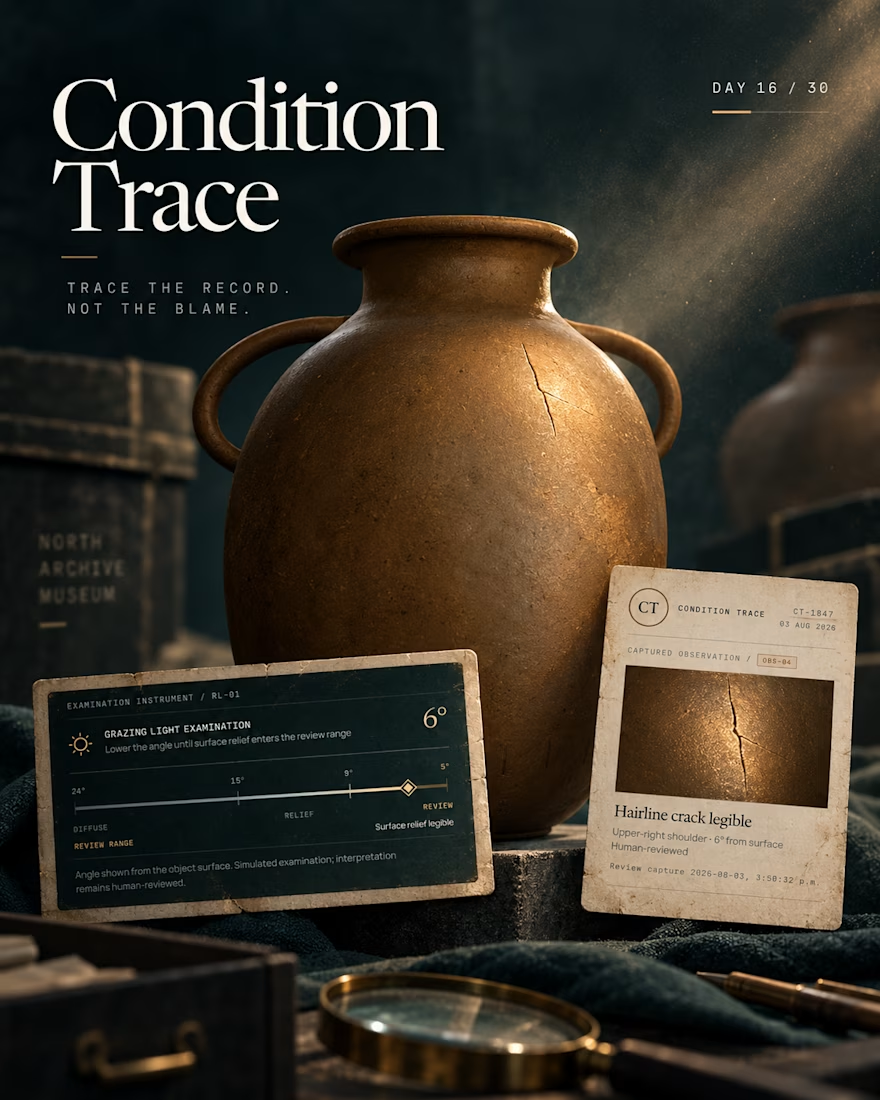
During the return-arrival inspection, the conservator introduces raking light.
As the grazing angle changes, a hairline crack on the vessel’s upper-right shoulder becomes legible.
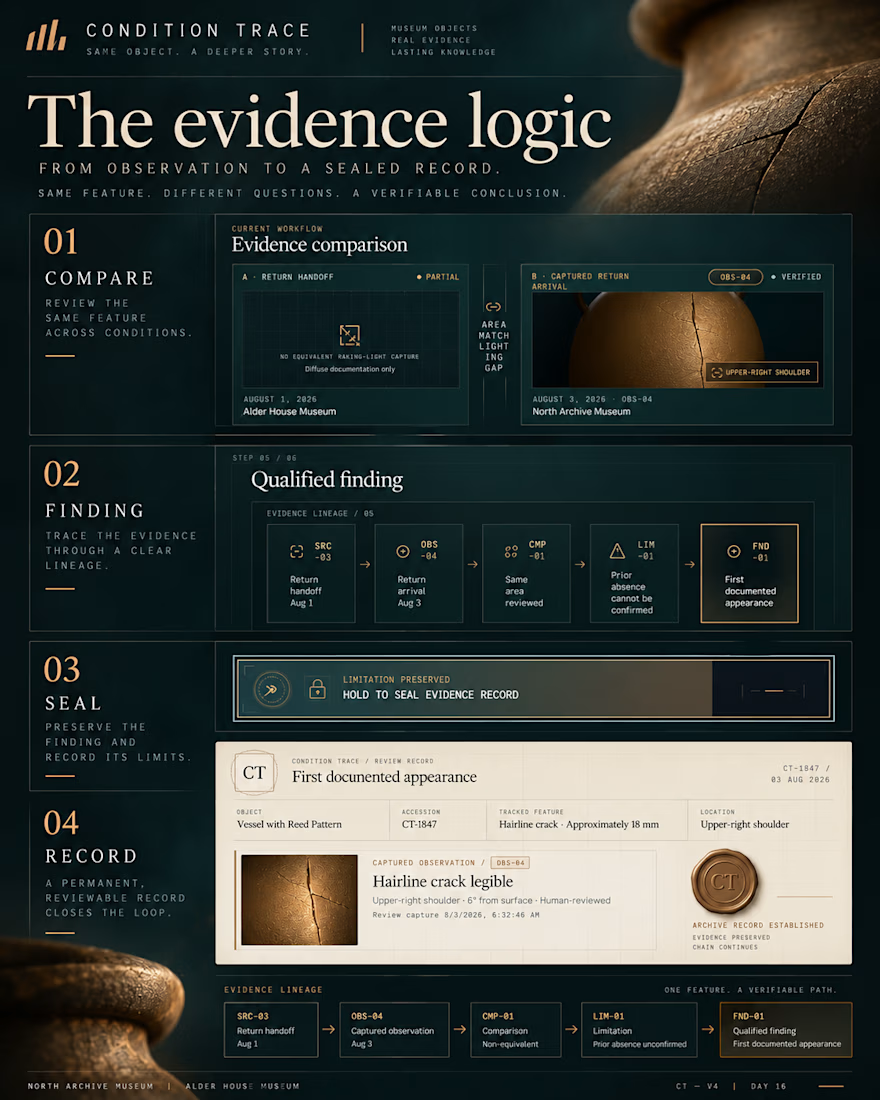
That observation is preserved as OBS-04 and carried through a traceable evidence chain:
SRC-03 → OBS-04 → CMP-01 → LIM-01 → FND-01
But the system deliberately refuses to overstate what the evidence proves.
The earlier examinations were not performed under equivalent lighting conditions.
So the conclusion remains narrow:
FIRST DOCUMENTED APPEARANCE AUGUST 3, 2026
Not:
“The damage happened on August 3.”
Not cause.
Not responsibility.
Not liability.
The interface follows the same principle.
Light becomes an examination instrument.
The observation persists through comparison.
The evidence lineage remains visible.
And the final finding must be deliberately sealed.
The goal wasn’t to make an interface that looks forensic.
It was to make the boundary of the evidence visible and traceable.
TRACE THE RECORD. NOT THE BLAME.
Live prototype:
https://day16-condition-trace.vercel.app
Day 16 / 30
Phase II begins.


The network for creativity
Join 1.25M professional creatives like you
Connect with clients, get discovered, and run your business 100% commission-free
Creatives on Contra have earned over $150M and we are just getting started







Related posts



Nice work, Miguel!!

How Much would You pay for this level of Motion in your landing pages


I would price the scope and performance requirements before the amount of motion.

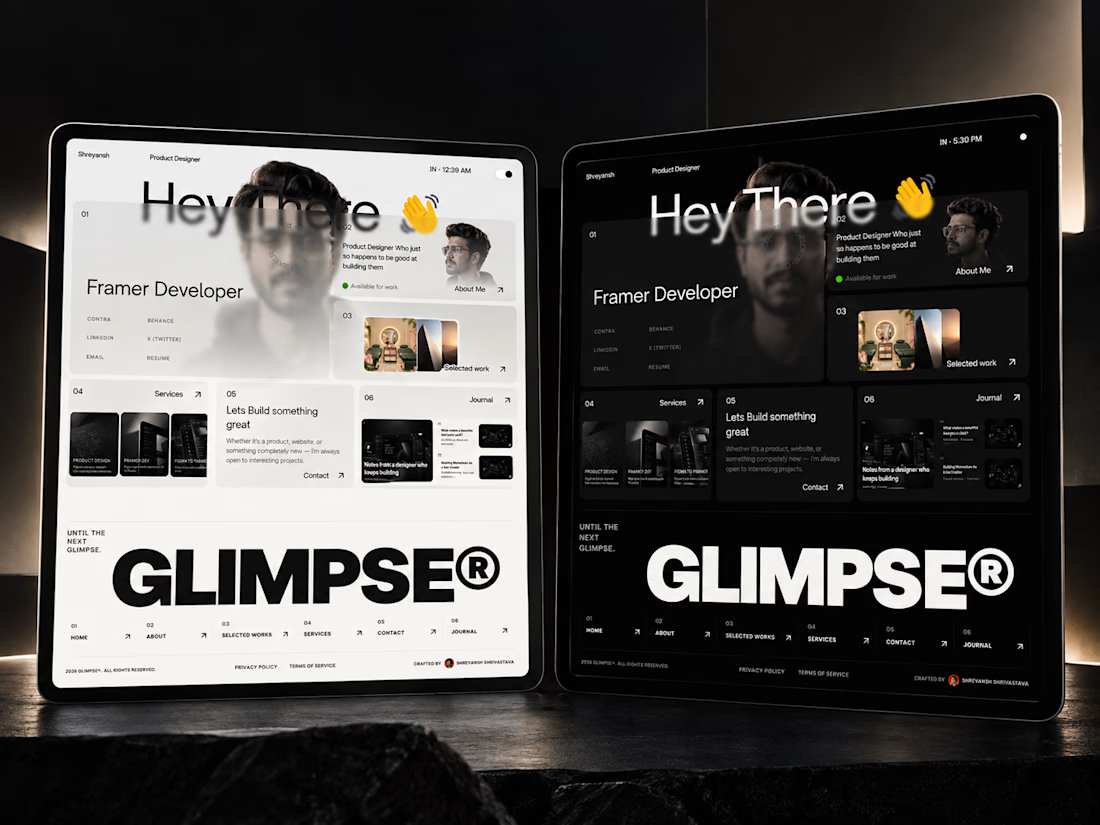
I didn't want to make another “pretty Framer template.”
So I built Glimpse® as a complete portfolio system — motion, CMS, Journal, bento layouts, responsive behavior, and light + dark mode included.
Now I’m curious: does it actually feel like a system, or does it still feel like a template?
I’d genuinely love your take. 👀