The network for creativity
Join 1.25M professional creatives like you
Connect with clients, get discovered, and run your business 100% commission-free
Creatives on Contra have earned over $150M and we are just getting started
Back to feedPost

SAST Management Software
SAST OS
The Operating System for Student-Led Engineering Teams
SAST OS is an integrated management platform designed for high-performance student organizations, technical clubs, and project-driven communities.
Originally built for a Space Technology Club, the platform solves a problem common across ambitious student teams: critical information is scattered across chats, spreadsheets, documents, and disconnected tools. As projects grow, coordination becomes harder than the actual work.
SAST OS brings everything into a single operational workspace.
Teams can plan missions, assign tasks, manage projects, track finances, submit reimbursements, monitor progress, and coordinate members without switching between multiple applications.
What It Does:
Project Management
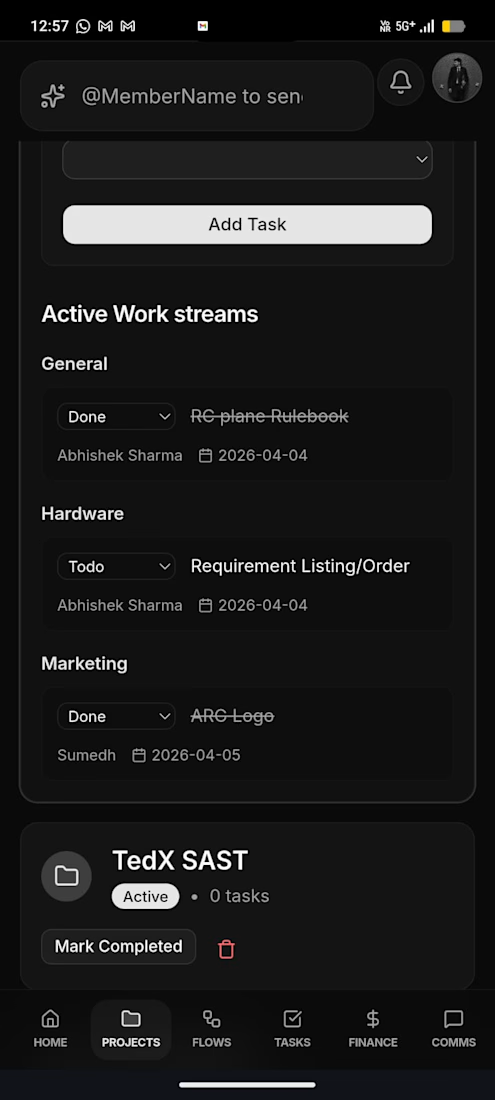
Create and manage long-term initiatives, technical projects, research efforts, competitions, and club operations from a centralized workspace.
Mission Planning
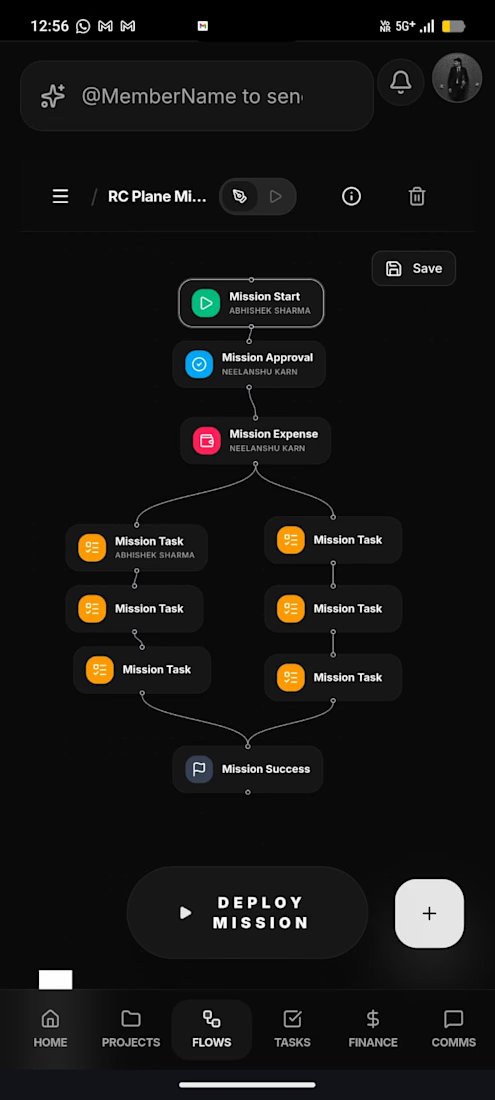
Visualize workflows through mission-based execution pipelines. Break complex objectives into structured stages, assign ownership, and track progress from idea to completion.
Task Assignment
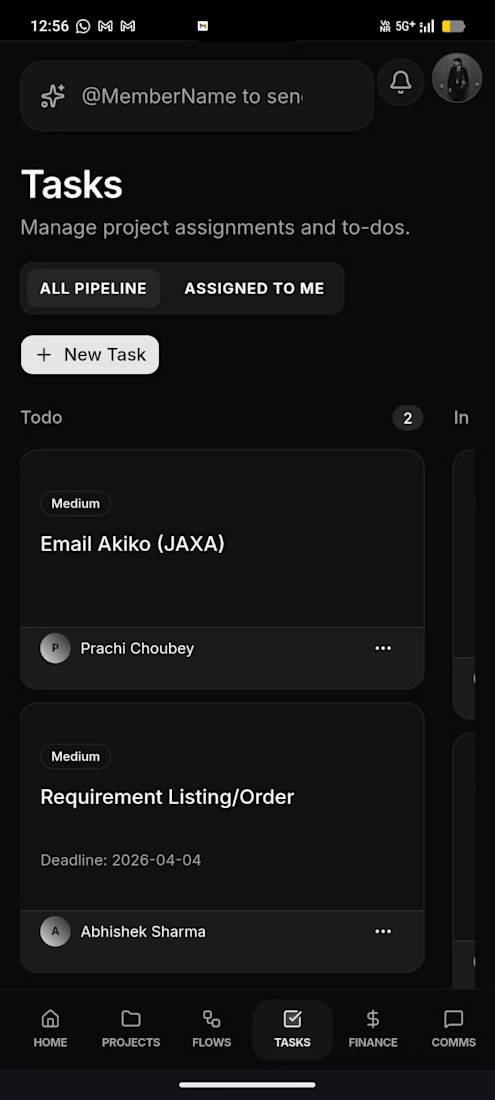
Assign responsibilities to members, departments, or committees with deadlines, status tracking, and accountability built into the workflow.
Finance & Budget Management
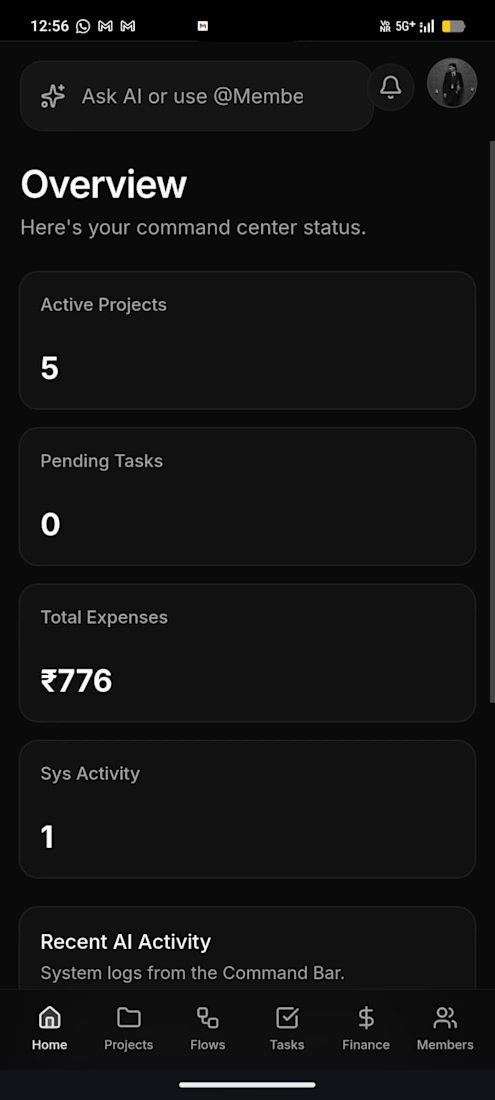
Track project expenses, monitor budgets, allocate funds, and maintain financial transparency across teams and initiatives.
Reimbursement Tracking
Digitize reimbursement requests, bill submissions, approvals, and expense verification, replacing inefficient manual processes.
Member Coordination
Keep teams aligned through centralized communication, project visibility, and real-time operational updates.
Product Thinking Behind SAST OS
Most club-management tools are simply databases with dashboards.
SAST OS was designed as an operational system.
The core idea was to treat student organizations the same way modern companies operate: with workflows, ownership, accountability, budgets, approvals, and execution pipelines.
Instead of asking:
"How do we manage events?"
the product asks:
"How do we run an organization?"
This shift led to a workflow-first architecture where projects, finances, approvals, and execution are interconnected rather than isolated modules.
Every screen is designed around reducing operational friction:
Fewer tools.
Less context switching.
Clear ownership.
Faster execution.
Better visibility.
The result is a platform that helps student teams spend less time managing work and more time building, creating, and shipping meaningful projects.
Design Philosophy
The interface embraces a dark, mission-control-inspired aesthetic that reflects the environment of technical and engineering teams.
The design prioritizes:
High information density without clutter.
Clear visual hierarchy.
Fast navigation between operational functions.
Dashboard-first decision making.
Mobile-first accessibility for on-the-go collaboration.
Every interaction is designed to feel purposeful, modern, and execution-focused.
Rather than resembling traditional administrative software, SAST OS feels closer to a command center—giving teams a clear picture of what is happening, who owns it, and what needs to happen next.
Built for Teams That Build
Whether it's a space technology club, robotics team, startup community, research group, or student organization, SAST OS provides the infrastructure required to coordinate ambitious projects and execute them effectively.
One workspace.
One workflow.
One operating system for execution.


The network for creativity
Join 1.25M professional creatives like you
Connect with clients, get discovered, and run your business 100% commission-free
Creatives on Contra have earned over $150M and we are just getting started





Related posts

Testing my app! 🧰🚀 Everything is finally coming along.
I’ve been working on this project for a little over two weeks. Initially it was just me working with one AI agent, but I was still manually coding most of it, so I was moving like a turtle 🐢very slow.
Then I decided to implement Codex into my project to automate more of the development and it has been amazing. Now I can focus more on prompting, testing, reviewing the code and making the technical decisions instead of manually coding everything.
I also created my own AGENTS.md bible with all my project rules and instructions to make sure Codex follows them as the final authority when working on my code.
The idea is simple: create one useful and intuitive ecosystem of tools that Shopify merchants can add to their stores to help customers make purchasing decisions faster and with more confidence.
Still testing, building and adding more tools. Let’s see where this goes! 🚀
And if anyone finds the idea interesting. I’m definitely open to collaborations, ideas or partnerships. Feel free to reach out!


Seeing you shift from hand coding to Codex and let the agent handle the grunt work really speeds up iteration.

A high-impact Webflow experience for an industrial site-selection platform.


Industrial site selection on Webflow lives or dies on map and filter clarity. High impact usually means dense data still scans on mobile.

A bold personal portfolio combining editorial design, 3D elements and modern web development to create a distinctive digital experience and showcase my work as a web developer.

I love the buddy here


