The network for creativity
Join 1.25M professional creatives like you
Connect with clients, get discovered, and run your business 100% commission-free
Creatives on Contra have earned over $150M and we are just getting started
Back to feedPost
Your product is solid. Your ads are running. You post every week.
But the leads still don’t come. Why???
Most founders think personal branding means posting daily. It doesn’t.
And here’s the painful part:
Every week you stay unclear, someone with a weaker product but a clearer message gets the calls. You pay for ads while your own profile does nothing.
Your personal branding doesn’t bring revenue when your content:
1. Talks about the product, not the problem.
Don’t just share feature updates. Show the client’s problem and how your product solves it.
2. Tries to talk to everyone.
Pick one specific client you want to attract and write only for them.
3. Has no point of view.
Tell people why you chose to solve this problem and what you believe about it.
4. Never tells a story.
You built this product for a reason. Share it. Stories make a stranger trust you before the first call.
Before you post, ask:
→ Who exactly is this for?
→ What pain does it name?
→ What do I believe about it that others don’t?
If you can’t answer all 3, the post isn’t ready.
Personal branding isn’t about being visible. It’s about being clear to the right people.
Which of these 4 is your biggest gap right now? Tell me in the comments.
#personalbranding #Linkedingrowth #Founder #socialmedia

Personal branding comes when you are clear on your path, have a specific target, and solve pain points through your product or service
The network for creativity
Join 1.25M professional creatives like you
Connect with clients, get discovered, and run your business 100% commission-free
Creatives on Contra have earned over $150M and we are just getting started

Related posts


Should a personal brand hero lead with the name or the promise?
A client of ours is a speaking coach. People find her by name: podcasts, stages, word of mouth. Yet her first hero hid that name in the top-left corner.
We tested two directions:
The promise first. "Speak with confidence" in big type, the name small in the nav. Clear, but it could be any coach on the internet.
The name first. Her name at billboard scale, the promise in one line above it, her face right behind. Someone arriving from a podcast knows instantly they're in the right place.
When people search for you, your name is the headline.
Which one would you ship for a personal brand?
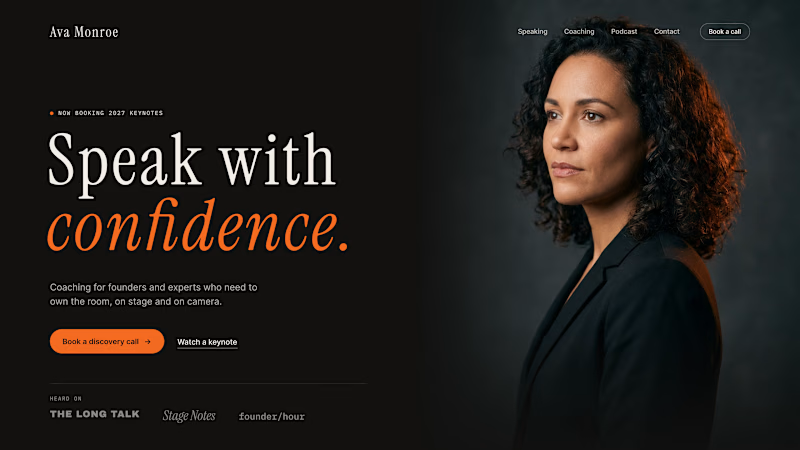
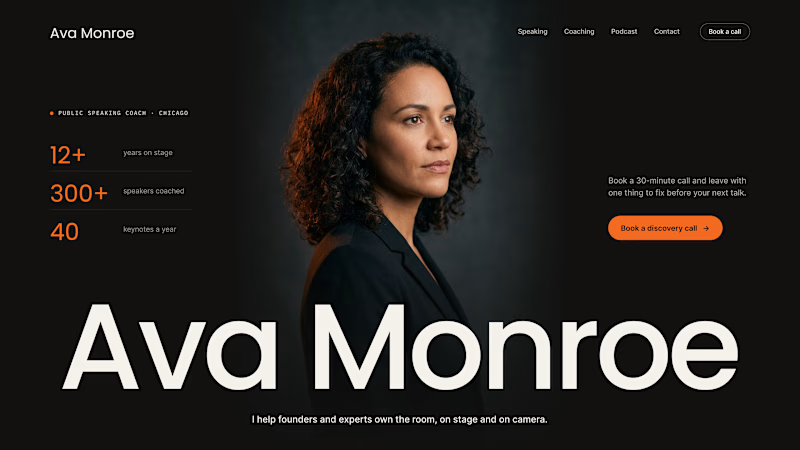
67 votes
Ends in 18h

Founders, if you need a website done by someone who has already worked with YC, A16z backed startups...well, I’m here. Send me a message.
I will help you figure out how to present your product and get your message across to the right people.

Great work!
If your website doesn't inspire trust, you're losing clients
"Thanks, Sherlock!", I hear you say, "Not that I didn't know that before. Better tell me how to build that trust."
Well, let's start with not ruining what you have in the first place. These are mistakes I've seen legit businesses make:
1. Logos without context
Especially if these are big names. What could do the heavy lifting for you now raises suspicion.
Are these your clients? Partners? Did you take the same elevator as a suspicious communist lady who is often seen together with the CEO of that company and consider yourself related now?
Just add one line explaining your relationship - trust earned.
2. Quantity over quality in testimonials
Some of your clients don't have a LinkedIn or X because... they have a life, I guess. They might have left you amazing reviews, and I understand the desire to show all of them.
But if people cannot google the person who left that review, they might assume this person doesn't exist.
Better have fewer, but verifiable testimonials.
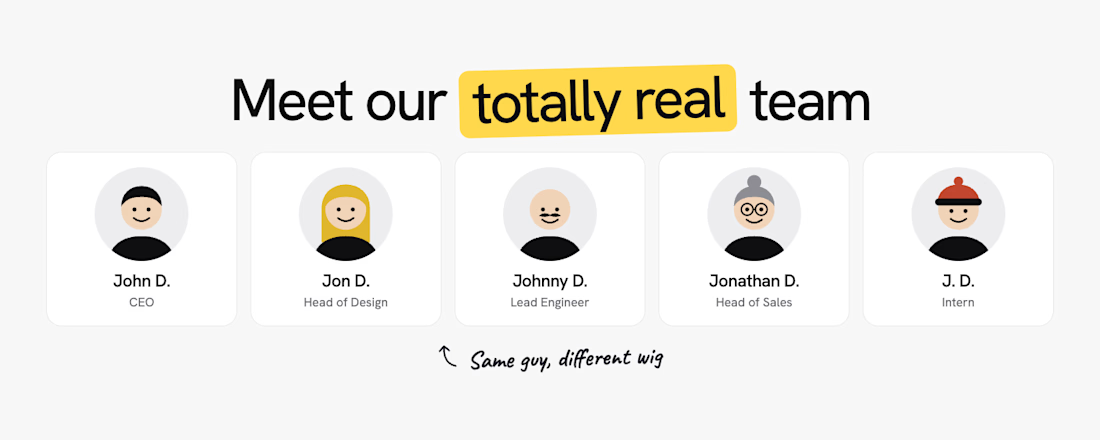
3. Fake team photos
I worked with a legitimate, successful business with a small team. To appear more trustworthy, they decided to add AI-generated team members to their About page.
Please, don't do that. I have astigmatism, myopia and a lazy eye. If I can see it's fake, everyone can.
Tell the truth or just leave that part out - either works.
That’s the “don’t ruin it” part. Do you want to take it to the next level?
I've helped some of the USA's national brands, Silicon Valley companies with their websites, including Grindr, Village Global, Zencastr.

The logos without context point is so true. One line on how you worked together fixes it.