The network for creativity
Join 1.25M professional creatives like you
Connect with clients, get discovered, and run your business 100% commission-free
Creatives on Contra have earned over $150M and we are just getting started
Back to feedPost
I built Chirp, a temporary shared room for small moments — 10-second sounds, photos, doodles, and stickers that disappear after 24 hours.
Most online spaces today feel public, permanent, and performative. I wanted to make the opposite: a private, playful, low-pressure room where people can leave tiny traces together without creating another profile, feed, or archive.
Anyone can create a room without logging in, share a unique link, and invite others to record short sounds, reply with audio, add photos, place stickers, or doodle on the canvas.
Chirp may look like a playful canvas, but it is not a productivity board or a persistent workspace. The 24-hour expiration is part of the design: because everything fades away, people can post more casually and treat the room like a shared moment, not a social feed.
I built Chirp with Figma Make to explore how Figma can be used to create an interactive, expressive, and temporary web experience.
Note: Chirp is an experimental prototype built for Config Makeathon. Rooms and uploaded content are temporary, so please don’t use it for sensitive information.
Live project:
https://chirp.figma.site/


The 24-hour expiration being a deliberate design choice rather than a limitation is a great frame. Removes the pressure to post something "worth keeping." Did you find the no-login flow created any friction during testing?

Thanks! I guess the friction is that the URL is the only way to return to the room. But since Chirp is designed to be temporary, I think that tradeoff fits the concept.


This is so great
Thank you!


Man, that's so cool!
Cheers man:)


Wonderful spatial layout freedom.
Thanks:)

This is a great example of creative problem-solving. The final experience feels very polished.
Thank you !

Nice concept, these are really interesting and enjoy full 🌝
Thanks! I’m glad you like it.

Amazing!
Thanks!


Nice work🔥👏
Thank you😊

Nice concept
Thank you:)
You’re welcome 😇

Absolutely amazing!👌
Thanks!

😍😍😍😍
☺️☺️☺️


Really amazing!
Thanks!


Hahah totaly love this concept💯

This is amazing


Awesome
The network for creativity
Join 1.25M professional creatives like you
Connect with clients, get discovered, and run your business 100% commission-free
Creatives on Contra have earned over $150M and we are just getting started





Related posts

I’ve always liked products that solve a very specific problem instead of trying to do everything.
So for the Lovable Challenge, I picked a simple question that event-tent rental businesses hear all the time:
“Can I book a tent for my wedding?”
The problem is… a tent can’t really be booked until you know if the whole event will work.
How many guests?
How much usable space?
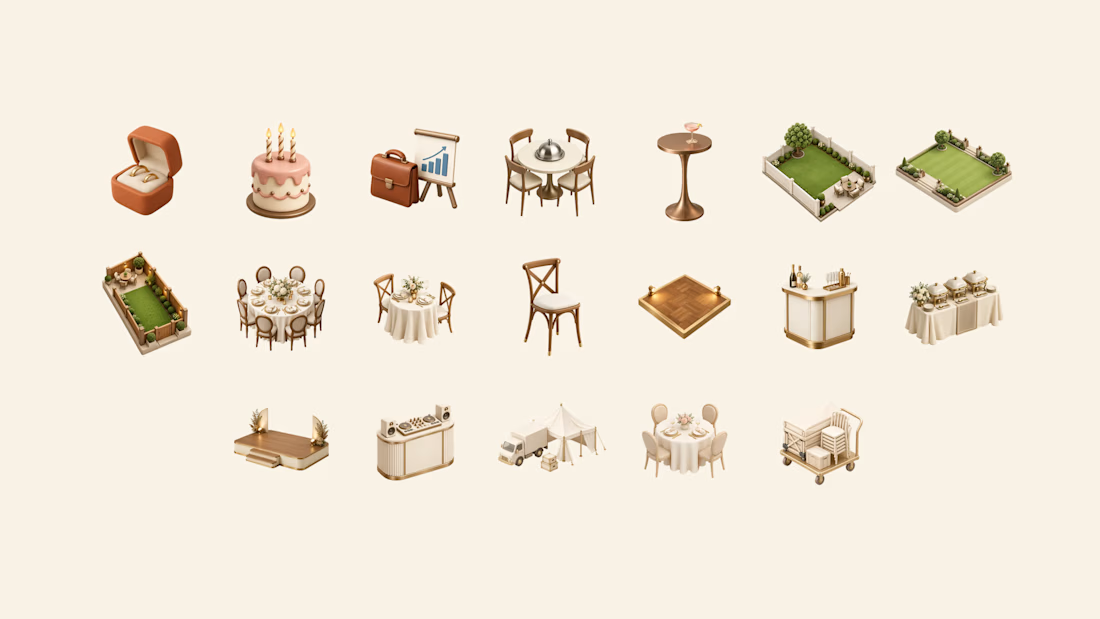
Tables? Dance floor? Bar? Stage?
Will the layout actually fit?
Can the crew set it up and pick it up on time?
Usually, the owner has to figure all of that out manually through messages, calls and calendar checking.
So I built TentFit — a spatial booking experience for event tent rentals.
The customer starts by planning the event, then maps out the space and everything they want inside it. TentFit checks the layout and highlights conflicts.
And instead of just saying “doesn’t fit,” it helps solve the problem:
Switch the tent. Move the layout. Remove an element.
Once everything works, TentFit checks the logistics and turns the final setup into a booking.
The goal was simple:
Make the customer’s decision easier, and make the owner’s job easier.
The flow is basically:
FIT → FEASIBLE → BOOKED
I had a lot of fun building the spatial planning part of this one.
X/Twitter post: https://x.com/brjanov/status/2105630218492731501?s=20
Built with @Lovable
#LovableChallenge #ProductDesign #UXDesign #NoCode #SaaS #WebDesign


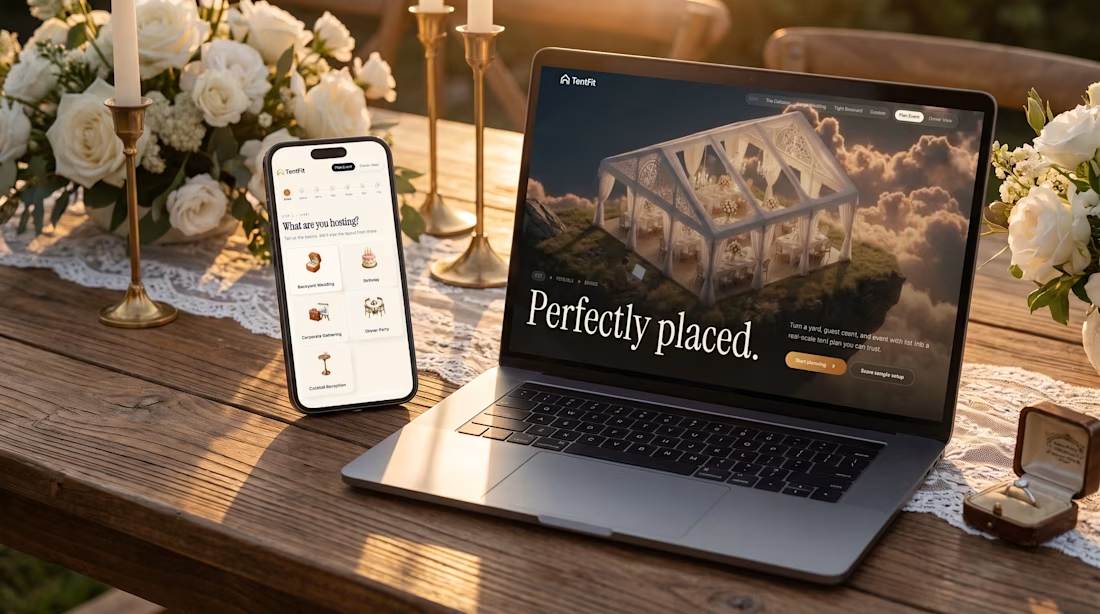

Nice stuff!


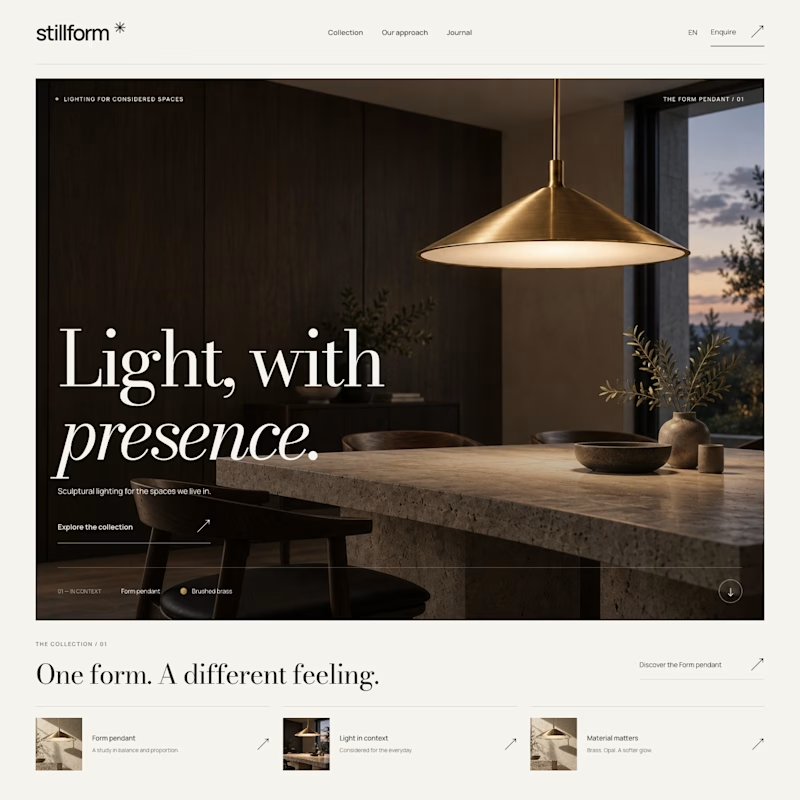
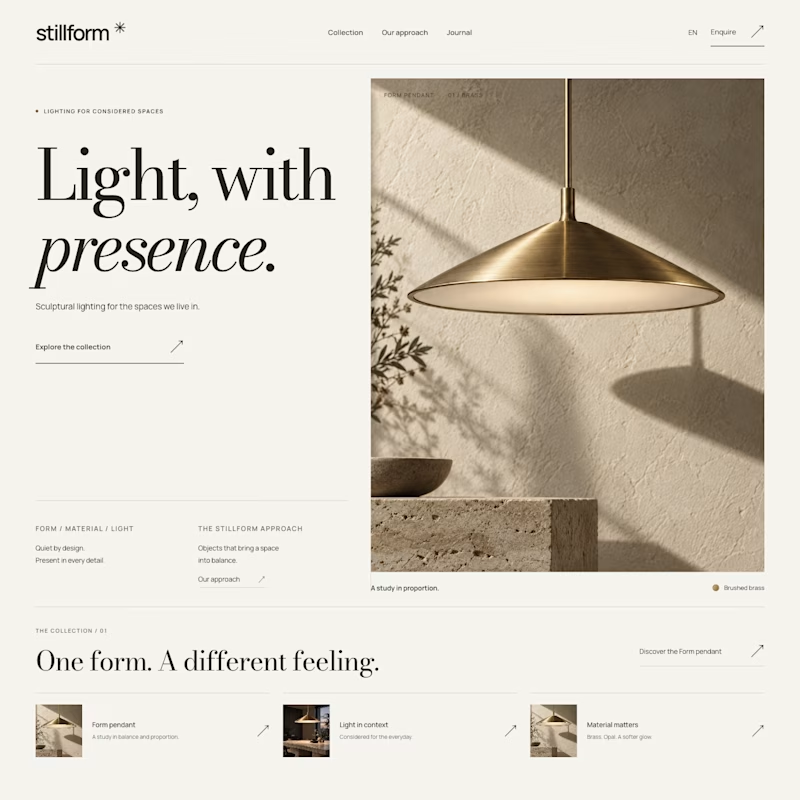

Atmospheric, and it was the photography that decided it. A lamp is a product you buy for what it does to a room, so seeing the warm glow pooling across a dark surface sells the feeling before the layout even registers. Sculptural is gorgeous but shows the object, Atmospheric shows the outcome.

IPO Coins landing page web design 3D animation website icons


Great Design, R