The network for creativity
Join 1.25M professional creatives like you
Connect with clients, get discovered, and run your business 100% commission-free
Creatives on Contra have earned over $150M and we are just getting started
Back to feedPost

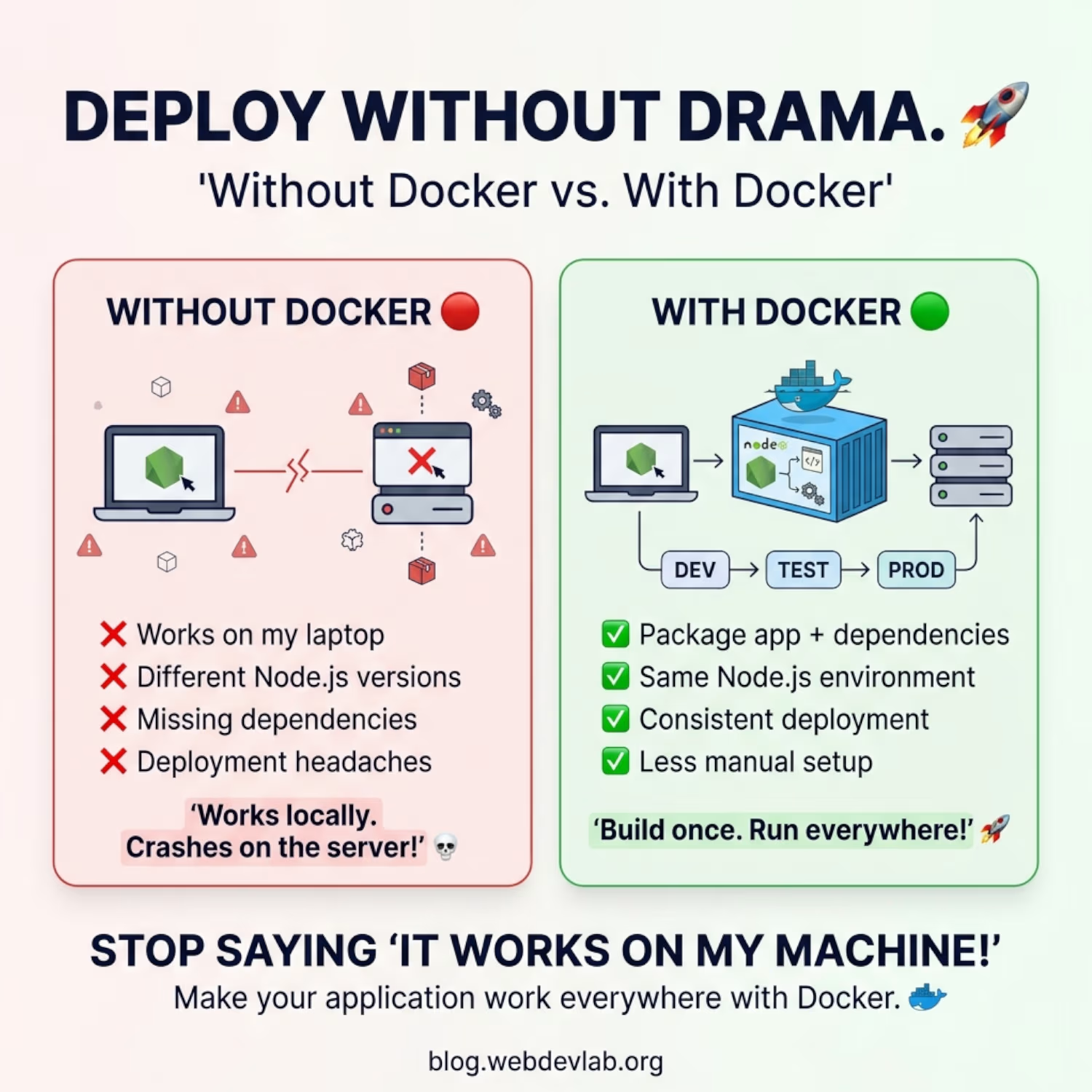
🚀 Deployment Without Docker vs. With Docker
Without Docker:
❌ Works on your laptop, crashes on the server.
❌ Different Node.js versions.
❌ Missing packages and dependencies.
❌ Hours wasted fixing environment issues.
With Docker:
✅ Package your app with its dependencies.
✅ Use the same Node.js version everywhere.
✅ Run consistently across development, testing, and production.
✅ Less manual setup. Fewer deployment surprises.
Imagine deploying your app without worrying whether the server has the right environment.
That's the power of Docker! 🐳
Stop saying "It works on my machine!"
Start making it work everywhere.
👉 Learn how to Dockerize your first Node.js app: https://blog.webdevlab.org/fix-works-on-my-machine-with-docker
#Docker #NodeJS #DevOps #WebDevelopment #SoftwareEngineering
The network for creativity
Join 1.25M professional creatives like you
Connect with clients, get discovered, and run your business 100% commission-free
Creatives on Contra have earned over $150M and we are just getting started



Related posts

I've been seeing a lot of designers moving from Framer to Astro, posting their new Lighthouse scores, and calling Framer the problem.
I think we're missing a bigger conversation here.
Astro is fast. No argument there. It ships static HTML with very little JavaScript by default, and having full control over your code is a real advantage.
But how many designers actually understand what's making their websites slow?
Do you know what LCP, INP, and CLS measure?
Are you checking image sizes and formats? Video compression? Font loading? Third-party scripts? The JavaScript behind your interactive components?
What about those scroll animations, huge blur effects, and background videos running on mobile?
Framer has made something incredible possible: designers can now build, host, and publish complete websites without depending on a developer.
But that freedom doesn't mean web fundamentals suddenly stop mattering.
And I'm not saying Framer is perfect. Its runtime has overhead, and Astro gives developers a level of control that Framer simply doesn't.
I'm a web engineer who builds with Framer, and I think both tools have their place.
What I find strange is seeing people treat a higher Lighthouse score after a complete rebuild as proof that the previous platform was the entire problem.
Sometimes it's the tool. Sometimes it's how you built the website. Often it's both.
Before switching stacks, understand what you're actually trying to fix.




Agree, Jalal. Most Lighthouse drops I see on Framer sites come from oversized images, heavy embeds and too many font weights rather than the platform itself.


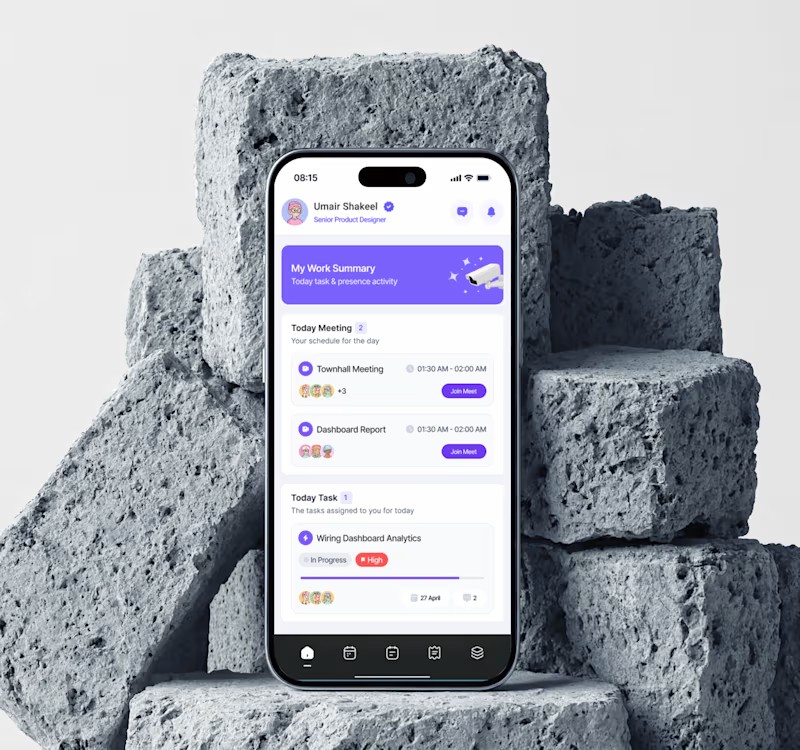
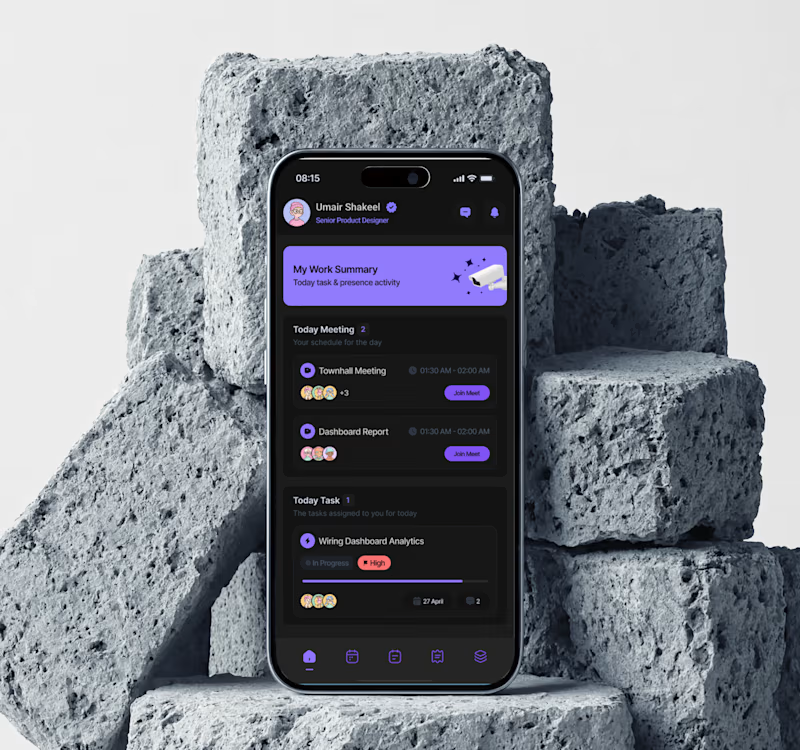

Dark mode for evenings, but light feels easier for daily use. Both look clean though!

Away from coding... and into the world of no-code development.
Coding has been my usual playground for years, but recently, I decided to step outside my comfort zone and explore a different way of building for the web.
After taking a few Framer tutorials, I decided it was time to stop watching and start building.
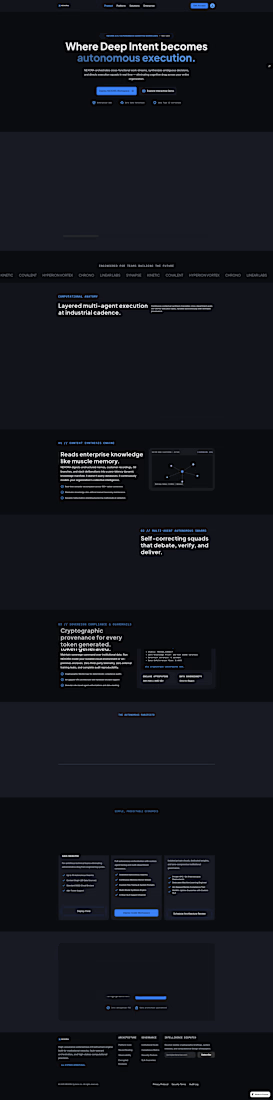
Meet Nexora — my first website built with Framer.
Nexora is a conceptual AI automation platform focused on autonomous execution, multi-agent collaboration, enterprise knowledge synthesis, and verifiable workflows.
I wanted to explore a more technical, futuristic visual direction, with a dark interface, subtle blue accents, structured layouts, and a clean presentation of complex technology.
This project was also an opportunity to get hands-on with Framer's layout system, responsive design, components, and animation capabilities.
I'm still learning, experimenting, and discovering what is possible beyond traditional code.
One thing is certain: being a developer doesn't mean I have to limit myself to writing code.
Sometimes, the best way to grow is to try something different.
First Framer project. More experiments ahead.
#Framer #NoCode #WebDevelopment #LearningInPublic #WebDesign

Congrats on your first Framer build!