The network for creativity
Join 1.25M professional creatives like you
Connect with clients, get discovered, and run your business 100% commission-free
Creatives on Contra have earned over $150M and we are just getting started
Back to feedPost

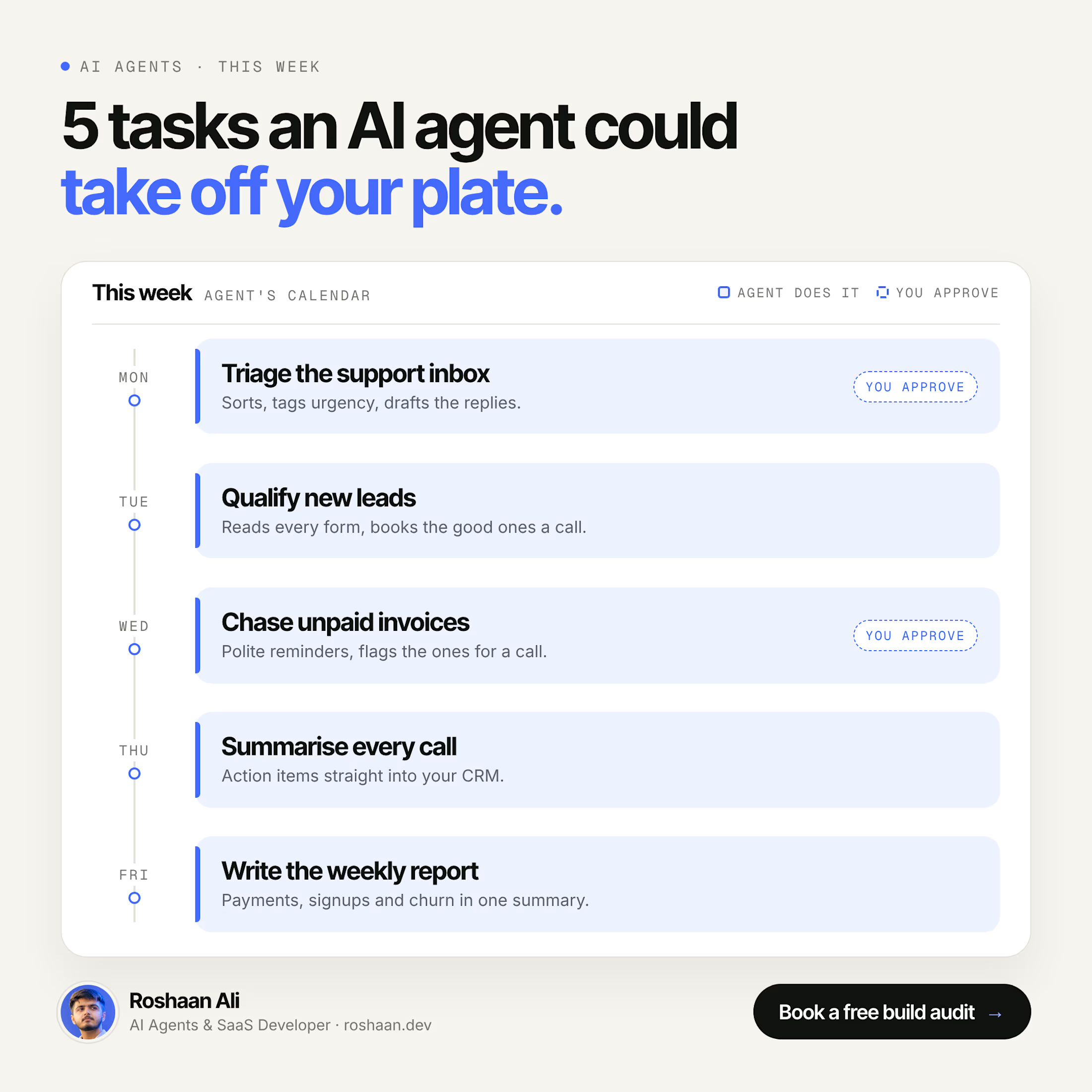
5 Tasks an AI Agent Could Take Off Your Plate This Week
When founders hear "AI agent", they picture something huge. The best first agents are boring. They take one repetitive job you already do every week and do it for you.
Here's what a week could look like:
Monday: Triage the support inbox
The agent reads every email, sorts it, tags what's urgent and drafts the replies. You read, tweak and send.
Tuesday: Qualify new leads
It reads every form submission, checks it against who you actually want to work with, and books a call with the good ones.
Wednesday: Chase unpaid invoices
Polite reminders go out on schedule, and it flags the clients who need a personal call. You approve before anything is sent.
Thursday: Summarise every call
After each sales or support call, the key points and action items go straight into your CRM. No more notes nobody reads.
Friday: Write the weekly report
Payments, signups and churn pulled into one summary, waiting for you before the weekend.
Notice the pattern: the agent does the busywork, and you stay in charge of anything that touches a customer or money.
Which of these would save you the most time? Book a free build audit and we'll pick the right first agent: calendly.com/roshaanali-business
The network for creativity
Join 1.25M professional creatives like you
Connect with clients, get discovered, and run your business 100% commission-free
Creatives on Contra have earned over $150M and we are just getting started



Related posts

How do you run 12 AI agents without opening 12 dashboards?
One office, every desk is an agent. Amber means it's waiting for you.
One map instead of twelve dashboards.
AI agent development service

good work

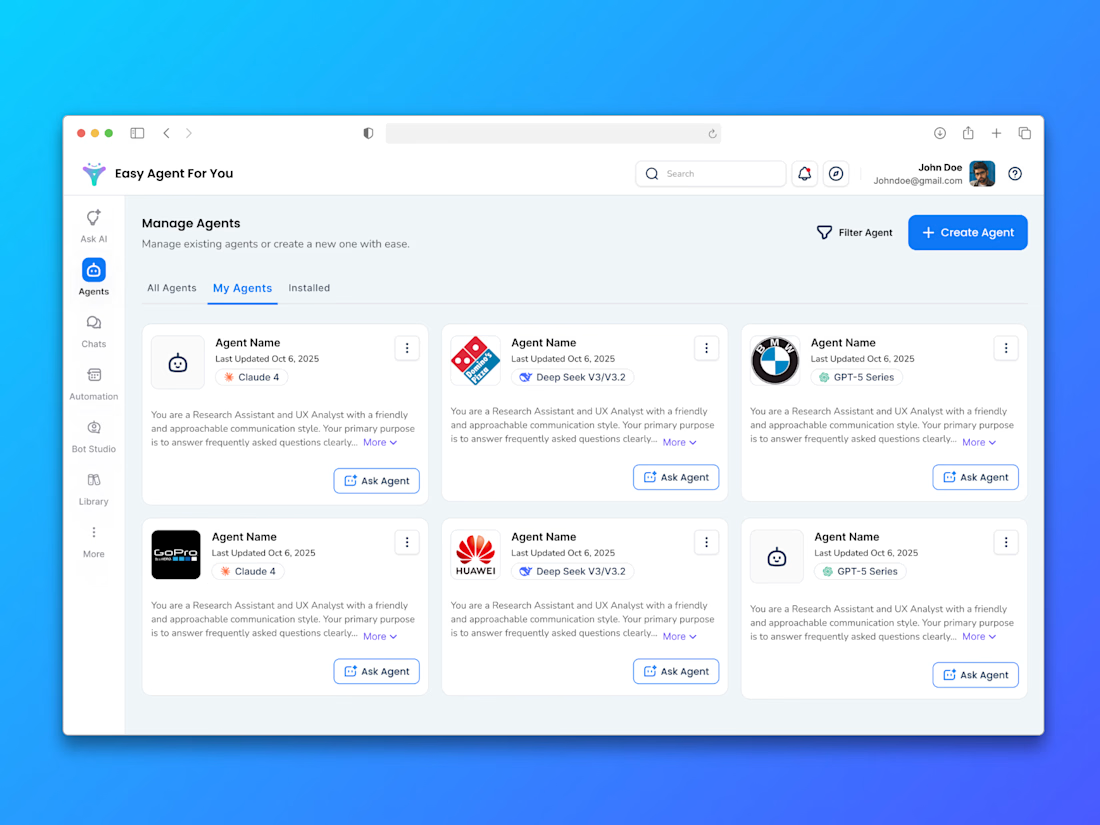
I was handed an AI agent platform that confused its own clients in a live presentation. In V2, five plain-language questions replace prompt writing, so a non-technical user has a working agent in under two minutes; Aria gives every new user a conversation from the first message; and public bots share nothing until the user chooses. 12 modules redesigned end to end with zero dropped use cases.
Full case study: https://zobia-khalid-malik-portfolio.framer.website/easyagent



Love how approachable this feels.

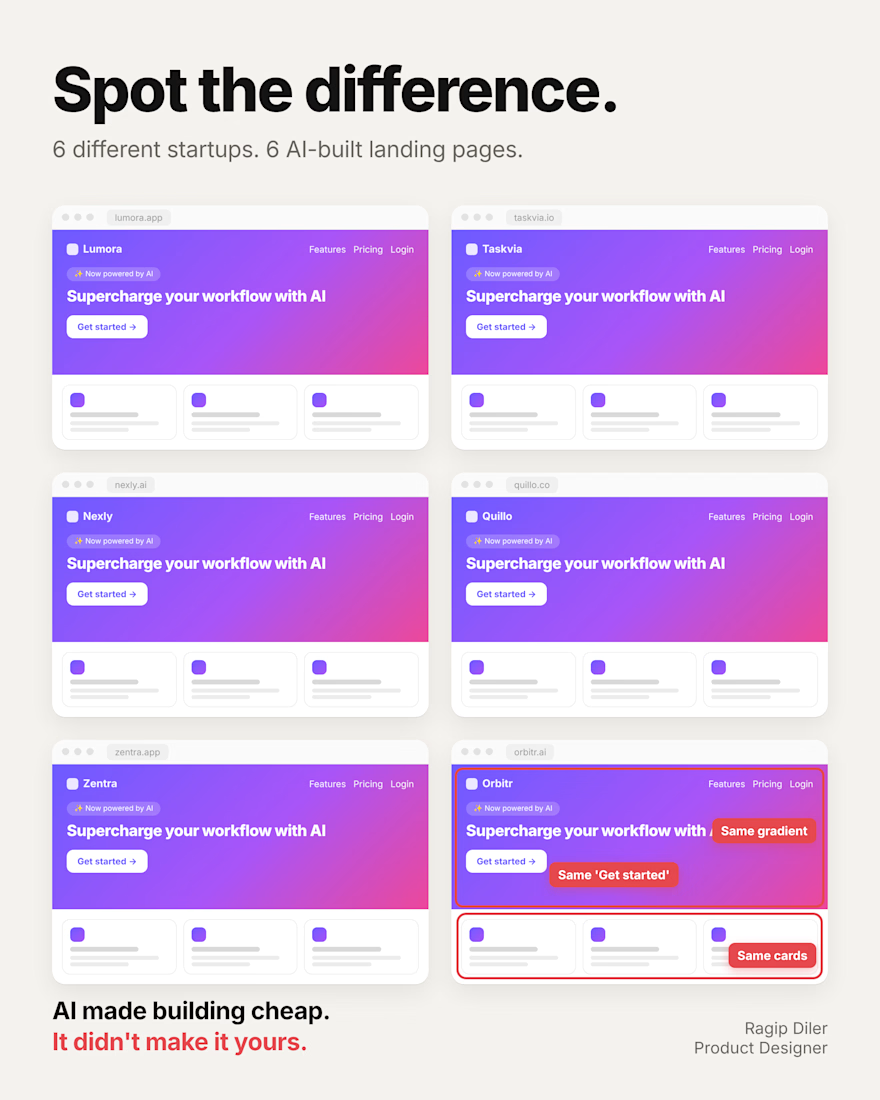
You can spot a vibe-coded app in 2 seconds.
Same gradient. Same cards. Same “Get started.”
It’s not a coincidence.
When you ask AI to “make it look modern,” it gives you the average of every landing page it has seen. The average is safe. It’s also invisible.
And it costs you more than looks:
→ Visitors can’t tell you apart from the 10 other tools they opened today.
→ “Supercharge your workflow” says nothing about the problem you solve.
→ A generic page feels like a weekend project. People don’t trust weekend projects with their data or their card.
The good news: you don’t need to rebuild anything. Three changes go a long way:
Write the headline yourself. Name your user and their problem in plain words.
Pick one thing only your product does and make it the first thing people see.
Replace the three feature cards with a real screen of your product.
AI can build the page in minutes. Deciding what it should say is still your job.
What’s the first thing you’d change on your own landing page?