The network for creativity
Join 1.25M professional creatives like you
Connect with clients, get discovered, and run your business 100% commission-free
Creatives on Contra have earned over $150M and we are just getting started
Back to feedPost

AI automation isn’t about adding AI to everything.
It’s about finding the repetitive work that slows a business down — then deciding what should be automated, what should use AI, and where a human should stay in the loop.
For example:
📄 Invoice received
→ Extract data with AI
→ Validate the information
→ Route for approval
→ Store structured records
→ Notify the right person
Or:
🛒 Customer places an order
→ Shopify event
→ Automation triggers
→ Customer segmentation
→ Klaviyo follow-up
→ Track the result
The important part isn't the AI model.
It's the workflow architecture connecting everything together.
I build these kinds of systems using n8n, Make.com, Zapier, APIs, OpenAI, Claude, Gemini, Shopify, Klaviyo, HubSpot, and other business tools.
My goal is simple:
Less repetitive work.
Fewer manual errors.
Faster processes.
Better visibility.
I'm currently open to remote AI automation roles and ongoing contract opportunities where I can help businesses turn manual processes into reliable automated systems.
🔗 Portfolio: timothy-ia-automation.netlify.app
#AIAutomation #n8n #Makecom #Zapier #WorkflowAutomation #AIEngineering #Automation #LLM #BusinessAutomation
The network for creativity
Join 1.25M professional creatives like you
Connect with clients, get discovered, and run your business 100% commission-free
Creatives on Contra have earned over $150M and we are just getting started




Related posts

AI Assistant Using Your Business Knowledge Base — RAG on Your Documents
THE PROBLEM
Q&A bots break down when knowledge lives in documents: a 100-page manual has no "questions" to match, it can't fit into a prompt, and generic chatbots hallucinate instead of admitting what they don't know.
THE SOLUTION
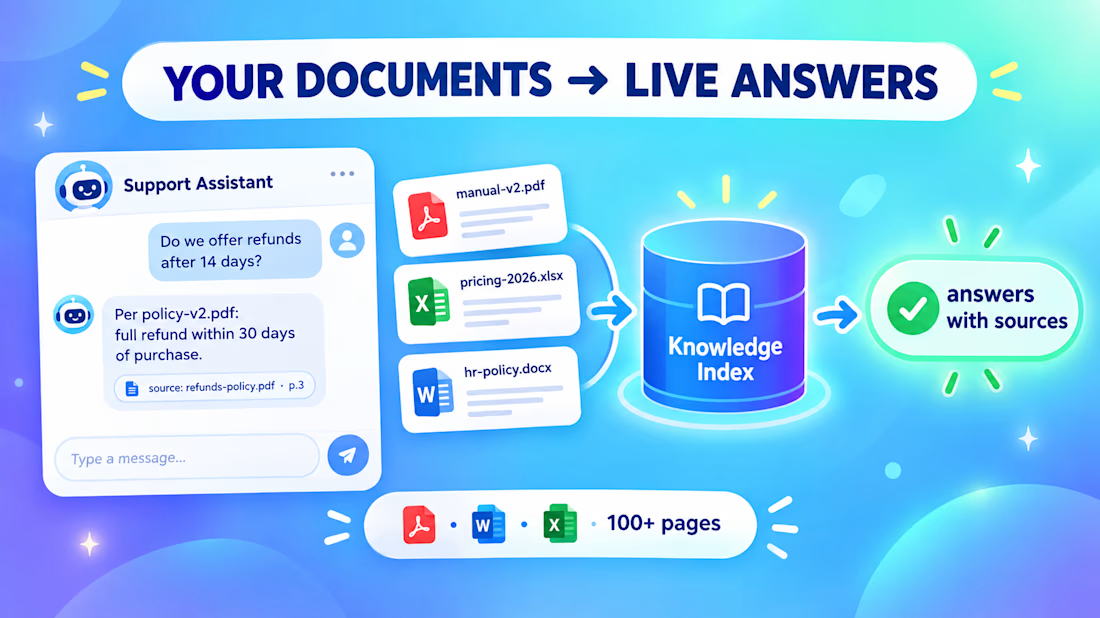
A RAG (Retrieval-Augmented Generation) knowledge base: documents are split into meaningful chunks, embedded into a vector index, and the assistant answers from the right sections — by meaning, not keywords.
Any format as-is: PDF, DOCX, TXT, Markdown — 100+ pages is fine
Answers grounded in YOUR documents — it says "I don't have that information" rather than inventing
Source references — every answer shows which document and section it came from
Runs on your infrastructure — documents never leave your control
One command to re-index after updating documents — documented, no programmer needed
LIVE DEMO
Ask it about my products, pricing, deployment and support — it answers from 6 real documents with sources:
https://kb-assistant-demo.dvc-ai.workers.dev



The 'I don't have that information' line is the part most RAG builds skip, and it's the one that matters. How do you set the cutoff? On mine, a fixed similarity threshold broke once I filtered results by user role. Scores shifted and it refused questions it could answer.

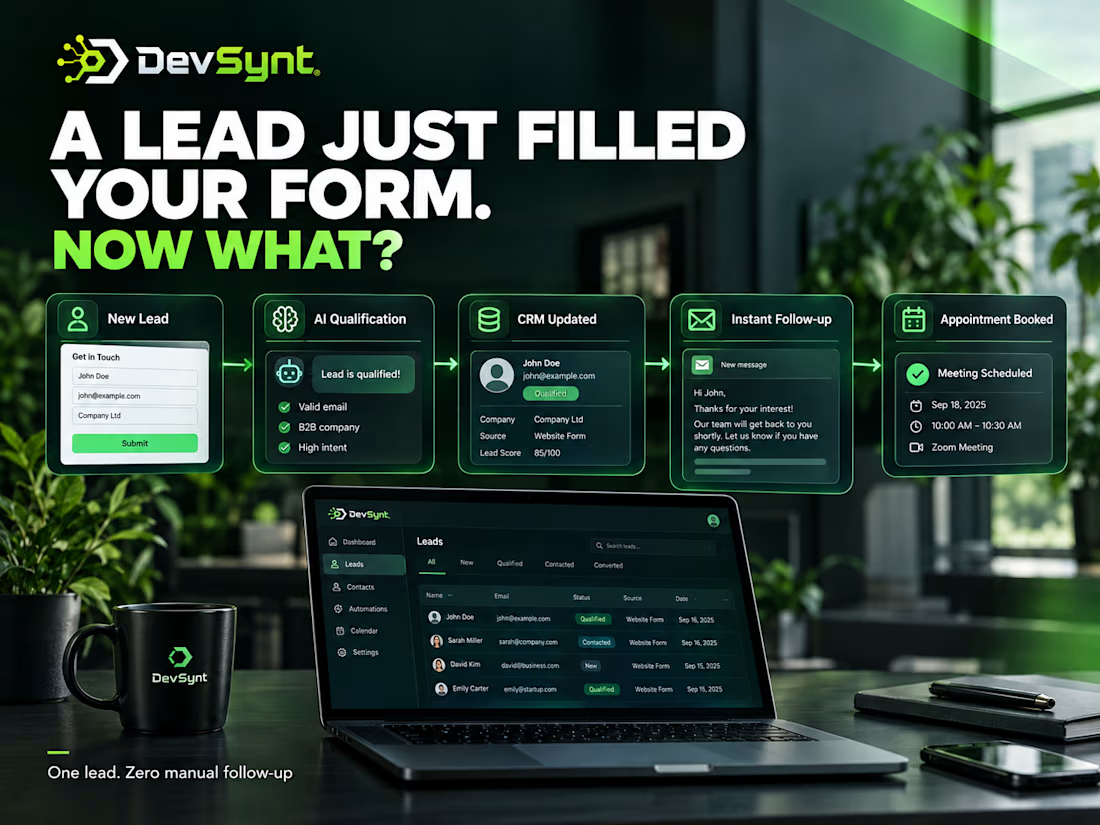
A lead just filled out your form. Now what?
If your team still has to manually:
→ Check the lead
→ Qualify them
→ Add them to the CRM
→ Send a follow-up
→ Find a meeting time
→ Update your records
…there's a workflow waiting to be automated.
With AI + automation, the process can happen automatically:
New Lead → AI Qualification → CRM → Follow-Up → Appointment
No repetitive data entry.
No forgotten follow-ups.
No waiting for someone to move the lead to the next step.
Just a connected workflow that keeps the business moving.
This is what we build at DevSynt.