The network for creativity
Join 1.25M professional creatives like you
Connect with clients, get discovered, and run your business 100% commission-free
Creatives on Contra have earned over $150M and we are just getting started
Back to feedPost

Currently building a website monitoring SaaS
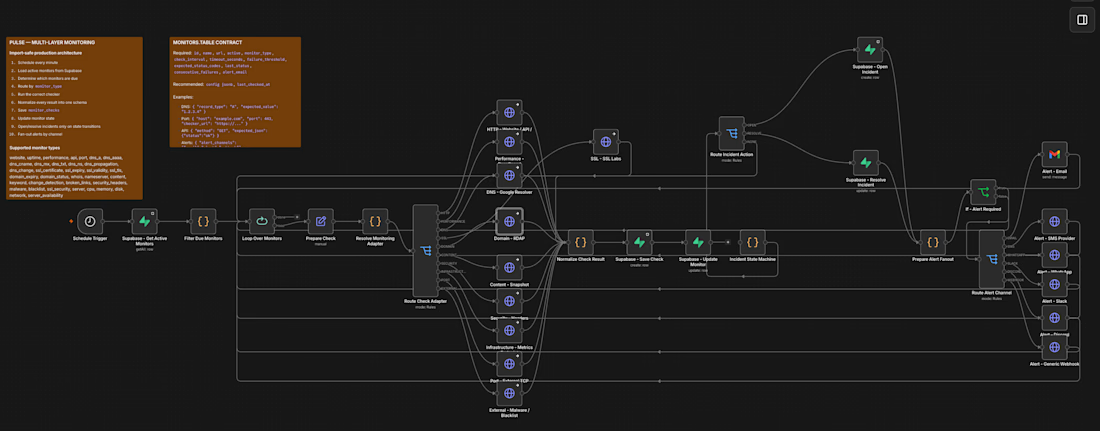
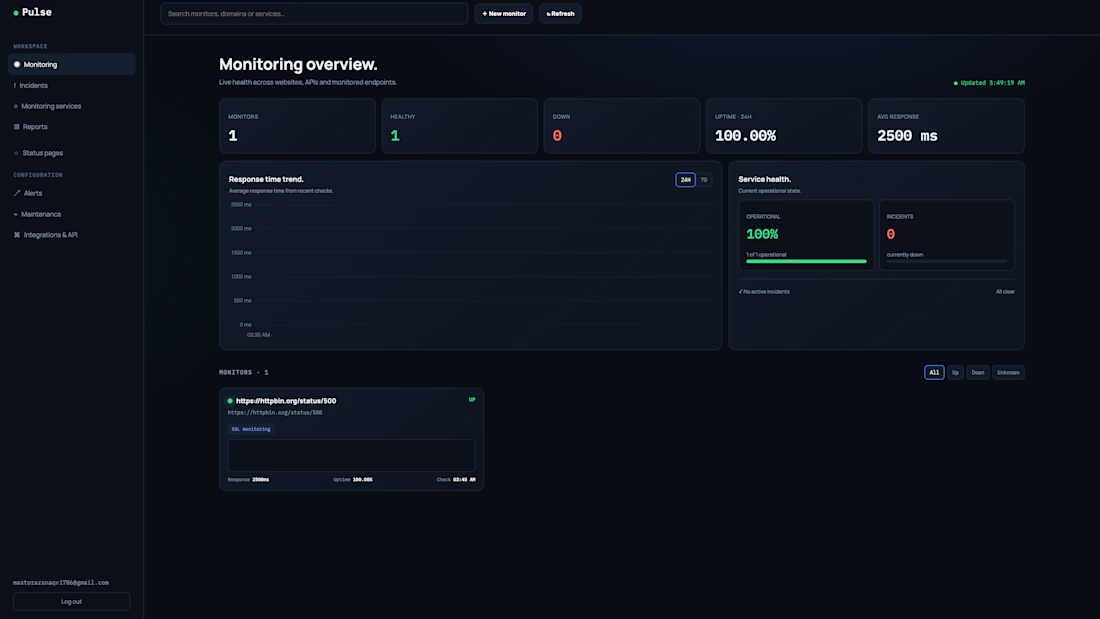
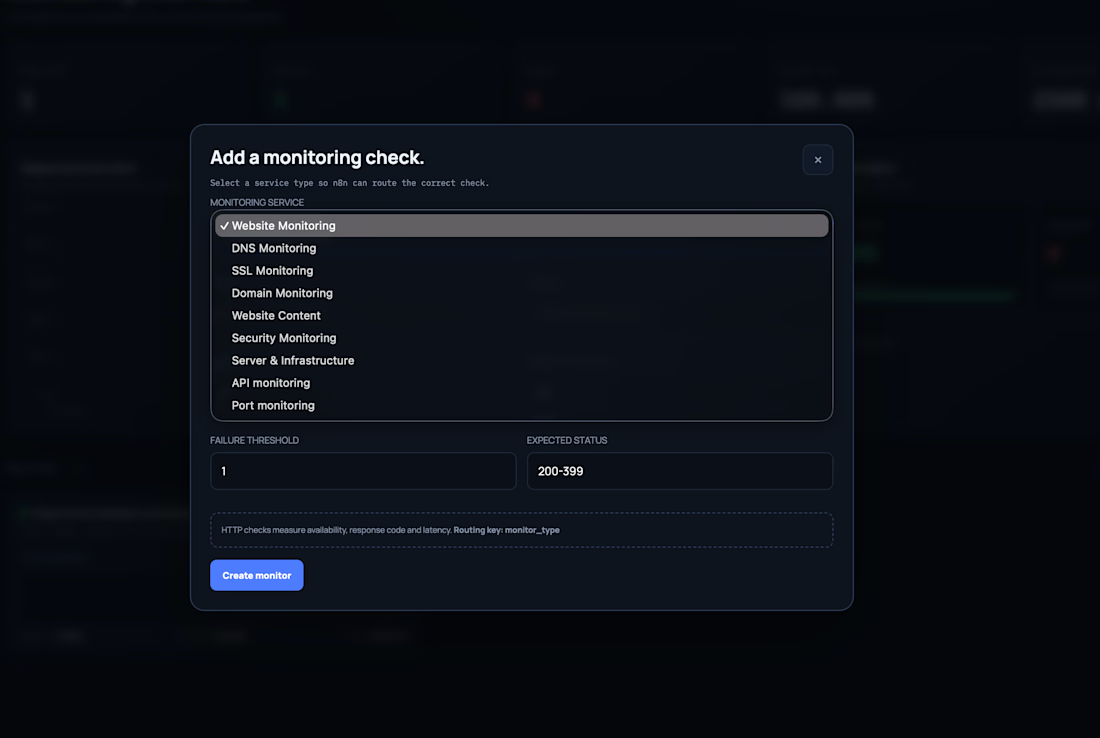
I started with a simple n8n workflow that could detect whether a website was up or down. Now I'm turning it into a full monitoring platform for uptime, performance, APIs, DNS, SSL, domains, content, security and infrastructure.
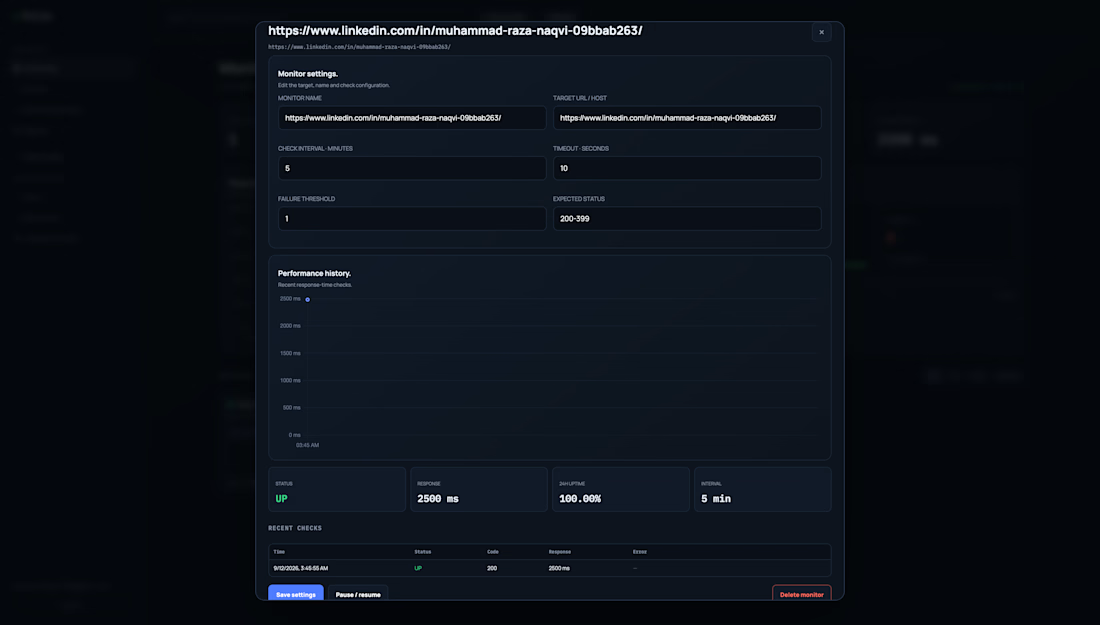
The goal isn't to build just another uptime checker. I'm focusing on making the experience simpler, more actionable and more flexible than the typical monitoring setup with one dashboard for different monitoring types, clear incident tracking, response time graphs, configurable checks and multi-channel alerts.
I'm building the backend and automation with n8n + Supabase + JavaScript, while designing the dashboard around real monitoring data and incidents.
It's still a work in progress, but I'm gradually moving it from:
Check → UP/DOWN → Alert
towards:
Monitor → Detect → Analyze → Incident → Alert → Report
Sharing the progress as I build it.


The network for creativity
Join 1.25M professional creatives like you
Connect with clients, get discovered, and run your business 100% commission-free
Creatives on Contra have earned over $150M and we are just getting started

Challenges
View all


Related posts

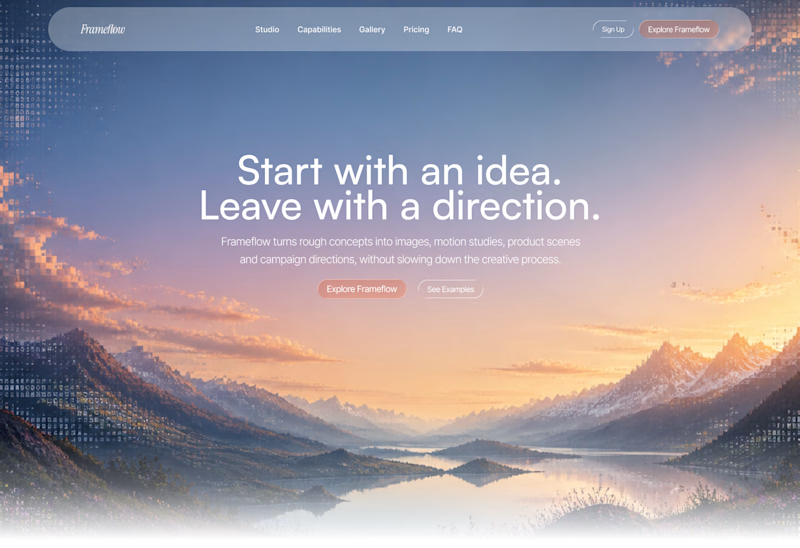
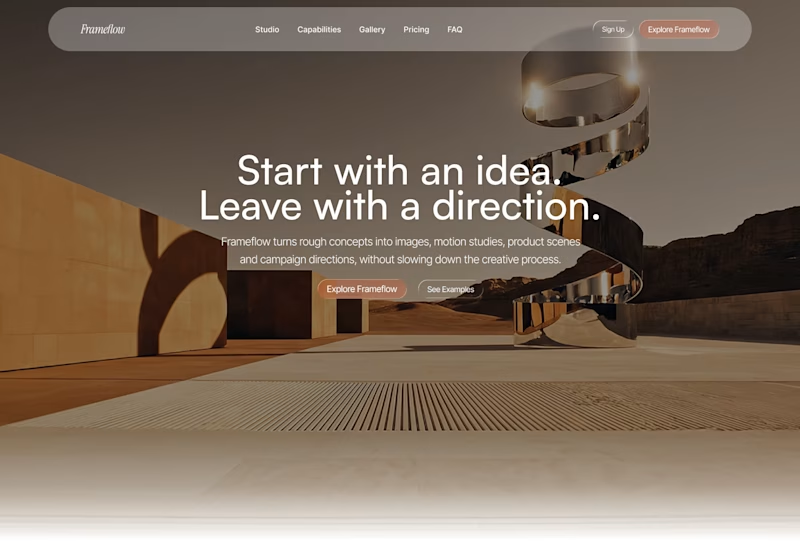
Explored two different visual directions for the same SaaS landing page.
The structure stays consistent, while the imagery, mood and art direction shift the overall brand feel.
Interested to know which direction feels stronger.

11 voted
73%
4 voted
27%
15 votes
Closed

Woww... What a precious design priyansh bro.😍 💯 🔥 🎉

Agent products resist normal product marketing. There's no single interface to screenshot and the category vocabulary has gone generic, so a feature list communicates almost nothing.
We built Heron's explanation as a four-beat scroll that runs the agent's actual loop. The model appears and is watched. Violations surface with plain language and a real IBC clause. An edit is applied after approval. The system learns the firm's standards.
Pacing was the main design problem. Each beat needed enough scroll distance to register as a separate action, without the section becoming so long that people bail before the payoff. The sequence carries the technical detail that would otherwise sit in a spec table.


The four-beat scroll is a smart way to make the agent’s loop feel tangible—much clearer than a static feature list. The restrained visual system gives the interaction room to breathe.

I recently redesigned and launched a modern, high-performance Web Infrastructure for Orikma Ref & Trading (Pvt) Ltd, a premier HVAC and Refrigeration supplier in Sri Lanka.
Key Highlights of the Project:
• Engineering Focus: Highlighting key HVAC solutions including compressors, refrigerants, fan motors, and professional VALUE tools.
• Modern Stack: Developed with Next.js and React, styled with Tailwind CSS for optimal load speed and cross-device responsiveness.
• Security & SEO: Fixed domain DNS configurations, Google Search Console indexing issues, and optimized for local search engine visibility.
Tech Stack: Next.js | React | Tailwind CSS | Vercel | Supabase
Are you looking to scale your business with custom web development? Let's connect!

Quality Assurance and Authorized Distribution get their own icon cards right under the hero instead of buried in an About page — for an HVAC B2B buyer those two lines are probably the actual purchase decision.