The network for creativity
Join 1.25M professional creatives like you
Connect with clients, get discovered, and run your business 100% commission-free
Creatives on Contra have earned over $150M and we are just getting started
Back to feedPost

Polsia reportedly raised $30M at a $250M valuation with one founder and zero employees.
Whether the exact model becomes mainstream or not, the signal is hard to ignore:
company operations are becoming software.
Polsia is positioned as an autonomous AI system that can plan, code, market, sell, and support a business through AI agents.
That is not just an AI story.
That is a business model story.
Because the companies that understand this early will not just “use AI.”
They will redesign how work gets done.
Lead follow-up will not wait for someone to remember.
Customer support will not depend on one overloaded inbox.
Reports will not take three people and two days.
Marketing experiments will not sit in a backlog for weeks.
Internal admin will not keep stealing hours from the people who should be growing the business.
This is where many companies are going to fall behind.
Not because they refuse to use ChatGPT.
Because they keep treating AI like a side tool instead of rebuilding the workflows around it.
The future business advantage is not having more software.
It is having systems that can think, trigger actions, move data, follow up, report, and support the team automatically.
That does not mean removing humans.
It means removing the repetitive work that keeps humans stuck.
For business owners, the question is simple:
Which parts of your company are still being handled manually only because nobody has rebuilt the process yet?
That is where I help.
I design and build the workflows, automations, AI systems, integrations, and internal tools that turn scattered operations into something faster, cleaner, and more profitable.
Polsia is an extreme example.
But the direction is obvious.
The businesses that build around this shift will move faster.
The ones that wait will be competing with companies that operate at a completely different speed.


The network for creativity
Join 1.25M professional creatives like you
Connect with clients, get discovered, and run your business 100% commission-free
Creatives on Contra have earned over $150M and we are just getting started





Related posts


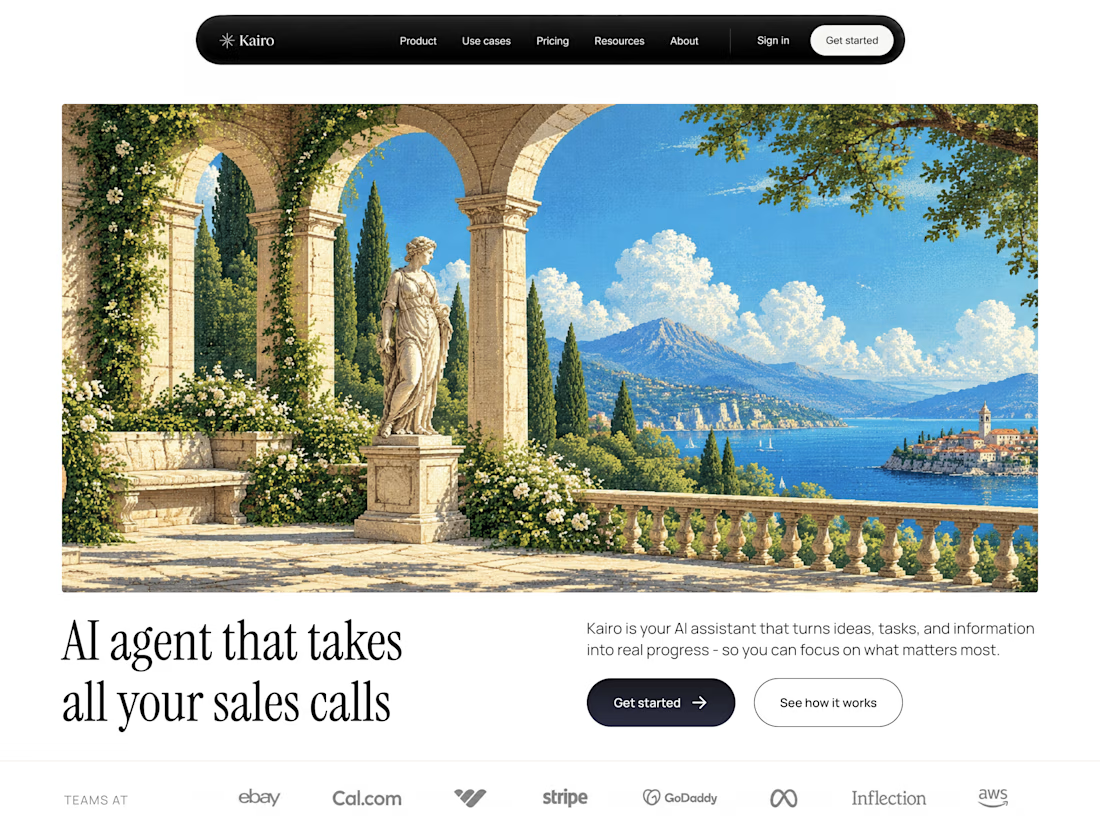

The visual storytelling is good.



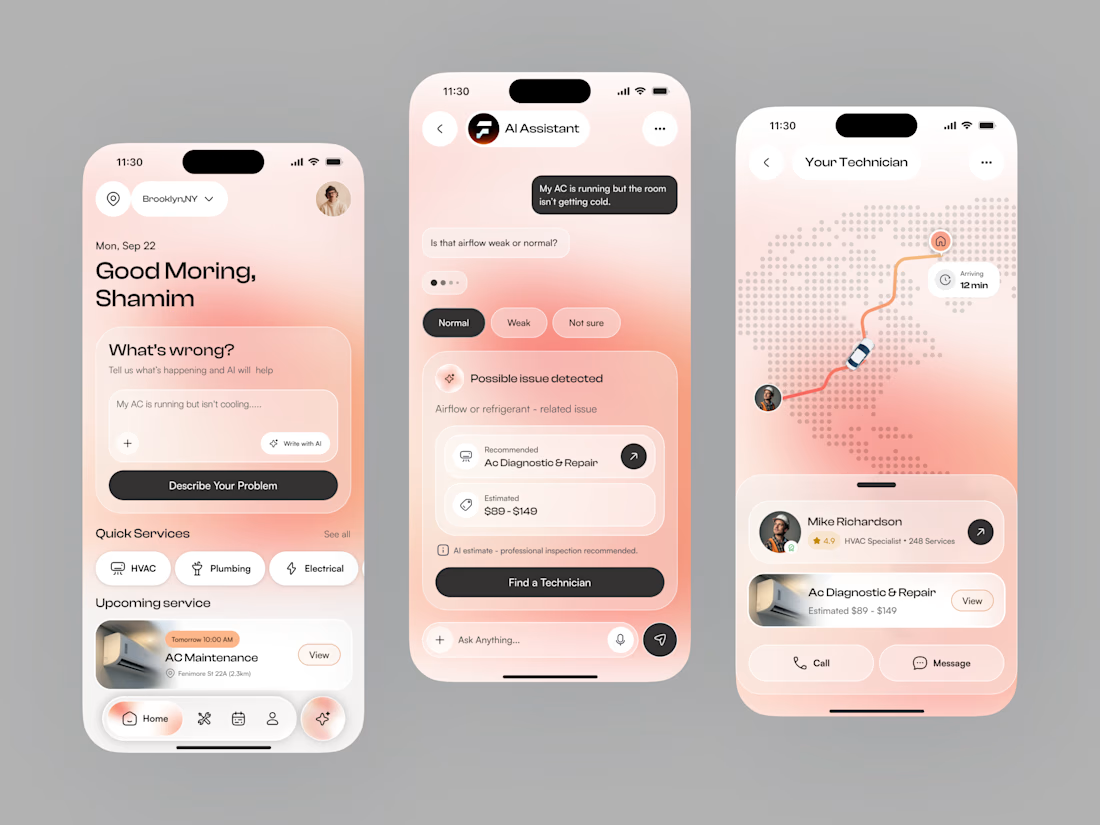
AI Home Services App — Smart Technician Booking & Repair
A premium AI-powered home services app designed to simplify how people diagnose home problems, find the right service, and book qualified technicians.
The product uses AI to turn a simple problem description into a clear service recommendation — helping users move from “What’s wrong?” → “What do I need?” → “Who can fix it?”
Key Experience
→ AI-powered problem diagnosis
→ Text, voice & photo input
→ Smart service recommendations
→ Technician discovery & booking
→ Transparent service information
→ Real-time technician tracking
→ Premium, intuitive mobile experience
The concept is designed for founders building AI home-service platforms, technician marketplaces, repair apps, and SaaS products where reducing friction and improving the booking experience can create a stronger customer journey.
Role: Product Designer
Focus: AI Product Design · UX/UI · Mobile App Design · Service Marketplace