The network for creativity
Join 1.25M professional creatives like you
Connect with clients, get discovered, and run your business 100% commission-free
Creatives on Contra have earned over $150M and we are just getting started
Back to feedPost


The network for creativity
Join 1.25M professional creatives like you
Connect with clients, get discovered, and run your business 100% commission-free
Creatives on Contra have earned over $150M and we are just getting started




Related posts

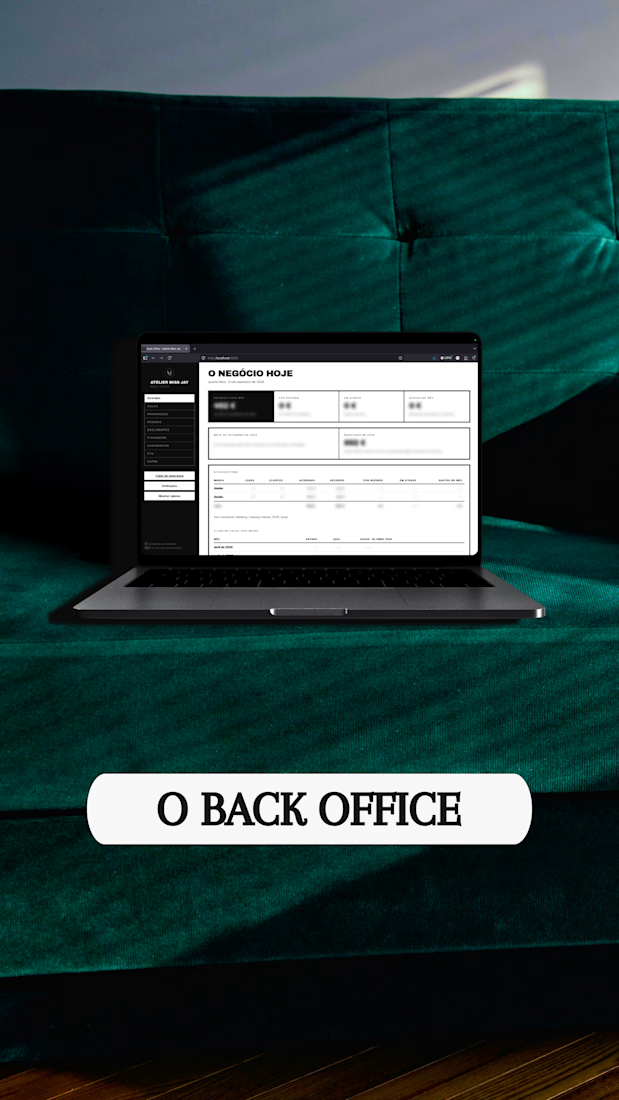
I built the back office that runs my whole business.
One page: money in, money owed, money overdue, money spent. Every brand on its own line. Six months of cash flow. A button that hides all the figures, so I can open it in a meeting without showing my revenue.
Before this, everything lived in spreadsheets, emails and my head, and checking the month took an afternoon of adding up by hand.
It was the first big thing I built with AI. It's still what I use every day, and it's what I now build for other businesses.



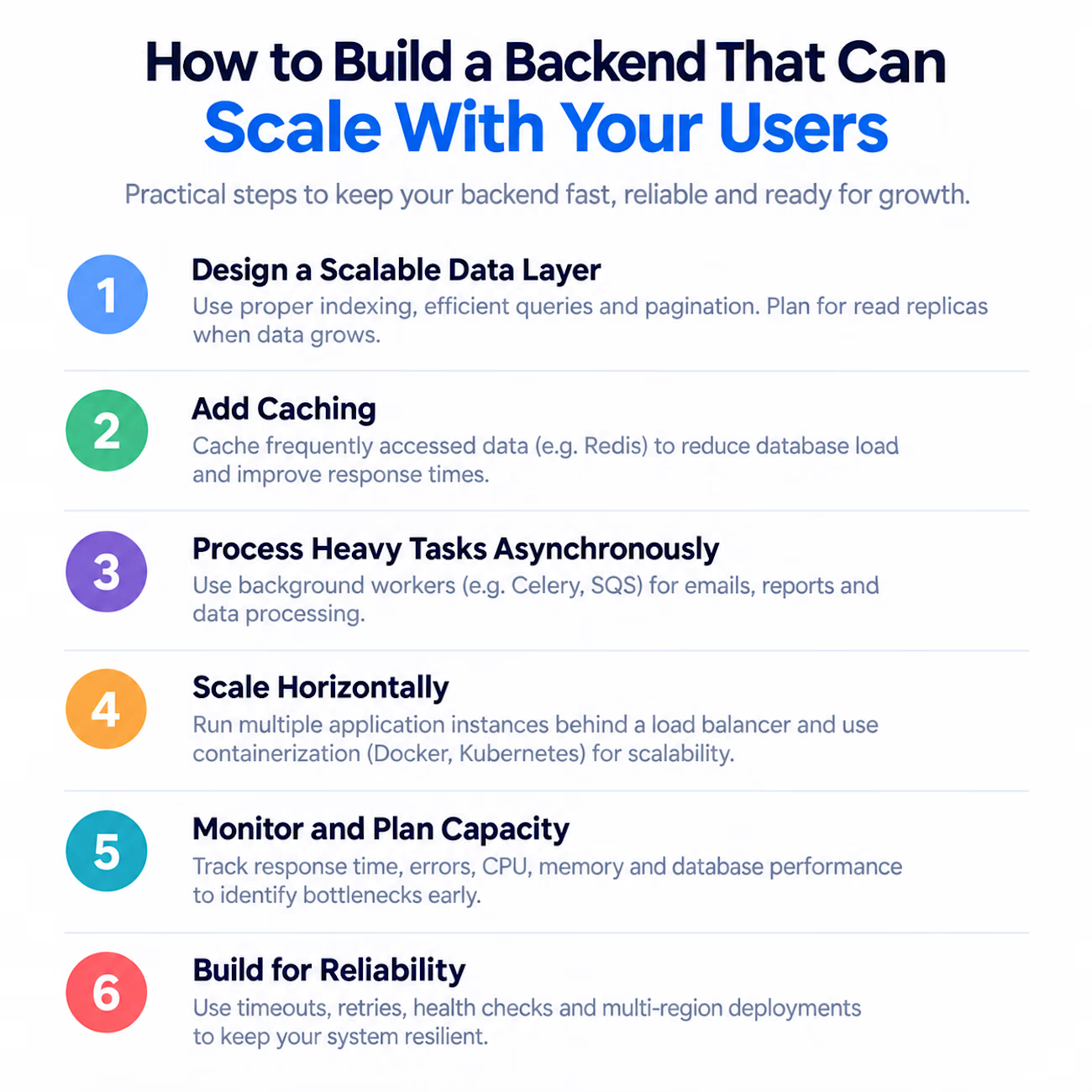
𝐀 𝐛𝐚𝐜𝐤𝐞𝐧𝐝 𝐭𝐡𝐚𝐭 𝐰𝐨𝐫𝐤𝐬 𝐟𝐨𝐫 𝟏,𝟎𝟎𝟎 𝐮𝐬𝐞𝐫𝐬 𝐦𝐚𝐲 𝐬𝐭𝐫𝐮𝐠𝐠𝐥𝐞 𝐚𝐭 𝟏𝟎𝟎,𝟎𝟎𝟎.
Scaling isn’t just about adding more servers. It starts with making the right architectural decisions early from 𝐝𝐚𝐭𝐚𝐛𝐚𝐬𝐞 𝐨𝐩𝐭𝐢𝐦𝐢𝐳𝐚𝐭𝐢𝐨𝐧 𝐚𝐧𝐝 𝐜𝐚𝐜𝐡𝐢𝐧𝐠 𝐭𝐨 𝐚𝐬𝐲𝐧𝐜 𝐩𝐫𝐨𝐜𝐞𝐬𝐬𝐢𝐧𝐠, 𝐡𝐨𝐫𝐢𝐳𝐨𝐧𝐭𝐚𝐥 𝐬𝐜𝐚𝐥𝐢𝐧𝐠, 𝐨𝐛𝐬𝐞𝐫𝐯𝐚𝐛𝐢𝐥𝐢𝐭𝐲, 𝐚𝐧𝐝 𝐟𝐚𝐮𝐥𝐭 𝐭𝐨𝐥𝐞𝐫𝐚𝐧𝐜𝐞.
→ 𝐃𝐚𝐭𝐚𝐛𝐚𝐬𝐞: Efficient queries, indexing, pagination, and read replicas as data grows.
→ 𝐂𝐚𝐜𝐡𝐢𝐧𝐠: Redis or similar caching layers to reduce repeated database work.
→ 𝐀𝐬𝐲𝐧𝐜: Processing: Move emails, reports, and heavy processing to background workers like Celery/SQS.
→ 𝐇𝐨𝐫𝐢𝐳𝐨𝐧𝐭𝐚𝐥 𝐒𝐜𝐚𝐥𝐢𝐧𝐠: Run multiple application instances behind load balancers using Docker/Kubernetes.
→ 𝐌𝐨𝐧𝐢𝐭𝐨𝐫𝐢𝐧𝐠: Track latency, errors, CPU, memory, and database performance before they become production issues.
→ 𝐑𝐞𝐥𝐢𝐚𝐛𝐢𝐥𝐢𝐭𝐲: Use timeouts, retries, health checks, and redundancy so failures don’t take down the entire system.
The goal isn’t to over-engineer from day one. It’s to design your backend so it can scale without becoming slow, expensive, or fragile.
𝐖𝐡𝐚𝐭’𝐬 𝐭𝐡𝐞 𝐛𝐢𝐠𝐠𝐞𝐬𝐭 𝐛𝐚𝐜𝐤𝐞𝐧𝐝 𝐬𝐜𝐚𝐥𝐢𝐧𝐠 𝐜𝐡𝐚𝐥𝐥𝐞𝐧𝐠𝐞 𝐲𝐨𝐮’𝐯𝐞 𝐟𝐚𝐜𝐞𝐝?

A comprehensive end-to-end landing page redesign and conversion optimization project executed for a regional commercial and residential roofing contractor. The core objective was to restructure dense regional trade service information into a seamless, authority-driven conversion path optimized to capture motivated local property managers and homeowners.