The network for creativity
Join 1.25M professional creatives like you
Connect with clients, get discovered, and run your business 100% commission-free
Creatives on Contra have earned over $150M and we are just getting started
Back to feedPost

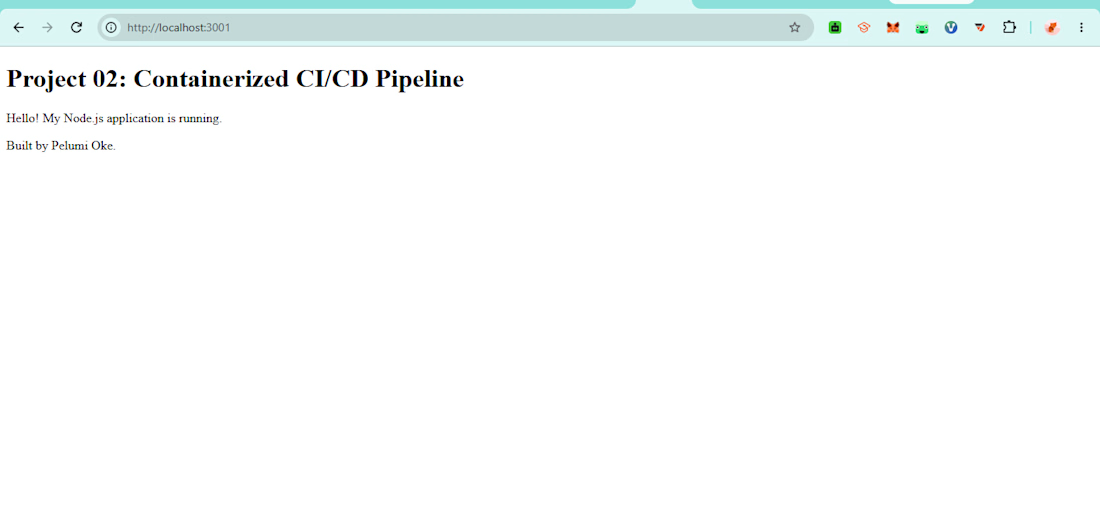
Containerized CI/CD Pipeline with GitHub Actions
Built a containerized Node.js application with automated testing and Docker image publishing through GitHub Actions.
What I implemented
Containerized the application using Docker.
Configured automated testing in GitHub Actions.
Automated Docker image publishing to GitHub Container Registry (GHCR) and Amazon ECR.
Configured AWS authentication using GitHub Actions OIDC.
Technologies: Docker, Node.js, GitHub Actions, AWS ECR, GHCR, AWS IAM OIDC.
This project demonstrates CI/CD automation and container image publishing. Production deployment to ECS was not included.


The network for creativity
Join 1.25M professional creatives like you
Connect with clients, get discovered, and run your business 100% commission-free
Creatives on Contra have earned over $150M and we are just getting started
Related posts

Made another web tool, this time for liquid shapes. Everything you see here came out of it.
Built with Claude Code (Opus 5.5) and Toolcraft. It’s a React app that runs entirely in the browser, with a custom WebGL2 path tracer and Intel’s OIDN denoiser on WebGPU, exporting seamless 4K loops.
Building design tools has changed how I think about my job. I used to focus on making the visuals. Now I think more about building the system that makes them, so a client’s brand can keep growing after the project is done.
I think more designers will work this way soon, and more founders will expect it.

hypnotizing!


Most enterprises can't use AI analytics tools, and the model isn't the reason.
The tools want the data sent to them. For the consulting and professional-services firms this product was built for, that ended the conversation early. Sensitive client data could not leave their cloud.
So we flipped it. The whole platform deploys inside the customer's own AWS account, with zero data egress.
Once it's in, a business user types a question in plain English and gets a live, governed dashboard in under 60 seconds.
What happens between the question and the chart:
→ Enterprise identities scope sources, rows, columns and tenant before the query runs
→ Bedrock Agents plan the query and Bedrock Guardrails check it
→ Trino queries SQL, NoSQL and custom sources where the data already lives
→ Apache Superset turns the result into a dashboard people can save and share
→ Subscribed datasets are watched for anomalies, trends and thresholds
→ Every answer keeps its question, sources, validated query, permissions and confidence
It ships as a white-label React widget, so product teams can embed it in their own apps. It's also listed on AWS Marketplace.
Stack: React, Trino, Apache Superset, AWS Bedrock (Agents, Guardrails, AgentCore), ECS Fargate, Aurora PostgreSQL, ElastiCache, CloudFormation, isolated VPC.
The product moved into the enterprise's AWS account.
The data never moved out.
At Zenveus, we start with what the software has to prove: the data, the permissions and the trail it leaves behind.

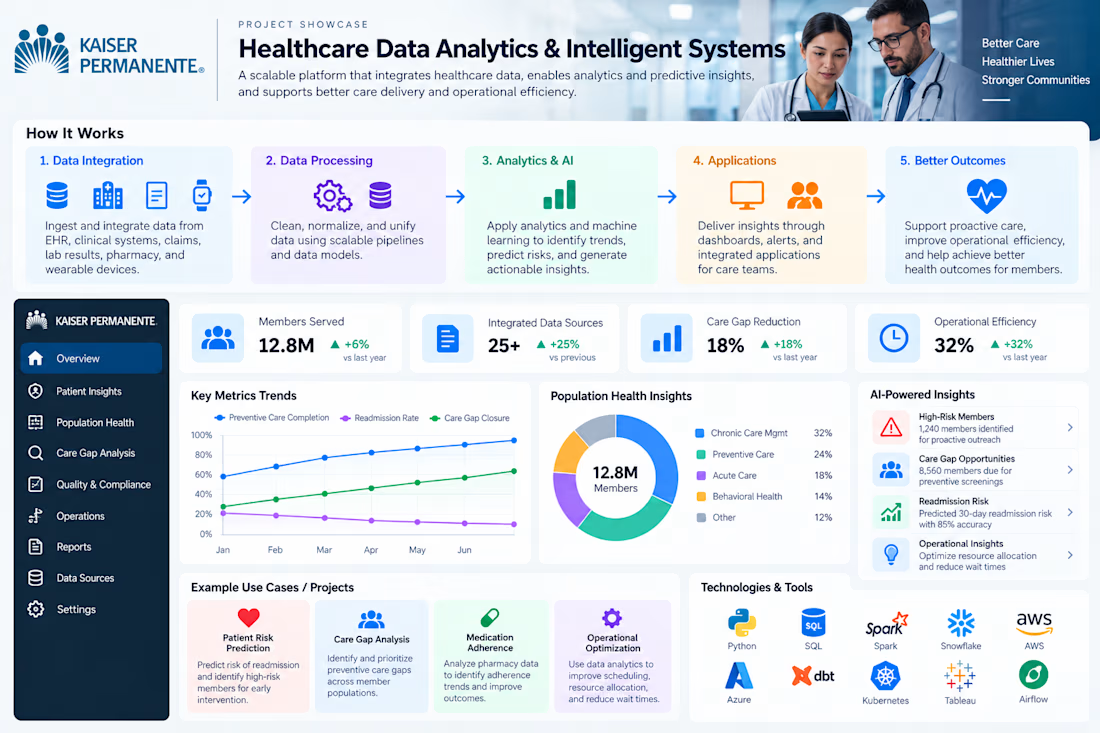
At Kaiser Permanente, I contributed to healthcare technology initiatives focused on improving data accessibility, system integration, and operational efficiency through enterprise software engineering and data analytics.
The work centered on developing scalable solutions for managing complex healthcare information, integrating data across enterprise systems, and supporting more efficient workflows for healthcare professionals and operational teams.
The project showcases how modern software architecture, data processing, and analytics can help healthcare organizations streamline operations, improve information accessibility, and support data-driven decision-making.
Key areas: Healthcare Technology, Software Engineering, Data Integration, Python, SQL, Enterprise Applications, Cloud Computing, and Data Analytics.