The network for creativity
Join 1.25M professional creatives like you
Connect with clients, get discovered, and run your business 100% commission-free
Creatives on Contra have earned over $150M and we are just getting started
Back to feedPost

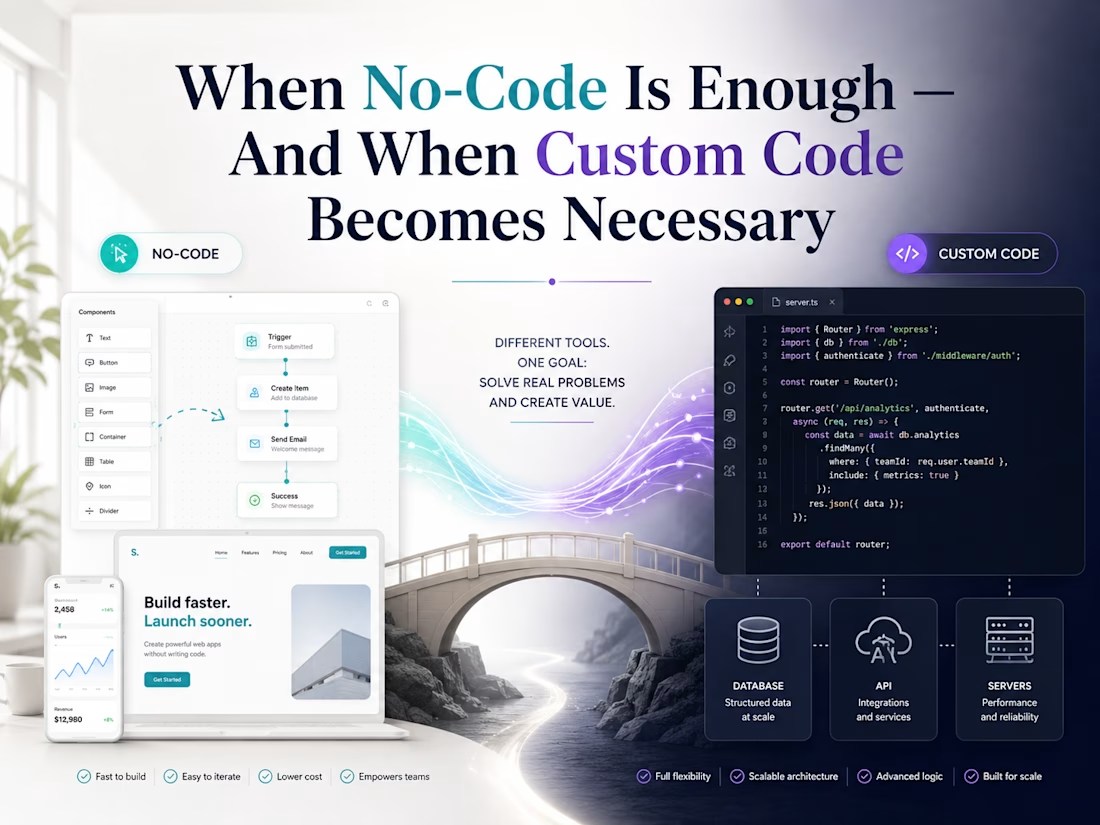
When No-Code Is Enough — And When Custom Code Becomes Necessary
No-code tools are great when speed matters.
They help founders launch landing pages, simple MVPs, internal tools, automations, and early product ideas without spending too much time or budget. If the goal is to test an idea quickly, no-code can be the smartest first step.
But no-code is not always enough.
As a product grows, you may need custom user flows, better performance, stronger security, deeper integrations, or more control over the design and backend logic.
That is when custom code becomes necessary.
The smart approach is not choosing no-code or code forever.
It is choosing the right solution for the current stage of the product.
Use no-code to move fast and validate the idea.
Use custom code when the product needs to scale, perform better, and support real business logic.
A good product does not always need to start big.
It needs to start with the right foundation.
The network for creativity
Join 1.25M professional creatives like you
Connect with clients, get discovered, and run your business 100% commission-free
Creatives on Contra have earned over $150M and we are just getting started





Related posts

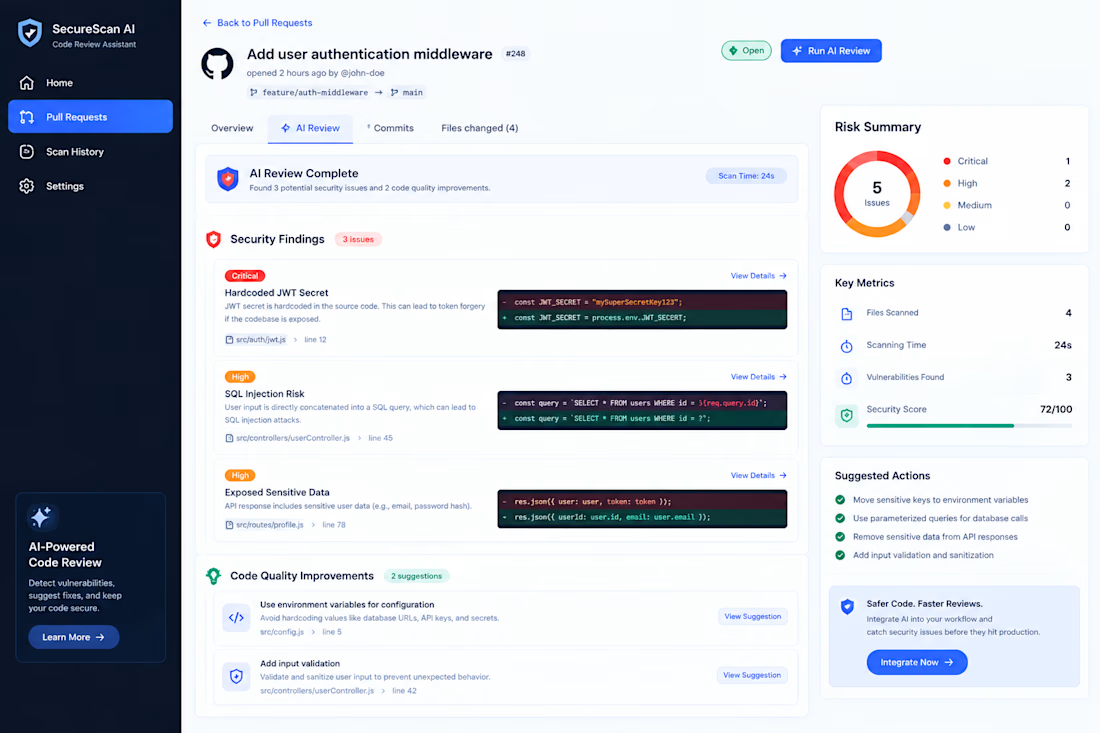
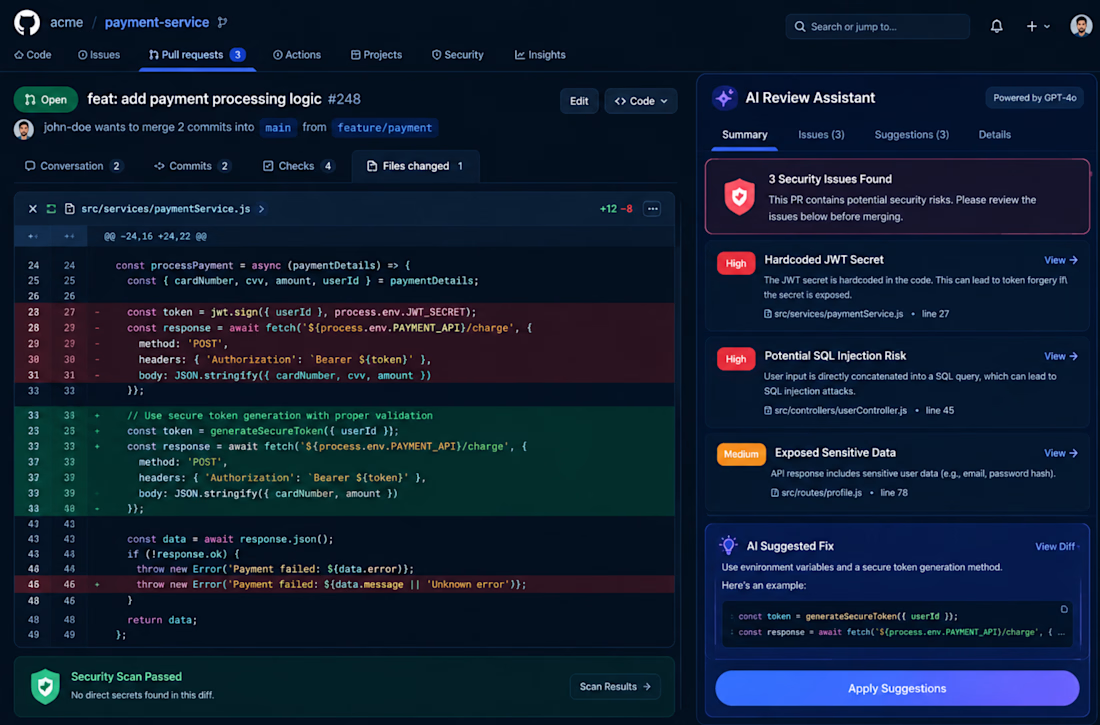
Building an AI-powered code review assistant that flags security vulnerabilities before PR merge 🛡️💻
Testing an automated workflow that scans pull requests, detects potential SQL/JWT leaks, and suggests clean, optimized code snippets in real time.
Saving developers hours of manual review while keeping codebases bulletproof. Sneak peek of the audit report output below! 👇
#AI #DevTools #CyberSecurity #WebDev #BuildInPublic



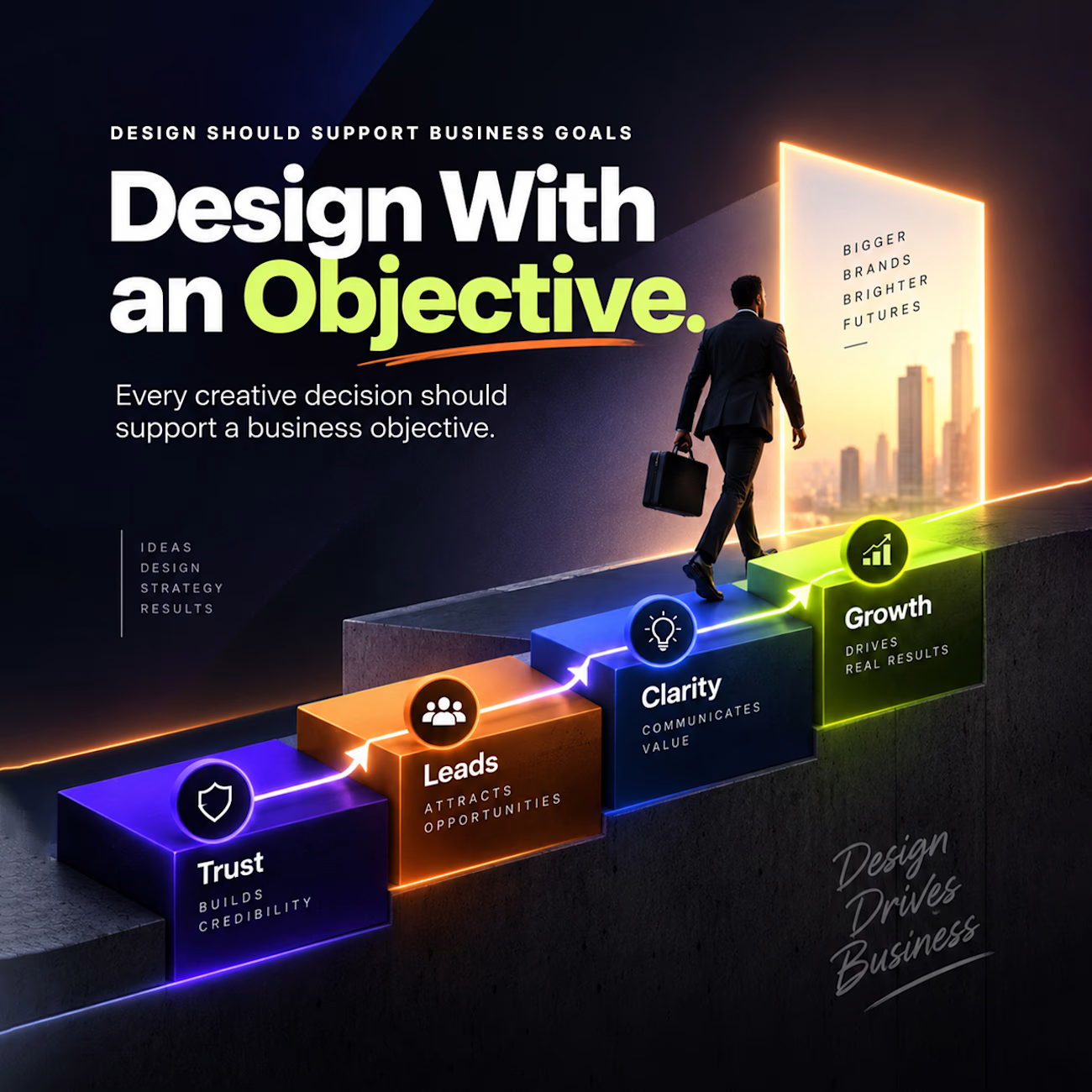
Good design should never exist just to look pretty on a screen. Every creative decision needs to serve a clear business goal.
When design is backed by strategy, it stops being an expense and becomes an engine for momentum.
Here is how intentional design drives your business forward:
• Trust: Builds immediate credibility the second someone lands on your page.
• Leads: Catches attention and attracts qualified opportunities into your funnel.
• Clarity: Communicates your true value fast with zero confusion.
• Growth: Turns interested visitors into long term customers and real revenue.
When you design with an objective, the business naturally scales with it.

This week I worked on a widget library for a new SaaS product.
On complex products, a widget library can pass 100 widgets fast. Every one needs multiple sizes, empty and error states, permission rules, and has to handle real data that never looks like the mockup. Without a system, each new widget becomes a one off and the product slowly starts to feel stitched together.
