The network for creativity
Join 1.25M professional creatives like you
Connect with clients, get discovered, and run your business 100% commission-free
Creatives on Contra have earned over $150M and we are just getting started
Back to feedPost

One thing I've learned after 15 years in test automation — a flaky test is never "just flaky". It's always hiding a real problem. Race conditions, hardcoded waits, shared state. Fix the root cause, not the symptom.

The network for creativity
Join 1.25M professional creatives like you
Connect with clients, get discovered, and run your business 100% commission-free
Creatives on Contra have earned over $150M and we are just getting started



Related posts

Hi everyone, I’m Dani from Innsbruck, Austria.
I’m a senior full-stack developer and technical consultant with experience in C#/.NET, PHP/Laravel/Symfony, TypeScript/Angular, APIs, SQL, e-commerce and AI integrations.
I enjoy turning business requirements into reliable applications, integrations and practical AI-assisted workflows. I’m currently available for remote freelance collaborations and happy to connect with other builders, founders and teams here on Contra.
Nice to meet you!
contra.com
Danijel Bumbar’s Work | Contra
View Danijel Bumbar’s work on Contra. The Independent-first, commission-free freelance marketplace shaping the future of work.

Nice!

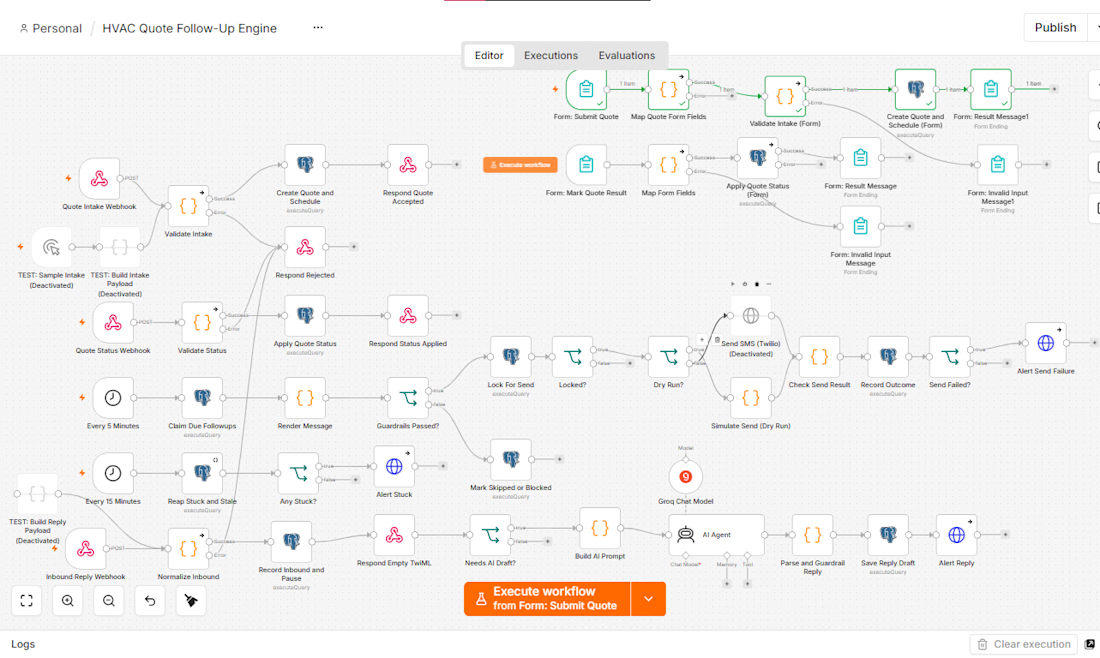
Quote Follow-Up Automation for HVAC & Plumbing
Most home-service quotes don’t get rejected, they just go quiet. I built a system that follows up on them automatically.
What it does
Takes each quote through a simple form
Schedules up to 8 timed texts over 30 days
Stops instantly on a reply, a STOP, or a booked/lost update
Uses AI to draft replies to objections, with a human approving every one
Built with safety first
No duplicate texts, even when processes overlap
Only contractor-approved wording is sent
Texts go out only during local business hours
Opt-outs are honored immediately
Stack: n8n, Postgres, Groq, Docker, Twilio
Status: built and tested end to end, ready to pilot.
I build automation systems like this for service businesses. Message me if you’d like one for yours😊 .



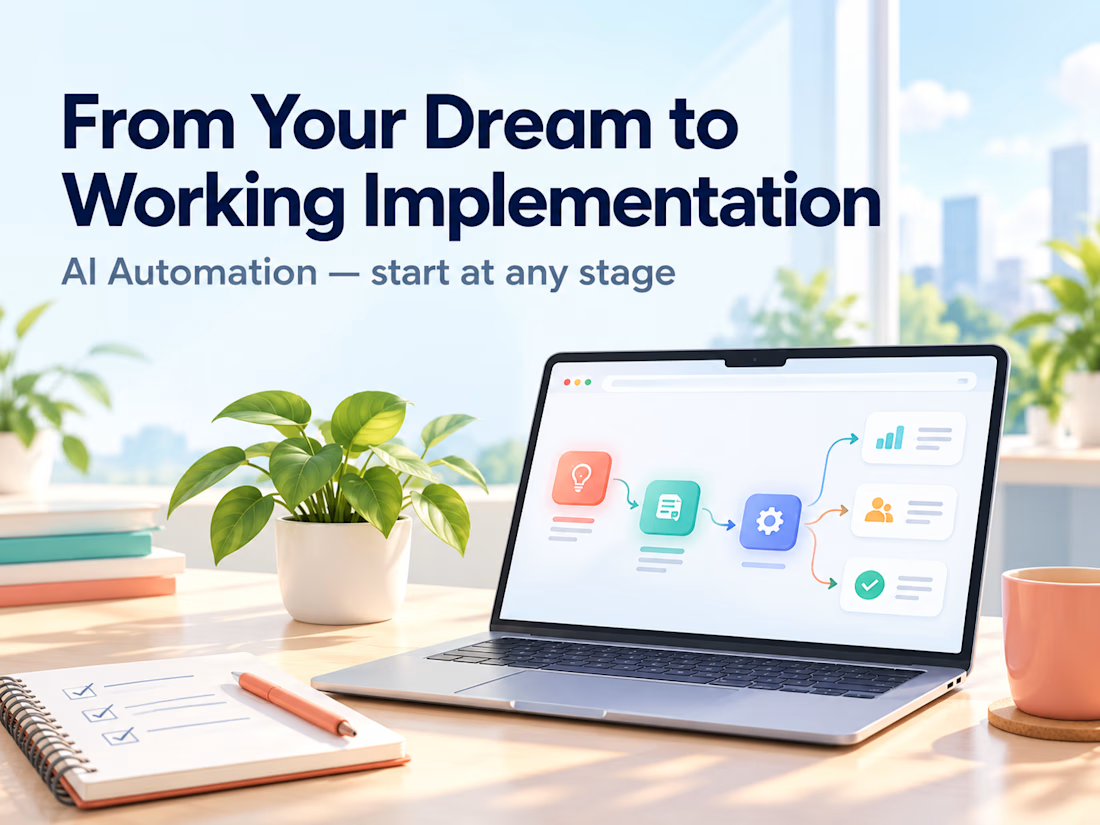
Clients often start with the same request: "Let's build an AI agent."
My counter-question is always: which manual process actually costs you time, errors, or money right now?
My selection rule: remove it first. If it can't be removed, simplify it. If it's still needed, automate it with a plain script. Only then add an integration or an agent. Often the best result is the process that no longer exists.
Safe automation means real scenarios, error handling, and alerts. Without alerts, a workflow can silently lose data for weeks. I always define what stays with a human and what goes to the system.
Question for you: which process would you automate first, and why is it still manual?
Service for audit and implementation: https://contra.com/s/BmWLbgFU-ai-automation-from-your-dream-to-working-implementation?r=auto_booster